Trip Overview
Trip Overview
The 11 Days Annapurna Circuit Trek is one of Nepal’s most iconic Himalayan adventures, offering an unforgettable journey through diverse landscapes, ancient villages, rich Himalayan cultures, and breathtaking mountain scenery. Organized by Himalayan Sherpa Exodus Team Treks & Expeditions Pvt. Ltd., this carefully designed itinerary combines scenic jeep drives with spectacular trekking, making it ideal for travelers with limited time while still experiencing the most rewarding section of the legendary Annapurna Circuit.
Beginning in the vibrant capital of Kathmandu, the journey follows the Marsyangdi River through lush forests and traditional Gurung villages before reaching the alpine region of Chame, Pisang, and Manang. An acclimatization day in Manang includes optional hikes to the famous Dalai Lama Cave and the turquoise Gangapurna Lake, helping trekkers safely adapt to higher elevations.
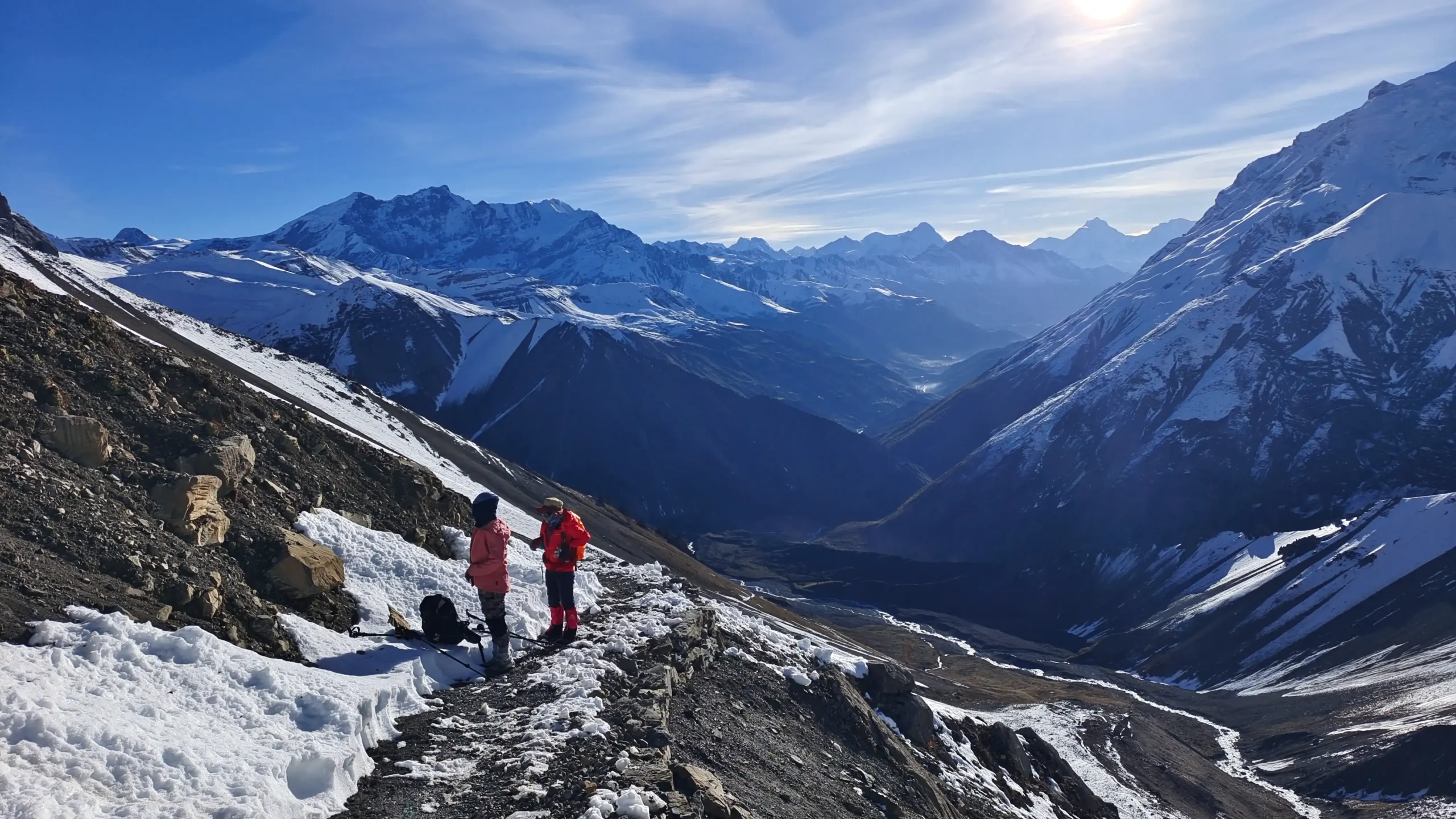
The adventure continues across dramatic Himalayan terrain toward Yak Kharka and High Camp before crossing the magnificent Thorong La Pass (5,416 m)—the highest point of the trek and one of the world’s most spectacular trekking passes. After celebrating this remarkable achievement, the trail descends to the sacred pilgrimage site of Muktinath Temple. The journey concludes with a scenic drive to the beautiful lakeside city of Pokhara before returning to Kathmandu.
This trek perfectly blends adventure, culture, natural beauty, and high-altitude achievement into one unforgettable Himalayan experience.
Trip Highlights
Trip Highlights
- Cross the legendary Thorong La Pass (5,416 m)—one of the world's highest trekking passes.
- Explore traditional Gurung, Manangi, and Thakali villages.
- Witness panoramic views of Annapurna II (7,937m), Annapurna III (7,555m), Annapurna IV (7,525m), Gangapurna (7,455m), Tilicho Peak (7,134m), Chulu East & West, Pisang Peak, Thorong Peak, Dhaulagiri (8,167m), Nilgiri, Lamjung Himal, Tukuche Peak, and many other snow-capped giants.
- Experience the dramatic transition from subtropical forests to high alpine deserts.
- Acclimatize with optional hikes to Dalai Lama Cave and Gangapurna Lake.
- Visit the sacred Muktinath Temple, revered by both Hindus and Buddhists.
- Enjoy authentic local hospitality in traditional mountain tea houses.
- Drive through one of Nepal's most scenic Himalayan highways.
- Discover diverse Himalayan wildlife, waterfalls, glaciers, rivers, and deep valleys.
- Capture unforgettable sunrise and sunset views across the Annapurna and Dhaulagiri mountain ranges.
Day 01 :
Arrival in Kathmandu
- Altitude: 1,350 m / 4,429 ft
- Activity: Airport pickup and hotel transfer
- Driving Time: 30–45 minutes
- Accommodation: Hotel
- Meals: Not Included
Upon arrival at Tribhuvan International Airport, our representative warmly welcomes you and transfers you to your hotel. After check-in, enjoy a trek briefing, equipment check, and free time to explore nearby Thamel.
Day 02 :
Kathmandu – Besisahar – Chame
- Start Altitude: 1,350 m
- Besisahar: 760 m
- Chame: 2,670 m
- Driving Distance: Approximately 235 km
- Driving Time: 9–11 hours
- Accommodation: Tea House
- Meals: Breakfast, Lunch & Dinner
Drive along scenic rivers, terraced farmland, waterfalls, and mountain villages to Besisahar before continuing by 4WD jeep through rugged Himalayan roads to Chame, the headquarters of Manang District.
Day 03 :
Chame – Upper Pisang
- Start Altitude: 2,670 m
- Destination: Upper Pisang (3,300 m)
- Walking Distance: 13 km
- Walking Time: 5–6 hours
- Accommodation: Tea House
- Meals: Breakfast, Lunch & Dinner
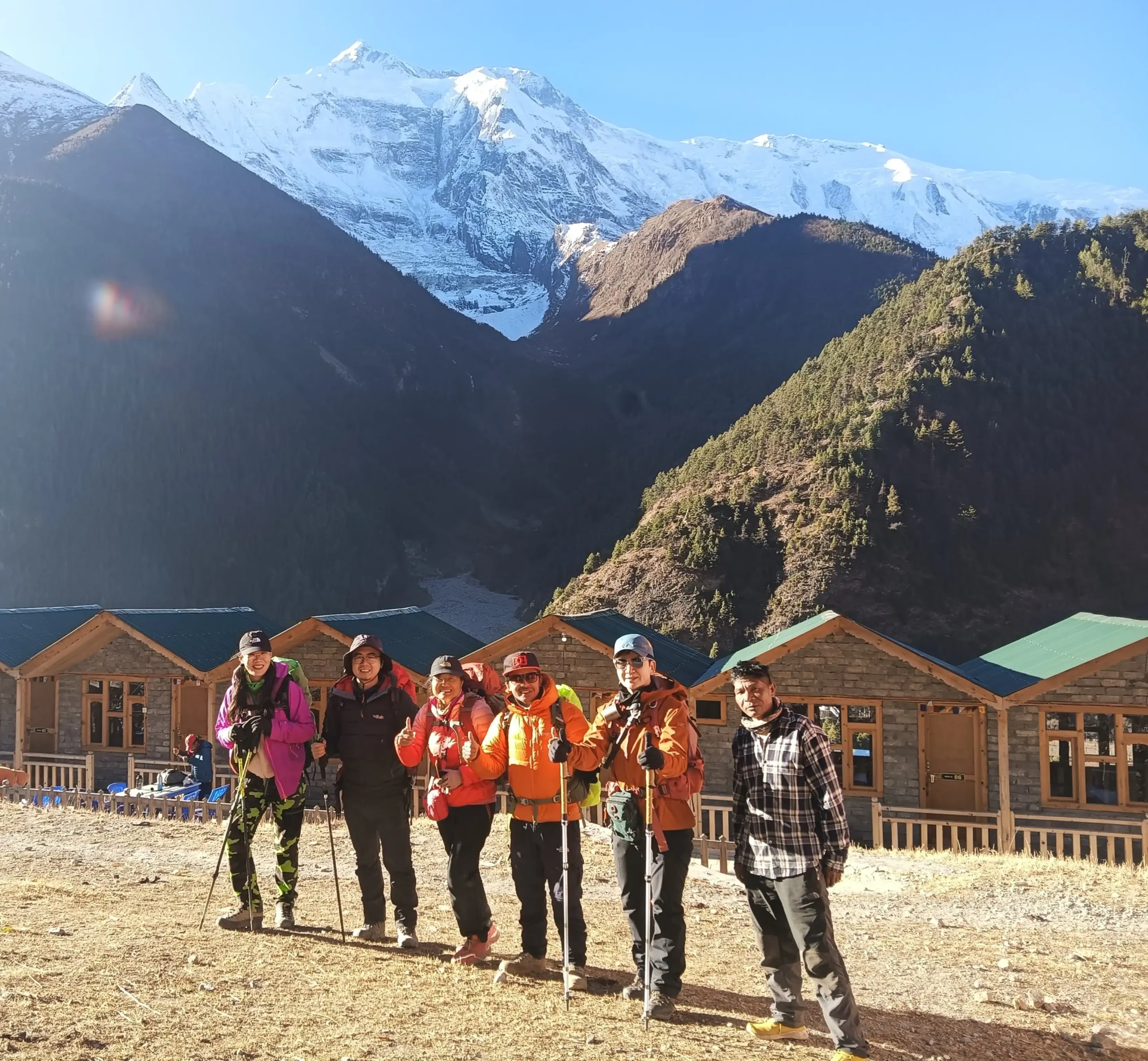
Today's trail follows pine forests, suspension bridges, and the Marsyangdi River while enjoying spectacular views of Annapurna II and Pisang Peak before reaching the beautiful village of Upper Pisang.
Day 04 :
Upper Pisang – Manang
- Start Altitude: 3,300 m
- Destination: Manang (3,540 m)
- Walking Distance: 17 km
- Walking Time: 6–7 hours
- Accommodation: Tea House
- Meals: Breakfast, Lunch & Dinner
Take the scenic upper trail through Ghyaru and Ngawal villages, offering breathtaking Himalayan panoramas before descending into the beautiful valley of Manang.
Day 05 :
Acclimatization Day at Manang
- Altitude: 3,540 m
- Side Hiking Distance: 5–8 km
- Walking Time: 3–5 hours
- Accommodation: Tea House
- Meals: Breakfast, Lunch & Dinner
An essential acclimatization day to prepare for higher elevations. Optional excursions include:
- Dalai Lama Cave
- Gangapurna Lake
- Gangapurna Glacier Viewpoint
- Himalayan Rescue Association Center
Return to Manang for overnight stay.
Day 06 :
Manang – Yak Kharka
- Start Altitude: 3,540 m
- Destination: 4,050 m
- Walking Distance: 10 km
- Walking Time: 4–5 hours
- Accommodation: Tea House
- Meals: Breakfast, Lunch & Dinner
Gradually ascend through alpine meadows, juniper bushes, and yak grazing pastures while enjoying incredible mountain scenery.
Day 07 :
Yak Kharka – High Camp
- Yak Kharka: 4,050 m
- High Camp: 4,880 m
- Walking Distance: 10 km
- Walking Time: 5–6 hours
- Accommodation: Tea House
- Meals: Breakfast, Lunch & Dinner
Cross suspension bridges before reaching Thorong Phedi and continuing to High Camp. If symptoms of altitude sickness occur, staying overnight at Thorong Phedi (4,525 m) is a safer option before crossing the pass the following morning.
Day 08 :
High Camp – Thorong La Pass – Muktinath
- Highest Point: Thorong La Pass (5,416 m)
- Destination: Muktinath (3,760 m)
- Walking Distance: 16 km
- Walking Time: 8–10 hours
- Accommodation: Tea House
- Meals: Breakfast, Lunch & Dinner
The most challenging yet rewarding day. Begin before sunrise to cross the legendary Thorong La Pass before descending to the sacred pilgrimage destination of Muktinath Temple.
Day 09 :
Muktinath – Pokhara
- Muktinath: 3,760 m
- Pokhara: 822 m
- Driving Distance: Approximately 170 km
- Driving Time: 7–8 hours
- Accommodation: Hotel
- Meals: Breakfast
Drive through Jomsom, Marpha, Tatopani, Beni, and lush valleys before arriving at the beautiful lakeside city of Pokhara.
Day 10 :
Pokhara – Kathmandu
Option A: Tourist Bus
- Distance: 200 km
- Driving Time: 7–8 hours
Option B: Domestic Flight
- Flight Time: 25 minutes
- Kathmandu Altitude: 1,350 m
- Accommodation: Hotel
- Meals: Breakfast
Enjoy one final journey back to Kathmandu by road or a short scenic flight.
- Altitude: 1,350 m
- Driving Time: 30–45 minutes
- Meals: Breakfast
After breakfast, our representative transfers you to Tribhuvan International Airport according to your international flight schedule, marking the end of your unforgettable Annapurna Circuit adventure with Himalayan Sherpa Exodus Team Treks & Expeditions Pvt. Ltd. We hope to welcome you back to Nepal for another Himalayan journey in the future.
Annapurna Circuit Trek
The Trip Package Cost Includes
- Airport pick-up and final departure transfer by private vehicle.
- 2 nights hotel accommodation in Kathmandu with breakfast.
- 1 night hotel accommodation in Pokhara with breakfast.
- Tourist bus from Kathmandu to Besisahar.
- Shared 4WD Jeep from Besisahar to Chame.
- Shared Jeep from Muktinath to Pokhara.
- Tourist bus from Pokhara to Kathmandu (or domestic flight upon request with additional cost).
- Complimentary use of a sleeping bag, down jacket, duffel bag, and trekking poles (to be returned after the trek).
- Annapurna Conservation Area Permit (ACAP).
- TIMS Card (Trekkers' Information Management System).
- Experienced government-licensed English-speaking trekking guide.
- Sherpa porter (1 porter for every 2 trekkers, carrying up to 20kg).
- Guide and porter salary, insurance, meals, accommodation, and transportation.
- 3 meals daily during the trek (Breakfast, Lunch & Dinner).
- Tea house accommodation during the trek.
- Seasonal fresh fruits after dinner.
- First aid medical kit and pulse oximeter carried by the guide.
- Trekking completion certificate.
- All government taxes and company service charges.
The Trip Package Cost Excludes
- Nepal Entry Visa Fee.
- International airfare.
- Travel insurance with emergency helicopter evacuation.
- Lunch and dinner in Kathmandu and Pokhara.
- Personal trekking equipment.
- Hot shower, Wi-Fi, charging fees during the trek.
- Bottled drinks, soft drinks, alcohol, snacks, and desserts.
- Tips for guide and porter (highly appreciated).
- Personal expenses and laundry.
- Extra accommodation due to flight cancellation, weather delays, illness, or any unforeseen circumstances.
- Any services not mentioned under "Cost Includes."
Best Time to Trek
The Annapurna Circuit Trek can be completed throughout the year, but the best trekking seasons are:
Spring (March – May)
- Rhododendron forests in full bloom.
- Pleasant temperatures.
- Crystal-clear mountain views.
- Excellent photography opportunities.
Autumn (September – November)
- Stable weather.
- Clear blue skies.
- Comfortable trekking temperatures.
- Best panoramic Himalayan views.
Winter (December – February)
- Snow-covered landscapes.
- Fewer trekkers.
- Suitable for experienced hikers.
Monsoon (June – August)
- Green valleys and waterfalls.
- Occasional rain below Manang.
- Mustang region remains relatively dry.
Transportation includes:
- Tourist Bus: Kathmandu → Besisahar
- 4WD Jeep: Besisahar → Chame
- Shared Jeep: Muktinath → Pokhara
- Tourist Bus or Domestic Flight: Pokhara → Kathmandu
Trek Difficulty
- Difficulty Level: Moderate to Challenging
- Maximum Elevation: Thorong La Pass (5,416 m)
- Daily Walking: 4–8 hours
- Suitable for: Physically fit beginners with preparation and experienced trekkers.
The biggest challenge is crossing Thorong La Pass, where altitude and weather conditions require good physical fitness and proper acclimatization.
Acclimatization & Altitude Sickness
Proper acclimatization is essential for a safe trek.
Our itinerary includes a full acclimatization day in Manang (3,540 m), allowing your body to adjust before ascending higher.
Possible symptoms include:
- Headache
- Nausea
- Fatigue
- Dizziness
- Loss of appetite
Our experienced guide continuously monitors trekkers and carries a first-aid kit and pulse oximeter throughout the journey.
Local Culture & Monasteries
The Annapurna Circuit offers a fascinating blend of Hindu and Tibetan Buddhist cultures.
Highlights include:
- Traditional Gurung villages
- Ancient Manangi settlements
- Tibetan-style monasteries
- Prayer wheels and Mani walls
- Colorful prayer flags
- Sacred Muktinath Temple
- Local hospitality and mountain traditions
Preparation Guide
Before your trek, we recommend:
- Walking or hiking 3–5 times per week.
- Cardiovascular exercises.
- Stair climbing with a backpack.
- Drinking plenty of water.
- Breaking in your trekking boots before arrival.
- Packing warm clothing for temperatures below freezing.
Weather & Climate
The trek passes through several climate zones.
Lower Region (Chame)
Middle Region (Manang)
High Region (Thorong La Pass)
- -15°C to 8°C depending on the season.
Morning weather is generally more stable than afternoon conditions.
Accommodation
Accommodation is provided in comfortable local tea houses.
Facilities generally include:
- Twin-sharing rooms.
- Comfortable beds with blankets.
- Shared bathrooms.
- Dining hall with heating stove.
- Friendly family-run hospitality.
Private rooms may be available in lower villages but become limited at higher elevations.
Meals During the Trek
Three fresh meals are provided daily.
Popular menu options include:
- Dal Bhat
- Fried Rice
- Noodles
- Pasta
- Tibetan Bread
- Pancakes
- Soup
- Eggs
- Momos
- Tea and Coffee
Dal Bhat remains the most nutritious and popular trekking meal.
Drinking Water
Safe drinking water options include:
- Boiled water.
- Filtered water.
- Water purification tablets.
- Refillable bottles.
We strongly discourage purchasing plastic bottled water to help protect the Himalayan environment.
Internet & Charging
Most villages provide:
- Wi-Fi (extra charge)
- Mobile network coverage (NTC & Ncell in many areas)
- Battery charging (small additional fee)
Signal strength decreases at higher elevations.
Travel Insurance
Comprehensive travel insurance is mandatory.
Your policy should include:
- High-altitude trekking above 5,500 m.
- Emergency helicopter evacuation.
- Medical treatment.
- Trip cancellation.
- Personal accident coverage.
Please carry both printed and digital copies of your insurance policy.
Packing List
Clothing
- Down jacket
- Waterproof jacket
- Waterproof pants
- Trekking pants
- Thermal base layers
- Fleece jacket
- Warm gloves
- Wool hat
- Sun hat
- Hiking socks
Footwear
- Trekking boots
- Camp shoes or sandals
Gear
- Sleeping bag (-15°C recommended)
- Trekking poles
- Daypack
- Duffel bag
- Sunglasses
- Sunscreen
- Lip balm
- Headlamp
- Water bottles (2L)
- Personal toiletries
- Personal medications
- Power bank
Safety Measures
Your safety is our highest priority.
Our safety practices include:
- Government-licensed professional trekking guides.
- Daily health monitoring.
- Flexible itinerary adjustments when necessary.
- Pulse oximeter checks.
- Emergency evacuation coordination.
- Weather monitoring.
- Well-planned acclimatization schedule.
- 24/7 emergency support from our Kathmandu office.
Frequently Asked Questions (FAQ)
How difficult is the Annapurna Circuit Trek?
It is considered a moderate to challenging trek due to the high altitude of Thorong La Pass (5,416 m).
Do I need previous trekking experience?
Previous experience is helpful but not mandatory if you have good physical fitness.
How many hours do we walk each day?
Usually between 4 and 8 hours depending on the itinerary.
Is altitude sickness common?
It can affect anyone. Proper acclimatization greatly reduces the risk.
Is Wi-Fi available?
Yes, in most villages for an additional fee.
Can beginners join?
Yes, provided they prepare physically before the trek.
Is travel insurance mandatory?
Yes. It must include emergency helicopter evacuation and high-altitude trekking coverage.
What is the highest point of the trek?
Thorong La Pass (5,416 m / 17,769 ft).
Can I charge my phone during the trek?
Yes. Most tea houses offer charging facilities for a small fee.
Why choose Himalayan Sherpa Exodus Team Treks & Expeditions Pvt. Ltd.?
We provide experienced local guides, personalized service, flexible itineraries, transparent pricing, safety-focused operations, and authentic Himalayan hospitality to ensure an unforgettable Annapurna Circuit Trek experience.
Be Well Prepared for Your Trek in Nepal
Proper preparation is the key to a safe, comfortable, and enjoyable trekking experience in Nepal. Please use this equipment guide to prepare the essential clothing, footwear, personal items, health and safety gear, and other trekking necessities according to your chosen route and season.
Pack wisely, travel comfortably, and trek confidently with Himalayan Sherpa Exodus Team.
 5416M
5416M Moderate