Makalu Expedition
Mt. Makalu Expedition Overview
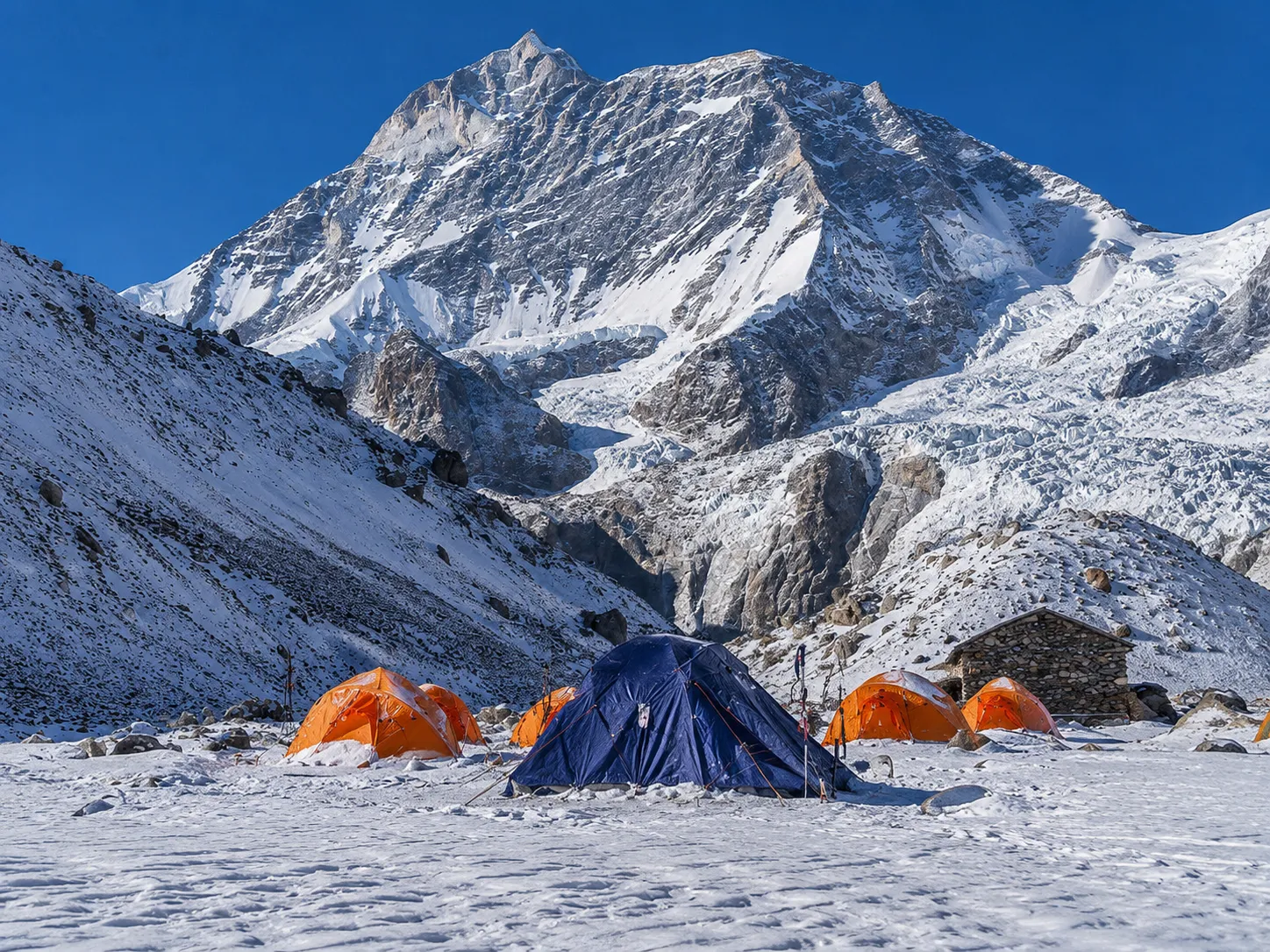
Rising to an impressive elevation of 8,485 metres (27,838 feet), Mount Makalu is the fifth-highest mountain in the world and one of the most technically demanding peaks in the Himalayas. Located in eastern Nepal near the border with Tibet, Makalu is instantly recognisable by its striking pyramid-shaped summit, steep ridges and isolated position within the magnificent Makalu Barun region.
The journey to Makalu is remarkable long before the climbing begins. The approach passes through the pristine landscapes of the Makalu Barun National Park, where deep river valleys, cascading waterfalls, alpine meadows and rugged mountain terrain create one of Nepal’s most diverse natural environments. The route also introduces climbers to the traditional settlements and distinctive cultures of the Sherpa, Rai and other Himalayan communities living in this remote region.
Mount Makalu was first successfully climbed on 15 May 1955 by French mountaineers Lionel Terray and Jean Couzy as part of an expedition led by Jean Franco. Their ascent followed the Northeast Ridge, which later became the most frequently attempted route to the summit. Despite its climbing history, Makalu remains a serious and respected objective because of its steep slopes, exposed ridges, technical sections and extreme altitude.
The 43 Days Mt. Makalu Expedition organised by Himalayan Sherpa Exodus Team Treks & Expeditions Pvt. Ltd. begins in Kathmandu with expedition preparation, documentation checks and an official briefing. The team then flies to Tumlingtar and continues by road to Num, the starting point of the trek towards Makalu Base Camp.
The approach follows a gradual route through Seduwa, Tashi Gaun, Khongma, Dobato, Yangle Kharka and Langmale Kharka before reaching the lower and main base camps. Carefully planned acclimatisation days allow climbers to adapt safely to the increasing elevation while enjoying the dramatic transition from subtropical forests to high Himalayan wilderness.
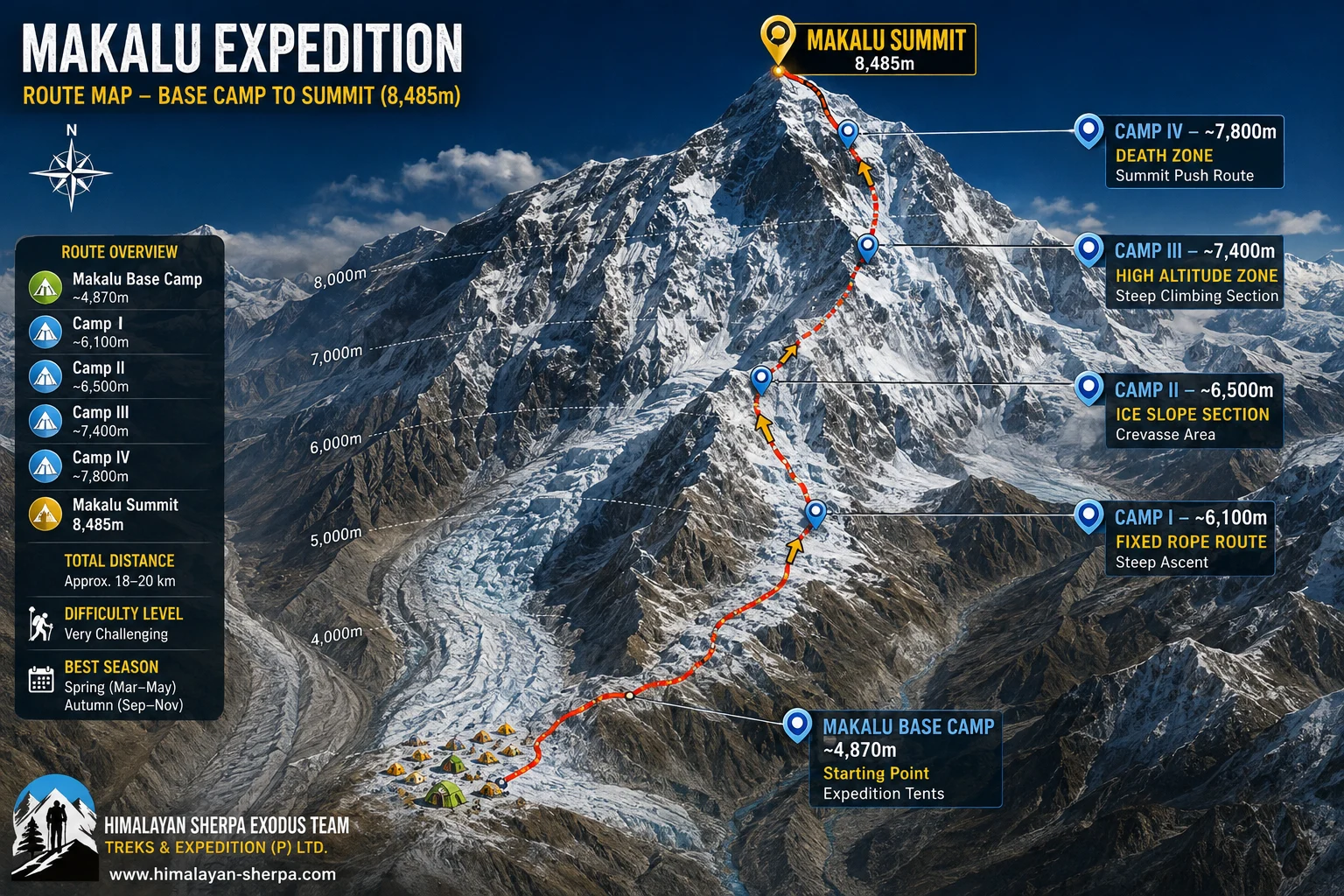
During the climbing phase, participants undertake several rotations between Base Camp and the higher camps. These rotations are essential for acclimatisation, equipment transportation, route familiarisation and preparation for the final summit attempt. Camp I is generally established at approximately 6,100 metres, Camp II at 6,500 metres, Camp III at 7,400 metres and Camp IV at around 7,800 metres.
The summit period is scheduled with sufficient flexibility to consider weather conditions, route safety and the physical readiness of the team. Reaching the summit demands excellent fitness, previous high-altitude experience, strong technical climbing ability, patience and mental resilience.
This expedition is recommended for experienced mountaineers who have previously climbed technical peaks of approximately 7,000 metres or higher. With professional Sherpa support, responsible expedition management and a carefully structured climbing programme, the journey offers a rare opportunity to challenge personal limits on one of the world’s most magnificent mountains.
For accomplished climbers, standing on the summit of Makalu is more than a mountaineering achievement. It is the culmination of weeks of preparation, teamwork, endurance and determination in one of the most remote and inspiring environments on Earth.
Mt. Makalu Expedition Expedition Highlights
Mt. Makalu Expedition Expedition Highlights
- Attempt the summit of Mount Makalu at 8,485 metres, the fifth-highest mountain in the world.
- Climb one of the Himalayas’ most respected and technically demanding 8,000-metre peaks.
- Follow a professionally organised 43-day expedition programme with sufficient time for preparation, acclimatisation and summit attempts.
- Experience the spectacular pyramid-shaped profile and dramatic ridgelines of Mount Makalu.
- Trek through the remote and environmentally diverse Makalu Barun National Park.
- Explore the magnificent Barun Valley, known for its deep gorges, waterfalls, forests and alpine landscapes.
- Travel through traditional settlements including Seduwa and Tashi Gaun.
- Experience the culture, lifestyle and hospitality of Sherpa, Rai and other eastern Himalayan communities.
- Enjoy a scenic flight from Kathmandu to Tumlingtar and an adventurous drive towards Num.
- Follow a varied approach route through forests, high passes, glacial valleys and alpine grazing areas.
- Complete carefully planned acclimatisation days at Tashi Gaun and Makalu Lower Base Camp.
- Establish the main expedition base at approximately 5,600 metres.
- Participate in progressive climbing rotations through Camps I, II and III.
- Benefit from a flexible summit period based on weather, route conditions and team readiness.
- Receive professional assistance from experienced climbing Sherpas and expedition support staff.
- Experience full-board services at Base Camp and organised support at the higher camps.
- Take part in responsible waste management and Base Camp clean-up procedures.
- Enjoy an expedition designed for experienced climbers seeking a serious Himalayan challenge.
- Return through the beautiful Makalu Valley after completing the climbing programme.
- Celebrate the expedition with a leisure day in Kathmandu before final departure.
Day 01 :
Arrival in Kathmandu (1,400m) & Transfer to Hotel
Upon your arrival at Tribhuvan International Airport, Kathmandu, our representative from Himalayan Sherpa Exodus Team Treks & Expeditions Pvt. Ltd. will warmly welcome you and assist with your transfer to the hotel. After check-in, you will have time to rest and recover from your journey. The evening may include a short introduction with the expedition team and preparation for the upcoming adventure.
Maximum Elevation: 1,400m
Accommodation: Hotel in Kathmandu
Meals: Welcome dinner
Day 02 :
Expedition Preparation, Official Briefing & Equipment Check in Kathmandu (1,400m)
Today is dedicated to final preparation for the Makalu Expedition. Our team will conduct a detailed expedition briefing covering the climbing route, safety procedures, weather considerations and important guidelines for the journey. Climbers will also complete necessary documentation, check personal equipment and make final arrangements before heading towards the Himalayas.
Maximum Elevation: 1,400m
Activities: Expedition briefing, equipment inspection and preparation
Accommodation: Hotel in Kathmandu
Meals: Breakfast
Day 03 :
Fly from Kathmandu to Tumlingtar (410m) and Drive to Num (1,560m)
After breakfast, we take a scenic domestic flight from Kathmandu to Tumlingtar, enjoying beautiful views of the eastern Himalayan ranges. Upon arrival, we continue our journey by private vehicle towards Num, a remote mountain village and the starting point of the Makalu trekking route. The drive passes through winding mountain roads, terraced hills and traditional settlements.
Flight Duration: Approximately 50 minutes
Drive Duration: Approximately 6–7 hours
Driving Distance: Approximately 45 km
Maximum Elevation: 1,560m at Num
Accommodation: Lodge
Meals: Breakfast, Lunch and Dinner
Day 04 :
Trek from Num (1,560m) to Seduwa (1,510m)
Our trekking adventure begins today. The trail descends through lush forests and crosses the Arun River before climbing gradually towards Seduwa village. The route offers beautiful views of surrounding hills, farming terraces and the first glimpse of the rural lifestyle of eastern Nepal.
Seduwa is an important settlement and entry point to the Makalu Barun National Park. Trekkers are welcomed by the peaceful atmosphere and traditional culture of the local communities.
Walking Distance: Approximately 8 km
Walking Duration: 5–6 hours
Maximum Elevation: 1,510m
Trail: Forest trails, downhill sections and gradual ascents
Accommodation: Lodge
Meals: Breakfast, Lunch and Dinner
Day 05 :
Trek from Seduwa (1,510m) to Tashi Gaun (2,070m)
The trail continues through beautiful landscapes, passing small villages, cultivated fields and forested areas. We gradually ascend towards Tashi Gaun, one of the last major Sherpa settlements before entering the higher Himalayan region.
Tashi Gaun provides an excellent opportunity to experience local mountain culture and enjoy spectacular views of the surrounding valleys.
Walking Distance: Approximately 12 km
Walking Duration: 6–7 hours
Maximum Elevation: 2,070m
Trail: Gradual uphill trekking through forests and villages
Accommodation: Lodge
Meals: Breakfast, Lunch and Dinner
Day 06 :
Acclimatization Day at Tashi Gaun (2,070m)
A rest and acclimatisation day is planned at Tashi Gaun to allow the body to adjust before gaining higher altitude. Short hikes around the village may be arranged to support acclimatisation while exploring the local surroundings.
This day is also useful for checking trekking equipment and preparing mentally and physically for the challenging mountain terrain ahead.
Maximum Elevation: 2,070m
Activities: Rest, acclimatisation hike and local exploration
Accommodation: Lodge
Meals: Breakfast, Lunch and Dinner
Day 07 :
Trek from Tashi Gaun (2,070m) to Khongma (3,760m)
Today we enter a more remote and alpine environment. The trail climbs steadily through rhododendron and pine forests before reaching higher elevations. The route offers impressive views of surrounding peaks and deep Himalayan valleys.
Khongma is located in a high alpine landscape and serves as an important stop before crossing the challenging Shipton La Pass section of the Makalu route.
Walking Distance: Approximately 7 km
Walking Duration: 6–7 hours
Maximum Elevation: 3,760m
Trail: Steep uphill sections, forest trails and alpine terrain
Accommodation: Camping
Meals: Breakfast, Lunch and Dinner
Day 08 :
Trek from Khongma (3,760m) to Dobato (4,010m) – Camping
The trail today crosses beautiful high-altitude landscapes with several uphill and downhill sections. We pass through alpine meadows and enjoy magnificent views of Himalayan peaks before reaching Dobato, a peaceful camping location surrounded by mountain wilderness.
This section provides the first true experience of the high Himalayan environment.
Walking Distance: Approximately 8 km
Walking Duration: 5–6 hours
Maximum Elevation: 4,010m
Trail: Alpine terrain, mountain passes and rocky trails
Accommodation: Camping
Meals: Breakfast, Lunch and Dinner
Day 09 :
Trek from Dobato (4,010m) to Yangle Kharka (3,640m) – Camping
Leaving Dobato, the trail gradually descends through rugged landscapes and enters the beautiful Barun Valley region. The route follows mountain slopes and offers dramatic views of cliffs, waterfalls and surrounding peaks.
Yangle Kharka is located beside the Barun River and provides a peaceful campsite surrounded by pristine Himalayan nature.
Walking Distance: Approximately 10 km
Walking Duration: 6–7 hours
Maximum Elevation: 3,640m
Trail: Descending trails, rocky paths and valley landscapes
Accommodation: Camping
Meals: Breakfast, Lunch and Dinner
Day 10 :
Trek from Yangle Kharka (3,640m) to Langmale Kharka (4,450m)
Today we continue deeper into the Makalu region, following the Barun Valley towards higher elevations. The trail gradually climbs through alpine landscapes, crossing rocky sections and enjoying spectacular views of glaciers, waterfalls and Himalayan peaks.
Langmale Kharka is a high-altitude grazing area and an important resting point before reaching Makalu Base Camp.
Walking Distance: Approximately 8 km
Walking Duration: 5–6 hours
Maximum Elevation: 4,450m
Trail: Alpine trail, gradual ascent and rocky terrain
Accommodation: Camping
Meals: Breakfast, Lunch and Dinner
Day 11 :
Trek from Langmale Kharka (4,450m) to Makalu Lower Base Camp (4,850m)
Acclimatisation at Lower Base Camp
The final approach to the lower base camp takes us through spectacular Himalayan scenery. The trail continues along the upper Barun Valley, surrounded by towering peaks, glaciers and dramatic mountain landscapes.
Upon reaching Makalu Lower Base Camp, the team settles into the camp environment and begins the acclimatisation process. This important phase allows climbers to prepare for the upcoming rotation climbs and higher altitude challenges.
Walking Distance: Approximately 6 km
Walking Duration: 4–5 hours
Maximum Elevation: 4,850m
Accommodation: Expedition Tent
Meals: Breakfast, Lunch and Dinner
Day 12 :
Acclimatization Day at Makalu Lower Base Camp (4,850m)
Today is dedicated to rest and acclimatisation at Makalu Lower Base Camp. After several days of trekking through increasing elevations, this rest day allows your body to adjust naturally to the high-altitude environment.
The expedition team will conduct necessary preparations, review climbing strategies and check personal equipment before moving towards the higher base camp. Short walks around the camp area may be arranged to support acclimatisation and maintain physical readiness.
Maximum Elevation: 4,850m
Activities: Rest, acclimatisation and expedition preparation
Accommodation: Expedition Tent
Meals: Breakfast, Lunch and Dinner
Day 13 :
Acclimatization Day at Makalu Lower Base Camp (4,850m)
A second acclimatisation day is planned at Lower Base Camp to ensure a safe transition towards higher elevations. Climbers can use this time for recovery, hydration, equipment organisation and mental preparation for the upcoming move to the main base camp.
The team leaders will provide further instructions regarding climbing procedures, safety measures and upcoming rotation plans.
Maximum Elevation: 4,850m
Activities: Rest, acclimatisation and preparation
Accommodation: Expedition Tent
Meals: Breakfast, Lunch and Dinner
Day 14 :
Trek from Makalu Lower Base Camp (4,850m) to Makalu Main Base Camp (5,600m)
Today marks an important stage of the expedition as we move towards the main Makalu Base Camp. The trail gradually climbs through rugged glacial terrain with breathtaking views of Makalu, surrounding peaks and the remote Himalayan wilderness.
Upon reaching the main base camp at approximately 5,600 metres, the expedition team establishes the primary climbing base. This will serve as the centre for acclimatisation, rest, communication, logistics and summit preparation.
Walking Distance: Approximately 6–7 km
Walking Duration: 4–5 hours
Maximum Elevation: 5,600m
Trail: Rocky moraine, glacier terrain and high-altitude landscape
Accommodation: Expedition Tent
Meals: Breakfast, Lunch and Dinner
Day 15 - 25 :
Acclimatization Rotations and Climbing Preparation
Route: Base Camp – Camp I – Camp II – Camp III – Base Camp
This period is dedicated to essential acclimatisation rotations and preparation for the final summit attempt. Climbers gradually move between Base Camp and higher camps to help the body adapt to extreme altitude and to become familiar with the climbing route.
The team will establish and improve higher camps, carry necessary equipment, practice technical climbing skills and evaluate mountain conditions. Depending on weather, route conditions and team progress, climbers will rotate through:
- Camp I: Approximately 6,100m
- Camp II: Approximately 6,500m
- Camp III: Approximately 7,400m
- Camp IV: Approximately 7,800m (during summit preparation)
Adequate rest periods at Base Camp are included between rotations to ensure proper recovery and readiness.
Maximum Elevation: Up to approximately 7,400m during rotations
Duration: 10 Days
Accommodation: Base Camp and High Camps
Meals: Full Board
Day 25 - 35 :
Summit Climbing Period
Route: Makalu Base Camp – Summit (8,485m) – Base Camp
This is the most important phase of the expedition. After successful acclimatisation and preparation, the team begins the summit climbing programme.
The summit push begins from Base Camp, moving through the established camps towards the top of Mount Makalu. Climbers will follow the planned route through higher camps while carefully monitoring weather conditions, physical condition and mountain safety.
The final ascent to the summit of Mount Makalu (8,485m) requires exceptional endurance, technical ability and determination. After reaching the summit, the team safely descends back to Base Camp.
This period includes flexibility to select the safest summit window depending on Himalayan weather conditions.
Summit Elevation: 8,485m / 27,838ft
Duration: 10 Days
Accommodation: High Camps and Base Camp
Meals: Full Board
Day 36 :
Base Camp Cleaning and Expedition Closure (5,600m)
After completing the climbing programme, the team begins the important responsibility of cleaning and restoring the Base Camp area. All equipment, waste materials and temporary structures are carefully managed according to responsible mountaineering practices.
The team prepares for the return journey while enjoying the final moments in the spectacular Makalu region.
Maximum Elevation: 5,600m
Activities: Base Camp clean-up, packing and preparation
Accommodation: Expedition Tent
Meals: Breakfast, Lunch and Dinner
Day 37 :
Trek from Makalu Base Camp (5,600m) to Yangle Kharka (3,640m)
We begin our return journey through the beautiful Barun Valley. The trail descends through alpine landscapes, following the same magnificent Himalayan wilderness towards Yangle Kharka.
The changing scenery from glaciers and rocky mountains to green valleys creates a memorable transition after the challenging expedition.
Walking Distance: Approximately 14 km
Walking Duration: 7–8 hours
Maximum Elevation: 3,640m
Trail: Descending alpine trail and valley paths
Accommodation: Camping/Lodge
Meals: Breakfast, Lunch and Dinner
Day 38 :
Trek from Yangle Kharka (3,640m) to Khongma (3,760m)
Today we retrace our route through the remote landscapes of the Makalu region. The trail includes gradual ascents and descents through forests, valleys and mountain terrain before reaching Khongma.
This section provides an opportunity to appreciate the natural beauty and peaceful environment of eastern Nepal.
Walking Distance: Approximately 12 km
Walking Duration: 6–7 hours
Maximum Elevation: 3,760m
Trail: Mountain paths, forest sections and alpine terrain
Accommodation: Lodge/Camping
Meals: Breakfast, Lunch and Dinner
Day 39 :
Trek from Khongma (3,760m) to Seduwa (1,510m)
The trail descends through forests and lower Himalayan landscapes towards Seduwa village. As we lose altitude, the vegetation becomes greener and the climate becomes warmer.
Seduwa marks our return to the lower mountain region and offers a relaxing environment after the demanding expedition.
Walking Distance: Approximately 15 km
Walking Duration: 7–8 hours
Maximum Elevation: 1,510m
Trail: Descending trails, forests and village paths
Accommodation: Lodge
Meals: Breakfast, Lunch and Dinner
Day 40 :
Trek from Seduwa (1,510m) to Num (1,560m) and Drive to Khandbari (1,020m)
Our final trekking day takes us back to Num, where the Makalu trekking journey officially concludes. From Num, we continue by private vehicle towards Khandbari, the main town of the Sankhuwasabha district.
The drive offers beautiful views of hills, rivers and traditional villages.
Walking Duration: Approximately 5–6 hours
Drive Duration: Approximately 4–5 hours
Maximum Elevation: Khandbari 1,020m
Accommodation: Lodge/Hotel
Meals: Breakfast, Lunch and Dinner
Day 41 :
Drive from Khandbari (1,020m) to Tumlingtar (410m) and Fly to Kathmandu (1,400m)
After breakfast, we drive to Tumlingtar Airport for our scenic flight back to Kathmandu. Upon arrival, our team will transfer you to the hotel.
The evening is reserved for rest and relaxation after completing the remarkable Makalu Expedition.
Drive Duration: Approximately 2 hours
Flight Duration: Approximately 50 minutes
Maximum Elevation: Kathmandu 1,400m
Accommodation: Hotel
Meals: Breakfast
Day 42 :
Leisure Day in Kathmandu (1,400m)
A free day is provided in Kathmandu for personal activities, shopping, sightseeing or simply relaxing after the expedition.
This day also serves as a buffer in case of unexpected delays caused by weather conditions during the return journey.
Maximum Elevation: 1,400m
Accommodation: Hotel
Meals: Breakfast
Day 43 :
Final Departure from Kathmandu (1,400m)
Today marks the conclusion of your 43 Days Mt. Makalu Expedition. According to your international flight schedule, our representative will assist with your transfer to Tribhuvan International Airport for your final departure.
We wish you a safe journey home with unforgettable memories from the Himalayas.
Airport Transfer: Hotel to International Airport
Meals: Breakfast
Makalu Expedition
The Trip Package Cost Includes
- Airport transfers upon arrival and departure in Kathmandu as per the expedition schedule.
- Accommodation in Kathmandu with breakfast during the expedition period.
- Domestic flight tickets between Kathmandu and Tumlingtar (including required arrangements).
- Private transportation from Tumlingtar to Num and return transportation from Khandbari to Tumlingtar.
- All necessary trekking permits, conservation area permits and national park entry fees.
- Makalu Expedition permit and required government royalties.
- Professional expedition management by Himalayan Sherpa Exodus Team Treks & Expeditions Pvt. Ltd.
- Experienced climbing Sherpa support throughout the expedition.
- Experienced trekking guides, porters and supporting staff.
- Complete camping arrangements during the trekking and climbing period.
- High-quality expedition tents, dining tents, kitchen tents and toilet facilities at Base Camp.
- Food services during the trekking route, Base Camp and climbing period as per expedition arrangements.
- Full board meals during the climbing period (Breakfast, Lunch and Dinner).
- Base Camp management including kitchen staff, cooks and essential logistics.
- Necessary group climbing equipment and expedition support materials.
- Rope fixing support, route preparation and climbing logistics where applicable.
- Communication facilities and expedition coordination support.
- Emergency planning and safety management throughout the expedition.
- Waste management and Base Camp cleaning support following responsible mountaineering practices.
- Official expedition staff insurance and necessary staff equipment allowance.
- All applicable government taxes and service charges.
The Trip Package Cost Excludes
- International airfare and travel expenses to and from Nepal.
- Nepal entry visa fees.
- Personal travel and medical insurance (mandatory for high-altitude climbing).
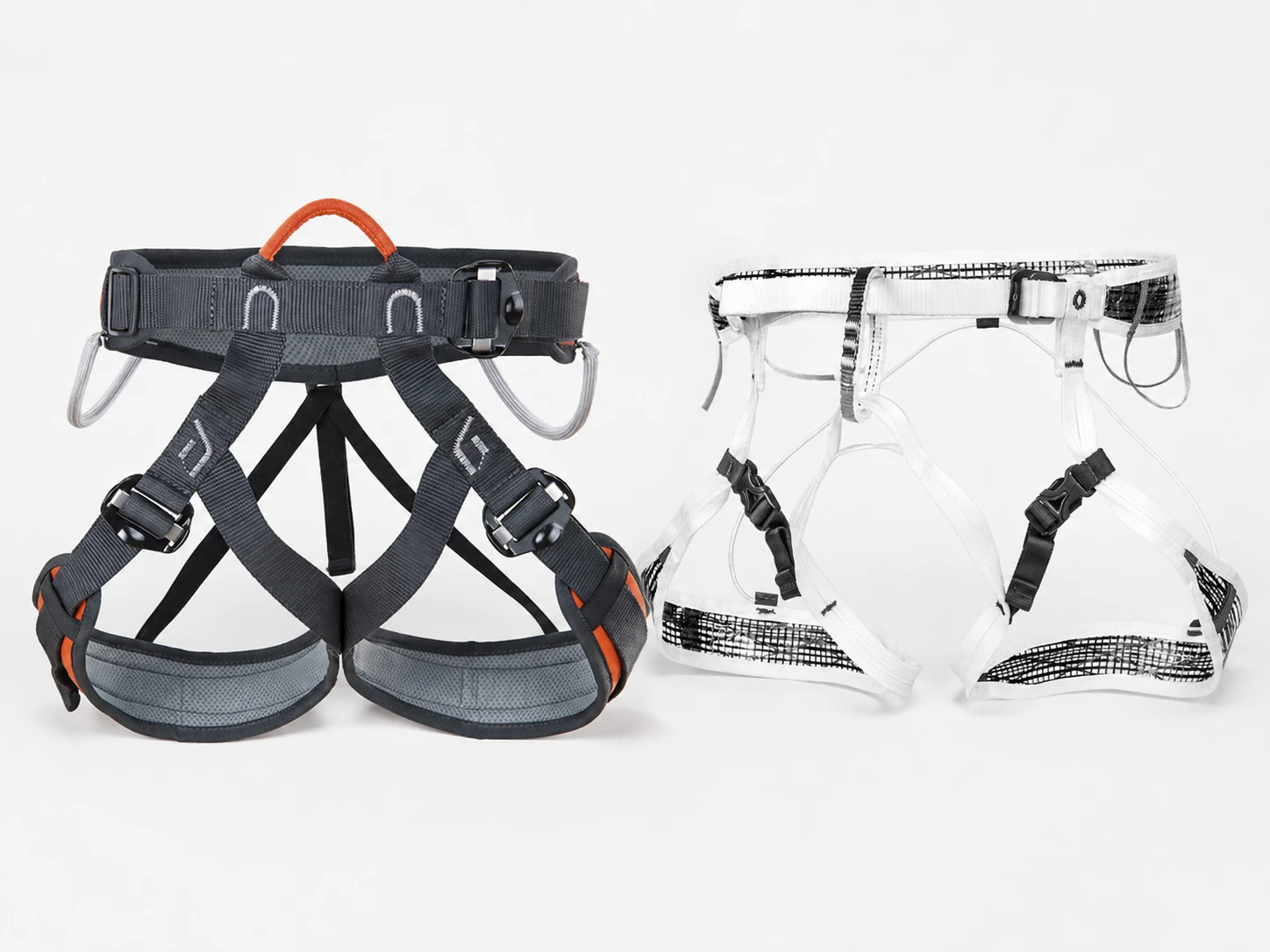
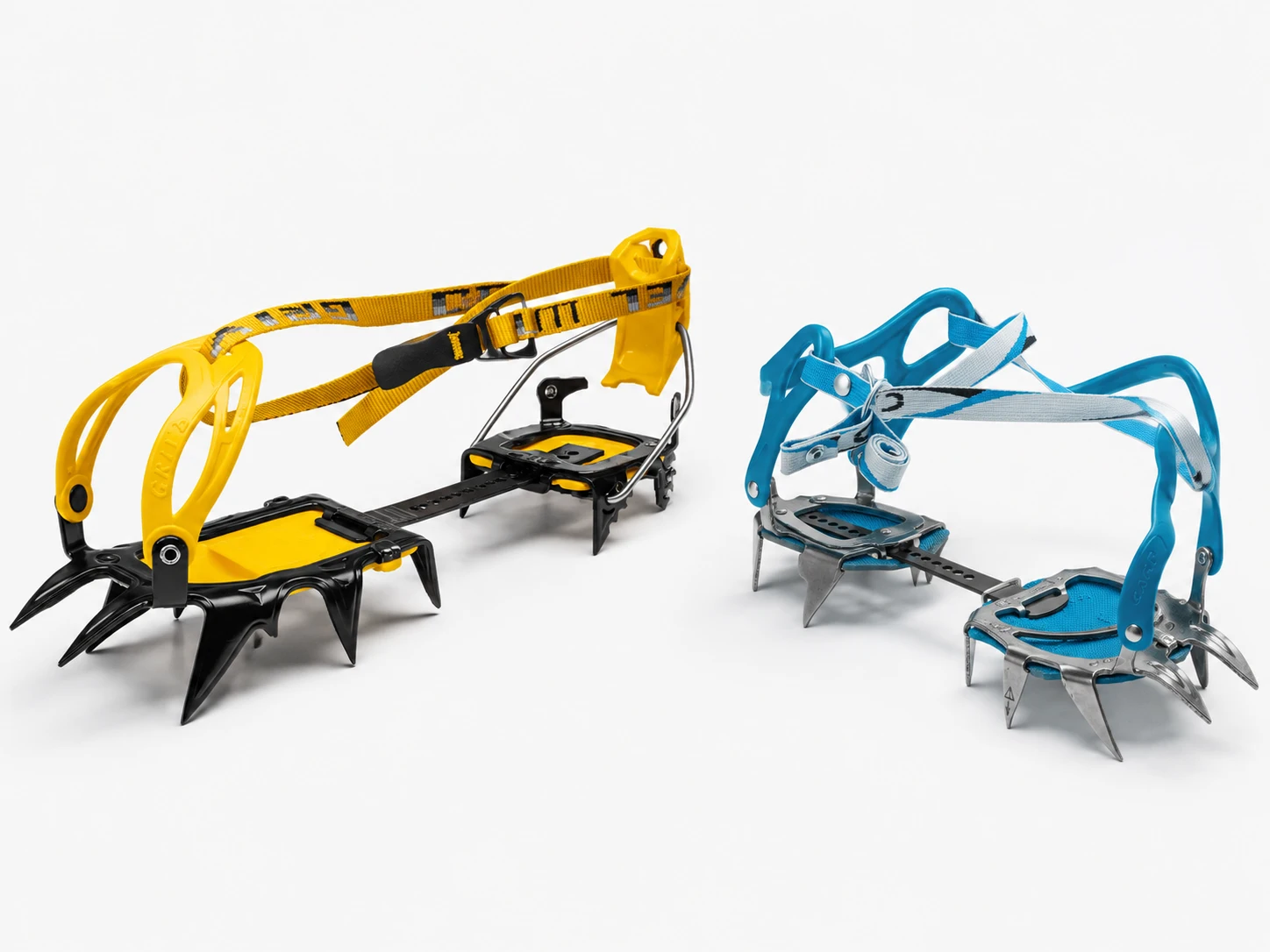
- Personal climbing equipment such as climbing boots, down suit, harness, crampons, ice axe, helmet and personal gear.
- Personal expenses including phone calls, internet, laundry, drinks and additional services.
- Extra hotel nights in Kathmandu due to early arrival, late departure or unexpected delays.
- Meals and accommodation outside the official expedition itinerary.
- Rescue, evacuation and emergency medical expenses.
- Personal medication and medical treatment costs.
- Tips and gratuities for expedition staff, guides, Sherpas and support crew.
- Any additional expenses caused by weather conditions, flight delays, natural events or circumstances beyond the company’s control.
Best Time for Mt. Makalu Expedition
The most suitable period for climbing Mt. Makalu (8,485m) is generally during the spring climbing season (April to May), when Himalayan weather conditions become more stable and favourable for high-altitude mountaineering.
During this period, climbers benefit from longer daylight hours, comparatively warmer temperatures and better summit-weather opportunities. The spring season provides the best conditions for establishing camps, completing acclimatisation rotations and attempting the summit.
The autumn season (September to November) also offers clear skies and excellent mountain views; however, for technical 8,000-metre peaks like Makalu, spring remains the most preferred climbing window.
Trek Difficulty & Expedition Challenge
The Mt. Makalu Expedition is considered one of the most challenging and technical mountaineering adventures in Nepal. Standing at 8,485 metres, Makalu demands advanced climbing skills, excellent physical fitness and previous high-altitude experience.
The approach trek itself involves long walking days, remote mountain trails, steep ascents and changing landscapes from forests to glaciers. The climbing section includes technical terrain, steep slopes, extreme cold, strong winds and limited oxygen levels above 8,000 metres.
This expedition is recommended for experienced climbers who have successfully completed high-altitude peaks, preferably including previous climbs of 7,000-metre-class mountains or equivalent technical objectives.
Successful completion requires:
- Strong physical endurance and cardiovascular fitness.
- Previous experience with crampons, ice axe and fixed ropes.
- Ability to adapt to extreme altitude conditions.
- Mental strength, patience and teamwork.
- Proper acclimatisation and preparation.
With professional leadership, experienced Sherpa support and careful planning, the expedition provides a structured opportunity to take on one of the world’s greatest mountaineering challenges.
Acclimatization & Altitude Sickness Management
Proper acclimatisation is one of the most important factors for a successful Mt. Makalu Expedition. The itinerary is carefully designed with gradual altitude gain, rest days and multiple climbing rotations to allow the body to adapt safely.
During the expedition, climbers gradually progress through different elevations:
- Makalu Lower Base Camp – approximately 4,850m
- Makalu Main Base Camp – approximately 5,600m
- Camp I – approximately 6,100m
- Camp II – approximately 6,500m
- Camp III – approximately 7,400m
- Camp IV – approximately 7,800m
- Summit – 8,485m
The rotation system between Base Camp and higher camps helps improve altitude adaptation and prepares climbers for the summit push.
Common altitude-related challenges may include:
- Headache
- Loss of appetite
- Fatigue
- Shortness of breath
- Difficulty sleeping
- Reduced physical performance
Our experienced expedition team closely monitors climbers throughout the journey and follows responsible altitude management practices. Maintaining hydration, proper nutrition, adequate rest and gradual ascent are essential for reducing altitude-related risks.
Himalayan Culture & Ancient Mountain Heritage
The Makalu region is not only famous for its mountains but also for its rich cultural heritage and traditional Himalayan lifestyle. The approach route passes through remote villages where communities have preserved their unique customs, traditions and close connection with nature.
The region is home to diverse ethnic groups, including Sherpa, Rai and other Himalayan communities, each contributing their own language, traditions and way of life. Visitors can experience traditional mountain hospitality, local farming practices and centuries-old cultural values.
The journey through the Makalu Barun region offers opportunities to witness:
- Traditional Sherpa and Rai settlements.
- Ancient Buddhist influences and Himalayan spiritual practices.
- Prayer flags, monasteries and sacred mountain landscapes.
- Local festivals, customs and community lifestyles.
- The deep relationship between Himalayan people and the natural environment.
Beyond the summit goal, the Mt. Makalu Expedition is a complete Himalayan experience combining adventure, culture, nature and the spirit of exploration.
Preparation Guide
A successful Mt. Makalu Expedition requires careful preparation, strong physical conditioning and proper technical training. As one of the world’s most challenging 8,000-metre peaks, Makalu demands commitment, endurance and previous high-altitude experience.
Before joining the expedition, climbers should focus on:
- Building excellent cardiovascular fitness through hiking, running, cycling or endurance training.
- Developing strength for carrying loads and long days in demanding mountain environments.
- Gaining experience with technical climbing equipment including crampons, ice axe, fixed ropes and high-altitude gear.
- Completing previous high-altitude climbs to prepare the body for extreme elevation.
- Practising glacier travel, rope techniques and safety procedures.
- Preparing mentally for long expedition periods, changing weather conditions and remote environments.
- Consulting with a doctor regarding physical fitness and high-altitude readiness.
The expedition team will provide detailed guidance regarding equipment requirements, climbing procedures and preparation before departure.
Weather & Climate
The weather conditions on Mt. Makalu vary greatly depending on altitude and season. The expedition is organised during the preferred spring climbing season, when conditions are generally more favourable for high-altitude mountaineering.
Lower Trekking Region (1,000m–4,500m)
- Moderate temperatures with pleasant walking conditions.
- Warm days and cooler mornings/evenings.
- Increasingly colder conditions as altitude rises.
Base Camp and Higher Camps (5,600m–8,000m+)
- Extremely cold temperatures, strong winds and unpredictable Himalayan weather.
- Temperatures may drop significantly below freezing, especially at night.
- Higher camps experience severe conditions with snow, ice and reduced oxygen levels.
Spring (April–May) generally provides the best summit opportunities with more stable weather windows, while careful planning and flexibility remain essential throughout the expedition.
Accommodation
Accommodation during the Mt. Makalu Expedition is arranged according to the changing environment and altitude.
Kathmandu
- Comfortable hotel accommodation with modern facilities.
- Rooms arranged according to expedition requirements.
Trekking Route
- Local mountain lodges and guesthouses where available.
- Basic but comfortable facilities reflecting the remote Himalayan environment.
Camping Sections
- Quality expedition tents with necessary camping arrangements.
- Dining tent, kitchen facilities and toilet facilities provided during camping periods.
Base Camp & High Camps
- Specialised expedition tents designed for high-altitude conditions.
- Organised camp management with support from experienced expedition staff.
Due to the remote nature of the Makalu region, facilities become more basic as altitude increases, but the expedition team ensures safe and comfortable arrangements throughout the journey.
Meals During the Expedition
Proper nutrition is essential for maintaining strength and energy during a demanding 8,000-metre expedition. The expedition kitchen team provides balanced meals throughout the journey.
During Trekking:
Meals generally include:
- Traditional Nepali dishes such as dal, bhat, vegetables and curry.
- Noodles, pasta, rice and soup.
- Bread, eggs, potatoes and seasonal foods.
- Tea, coffee and hot beverages.
At Base Camp:
A variety of nutritious meals are prepared to support recovery and acclimatisation, including:
- High-energy carbohydrates.
- Protein-rich foods.
- Fresh and preserved food items suitable for expedition conditions.
During Climbing:
High-altitude meals focus on:
- Lightweight and energy-rich food.
- Hot drinks and hydration support.
- Climbing snacks and supplementary nutrition.
Special dietary requirements should be communicated before the expedition begins.
Drinking Water
Safe drinking water is carefully managed throughout the expedition. Staying properly hydrated is extremely important at high altitude.
Available options include:
- Boiled and treated drinking water provided by the expedition kitchen.
- Water purification tablets or filtration systems when required.
- Personal hydration bottles or hydration packs recommended for climbers.
- Electrolyte supplements to support hydration during strenuous climbing.
Avoid drinking untreated water from streams or natural sources to reduce health risks during the expedition.
Internet & Charging Facilities
Communication facilities become limited as the expedition enters remote Himalayan areas.
Kathmandu:
- Reliable internet access.
- Mobile charging facilities available.
Trekking Route:
- Some villages may have limited mobile network coverage.
- Charging facilities may be available at selected lodges with additional charges.
Base Camp:
- Satellite communication and expedition communication systems may be arranged.
- Charging facilities are available through expedition power solutions.
- Solar charging systems may be used depending on conditions.
Climbers are advised to carry:
- Power banks.
- Extra batteries.
- Personal charging cables and adapters.
Travel Insurance
Comprehensive travel insurance is mandatory for the Mt. Makalu Expedition.
The insurance policy should cover:
- High-altitude mountaineering activities up to 8,500m or above.
- Emergency helicopter evacuation.
- Medical treatment and hospital expenses.
- Accidental injury coverage.
- Trip cancellation or interruption.
- Loss or damage of personal belongings.
Standard travel insurance policies usually do not cover 8,000-metre expeditions, so climbers must ensure their policy specifically includes extreme-altitude climbing.
Packing List
Personal Clothing & Equipment
- Expedition down suit suitable for 8,000m climbing.
- High-altitude climbing boots.
- Mountaineering jacket and trousers.
- Thermal base layers.
- Fleece jackets and insulated layers.
- Waterproof shell jacket and trousers.
- Warm gloves and inner gloves.
- Wool or thermal socks.
- Balaclava and warm hat.
- Sunglasses and glacier glasses.
- Headlamp with extra batteries.
Technical Climbing Gear
- Mountaineering harness.
- Crampons.
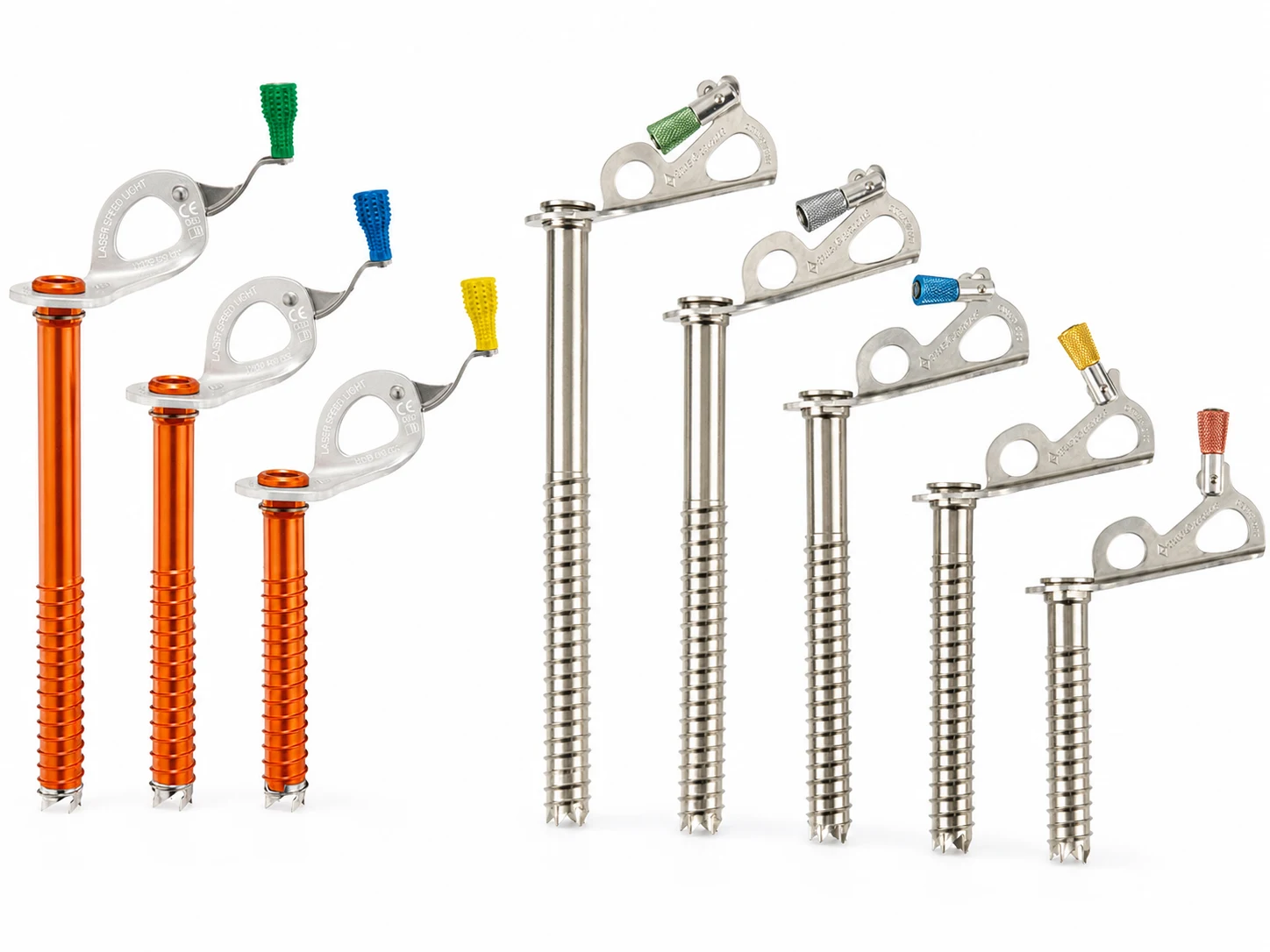
- Ice axe.
- Climbing helmet.
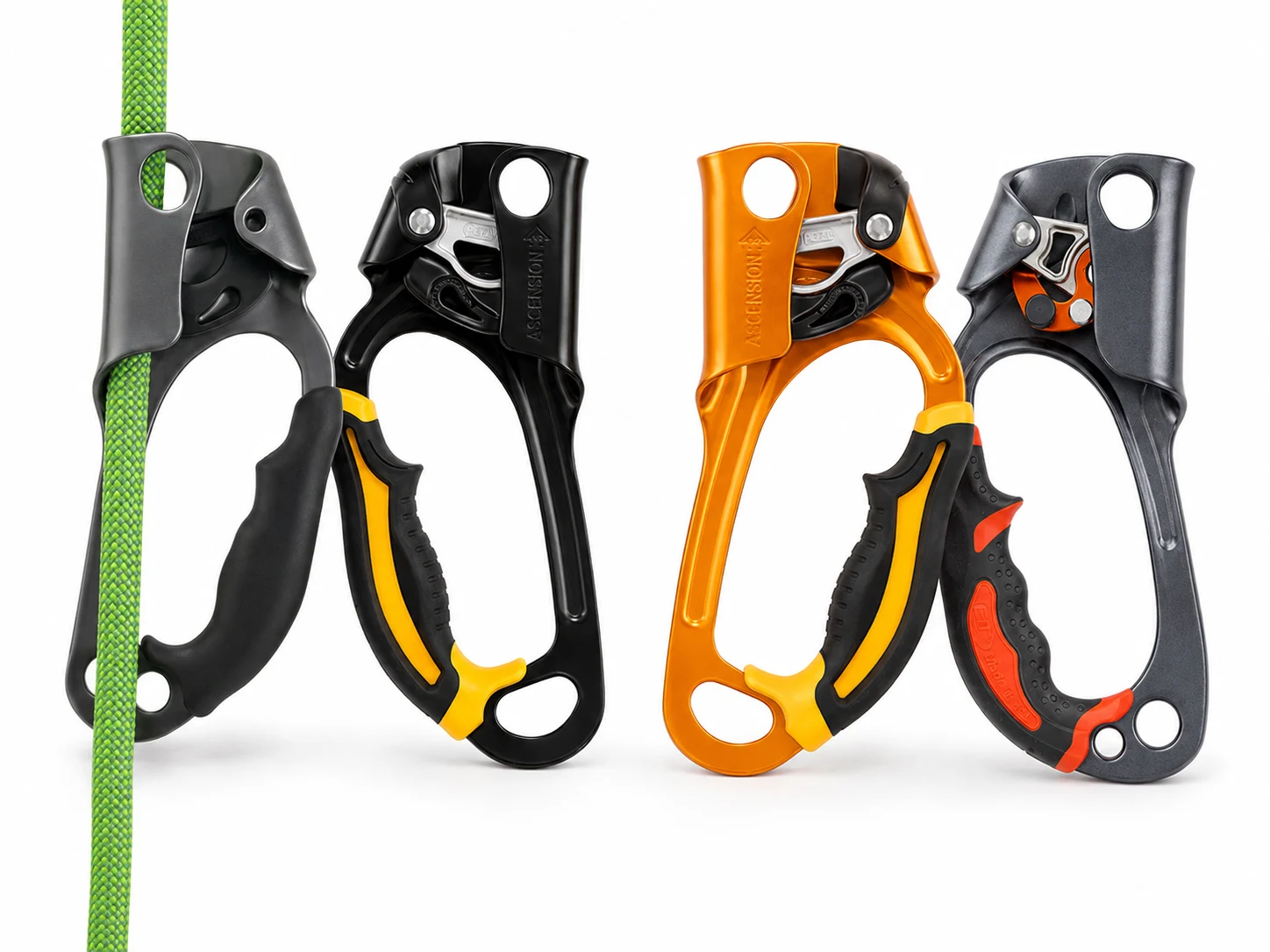
- Ascender/Jumar.
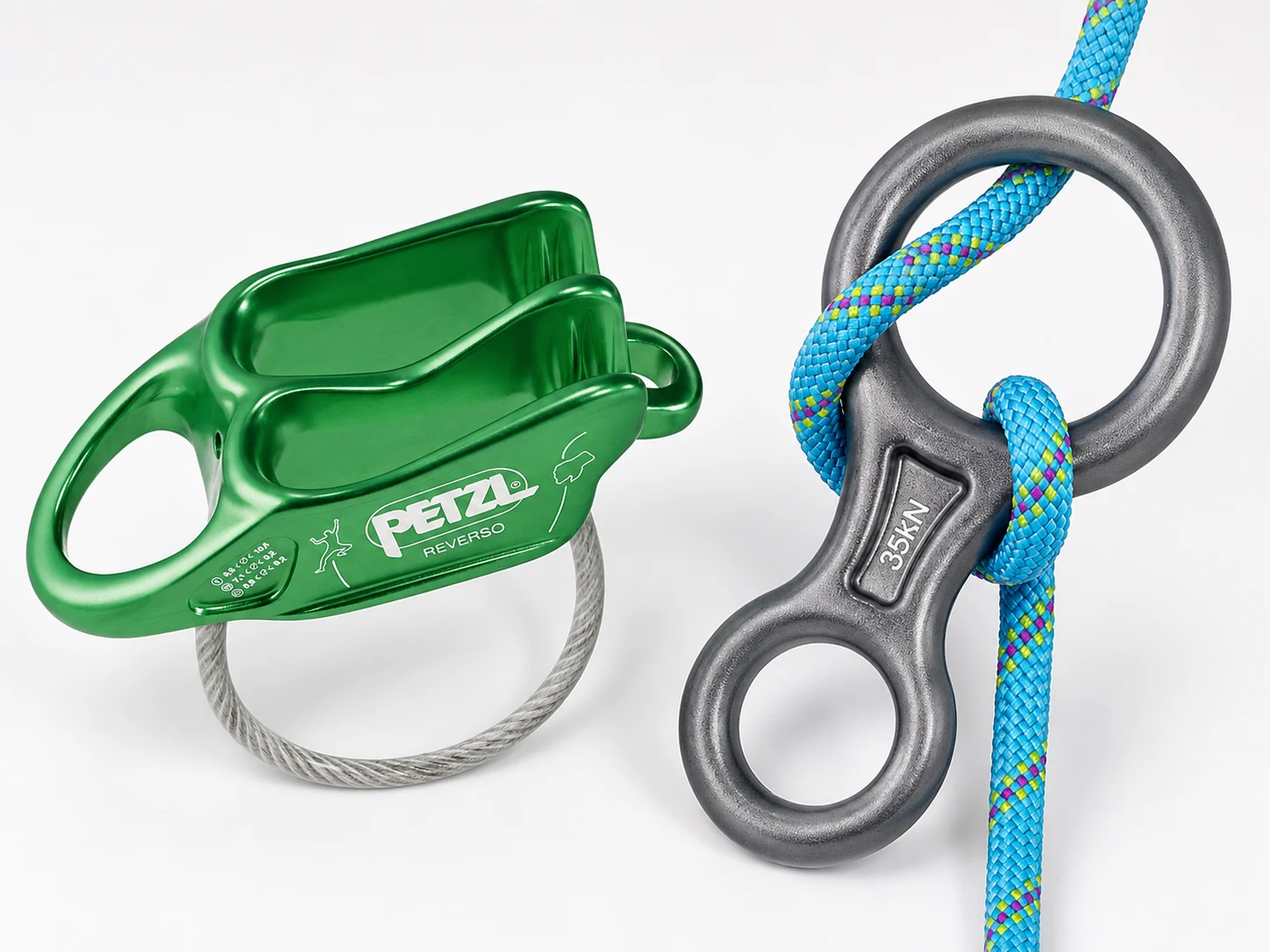
- Descender device.
- Carabiners.
- Climbing gloves.
- Personal climbing accessories.
Personal Items
- Sleeping bag suitable for extreme cold.
- Duffel bags and daypack.
- Water bottles or hydration system.
- Personal medication.
- Sunscreen and lip balm.
- Personal toiletries.
- Camera and electronic accessories.
A detailed equipment checklist will be provided before the expedition.
Safety Measures
Safety is the highest priority throughout the Mt. Makalu Expedition. The expedition programme is designed with careful planning, professional guidance and responsible decision-making.
Safety practices include:
- Experienced expedition leaders and climbing Sherpa support.
- Proper acclimatisation schedule.
- Regular monitoring of climbers’ health and altitude response.
- Careful assessment of weather and mountain conditions.
- Use of established climbing routes and fixed ropes where required.
- Emergency communication arrangements.
- Responsible summit decisions based on safety rather than pressure.
- Proper waste management and environmental responsibility.
Climbers are expected to follow expedition guidelines, respect team decisions and maintain good communication throughout the journey.
Frequently Asked Questions (FAQ)
1. How difficult is the Mt. Makalu Expedition?
Mt. Makalu is considered one of the most technically demanding 8,000-metre peaks. It requires previous high-altitude climbing experience, excellent physical fitness and strong technical skills.
2. What experience is required for this expedition?
Participants should have experience climbing high-altitude peaks, preferably including previous 7,000-metre-class expeditions or equivalent technical climbing experience.
3. What is the best season for climbing Mt. Makalu?
The main climbing season is spring (April–May), when weather conditions are generally more suitable for summit attempts.
4. How long does the complete expedition take?
The complete expedition duration is approximately 50 days, including preparation, trekking, acclimatisation, climbing and return journey.
5. How high is Mt. Makalu?
Mt. Makalu stands at 8,485 metres (27,838 feet) above sea level and is the fifth-highest mountain in the world.
6. Is altitude sickness a concern?
Yes. Due to extreme elevation, altitude-related challenges are possible. Proper acclimatisation, hydration, rest and professional guidance help reduce risks.
7. What type of accommodation is provided?
Accommodation includes hotels in Kathmandu, lodges during trekking sections and expedition tents during Base Camp and climbing periods.
8. Are meals provided during the expedition?
Yes. Full-board meals are provided during trekking, Base Camp and climbing periods according to expedition arrangements.
9. Can beginners join the Mt. Makalu Expedition?
No. Mt. Makalu is not suitable for beginners. Participants require previous mountaineering experience and technical climbing ability.
10. Why choose Himalayan Sherpa Exodus Team Treks & Expeditions Pvt. Ltd.?
Our team provides professional expedition management, experienced Sherpa support, careful logistics planning and responsible Himalayan adventure services to help climbers pursue their goals safely and successfully.
 8485M
 Moderate Climb PD+++