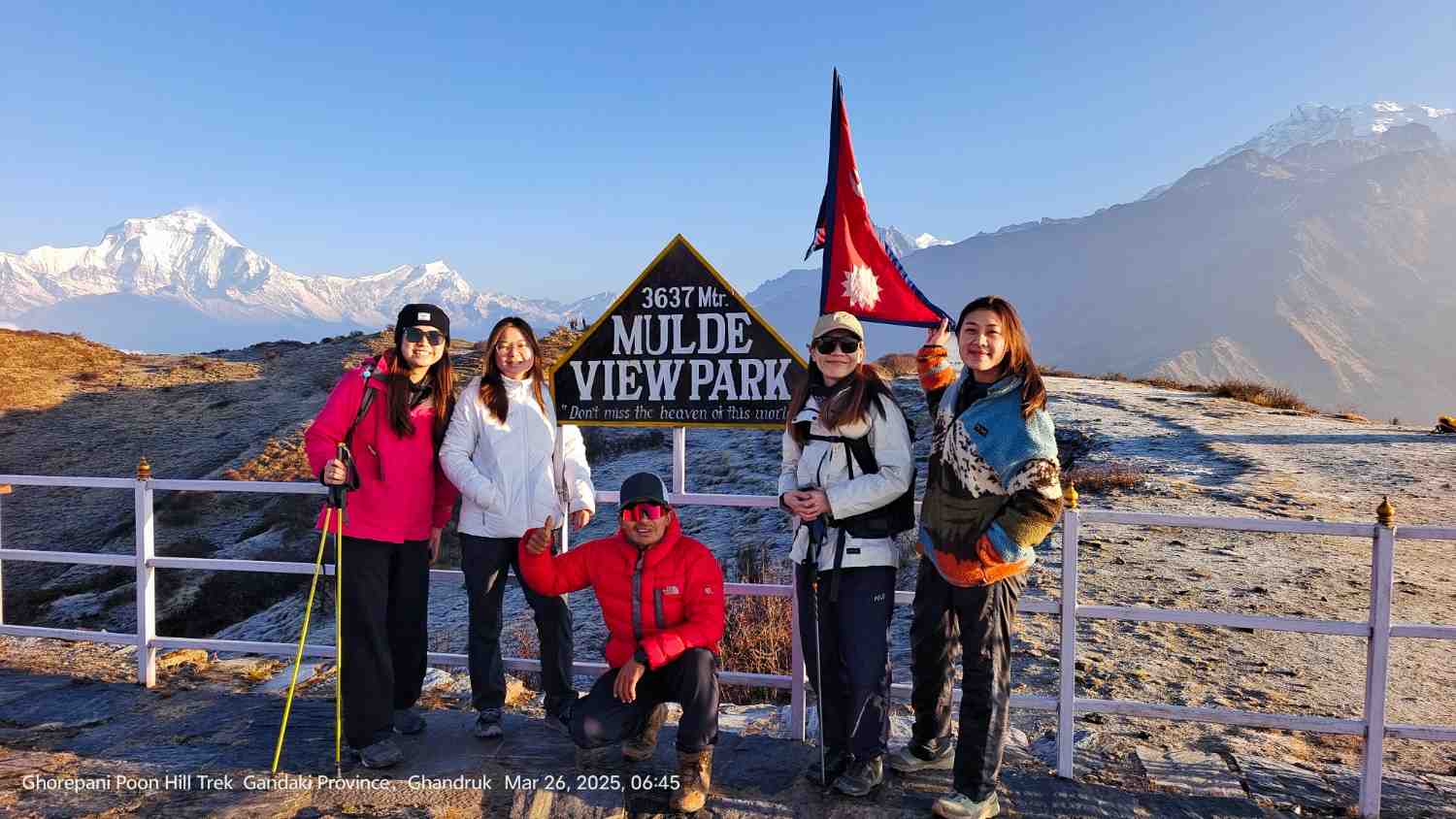
Essential Trip Information
-
9 Days
-
Annapurna
-
2+
-
 3637M
-
 Moderate
-
Spring (Mar - May) Autumn (Sep- Nov)
-
Nepal
Note: The total package price may vary depending on the choice of domestic flights, hotel category, private transportation, and additional personalized services.
Extend Your Trip
Best Time to Trek
The 9 Days Ghorepani Poon Hill Muldai View Point Trek can be undertaken throughout much of the year, but spring (March to May) and autumn (September to November) are generally considered the most favorable seasons.
Spring : brings pleasant trekking temperatures, clear mountain views, and colorful rhododendron forests. The trails become especially beautiful when the rhododendron flowers are in full bloom, creating a vibrant contrast against the green hills and snow-covered mountains.
Autumn : is another excellent season following the monsoon. The atmosphere is generally clearer, the mountain visibility is often excellent, and the stable weather creates ideal conditions for trekking and sunrise photography.
Winter (December to February) : brings colder temperatures, particularly around Dobato and Muldai View Point. Snowfall may occur at higher elevations, but the trek can still be enjoyed by well-prepared travelers with appropriate winter clothing and equipment.
Monsoon (June to August) : brings frequent rainfall, slippery trails, clouds, and occasional changes in road conditions. However, the landscape becomes exceptionally green and lush, offering a different perspective of the Annapurna foothills.
Trek Difficulty
The 9 Days Ghorepani Poon Hill Muldai View Point Trek is generally considered a moderate-level trekking adventure. It does not involve technical climbing or specialized mountaineering skills, but a reasonable level of physical fitness is recommended.
Some sections include steep uphill and downhill walking, stone steps, forest trails, and uneven terrain. The early-morning hikes to Poon Hill and Muldai View Point also require additional uphill walking before sunrise.
Depending on the itinerary and individual walking pace, trekkers can expect approximately 3 to 7 hours of walking per day.
The trek is suitable for travelers with basic trekking experience as well as physically fit beginners. Regular walking, hiking, stair climbing, and cardiovascular exercises before the journey can make the trek more comfortable and enjoyable.
A steady pace, proper hydration, adequate rest, and following the guidance of your trekking team are important throughout the journey.
Acclimatization & Altitude Sickness
Although this trek does not reach extremely high Himalayan elevations, the route reaches above 3,500 meters, particularly around Muldai View Point. Some travelers may therefore experience mild altitude-related symptoms as they gain elevation.
Possible symptoms may include headache, tiredness, dizziness, reduced appetite, difficulty sleeping, or mild shortness of breath.
To reduce the risk of altitude-related problems:
- Ascend gradually and maintain a comfortable walking pace.
- Stay properly hydrated throughout the trek.
- Avoid excessive alcohol consumption at higher elevations.
- Take adequate rest and avoid unnecessary physical exertion.
- Inform your guide immediately if you experience unusual or worsening symptoms.
- Do not continue ascending if serious altitude-related symptoms develop.
- If necessary, descend to a lower elevation and seek medical assistance.
Although the itinerary does not include a separate acclimatization day, the gradual elevation changes and overnight stops help the body adjust naturally to the changing altitude.
Your trekking guide will monitor your condition throughout the journey and provide appropriate advice whenever necessary.
Himalayan Culture & Ancient Monasteries
The Ghorepani Poon Hill Muldai View Point Trek is not only a journey through spectacular Himalayan landscapes but also an opportunity to experience the traditional culture and lifestyle of the mountain communities in the Annapurna region.
The trail passes through several culturally rich settlements, including Ghorepani, Tadapani, and Ghandruk. Among them, Ghandruk is particularly well known for its distinctive Gurung heritage, traditional stone houses, terraced fields, narrow stone-paved pathways, and welcoming local communities.
In Ghandruk, travelers can interact with local residents and gain insight into traditional mountain life, customs, food, clothing, and community traditions. Wearing traditional Gurung attire and taking photographs in the village provides an enjoyable cultural experience and a memorable connection with the local heritage.
While ancient monasteries are not the primary attraction of this particular trekking route, the region reflects a blend of Buddhist and Hindu spiritual traditions. Prayer flags, village shrines, chortens, and other religious symbols can be encountered along the Himalayan landscape.
Travelers are encouraged to respect local customs, religious practices, and community traditions while visiting cultural sites and interacting with local residents.
Preparation Guide
Good preparation can make your 9 Days Ghorepani Poon Hill Muldai View Point Trek safer, more comfortable, and more enjoyable.
Before beginning the trek, we recommend:
- Start regular walking or hiking several weeks before your departure.
- Practice uphill and downhill walking to strengthen your legs.
- Include stair climbing and cardiovascular exercises in your training routine.
- Gradually increase your walking duration to improve endurance.
- Wear your trekking boots before the trip to ensure they are comfortable and well-fitted.
- Avoid carrying an unnecessarily heavy backpack.
- Maintain good hydration and healthy eating habits before and during the trek.
- Bring any personal medications and a basic first-aid kit.
- Prepare warm clothing for the higher elevations.
- Carry a waterproof jacket and backpack cover, particularly during unpredictable weather.
- Bring a headlamp or flashlight for the early-morning sunrise hikes to Poon Hill and Muldai View Point.
- Carry sunglasses, sunscreen, lip balm, and other essential personal items.
- Inform your guide about any relevant medical conditions or regular medications before starting the trek.
Adequate sleep and rest before the journey are also important. A positive mindset, realistic walking pace, and willingness to adapt to changing mountain conditions will further enhance your trekking experience.
Weather & Climate
The weather along the 9 Days Ghorepani Poon Hill Muldai View Point Trek varies according to season and elevation. Kathmandu and Pokhara generally have warmer conditions, while Ghorepani, Dobato, and Muldai View Point can be significantly colder, especially during early mornings and nighttime.
Spring — March to May
Spring offers comfortable trekking conditions, colorful rhododendron forests, and generally favorable mountain visibility. The blooming flowers add exceptional beauty to the forest sections of the trail, while mornings are often ideal for mountain views and photography.
Summer/Monsoon — June to August
The monsoon season brings frequent rainfall, humid conditions, slippery trails, and occasional changes in visibility. Leeches may also be encountered on wet forest trails. Waterproof clothing, a rain cover, and suitable trekking footwear are highly recommended.
Autumn — September to November
Autumn is one of the most popular trekking seasons. Following the monsoon, the air is often clearer, the landscape remains fresh and green, and the chances of enjoying excellent mountain views are generally high. The season is particularly favorable for sunrise photography from Poon Hill and Muldai View Point.
Winter — December to February
Winter brings cold mornings and nights, especially at higher elevations. Snowfall is possible around Dobato and Muldai View Point, depending on weather conditions. Warm layers, a quality down jacket, thermal clothing, gloves, a warm hat, and appropriate trekking equipment are recommended.
Overall, Himalayan weather can change quickly, regardless of the season. We recommend using a layering system and carrying appropriate rain and cold-weather protection to remain comfortable throughout the trek.
Accommodation
Accommodation during the 9 Days Ghorepani Poon Hill Muldai View Point Trek is arranged in comfortable local teahouses and mountain lodges along the trekking route. These properties provide a simple but welcoming environment where trekkers can rest after each day’s journey.
In Kathmandu and Pokhara, accommodation is generally provided in comfortable hotels according to the selected package and hotel category.
During the trek, accommodation is arranged in local teahouses or lodges in destinations such as Ghorepani, Dobato, Tadapani, and Ghandruk. Most rooms are twin-sharing and typically include basic beds, mattresses, blankets, and pillows. Some lodges may have attached bathrooms, while shared bathroom facilities are more common at higher elevations.
The facilities become more basic as the trail climbs toward higher and more remote areas. Hot showers may be available at selected lodges for an additional charge, while Wi-Fi and electricity may also be available depending on the location.
We select accommodation based on availability, cleanliness, location, comfort, and the overall quality of services available along the route.
Meals During the Trek
Food is an important part of the trekking experience, and the 9 Days Ghorepani Poon Hill Muldai View Point Trek provides a variety of meals to keep you energized throughout the journey.
During the trekking days, breakfast, lunch, and dinner are included in the standard trekking package. Meals are generally served at local teahouses and lodges along the trail.
Breakfast options may include:
- Tibetan or local-style bread
- Toast with butter, jam, or honey
- Eggs prepared in different styles
- Pancakes
- Porridge
- Muesli or cereal
- Tea, coffee, or hot beverages
Lunch and dinner may include:
- Traditional Nepali Dal Bhat with rice and lentils
- Noodles
- Pasta
- Fried rice
- Soups
- Momos
- Potatoes and seasonal vegetables
- Tibetan-style dishes
- Simple Western-style meals where available
Dal Bhat is particularly popular among trekkers because it provides a balanced and filling meal with carbohydrates, protein, and vegetables.
Food choices can vary from one teahouse to another. We recommend choosing freshly prepared, simple, and nutritious meals during the trek and avoiding excessive alcohol consumption, particularly at higher elevations.
Drinking Water
Staying properly hydrated is essential during the Ghorepani Poon Hill Muldai View Point Trek, especially while walking uphill and at higher elevations.
Drinking water can generally be obtained from teahouses, lodges, local shops, and designated water sources along the route. Depending on availability, you may have access to boiled water, filtered water, or bottled water.
We recommend carrying a reusable water bottle or hydration bladder and refilling it at reliable sources. For additional safety, trekkers should consider using water purification tablets, a portable filtration system, or a UV water purifier before drinking untreated water.
Bottled water is available in many trekking settlements, but using refillable bottles helps reduce plastic waste and supports more environmentally responsible trekking practices.
Aim to drink regularly throughout the day rather than waiting until you feel thirsty. Your guide can advise you about safe water sources and the best options available at each overnight stop.
Internet & Charging
Mobile network coverage and internet availability vary along the trekking route.
In Kathmandu and Pokhara, reliable Wi-Fi and mobile internet services are widely available. As you travel deeper into the trekking region, connectivity becomes more limited.
Wi-Fi may be available at some teahouses in Ghorepani, Tadapani, Ghandruk, and other larger settlements, usually for an additional fee. However, the connection can be slower and less reliable than in cities.
Electricity is generally available in the main villages, but charging facilities may be limited in remote areas. Some lodges charge an additional fee for charging electronic devices.
We recommend bringing:
- A power bank with sufficient capacity
- Extra charging cables
- A universal travel adapter
- Spare batteries if required
- A headlamp with extra batteries
If staying connected is important to you, carrying a local SIM card with a suitable data package can be useful, although network coverage may still be inconsistent in some sections of the trail.
The mountain environment also provides an excellent opportunity to disconnect from digital distractions and fully enjoy the Himalayan scenery and cultural experience.
Travel Insurance
Travel insurance is strongly recommended for every traveler joining the 9 Days Ghorepani Poon Hill Muldai View Point Trek.
Your insurance policy should ideally cover:
- Trekking activities at the maximum altitude reached during the itinerary
- Emergency medical treatment
- Hospitalization
- Accidental injury
- Emergency evacuation, if required
- Helicopter rescue, where medically necessary
- Trip cancellation or interruption
- Flight delays or cancellations
- Lost, delayed, or damaged baggage
- Personal belongings and valuables
Before traveling to Nepal, carefully review your insurance policy to ensure that trekking activities and emergency evacuation are covered under the specific terms and conditions.
Although this is a moderate-level trek, unexpected situations such as injury, sudden illness, severe weather, or natural disruptions can occur in the mountains. Having comprehensive travel insurance provides valuable financial protection and peace of mind.
Travelers should carry a copy of their insurance policy and emergency contact details during the trek.
Packing List
Packing appropriately is essential for a comfortable and enjoyable trekking experience. We recommend keeping your luggage practical and lightweight while preparing for changing temperatures and weather conditions.
Clothing
- Moisture-wicking base layers
- Warm fleece or insulating mid-layer
- Lightweight down or synthetic jacket
- Waterproof and windproof jacket
- Trekking trousers
- Comfortable hiking pants
- Thermal underwear for colder conditions
- T-shirts
- Long-sleeved shirts
- Lightweight gloves
- Warm hat or beanie
- Sun hat or cap
- Warm socks
- Extra underwear
Footwear
- Comfortable and well-broken-in trekking boots
- Lightweight shoes or sandals for evenings
- Extra trekking socks
Trekking Equipment
- Daypack
- Duffel bag, if provided by the trekking company
- Rain cover for backpack
- Trekking poles
- Headlamp or flashlight
- Water bottles or hydration bladder
- Sleeping bag suitable for the season
- Sunglasses with UV protection
- Sunscreen and lip balm
- Personal first-aid supplies
- Water purification tablets or filtration system
- Power bank
- Universal travel adapter
Personal Items
- Passport and necessary travel documents
- Travel insurance details
- Cash in Nepalese Rupees
- Personal medications
- Basic toiletries
- Quick-drying towel
- Hand sanitizer
- Wet wipes and tissues
- Small personal hygiene kit
- Camera or smartphone
- Extra batteries or charging equipment
For the early sunrise hikes to Poon Hill and Muldai View Point, a headlamp, warm clothing, gloves, and a good pair of trekking shoes are particularly useful.
Safety Measures
The safety and well-being of our guests are among the highest priorities of Himalayan Sherpa Exodus Team Treks & Expeditions Pvt. Ltd.
We take several measures to support a safe and enjoyable trekking experience:
- Trekking with an experienced and licensed local guide.
- Following a carefully planned itinerary with appropriate daily walking distances.
- Monitoring trekkers for signs of altitude-related problems.
- Maintaining a suitable walking pace according to individual fitness levels.
- Providing guidance on hydration, nutrition, and rest.
- Checking weather and trail conditions whenever possible.
- Adjusting the itinerary when necessary due to unsafe weather or unexpected circumstances.
- Carrying basic first-aid supplies with the trekking team.
- Using established trails and reliable accommodation along the route.
- Encouraging trekkers to inform the guide immediately about any health concerns.
- Maintaining appropriate communication with the trekking team throughout the journey.
Trekkers should always follow the instructions of their guide, stay with the group, and avoid walking alone in unfamiliar areas.
Weather in the Himalayas can change rapidly, so appropriate clothing and rain protection should always be kept accessible. During the trek, travelers should also take care of their personal belongings and maintain responsible behavior around steep trails and mountain viewpoints.
Our goal is to provide a safe, responsible, and memorable Himalayan experience while respecting local communities and the natural environment.
Frequently Asked Questions (FAQ)
1. How difficult is the 9 Days Ghorepani Poon Hill Muldai View Point Trek?
The trek is generally considered moderate in difficulty. No technical climbing skills are required, but you should be comfortable walking for several hours a day on uphill, downhill, and uneven mountain trails.
2. Is this trek suitable for beginners?
Yes. Physically fit beginners can undertake this trek with proper preparation. Regular walking and hiking practice before the trip will help improve stamina and confidence.
3. What is the highest point of the trek?
The itinerary reaches approximately 3,600 meters or slightly higher at Muldai View Point, depending on the exact viewpoint and trail used.
4. Do I need previous trekking experience?
Previous trekking experience is not mandatory. However, you should have a reasonable level of fitness and be prepared for several consecutive days of walking.
5. What are the main highlights of this trek?
The major highlights include the sunrise from Poon Hill, the spectacular mountain panorama from Muldai View Point, the peaceful trails around Dobato, the beautiful forests, and the cultural experience in the traditional Gurung village of Ghandruk.
6. Can I see the sunrise from both Poon Hill and Muldai View Point?
Yes. The itinerary is specifically designed to provide sunrise experiences from both Poon Hill and Muldai View Point, weather and visibility permitting.
7. What mountains can I see during the trek?
Depending on weather and visibility, you may see spectacular views of the Annapurna range, Dhaulagiri range, Machhapuchhre (Fishtail), Hiunchuli, Nilgiri, and other surrounding Himalayan peaks.
8. Is altitude sickness a concern on this trek?
The risk is generally lower than on very high-altitude Himalayan treks, but altitude-related symptoms are still possible because the route reaches above 3,500 meters. Proper hydration, gradual walking, adequate rest, and following your guide’s advice are important.
9. What type of accommodation is available?
Accommodation is provided in local teahouses and lodges during the trek. Rooms are generally twin-sharing, with shared bathrooms common in higher and more remote areas.
10. Are meals included during the trek?
Yes. The standard package includes breakfast, lunch, and dinner during the trekking days. A variety of Nepali, Tibetan, Indian, and simple international-style dishes may be available.
11. Is drinking water available along the trail?
Yes. Water is available at teahouses, lodges, shops, and selected local sources. Trekkers are advised to use boiled, filtered, or properly treated water.
12. Is Wi-Fi available during the trek?
Wi-Fi may be available in some villages and teahouses, but connectivity can be limited or unreliable in remote areas. It is best to carry a power bank and be prepared for periods without internet access.
13. Can I charge my phone and camera batteries?
Charging facilities are available at many teahouses, although they may be limited in remote areas and may involve an additional fee. Carrying a power bank is strongly recommended.
14. What should I pack for the trek?
Essential items include comfortable trekking boots, layered clothing, a waterproof jacket, warm clothing, a daypack, water bottles, sunscreen, sunglasses, a headlamp, personal medications, and a power bank.
15. Do I need travel insurance?
Yes. Comprehensive travel insurance covering trekking, medical treatment, and emergency evacuation is strongly recommended.
16. Can I do this trek throughout the year?
The trek is possible in most seasons, but spring and autumn generally offer the most favorable conditions. Winter can be cold and snowy at higher elevations, while monsoon may bring rain and slippery trails.
17. Is the Gurung cultural experience in Ghandruk included?
The itinerary includes an opportunity to experience traditional Gurung culture and wear traditional Gurung attire for photographs, subject to local availability and arrangements.
18. Can I customize the itinerary?
Yes. The itinerary can be customized according to your available time, fitness level, transportation preferences, accommodation requirements, and other personal interests. Our team can design a private trekking program to suit your needs.
19. What happens if the weather changes during the trek?
Mountain weather can be unpredictable. Your guide will monitor local conditions and make appropriate decisions regarding the day’s activities. If necessary, the itinerary may be adjusted to prioritize the safety and comfort of the trekking group.
20. Why should I book this trek with Himalayan Sherpa Exodus Team Treks & Expeditions Pvt. Ltd.?
We focus on providing a well-organized and personalized trekking experience that combines Himalayan scenery, authentic local culture, and responsible travel. Our experienced trekking team works closely with guests throughout the journey to ensure proper coordination, local insight, and a memorable experience in the Annapurna region.
Be Well Prepared for Your Trek in Nepal
Proper preparation is the key to a safe, comfortable, and enjoyable trekking experience in Nepal. Please use this equipment guide to prepare the essential clothing, footwear, personal items, health and safety gear, and other trekking necessities according to your chosen route and season.
Pack wisely, travel comfortably, and trek confidently with Himalayan Sherpa Exodus Team.