Essential Trip Information
-
2 Days
-
Kathmandu - Bhaktapur
-
2+
-
 1350M
-
 Normal
-
All the time
-
Nepal
Overview
A Journey into the Living Heritage of the Kathmandu Valley
The Bhaktapur and Changu Narayan Day Tour offers a thoughtful exploration of two of the Kathmandu Valley’s most significant cultural landscapes. Beginning at the sacred hilltop temple of Changu Narayan and continuing through the historic streets and ceremonial squares of Bhaktapur, the journey brings together ancient history, religious traditions, Newar craftsmanship, and everyday local life.
Rather than presenting heritage as something confined to museums, this tour reveals how history continues to shape the rhythms of the present. Temple bells ring beside family homes, potters work in open courtyards, artisans carve timber using skills passed down through generations, and residents gather around shrines that have remained part of community life for centuries.
Travelling with Himalayan Sherpa Exodus Team Treks & Expeditions Pvt. Ltd., visitors can experience Bhaktapur at a comfortable pace while gaining a deeper understanding of its architecture, beliefs, legends, festivals, and living cultural practices.
Trip Overview
Located approximately 12 kilometres east of central Kathmandu, Bhaktapur is one of the three historic royal cities of the Kathmandu Valley. It is known locally as Khwopa and has also been called Bhadgaon, meaning the “City of Devotees.”
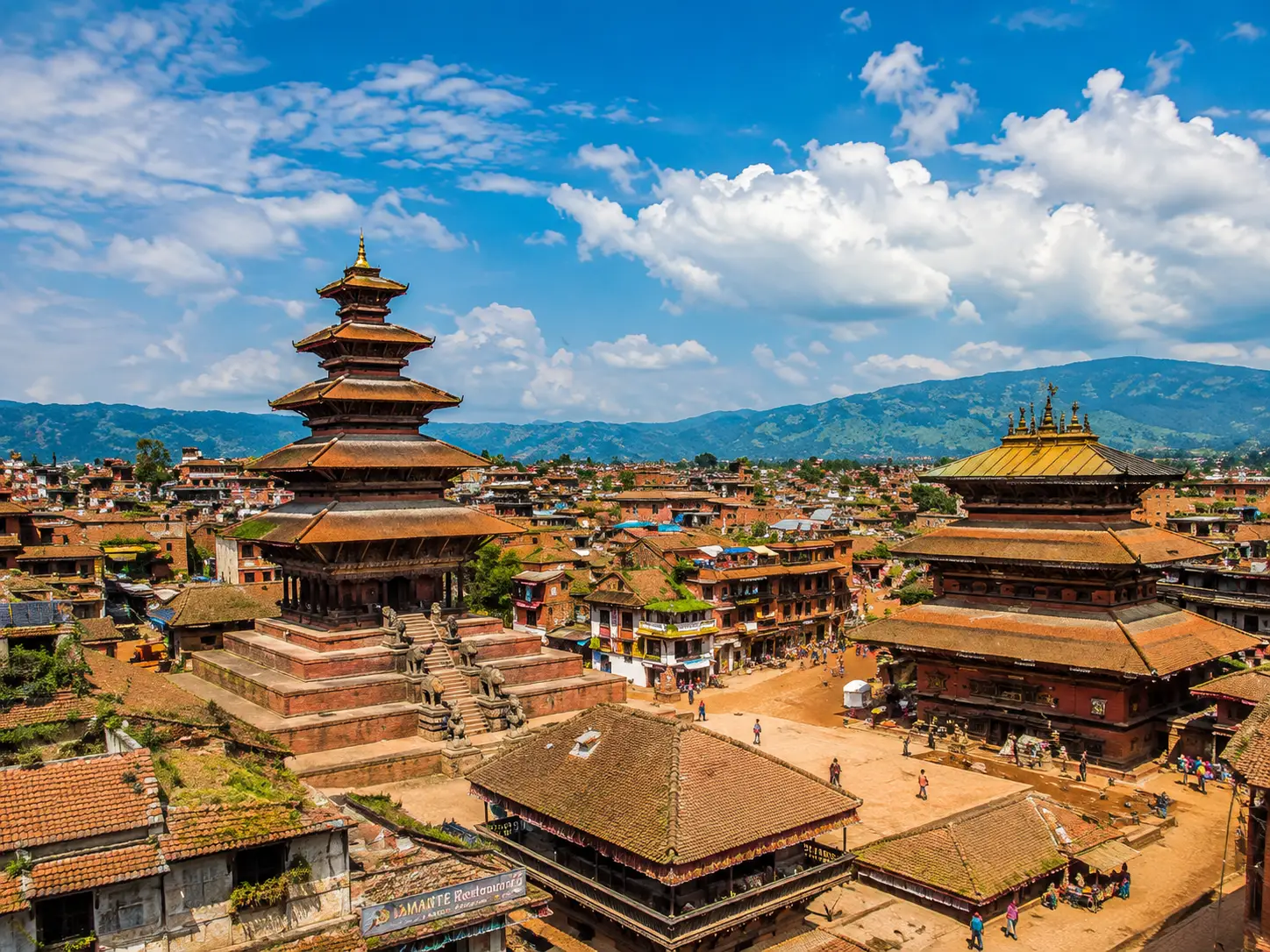
Bhaktapur developed into an important political, religious, and artistic centre under the Malla rulers. Its brick-paved streets, carved wooden windows, temple courtyards, water tanks, royal monuments, and traditional neighbourhoods preserve the character of a medieval Newar city.
The tour begins at Changu Narayan, an ancient Hindu sanctuary situated on a ridge overlooking the valley. Dedicated to Lord Vishnu, the temple complex contains important stone sculptures, inscriptions, metalwork, and woodcarvings associated with the Licchavi and later historical periods.
After exploring Changu Narayan, the journey continues to Bhaktapur. The guided heritage walk covers Bhaktapur Durbar Square, Taumadhi Square, Pottery Square, and Dattatreya Square. Along the way, visitors encounter royal architecture, sacred monuments, traditional workshops, local markets, hidden courtyards, and some of Nepal’s finest examples of wood, stone, brick, and metal craftsmanship.
Tour at a Glance
- Tour duration: Approximately 7 to 8 hours
- Starting point: Hotel or agreed location in Kathmandu
- Ending point: Hotel or agreed location in Kathmandu
- Tour type: Cultural sightseeing and heritage walk
- Walking difficulty: Easy, with steps and uneven stone-paved streets
- Major destinations: Changu Narayan and Bhaktapur
- Heritage significance: Two monument zones within the UNESCO-listed Kathmandu Valley
- Suitable for: Families, couples, solo travellers, students, photographers, and cultural enthusiasts
- Best seasons: Spring and autumn, although the tour can be arranged throughout the year
Trip Highlights
highlights
- Explore Changu Narayan, one of the Kathmandu Valley’s oldest surviving Hindu temple complexes.
- Observe ancient inscriptions and sculptures associated with different manifestations of Lord Vishnu.
- Enjoy views of cultivated hills, settlements, and the surrounding valley from the Changu Narayan ridge.
- Walk through the historic lanes and traditional neighbourhoods of Bhaktapur.
- Discover the Golden Gate and the Palace of Fifty-Five Windows.
- Visit the monumental five-storey Nyatapola Temple.
- Learn about Bhairava worship and the religious traditions of Taumadhi Square.
- Watch local artisans shape clay using traditional pottery techniques.
- Explore Dattatreya Square and admire the celebrated Peacock Window.
- See Newar woodcarving, brickwork, metal repoussé, stone sculpture, and sacred iconography.
- Taste local specialities such as Bhaktapur’s famous Juju Dhau, subject to personal preference.
- Browse locally made pottery, masks, textiles, paintings, and handcrafted souvenirs.
- Gain an informed perspective on the coexistence of Hindu, Buddhist, Tantric, and indigenous Newar traditions.
Bhaktapur Tour
Tour Package Includes
- Professional English-Speaking Cultural Tour Guide : throughout the Bhaktapur Day Tour, including Changu Narayan and the major heritage sites.
- All Ground Transportation : by private tourist vehicle, including hotel pick-up and drop-off in Kathmandu, transportation to Changu Narayan, transfer to Bhaktapur, and return to Kathmandu.
- Heritage Entrance Fees : for Changu Narayan Temple and Bhaktapur’s main heritage area.
- Museum Entrance Fee : where the National Art Museum is included in the sightseeing program and open for visitors.
- Driver and Vehicle Costs : including fuel, parking, and applicable transportation charges during the tour.
- Government Taxes and Service Charges : applicable to the transportation and guiding services provided by the company.
- Hotel Pick-Up and Drop-Off : from your hotel or an agreed location within Kathmandu.
- Sightseeing Assistance and Cultural Interpretation by the guide at Changu Narayan, Bhaktapur Durbar Square, Golden Gate, Palace of Fifty-Five Windows, Taumadhi Square, Nyatapola Temple, Bhairavnath Temple, Pottery Square, Dattatreya Square, Peacock Window, and other major heritage sites mentioned in the itinerary.
- Local Assistance : throughout the tour to help with temple etiquette, photography restrictions, heritage-site regulations, and cultural practices.
Tour Package Excludes
- Lunch and other meals, including local Newari cuisine, unless specifically mentioned in your booking package. The itinerary allows lunch to be arranged at a local restaurant according to the group’s preference.
- Drinking Water, Soft Drinks, Tea, Coffee, and Other Beverages purchased during the tour.
- Personal Expenses, including shopping, souvenirs, handicrafts, pottery, local products, and other personal purchases.
- Tips and Gratuities for the guide and driver.
- Travel Insurance and any expenses related to medical treatment or emergency assistance.
- Additional Entrance Fees for museums, monuments, exhibitions, or attractions not specifically included in the confirmed sightseeing program.
- Expenses Caused by Changes to the Itinerary due to personal preferences, additional sightseeing, waiting time, road conditions, or other services requested beyond the standard itinerary.
- Photography or Special Permission Fees, if applicable at particular heritage sites or during special cultural activities.
- Drone Permit or Photography Authorisation, if required. Drone use is subject to separate authorisation and should not be assumed to be permitted.
- Any Other Services or Expenses Not Specifically Mentioned Under “Cost Includes.”
Extend Your Trip
Detailed Bhaktapur Day Tour Itinerary
Morning: Drive from Kathmandu to Changu Narayan
Your cultural journey begins with a morning pick-up from your hotel or an agreed location in Kathmandu. Accompanied by a knowledgeable guide, you will travel east towards the peaceful hilltop settlement of Changu Narayan.
As the road rises above the urban valley, the surroundings gradually become quieter. Traditional houses, terraced fields, small villages, and distant hills provide a gentle introduction to the rural landscape around Bhaktapur.
Visit to Changu Narayan Temple
Upon arrival, a short walk through the traditional settlement leads to the Changu Narayan Temple complex. The lane approaching the temple contains small craft shops, rest houses, shrines, and traditional buildings that reflect the cultural character of the village.
Dedicated to Lord Vishnu, Changu Narayan is particularly important for the study of Nepalese religion, sculpture, epigraphy, and temple architecture. The wider complex includes one of the earliest known inscriptions in the Kathmandu Valley, dating from the fifth century.
Within the temple courtyard, visitors can observe representations of Vishnu in several forms. These include Vishnu mounted upon Garuda, the half-human and half-bird celestial vehicle of the deity; Narasimha, the fierce lion-man incarnation; and Vishnu Vikranta, associated with the cosmic strides of Vishnu. Such images communicate religious narratives while demonstrating the technical refinement of early Nepalese stone sculpture.
The temple’s carved roof struts, gilded details, bells, guardian figures, and metal-clad entrances illustrate how stone, timber, and bronze were integrated within the Newar architectural tradition. Changu Narayan is not merely an archaeological site. It remains a functioning place of worship where ritual practice, mythology, and community identity continue to intersect.
Transfer to Bhaktapur
After visiting Changu Narayan, the tour proceeds towards the historic centre of Bhaktapur. Depending on traffic and local conditions, the drive generally takes between 30 and 45 minutes.
On arrival, the remainder of the tour is completed mainly on foot. Walking is the most rewarding way to experience Bhaktapur because many of its significant details are found within narrow lanes, residential courtyards, neighbourhood shrines, and traditional market streets.
Bhaktapur Durbar Square
Bhaktapur Durbar Square was once the ceremonial and administrative centre of the Bhaktapur kingdom. Its collection of temples, royal buildings, statues, courtyards, and public monuments reflects the artistic prosperity of the Malla period.
Buildings around the square date from different historical phases, particularly between the thirteenth and eighteenth centuries. Although earthquakes have altered parts of the original complex, the square continues to demonstrate the sophistication of Newar architecture and urban planning.
Important monuments include the Palace of Fifty-Five Windows, the Golden Gate, the Lion Gate, the Vatsala Temple, the statue of King Bhupatindra Malla, and several smaller shrines dedicated to Hindu deities.
The Golden Gate
The Golden Gate forms the richly ornamented entrance to the inner courtyard of the former royal palace. Completed during the reign of King Ranjit Malla, it is celebrated for its refined repoussé metalwork.
The gateway is decorated with divine figures, mythical beings, serpentine forms, and floral motifs. Its dense symbolic composition reflects both royal authority and sacred protection. Despite its modest physical scale, the Golden Gate is considered one of Bhaktapur’s finest achievements in metal craftsmanship.
The Palace of Fifty-Five Windows
The Palace of Fifty-Five Windows is distinguished by its long façade and elaborately carved wooden balcony. The palace complex developed over several phases during the Malla period, with major additions and restoration associated with King Bhupatindra Malla.
Its sequence of carved windows demonstrates the precision of Newar woodworkers, who transformed functional architectural elements into intricate works of art. The building once formed part of the royal residence and remains one of the most recognisable monuments in Bhaktapur.
National Art Museum
Located within the former palace complex, the National Art Museum contains examples of traditional Nepalese painting, sculpture, manuscripts, and religious art.
Its collection reflects Hindu, Buddhist, and Tantric artistic traditions from different historical periods. A visit may be included when the museum is open and time permits. Museum opening days and hours can change during public holidays or conservation work.
Vatsala Temple and the Bell of Barking Dogs
The stone-built Vatsala Temple presents a striking contrast to the brick-and-timber pagodas surrounding it. Constructed in the Shikhara architectural style, the temple is distinguished by its vertical form and delicately carved stone surfaces.
Nearby stands a large bronze bell traditionally known as the Bell of Barking Dogs. Installed during the reign of King Ranjit Malla in 1737, it was historically used to announce important civic times, including the beginning and end of curfew.
Taumadhi Square and Nyatapola Temple
A short walk from Durbar Square brings visitors to Taumadhi Square, one of Bhaktapur’s most active ceremonial and commercial spaces.
Dominating the square is Nyatapola Temple, whose name means “five-storeyed” in the Nepal Bhasa language. Built in 1702 during the reign of King Bhupatindra Malla, the temple is dedicated to Siddhi Lakshmi, a powerful Tantric goddess.
Five ascending terraces lead towards the temple. Each level is guarded by pairs of symbolic protectors, including wrestlers, elephants, lions, griffins, and divine figures. According to local tradition, every pair possesses greater strength than the guardians positioned below it.
The temple’s carefully balanced proportions and massive brick-and-timber construction have enabled it to withstand several major earthquakes. Its upper sanctum is generally reserved for authorised priests, but the exterior offers a remarkable study of Newar engineering, sacred geometry, and symbolic design.
Bhairavnath Temple
Standing near Nyatapola is the Bhairavnath Temple, dedicated to Bhairava, a fierce manifestation of Lord Shiva. The shrine was originally constructed as a smaller structure and was later enlarged into a three-tiered pagoda during the reign of King Bhupatindra Malla.
Bhairava occupies an important place in the ritual life of Bhaktapur, particularly during the annual Bisket Jatra festival. Local legends concerning the deity, the construction of the temple, and the sacred power of Taumadhi Square add another dimension to the architectural experience.
Pottery Square
The tour then continues to Pottery Square, where clay vessels are still produced through traditional methods. Depending on the weather and production cycle, visitors may see potters preparing clay, shaping vessels on wheels, decorating finished pieces, or drying rows of pots in the open square.
Pottery has long supported the domestic, ritual, and commercial life of the Kathmandu Valley. Water jars, oil lamps, cooking vessels, ceremonial pots, and decorative objects are produced for both local use and visitors.
Where available, guests may try shaping a small clay object under the supervision of a local potter. Purchasing directly from local workshops can also help sustain traditional skills and family-based craft economies.
Local Lunch and Cultural Flavours
A lunch break can be arranged at a local restaurant according to the interests of the group. Travellers may choose familiar dishes or sample Newar cuisine.
Bhaktapur is especially known for Juju Dhau, a rich yoghurt traditionally served in clay bowls. Other regional dishes may include bara, chatamari, beaten rice combinations, seasonal vegetables, spiced potatoes, and various Newar snacks. Food availability varies by restaurant and season.
Dattatreya Square
The final major heritage area is Dattatreya Square, one of the oldest and most atmospheric sections of Bhaktapur. The square takes its name from the Dattatreya Temple, dedicated to a composite form of Brahma, Vishnu, and Shiva.
Local tradition holds that the temple was constructed from the timber of a single tree. Whether understood historically or symbolically, the story reflects the importance attached to the temple within Bhaktapur’s cultural memory.
The surrounding neighbourhood contains traditional monasteries, residential courtyards, carved façades, and workshops. It generally feels quieter than Taumadhi Square and provides an intimate view of Bhaktapur’s domestic and religious architecture.
Peacock Window and Pujari Math
Near Dattatreya Temple stands Pujari Math, a former monastic residence celebrated for its exceptional woodcarving. Its best-known feature is the Peacock Window, an intricately carved wooden window whose radiating design resembles the spread feathers of a peacock.
The workmanship displays extraordinary control of pattern, depth, symmetry, and detail. Visitors should also look beyond the famous window, as the surrounding doors, pillars, brackets, and smaller windows contain equally sophisticated carvings.
Free Time and Return to Kathmandu
Before leaving Bhaktapur, a short period of free time may be provided for photography, refreshments, or shopping. Pottery, carved masks, paubha paintings, handmade paper products, textiles, metal objects, and other handicrafts are commonly available.
In the late afternoon, you will meet your driver and return to Kathmandu. The tour concludes with a transfer to your hotel or another agreed location.
The visiting order and timing may be adjusted according to traffic, weather, museum opening hours, religious ceremonies, conservation work, and the interests of the group.
Understanding Bhaktapur’s Rich Culture
A Living Newar City
Bhaktapur should not be viewed simply as a collection of old buildings. It remains a living Newar city in which religious practice, craftsmanship, agriculture, food traditions, music, and neighbourhood organisation continue to influence everyday life.
Many courtyards function as shared social spaces. Small shrines may serve an entire neighbourhood, while public water spouts, ponds, rest houses, and processional routes preserve older patterns of community life.
Visitors are therefore entering both a heritage site and a residential city. Quiet observation and respectful behaviour often lead to a more meaningful experience than hurried sightseeing.
Hindu and Buddhist Traditions
The cultural landscape of Bhaktapur demonstrates a close historical relationship between Hinduism and Buddhism. Deities, rituals, festivals, and artistic symbols may be interpreted differently by various communities, yet they frequently share the same urban and ceremonial spaces.
Tantric traditions have also influenced the religious art and ritual life of the city. Some images and temple details may appear fierce or erotic, but they should be understood within their symbolic and philosophical contexts rather than through modern literal interpretation.
Craftsmanship and Cultural Knowledge
Bhaktapur’s architecture developed through the combined knowledge of brickmakers, carpenters, stone carvers, metalworkers, painters, potters, and ritual specialists. These crafts were not merely decorative. They communicated religious narratives, protected buildings, marked social identity, and supported the practical needs of urban life.
Traditional craftsmanship remains visible in pottery workshops, carved windows, temple struts, metal gates, ritual objects, masks, and paintings. Responsible tourism can contribute to the survival of these skills when visitors purchase authentic work directly from local producers.
Festivals and Community Life
Bhaktapur’s annual calendar includes numerous processions, deity festivals, agricultural observances, and neighbourhood rituals. Bisket Jatra is among the most prominent celebrations, involving chariots, ceremonial poles, music, and large public gatherings.
Festival periods can offer memorable cultural experiences, although they may also involve crowds, road closures, noise, and changes to the normal itinerary. Visitors should follow local guidance and remain sensitive when photographing ceremonies.
Things to Know Before the Tour
Heritage Entrance Fees
Entrance fees apply to Bhaktapur’s heritage area, Changu Narayan, and certain museums. Rates differ for Nepalese citizens, SAARC nationals, Chinese citizens, and visitors from other countries. As fees may be revised, the current amount should be confirmed when booking the tour.
Keep your entrance ticket throughout the visit, as it may be checked at different points within the heritage zone.
Clothing and Temple Etiquette
Modest and comfortable clothing is recommended. Shoulders and knees should ideally be covered when entering sacred areas.
Shoes must be removed before entering certain temple courtyards or shrines. Some inner sanctums are open only to practising Hindus or authorised priests. Your guide will explain the relevant customs at each location.
Avoid touching religious images, offerings, butter lamps, ritual vessels, or sacred objects unless invited to do so.
Photography
Photography is generally possible in outdoor heritage areas. However, restrictions may apply inside temples, museums, and active worship spaces.
Always ask permission before taking close photographs of local residents, priests, artisans, or religious ceremonies. Drone use requires separate authorisation and should not be assumed to be permitted.
Walking Conditions
The tour involves walking over brick-paved streets, stone surfaces, steps, and occasionally uneven ground. Comfortable shoes with reliable grip are strongly recommended.
Travellers with limited mobility should inform the company in advance. The itinerary may then be adjusted where practical, although some historic sites have unavoidable steps and restricted vehicle access.
Weather and Seasonal Conditions
Bhaktapur can be visited throughout the year. Spring and autumn generally provide comfortable temperatures and clearer views. Winter mornings may be cold, while summer and monsoon visits can be warm, humid, or rainy.
A light jacket, sun protection, drinking water, and a compact raincoat or umbrella may be useful, depending on the season.
Responsible Cultural Travel
- Respect temple rules and local religious practices.
- Walk quietly through residential courtyards.
- Do not climb on monuments or sacred platforms.
- Avoid interrupting worship or ceremonial activity.
- Ask before photographing people.
- Purchase crafts from genuine local producers where possible.
- Use designated waste bins and avoid single-use plastics.
- Do not remove stones, bricks, pottery fragments, or other objects from heritage areas.
What to Bring
- Comfortable walking shoes
- Modest clothing suitable for temple visits
- Sun hat, sunglasses, and sunscreen
- Light jacket or rain protection, depending on the season
- Reusable drinking-water bottle
- Camera or mobile phone
- Personal medication
- Passport or identification if required for nationality-based entrance fees
- Nepalese currency for entrance tickets, refreshments, and personal purchases
Why Choose This Bhaktapur Day Tour?
This journey is designed for travellers who wish to understand Bhaktapur rather than merely pass through it. The combination of Changu Narayan’s ancient sacred art and Bhaktapur’s living urban heritage provides a broad yet coherent introduction to the cultural history of the Kathmandu Valley.
Himalayan Sherpa Exodus Team Treks & Expeditions Pvt. Ltd. aims to make the experience informative, comfortable, and respectful. Our approach encourages careful observation, meaningful local interaction, and an appreciation of the communities whose knowledge and traditions continue to sustain these remarkable heritage places.
Join us for a day among hilltop sanctuaries, royal courtyards, carved windows, temple bells, pottery workshops, and brick-paved streets. Bhaktapur does not simply preserve the past. It allows visitors to encounter history as a continuing part of everyday life.