Essential Trip Information
-
24 Days
-
Dolpo
-
2+
-
 5360M
-
 Moderate
-
Essential Trip Information
-
Nepal
Please note: Final inclusions are based on the confirmed booking agreement and may vary slightly according to group size, trek style and any customized services requested by the client.
Extend Your Trip
Best Time to Trek Upper Dolpo
The most suitable seasons for the Upper Dolpo Trek are generally spring from March to May and autumn from September to October. Nepal Tourism Board also identifies these periods as the preferred trekking seasons for Shey-Phoksundo National Park.
Spring: March to May : Spring brings gradually warmer temperatures and longer daylight hours. The lower sections of the trail become more pleasant as vegetation begins to develop, while the higher valleys retain the striking dry and rugged appearance characteristic of Upper Dolpo.
April and May are particularly attractive for trekkers looking for a combination of comfortable daytime conditions, changing vegetation and high-Himalayan scenery. Snow can still remain around the higher passes, especially early in the season, so conditions should always be assessed locally.
Autumn: September to October : Autumn is another excellent period for Upper Dolpo. After the main summer monsoon period, the atmosphere is often clearer and the surrounding mountains, valleys and high passes can offer excellent visibility.
September and October generally provide favourable conditions for crossing Kang La and Saldang La, although temperatures become noticeably colder at night as the season progresses.
Summer and Winter Considerations : Upper Dolpo lies within Nepal’s trans-Himalayan region and has a considerably drier landscape than many areas south of the main Himalayan range. However, summer travel can still be affected by weather conditions elsewhere in Nepal, particularly domestic flight connections and lower access routes.
Winter brings very cold temperatures, snow and difficult conditions on the high passes. For this reason, winter departures require considerably more preparation and are generally unsuitable for ordinary trekking groups.
Kathmandu–Nepalgunj–Juphal–Nepalgunj–Kathmandu Flight Information
Reaching Upper Dolpo requires a combination of regular domestic flights and a short mountain flight.
Kathmandu to Nepalgunj
The first flight takes us from Kathmandu to Nepalgunj in western Nepal. The scheduled flying time is approximately 50 minutes. Nepalgunj serves as an important aviation hub for journeys into the remote districts of western Nepal.
After arriving in Nepalgunj, we stay overnight before taking the onward mountain flight to Juphal according to our itinerary.
Nepalgunj to Juphal
The following morning, we take a small aircraft from Nepalgunj to Juphal, the principal air gateway for the Dolpo region. Nepal Tourism Board lists the Nepalgunj–Juphal flight at approximately 20 minutes.
The flight provides an impressive geographical transition from Nepal’s western plains towards steep hills, deep valleys and the rugged mountain landscape of Dolpo.
Juphal Airport, officially known as Dolpa Airport, is operational and serves as an important access point for Shey-Phoksundo National Park and Upper Dolpo trekking routes.
Return Flight: Juphal–Nepalgunj–Kathmandu
After completing the trek, we return to Juphal and fly back to Nepalgunj. From Nepalgunj, we take a connecting flight to Kathmandu, completing the domestic air journey.
Important Flight Information
Flights between Nepalgunj and Juphal operate in mountainous terrain and are more sensitive to weather, visibility and operational conditions than regular trunk-route flights. Delays, rescheduling or cancellations are therefore possible.
We strongly recommend maintaining some flexibility in your international travel arrangements after returning from Dolpo. Flight timings, airlines and schedules are always reconfirmed close to the trekking date.
Upper Dolpo Trek Difficulty
The Upper Dolpo Trek is considered a strenuous and physically demanding high-altitude trek. It is best suited to trekkers who are physically fit, comfortable with long walking days and prepared for extended travel through remote mountain terrain.
Our itinerary reaches its highest point at Kang La Pass, approximately 5,360 metres, while Saldang La reaches approximately 5,010 metres. Several nights are also spent above 4,000 metres.
Most trekking days involve approximately five to seven hours of walking, although actual duration depends on altitude, weather, trail conditions and individual pace.
The challenge of Upper Dolpo comes not only from altitude. The route travels through isolated valleys with limited infrastructure, long distances between settlements, changing weather and sections where services are considerably more basic than on Nepal’s popular Everest or Annapurna routes.
Trekkers should therefore arrive with good cardiovascular fitness, strong walking endurance and realistic expectations about remote Himalayan travel.
Previous high-altitude trekking experience is helpful, although determined trekkers with excellent physical preparation, appropriate acclimatization and professional guidance may also undertake the journey successfully.
Acclimatization & Altitude Sickness
Proper acclimatization is one of the most important parts of a successful Upper Dolpo Trek.
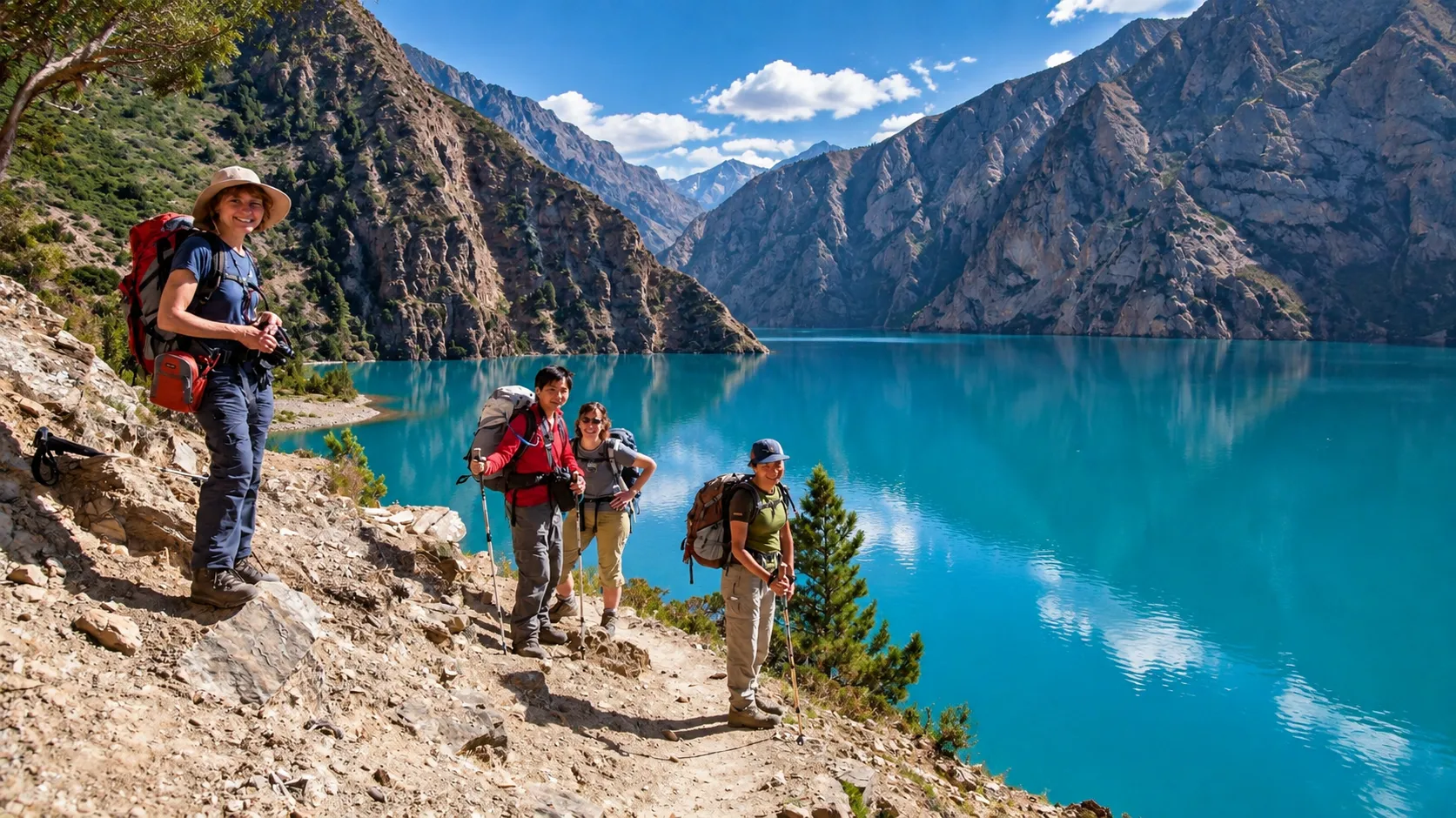
Our itinerary gains altitude gradually and includes dedicated rest and exploration days at Phoksundo Lake at approximately 3,600 metres and Shey Gompa at approximately 4,126 metres. These days provide additional time for the body to adjust before continuing towards higher terrain and major mountain passes.
At high altitude, lower atmospheric pressure means less oxygen is available to the body. Symptoms of Acute Mountain Sickness may include headache, unusual tiredness, dizziness, reduced appetite, nausea or disturbed sleep. Individual responses to altitude vary considerably, regardless of physical fitness.
Current CDC high-altitude guidance emphasizes gradual ascent and advises trekkers not to continue to a higher sleeping altitude while experiencing symptoms of altitude illness. Worsening symptoms require descent and appropriate medical assessment.
During the trek, we encourage a steady walking pace, adequate hydration, sufficient rest and honest communication with the guide about any unusual symptoms.
Our trekking team monitors the condition of group members throughout the high-altitude sections. Safety always takes priority over reaching a particular pass or completing a predetermined walking schedule.
Anyone with an existing heart, lung or other significant medical condition should discuss high-altitude travel with an appropriate healthcare professional before undertaking the trek.
Himalayan Culture & Ancient Monasteries
Upper Dolpo is not only a wilderness trek; it is also a remarkable journey through one of Nepal’s most culturally distinctive Himalayan regions.
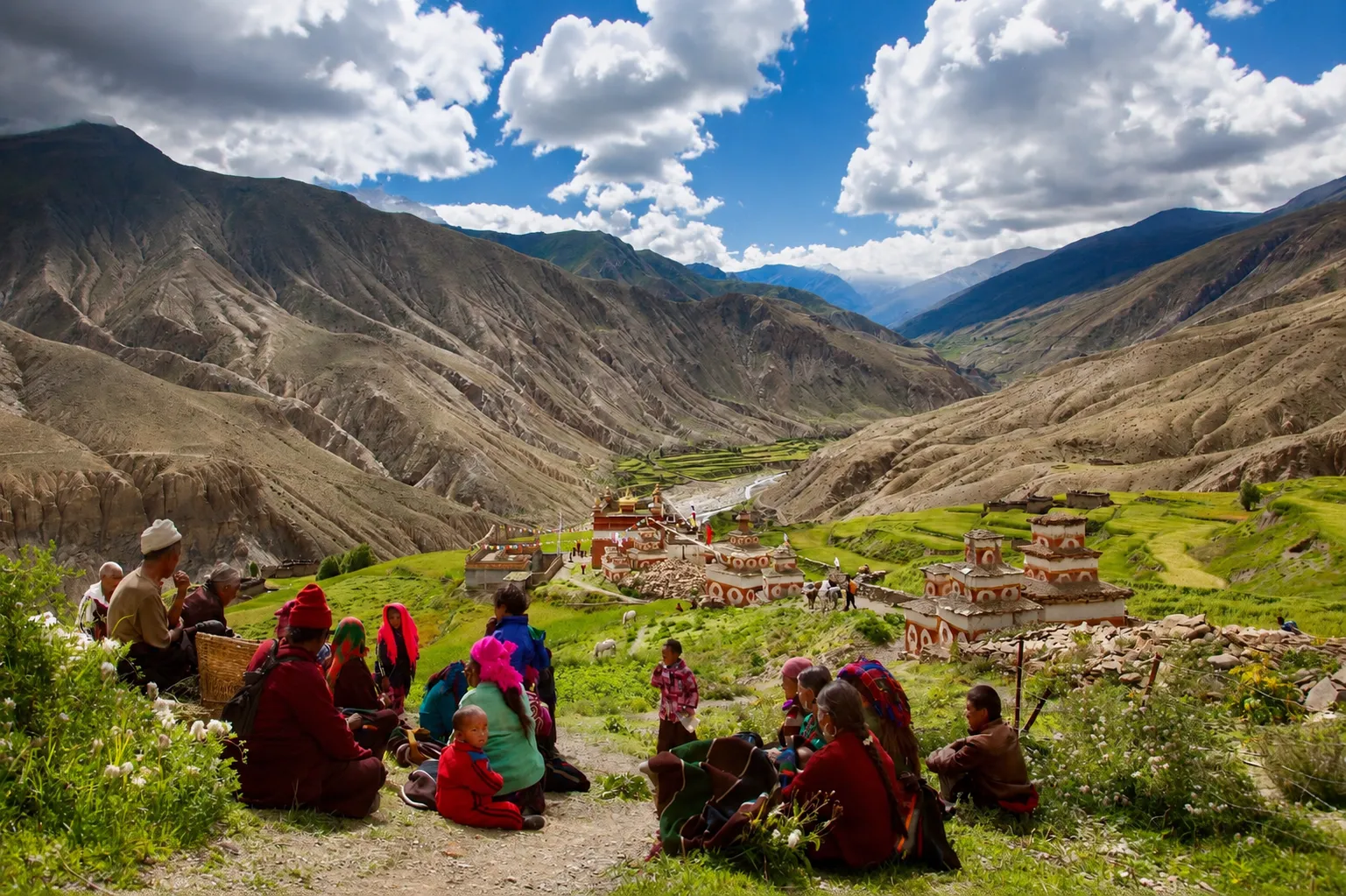
Geographical isolation has allowed many communities of Dolpo to preserve traditions closely connected with the wider Tibetan cultural world. Traditional stone-built villages, agricultural terraces, prayer flags, mani walls, chortens and monasteries remain visible throughout the journey.
Both Tibetan Buddhist and Bön traditions have an important presence in Dolpo. Nepal Tourism Board identifies Dolpo as one of Nepal’s significant regions for Bön communities and religious heritage.
Shey Gompa
Shey Gompa is one of the most significant spiritual locations on our itinerary. Reached after crossing Kang La Pass, the monastery stands within an extraordinary landscape of dry mountains and open valleys.
The official Shey-Phoksundo National Park management plan identifies historic Shey Monastery, Buddhist culture and the Upper Dolpo landscape among the important cultural attractions of the protected area.
Our additional day at Shey allows time not simply for physical recovery but also for experiencing the spiritual and cultural atmosphere surrounding this remote Himalayan settlement.
Namgung, Saldang, Tokyu and Dho Tarap
As the journey continues through Namgung Gompa, Saldang, Tokyu Gaon and Dho Tarap, trekkers encounter traditional settlements where religion, farming, seasonal livestock movement and community life remain closely connected.
The Dolpo Heritage Circuit documented by Nepal Tourism Board describes the wider region as predominantly Buddhist and notes a large number of gompas, including historic monasteries around settlements such as Saldang and Dho.
Rather than treating these villages simply as overnight stops, we encourage travellers to approach them with patience and respect. Asking permission before photographing people or religious ceremonies, dressing respectfully and observing local customs helps create a more meaningful relationship between visitors and host communities.
The cultural experience of Upper Dolpo is quiet and deeply rooted in place. Monasteries, prayer structures, traditional homes and centuries of adaptation to the high Himalayan environment together make this journey as culturally rewarding as it is geographically spectacular.
Preparation Guide
The Upper Dolpo Trek is a remote and physically demanding Himalayan journey, so thoughtful preparation is essential. Unlike Nepal’s more developed trekking regions, Upper Dolpo involves long walking days, high mountain passes, isolated valleys and limited access to modern facilities. Trekkers should therefore prepare for both the physical demands of altitude and the practical realities of travelling through a remote mountain environment.
We recommend beginning regular physical training several weeks before departure. Walking, hiking, stair climbing, cycling, swimming and other cardiovascular activities can help improve endurance, while basic strength exercises for the legs and core can make long trekking days more comfortable. Whenever possible, practice walking on uneven terrain while carrying a light daypack.
Mental preparation is equally important. Weather, domestic flights, trail conditions and local circumstances can occasionally require changes to the planned schedule. Travelling with flexibility and patience makes the experience considerably more enjoyable.
Before travelling, trekkers should also review personal medications, trekking equipment, travel documents, insurance coverage and any health concerns with an appropriate medical professional. Nepal Tourism Board specifically recommends physical preparation for high-altitude trekking and appropriate travel insurance for adventure activities.
Weather & Climate
Upper Dolpo lies within the trans-Himalayan region of north-western Nepal and has a noticeably drier climate than many trekking areas located south of the main Himalayan range. The landscape changes dramatically with elevation, from greener river valleys and forested sections at lower levels to dry alpine meadows, exposed mountain slopes and largely treeless terrain in the higher areas.
Spring: March to May
Spring is one of the preferred periods for trekking in Upper Dolpo. Temperatures gradually become milder, daylight hours increase and lower valleys begin to show more vegetation.
At higher elevations, mornings and nights remain cold, and snow may still be present around the major passes. Conditions can vary considerably between sunny daytime walking and cold evenings at camp.
Summer: June to August
Upper Dolpo receives less direct monsoon rainfall than many southern Himalayan regions because of its trans-Himalayan location. However, reaching Dolpo still requires flights and travel through other parts of Nepal that can be affected by summer weather.
Cloud, rain and reduced visibility may disrupt domestic flights, while trail conditions can vary according to local rainfall.
Autumn: September to October
Autumn is another highly suitable season for the Upper Dolpo Trek. The post-monsoon period often brings clearer mountain views, relatively stable conditions and excellent visibility across the high valleys.
Temperatures gradually become colder as October progresses, particularly at camps above 4,000 metres.
Winter: November to February
Winter in Upper Dolpo is severe. Heavy cold, snow accumulation and difficult conditions around high passes can make the route unsuitable for standard trekking departures.
Nepal Tourism Board identifies March–May and September–October as the principal trekking seasons for Shey-Phoksundo National Park.
Because our itinerary reaches Kang La Pass at approximately 5,360 metres and Saldang La at approximately 5,010 metres, trekkers should be prepared for freezing temperatures and sudden weather changes even during the recommended seasons.
Accommodation
Accommodation on the Upper Dolpo Trek is considerably more basic than on established lodge routes such as Everest Base Camp or the Annapurna Circuit.
Kathmandu and Nepalgunj provide comfortable hotel accommodation according to the selected package category. Once we enter the remote trekking region, however, facilities become limited.
Shey-Phoksundo National Park officially lists camping as the primary form of accommodation for the area. Depending on the exact location and availability, some settlements may provide simple local lodges or basic rooms, but these should not be expected throughout the entire journey.
For the more isolated sections of Upper Dolpo, organized camping provides greater flexibility and reliability. Our trekking team arranges the necessary camping equipment, kitchen arrangements and group support according to the confirmed trek package.
Facilities in remote settlements are simple. Travellers should not expect private bathrooms, continuous hot water, heating, Western-style toilets or other comforts normally associated with city hotels.
The simplicity of accommodation is part of the character of travelling through Upper Dolpo. A flexible attitude and realistic expectations are important.
Meals During the Trek
During the trekking section, we provide regular meals designed to supply the energy required for long walking days and high-altitude travel.
Food options naturally become more limited as we travel farther from roads and major settlements. In remote sections, ingredients must often be carried for considerable distances, so meals are generally simple, nutritious and practical rather than elaborate.
Breakfast may include items such as porridge, eggs, bread, pancakes, cereals, tea or coffee depending on availability.
Lunch and dinner commonly include rice, lentils, vegetables, potatoes, noodles, pasta, soups and other filling meals suitable for trekking. Traditional Nepali dal bhat is particularly useful on long trekking days because it provides carbohydrates, protein and warm food in a simple meal.
At high altitude, appetite can decrease. We encourage trekkers to eat regularly even when they do not feel particularly hungry.
Vegetarian diets can generally be accommodated when advance notice is provided. Travellers with allergies, serious food intolerances or strict dietary requirements should inform us before the trek so that realistic arrangements can be discussed.
Because supplies are limited in Upper Dolpo, highly specialized dietary requirements may not always be possible in every location.
Drinking Water
Staying properly hydrated is particularly important during a high-altitude journey such as Upper Dolpo.
Water is available from local settlements, streams and other natural sources along different sections of the route, but untreated water should never automatically be considered safe for drinking.
Depending on the location, drinking water may be provided as boiled water or treated using an appropriate purification system.
Trekkers should carry at least one reusable water bottle or hydration container. A personal water purification method, such as purification tablets or a suitable trekking filter, can also provide additional flexibility.
Nepal Tourism Board advises travellers to use boiled, treated or reliably sealed drinking water, while CDC travel guidance notes that wilderness surface water can contain disease-causing organisms and should be appropriately disinfected before consumption.
We strongly encourage the use of reusable bottles rather than depending on disposable plastic bottles wherever possible. This helps reduce unnecessary waste in an environmentally sensitive and difficult-to-access region.
Internet & Charging
Internet and mobile connectivity should be considered a convenience rather than a guaranteed service during the Upper Dolpo Trek.
Kathmandu and Nepalgunj generally provide reliable mobile networks, Wi-Fi and electricity. Connectivity becomes increasingly limited after flying into Dolpo.
Some larger settlements may occasionally have mobile coverage or locally available internet services, but connections can be slow, intermittent or completely unavailable. Weather, geography, power supply and network conditions can all affect communication.
Once the trek enters the remote areas around Phoksundo, Shey Gompa, Saldang and the higher valleys, trekkers should be prepared to remain without internet access for extended periods.
Electricity is similarly limited. Some settlements may provide solar charging for phones, cameras or power banks, sometimes for an additional fee, but availability cannot be guaranteed.
We recommend carrying:
- A high-capacity power bank.
- Spare camera batteries.
- A charging cable for each device.
- A small solar charger if required.
- Devices kept in airplane mode when not needed.
Cold temperatures also reduce battery performance, so spare batteries and power banks should be kept protected from extreme cold whenever possible.
Upper Dolpo is not an ideal destination for someone planning to conduct daily video meetings from the trail. Geography has, rather inconsiderately, declined to install broadband at 5,000 metres.
Travel Insurance
Comprehensive travel insurance is essential for the Upper Dolpo Trek.
Your policy should specifically cover trekking at the maximum altitude reached by the itinerary. For this journey, that means coverage should extend beyond 5,360 metres, the approximate elevation of Kang La Pass.
The policy should include:
- High-altitude trekking.
- Emergency medical treatment.
- Helicopter evacuation and rescue.
- Hospital expenses.
- Trip interruption or cancellation where applicable.
- Flight delays and cancellations where applicable.
- Lost, stolen or damaged baggage where applicable.
- Repatriation if medically required.
Nepal Tourism Board advises trekkers to obtain comprehensive insurance because helicopter evacuation and emergency medical treatment can be very expensive.
Do not assume that ordinary holiday insurance automatically covers trekking above 5,000 metres. Trekkers should read their insurance policy carefully and obtain written confirmation from the insurer when necessary.
Before departure, please provide us with your insurance company name, policy number and emergency assistance contact details.
Packing List
Packing correctly for Upper Dolpo means preparing for warm lower valleys, freezing high camps, strong sunlight, wind, possible rain or snow and long periods away from shops.
Essential Trekking Clothing
- Lightweight trekking shirts.
- Moisture-wicking base layers.
- Warm thermal top and bottom.
- Trekking trousers.
- Warm fleece or insulated mid-layer.
- Waterproof and windproof jacket.
- Waterproof trousers.
- Warm insulated or down jacket.
- Warm hat or beanie.
- Sun hat or cap.
- Lightweight gloves.
- Warm insulated gloves.
- Several pairs of trekking socks.
- Comfortable underwear.
Footwear
- Well-broken-in waterproof trekking boots.
- Lightweight shoes or sandals for camp.
- Gaiters where appropriate.
- Spare trekking laces.
Never begin a remote 24-day trek wearing brand-new boots. Discovering blisters on Day 2 is an impressively inefficient way to learn about footwear.
Trekking Equipment
- Comfortable daypack.
- Duffel bag for porter transport.
- Sleeping bag suitable for sub-zero temperatures.
- Trekking poles.
- Headlamp with spare batteries.
- Reusable water bottles or hydration system.
- Water purification tablets or personal filter.
- Sunglasses with good UV protection.
- Sunscreen with high SPF.
- Lip balm with sun protection.
- Personal towel.
- Waterproof dry bags or packing liners.
Personal Health & Hygiene
- Personal prescription medicines.
- Small personal first-aid kit.
- Blister treatment.
- Hand sanitizer.
- Toothbrush and toothpaste.
- Biodegradable soap.
- Wet wipes or tissues.
- Toilet paper.
- Personal hygiene products.
Any prescription or altitude-related medication should be discussed with an appropriate medical professional before travel rather than selected casually from an online packing list.
Electronics
- Mobile phone.
- Camera if desired.
- Power bank.
- Spare batteries.
- Charging cables.
- Universal travel adapter.
- Optional compact solar charger.
Important Documents
- Passport.
- Nepal visa documents.
- Travel insurance details.
- Emergency contact information.
- Copies of passport and insurance documents.
- Required passport-size photographs if requested during trip preparation.
- A small amount of Nepali currency for personal expenses.
The final equipment list may be adjusted according to trekking month, weather forecast and the specific style of expedition.
Safety Measures
Safety is our first priority throughout the Upper Dolpo Trek.
Upper Dolpo involves remote terrain, high passes, long walking days and limited access to immediate medical facilities. For this reason, safe trekking depends on preparation, professional guidance, sensible acclimatization and good communication between trekkers and the support team.
Altitude Safety
Our itinerary includes gradual altitude gain and dedicated acclimatization days at Phoksundo Lake and Shey Gompa.
Trekkers should immediately inform the guide if they develop symptoms such as persistent headache, nausea, unusual fatigue, dizziness, loss of appetite, difficulty walking or shortness of breath at rest.
CDC guidance emphasizes gradual ascent, and Nepal Tourism Board recommends stopping further ascent when symptoms of altitude illness occur and descending if symptoms worsen. No mountain pass is more important than a trekker’s health.
Professional Guidance
The trek is led by an experienced guide familiar with high-altitude trekking and remote Himalayan conditions.
Trekkers should remain with the group, follow the guide’s instructions and avoid leaving established routes without informing the trekking team.
Nepal Tourism Board recommends trekking with a guide and using established routes, particularly in remote and high-altitude environments.
Daily Health Monitoring
Throughout the trek, the guide observes group members for unusual fatigue, altitude symptoms or other health concerns. Trekking pace and daily plans may be adjusted where necessary.
Weather Awareness
Conditions around Kang La, Saldang La and other high areas can change rapidly. The guide may alter departure times, camps or route decisions based on weather, snow conditions and overall safety.
First-Aid Preparation
Our trekking team carries basic first-aid supplies appropriate to the journey. Trekkers should also carry any personal medication they require.
Because advanced medical facilities are not readily available in Upper Dolpo, serious illness or injury may require evacuation.
Communication & Emergency Procedures
Emergency communication arrangements are maintained according to the logistical requirements of the trek. When evacuation becomes necessary, our local team coordinates with available rescue services and the traveller’s insurance provider.
Safe Food and Water
Meals are prepared with attention to cleanliness, and drinking water is boiled or treated according to local conditions.
Environmental Safety
Trekkers should remain on established trails, avoid disturbing wildlife, carry waste responsibly and respect local environmental regulations.
Upper Dolpo is a fragile mountain environment. Responsible trekking helps protect it for both local communities and future visitors.
Frequently Asked Questions (FAQ)
1. How difficult is the Upper Dolpo Trek?
The Upper Dolpo Trek is a strenuous high-altitude journey. Most days involve approximately five to seven hours of walking, and the itinerary includes remote terrain, camping and two major passes above 5,000 metres.
Good physical fitness, endurance and previous trekking experience are highly beneficial.
2. What is the highest point of the trek?
The highest point of this itinerary is Kang La Pass at approximately 5,360 metres.
The route also crosses Saldang La Pass at approximately 5,010 metres and includes several overnight stops above 4,000 metres.
3. When is the best time to trek Upper Dolpo?
The principal trekking seasons are March to May and September to October, which are also the seasons recommended by Nepal Tourism Board for Shey-Phoksundo National Park.
Actual mountain conditions can still vary from year to year.
4. Do I need previous trekking experience?
Previous high-altitude trekking experience is recommended but is not always mandatory.
Trekkers without previous Himalayan experience should have excellent physical preparation, realistic expectations and a willingness to follow the guide’s acclimatization and safety instructions carefully.
5. Is Upper Dolpo a teahouse trek?
Not entirely.
Upper Dolpo remains much less developed than Everest, Annapurna and Langtang. Simple accommodation may be available in some settlements, but organized camping is normally required for remote sections. Nepal Tourism Board lists camping as the principal accommodation type within Shey-Phoksundo National Park.
6. Is there internet during the trek?
Internet and mobile coverage are limited and unreliable.
Some larger settlements may occasionally provide connectivity, but trekkers should expect several days without internet or mobile service, particularly in the remote sections of Upper Dolpo.
7. Can I charge my phone and camera?
Charging may be possible in selected settlements, often through solar electricity, but it cannot be guaranteed.
A good power bank and spare batteries are strongly recommended.
8. Is drinking water available?
Water is available throughout the route from settlements and natural sources, but it should be boiled, filtered or appropriately treated before drinking.
Trekkers should carry reusable water bottles and preferably a personal purification method.
9. Do I need travel insurance?
Yes. Comprehensive insurance suitable for this type of adventure travel is essential.
Your policy should specifically cover high-altitude trekking beyond 5,360 metres, emergency medical treatment, helicopter evacuation and rescue. Nepal Tourism Board recommends comprehensive insurance for trekkers because emergency helicopter evacuation can be expensive.
10. How should I prepare physically?
Begin regular cardiovascular and endurance training before the trek.
Hiking, stair climbing, cycling, jogging and long walks are useful. Strengthening your legs and core will also help with long ascents and descents.
Training with your trekking boots and a light daypack is particularly helpful.
11. What happens if I develop altitude sickness?
You should immediately inform your guide.
Mild altitude symptoms should never be hidden or ignored. Further ascent may need to stop, and worsening symptoms require descent and appropriate medical attention.
Altitude illness can become life-threatening if serious symptoms are ignored.
12. Can the itinerary change?
Yes, Upper Dolpo is a remote mountain destination, and itinerary adjustments may occasionally be necessary because of weather, trail conditions, domestic flight delays, snow on high passes, health concerns or other circumstances beyond our control.
Any necessary change will be made with the safety and overall interests of the group as the priority.
13. Are the Nepalgunj–Juphal flights reliable?
Flights operate in mountainous terrain and are dependent on suitable weather and visibility.
Delays and cancellations are possible, particularly when weather conditions deteriorate. Travellers should therefore maintain some flexibility in their schedule.
14. What type of food is available during the trek?
Meals are generally simple, warm and nutritious. Typical food may include rice, lentils, vegetables, potatoes, noodles, soup, pasta, eggs, bread and other locally available ingredients. Food variety becomes more limited in the most remote sections.
15. Can vegetarian meals be arranged?
Yes, vegetarian meals can normally be arranged.
Please inform Himalayan Sherpa Exodus Team Treks and Expeditions Pvt. Ltd. in advance about vegetarian requirements, allergies or other important dietary restrictions.
16. How cold does Upper Dolpo become?
Temperature varies considerably according to season, altitude and weather.
Even during spring and autumn, temperatures can fall below freezing at high camps and around the major passes. Mountain travellers should therefore carry adequate thermal layers, an insulated jacket, warm gloves and a suitable sleeping bag.
High-altitude environments also involve low humidity, strong ultraviolet exposure and rapidly changing temperatures.
17. Is Upper Dolpo suitable for beginners?
Upper Dolpo is generally not recommended as a first easy trekking experience.
A well-prepared beginner with excellent fitness may be capable of completing the route under professional guidance, but the altitude, remote camping conditions and length of the journey make previous multi-day trekking experience highly desirable.
18. Why choose the Upper Dolpo Trek?
Upper Dolpo combines several experiences that are increasingly difficult to find on a single Himalayan journey: Phoksundo Lake, isolated high passes, ancient monasteries, traditional villages, Buddhist and Bön cultural heritage and long stretches of remote trans-Himalayan wilderness.
For travellers who value cultural depth, mountain landscapes and genuine remoteness more than luxury, Upper Dolpo can be one of Nepal’s most rewarding trekking experiences.
Be Well Prepared for Your Trek in Nepal
Proper preparation is the key to a safe, comfortable, and enjoyable trekking experience in Nepal. Please use this equipment guide to prepare the essential clothing, footwear, personal items, health and safety gear, and other trekking necessities according to your chosen route and season.
Pack wisely, travel comfortably, and trek confidently with Himalayan Sherpa Exodus Team.