Day Itinerary – Kathmandu Valley Sightseeing
Morning – Kathmandu Durbar Square
After breakfast, your guide and private vehicle will meet you at your hotel and begin the sightseeing tour with Kathmandu Durbar Square, located in the historic heart of the capital. The square was once the ceremonial and political center of the Kathmandu kingdom and contains palaces, courtyards, temples, shrines, carved wooden windows, stone sculptures, and monuments representing the artistic achievements of the Kathmandu Valley.
During the guided visit, you will explore important areas around the former royal palace complex and learn how the Kathmandu Valley was shaped by the Malla kings, who ruled the three principal valley kingdoms before the unification of Nepal. The site also reflects the later Shah period, when Kathmandu became the capital of unified Nepal.
A Short Historical Note on the Kings and the Rana Era
Kathmandu Durbar Square is especially associated with the Malla royal period and the Shah dynasty. After Prithvi Narayan Shah unified the valley in the eighteenth century, Kathmandu became the capital of unified Nepal and the Shah kings ruled the country from the capital. The Rana period came later and is historically important, but the Rana rulers were hereditary Prime Ministers rather than kings. The Rana regime exercised strong political control from 1846 to 1951 while the Shah monarchs formally remained on the throne. This distinction is important when describing the history of the Durbar Square and Nepal’s royal institutions.
Swayambhunath (Monkey Temple)
From Kathmandu Durbar Square, continue to Swayambhunath Stupa, situated on a hill overlooking the Kathmandu Valley. The site is one of Nepal’s most important Buddhist monuments and is also a vivid example of the religious coexistence found throughout the valley. The stupa is surrounded by shrines, monasteries, prayer wheels, statues, and traditional religious architecture.
Your guide will explain the ancient legend that the Kathmandu Valley was once a lake and that a sacred lotus appeared in the middle of it. Swayambhunath, whose name is commonly understood as referring to the 'self-existent' or self-arisen one, is associated with this tradition. The hilltop also provides broad views across Kathmandu, making the visit both culturally meaningful and visually rewarding. The nickname 'Monkey Temple' comes from the many monkeys commonly seen around the site.
Boudhanath Stupa
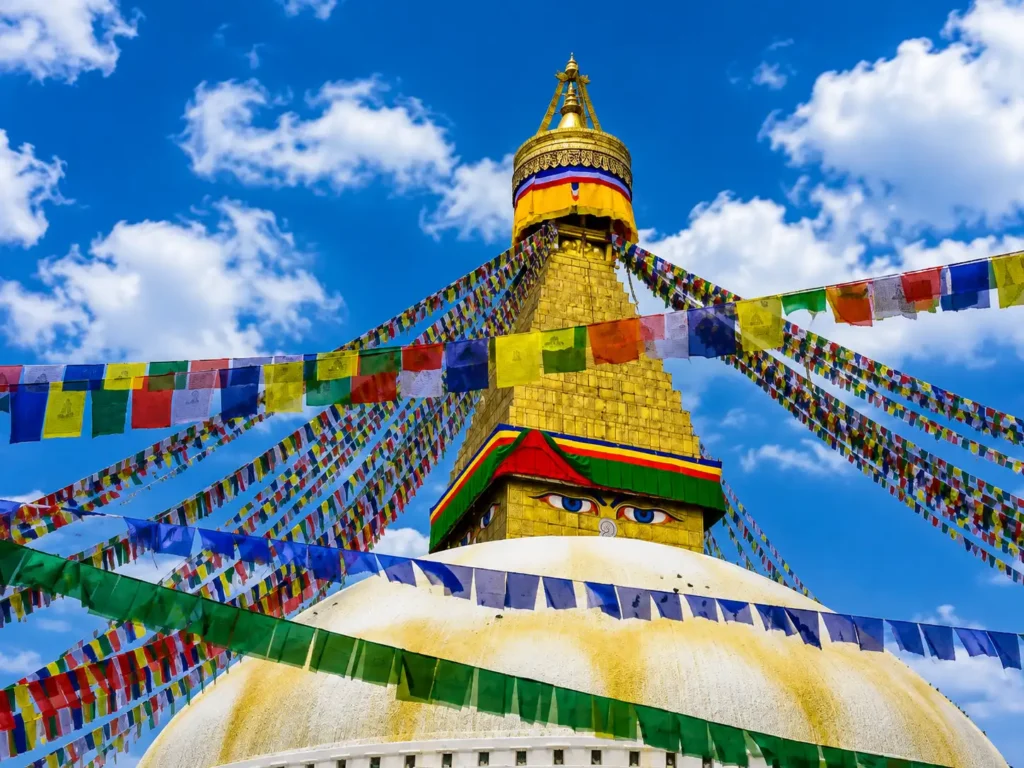
Continue to Boudhanath, one of the most recognizable Buddhist landmarks in Kathmandu. The immense white dome, gilded pinnacle, Buddha eyes, prayer flags, monasteries, and circular pilgrimage route create a distinctive spiritual environment. The stupa is particularly important to Tibetan Buddhist communities and has long served as a center for prayer, pilgrimage, study, and monastic life.
During the visit, walk around the stupa in the traditional clockwise direction while observing pilgrims turning prayer wheels, making offerings, and reciting prayers. Your guide will introduce the symbolism of the stupa and explain its importance within the religious and cultural landscape of Kathmandu Valley. There will also be time to explore the surrounding courtyards, monasteries, traditional shops, and cafés at a relaxed pace.
Pashupatinath Temple
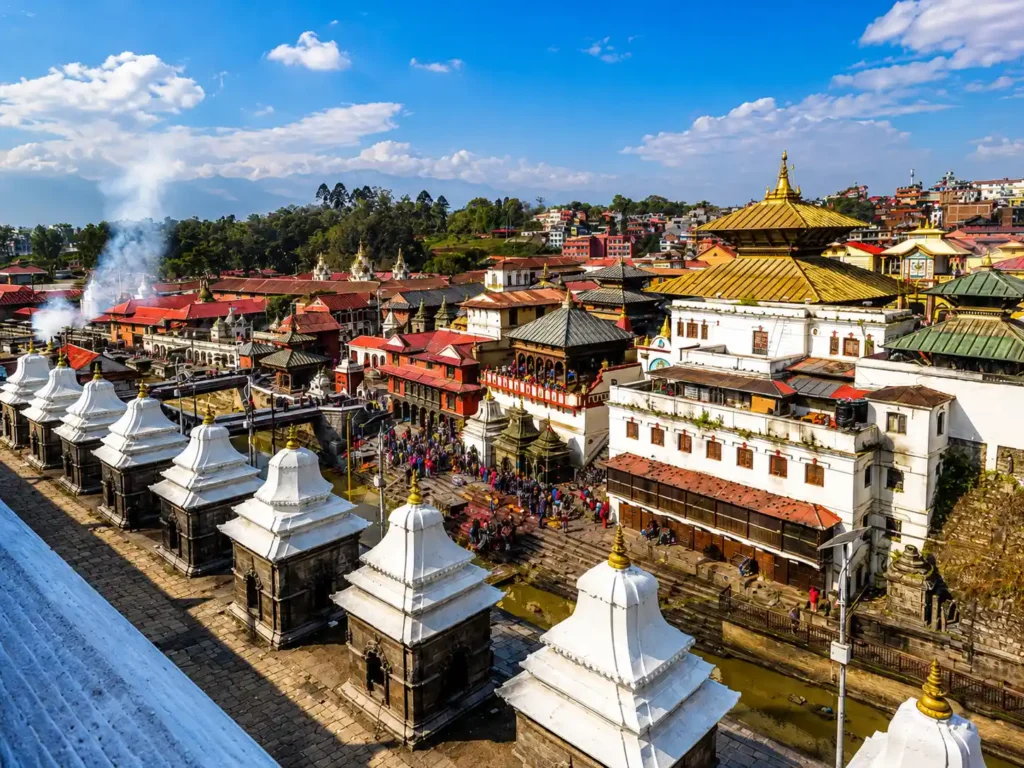
The final major stop is Pashupatinath, located on the sacred Bagmati River. It is one of the most revered Hindu temple complexes in Nepal and a major pilgrimage destination dedicated to Lord Shiva. The wider heritage area contains numerous temples, shrines, monuments, traditional structures, and sacred spaces that together form an extensive cultural landscape.
Your guide will explain the religious importance of Pashupatinath, the traditions associated with Lord Shiva, the role of the Bagmati River, and the cultural significance of the cremation ghats. Visitors can observe the temple complex and religious activities from permitted areas. The principal inner temple is reserved for Hindu devotees, so non-Hindu visitors should follow the designated viewing arrangements and local regulations.
After completing the sightseeing, return by private vehicle to your hotel or another agreed drop-off point in Kathmandu, concluding the Kathmandu Valley cultural tour.
Suggested Timing
08:00: Hotel pickup and departure
08:30–10:15: Kathmandu Durbar Square
10:30–12:00: Swayambhunath Stupa
12:15–13:30: Lunch break at a suitable local restaurant – lunch is not included unless specifically arranged
14:00–15:30: Boudhanath Stupa
16:00–17:30: Pashupatinath Temple area
17:30 onward: Return to hotel / agreed drop-off point