Essential Trip Information
-
38 Days
-
Manaslu
-
2+
-
 8163M
-
 Moderate Climb PD+++
-
Spring (Mar - May) Autumn (Sep- Nov)
-
Nepal
Extend Your Trip
1. Manaslu Expedition Climbing Program
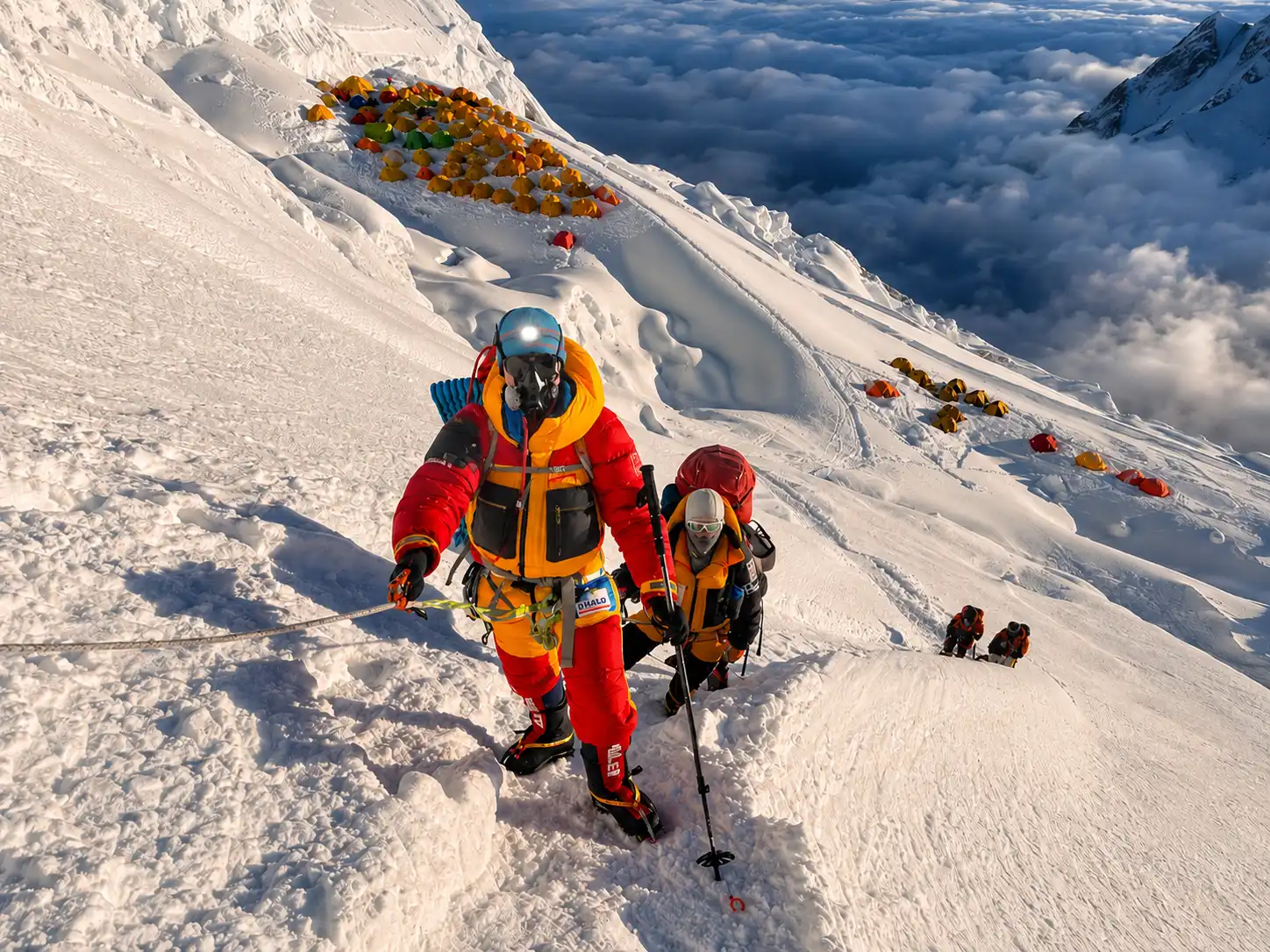
The climbing program is intentionally flexible. The reference itinerary allocates Days 10–30 to the mountain phase, covering technical preparation, acclimatization, rotations, the summit attempt and descent. Rather than assigning fixed calendar dates to each camp, our expedition leadership adjusts the climbing sequence according to weather, snow conditions, route safety, acclimatization and individual team readiness.
- Manaslu Base Camp: approximately 4,700 m – principal acclimatization, training, logistics and recovery base.
- Camp I: first major high-altitude climbing rotation following Base Camp training.
- Camp II: progressive altitude gain with further acclimatization and technical exposure.
- Camp III: increasingly steep and demanding snow and ice terrain requiring strong technical skills.
- Camp IV: final high camp, described in the source material around 7,450 m, used before the summit push.
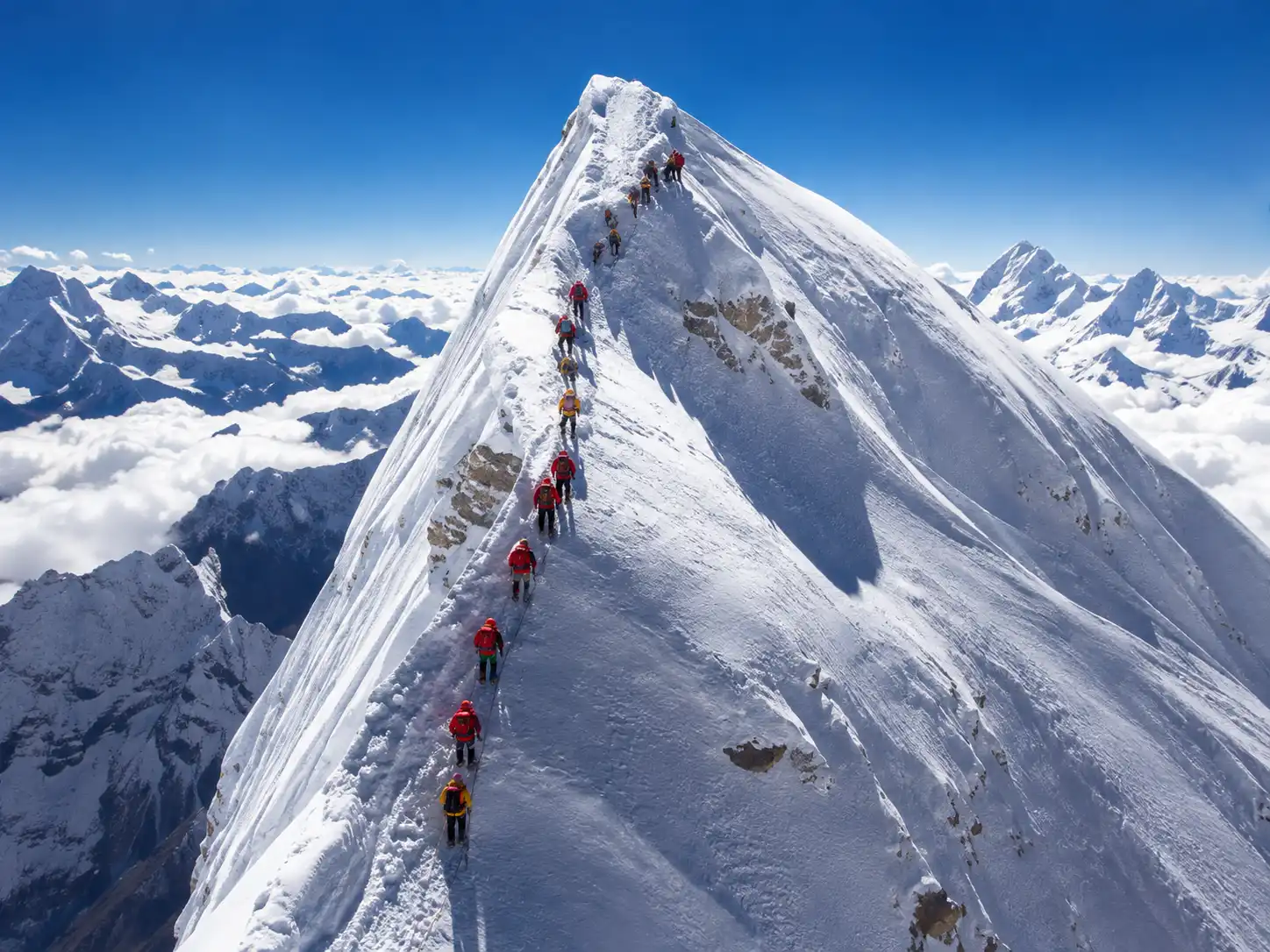
- Summit: 8,163 m – reached through fixed-rope and high-altitude terrain when conditions are suitable.
- Descent: gradual return through the high camps to Base Camp after the summit attempt.
Difficulty, Experience and Technical Requirements
Manaslu is an extreme high-altitude expedition and should only be approached with serious preparation. The reference document describes it as a 4E-level expedition and emphasizes physical strength, endurance, mental resilience and previous mountaineering experience. The climb includes steep snow and ice, crevasses, fixed ropes, exposed terrain, extreme cold and unpredictable weather. Climbers should be confident with crampons, ice axes, ascenders, rappelling and fixed-rope movement and should understand the demands of high-altitude camping.
- Previous high-altitude mountaineering experience is strongly recommended.
- Strong cardiovascular endurance, leg strength and core stability are essential.
- Climbers should be comfortable walking with crampons on snow and ice.
- Experience with fixed ropes, ascenders and rappelling is required for the technical sections.
- Crevasse awareness and basic rescue knowledge are important expedition skills.
- The ability to remain calm and disciplined in cold, fatigue, exposure and changing weather is essential.
- The source document notes a Nepal regulatory requirement concerning prior experience on a Nepalese peak above 6,500 m for participation in an 8,000-meter expedition; climbers should confirm current official requirements before departure.
Best Time for the Manaslu Expedition
The reference material identifies spring and autumn as the most favorable seasons for the Manaslu Expedition. The main windows are approximately late March to May and September to November, with April–May and September–October commonly presented as the most practical periods. Spring generally offers longer daylight and relatively stable conditions, while autumn is known for crisp visibility and impressive mountain scenery. The monsoon period from June to August is considered unfavorable because of heavy rainfall, unstable conditions and increased risks of landslides and other weather-related disruptions.
Because high-mountain conditions change from season to season, the final expedition schedule should always be confirmed according to current weather, route and official climbing information.
Weather and Climate
Manaslu crosses several climatic zones, so conditions change dramatically with elevation. Lower trekking sections around Dharapani can experience comparatively mild daytime temperatures, while nights are cooler. At Base Camp around 4,700 meters, temperatures can remain below freezing, especially at night. Near the summit, temperatures may fall to approximately -20°C to -30°C or lower when wind chill is considered. Snowstorms, high winds, rapid weather changes and severe cold are normal risks of an 8,000-meter expedition. Climbers must therefore be prepared for conditions that can change rapidly.
Acclimatization and Altitude Sickness
Acclimatization is one of the most important safety components of the expedition. The approach itself provides progressive elevation gain, including an acclimatization day at Bimthang and the demanding crossing of Larkya La before reaching Base Camp. During the climbing phase, the team follows a controlled rotation strategy in which climbers ascend to higher camps and return to lower elevations before progressing again. This gradual exposure supports adaptation to reduced oxygen availability.
Altitude sickness can present with headache, nausea, dizziness, unusual fatigue and shortness of breath. More severe conditions such as High Altitude Cerebral Edema (HACE) and High Altitude Pulmonary Edema (HAPE) require immediate medical attention and descent. Climbers must report symptoms early, avoid pushing through serious illness and follow the instructions of the expedition leadership. Hydration, gradual ascent, adequate rest and disciplined pacing are important preventive measures.
Physical Fitness and Training
Preparation should begin well before the expedition. The reference material recommends approximately three to six months or longer of structured training, depending on the climber’s existing condition and experience. Training should combine cardiovascular endurance, strength, loaded hiking, stair climbing and core conditioning. Progressive training with a backpack can help prepare the body for long approaches and steep terrain, while appropriate altitude exposure may help build familiarity with high-elevation environments.
- Cardio training such as running, cycling, swimming or sustained uphill walking.
- Leg-strength work including squats, lunges and controlled step-ups.
- Core-strength and balance exercises for stability on uneven terrain.
- Long hikes with a gradually increased pack weight.
- Stair or hill training to simulate sustained uphill effort.
- Technical mountaineering practice before the expedition.
- Recovery, flexibility and mobility work to reduce fatigue and improve movement efficiency.
Accommodation and Camp Facilities
Accommodation changes with the terrain. During the trekking approach and return sections, accommodation is generally provided in local teahouses or lodges. These offer basic but practical facilities for sleeping, eating and personal recovery, with services such as charging, internet, bathing or laundry available in some locations for an additional fee depending on the lodge.
At Manaslu Base Camp and higher camps, the expedition becomes fully camp-based. The support team establishes dining, kitchen, storage, toilet and sleeping facilities. Base Camp is designed as the main operational center, while higher camps are necessarily more basic because of altitude, cold and logistical limitations. The reference material describes high-camp accommodation as functional and securely anchored for harsh weather rather than luxurious.
Food, Meals and Nutrition
Nutrition is a central part of maintaining energy during a long expedition. During the trekking sections, meals may include traditional Nepali dishes such as dal bhat as well as noodles, bread, eggs, potatoes, pasta, soups and other practical trekking meals. At higher elevations, menus become simpler but remain focused on calories, carbohydrates, protein and easy digestion. During the climbing phase, the expedition kitchen team prepares warm, nutritious meals from carried provisions, supported by appropriate fuel and cooking equipment.
- Breakfast, lunch and dinner are planned throughout the trekking and climbing program as stated in the package.
- High-energy snacks such as nuts, dried fruit and energy bars are useful between meals.
- Regular hydration is essential, especially at altitude.
- Warm drinks such as tea and soup can support hydration and comfort in cold conditions.
- Small, frequent meals can be easier to manage than very heavy meals during strenuous days.
Sherpa, Guide and Support Team
A major expedition requires more than a summit guide. The climbing team, Sherpa staff, trekking guides, kitchen crew and porters work together to manage route support, camp operations, food, equipment movement and safety. Experienced mountain staff help climbers negotiate difficult sections, establish and maintain camps, organize logistics and respond to changing conditions. Their local knowledge and high-altitude experience are an important part of a professional expedition structure.
Safety and Emergency Procedures
Safety remains the first priority throughout the expedition. Guides monitor climbers’ physical condition and provide first-aid support when required. In the event of serious illness or injury, the expedition team will coordinate appropriate evacuation procedures according to the location, weather and operational circumstances. Depending on the situation, evacuation may involve helicopter support or ground transportation. Climbers are expected to report symptoms or concerns promptly rather than attempting to hide problems.
- Daily monitoring of health, acclimatization and climbing readiness.
- Experienced guides and Sherpa support in technical sections.
- First-aid capability within the expedition support structure.
- Supplementary oxygen arrangements as specified in the package and according to operational requirements.
- Emergency evacuation coordination when medically necessary and feasible.
- Weather-based decisions and summit-go/no-go assessments by expedition leadership.
- Gradual descent and controlled movement after summit attempts.
Insurance Requirements
Every climber must arrange comprehensive insurance suitable for an 8,000-meter expedition. The policy should explicitly cover high-altitude mountaineering, emergency medical treatment, mountain rescue and helicopter evacuation at the elevations involved. Climbers should carefully check the maximum altitude and activity exclusions because many standard trekking policies do not cover very high-altitude climbing. A copy of the valid insurance policy should be provided to the expedition team before departure.
Permits and Documentation
The reference document identifies several permits and documents associated with the route, including the Manaslu Restricted Area Permit, Manaslu Conservation Area Permit, Annapurna Conservation Area Permit for the Dharapani-side approach, and the Manaslu Climbing Permit. Permit requirements and fees can change according to season, nationality and current government regulations. Our team will coordinate the permits included in the confirmed package, while climbers should provide the personal documentation required for applications.
- Passport with adequate validity and required visa documentation.
- Manaslu Restricted Area Permit, where applicable to the route.
- Manaslu Conservation Area Permit.
- Annapurna Conservation Area Permit for the relevant Dharapani approach.
- Manaslu Climbing Permit.
- Other route or administrative documents required by the Government of Nepal at the time of the expedition.
Essential Mountaineering Equipment
- Crampon-compatible insulated mountaineering boots.
- Mountaineering crampons suitable for high-altitude snow and ice.
- Mountaineering ice axe.
- Climbing harness, helmet, ascender and appropriate carabiners.
- High-altitude sleeping bag rated to approximately -20°C or lower, according to personal needs and conditions.
- Down jacket and appropriate high-altitude insulating layers.
- Moisture-wicking base layers and fleece or insulating mid-layers.
- Waterproof and windproof shell jacket and trousers.
- Warm gloves, liners, hat, balaclava and neck protection.
- UV-protective mountaineering sunglasses and suitable goggles.
- Headlamp with spare batteries.
- Trekking poles.
- Gaiters where appropriate.
- Personal first-aid supplies and prescribed personal medication.
- Water bottles or hydration system and high-energy snacks.
- Personal communication, charging and camera equipment as required.
Packing Guidance
Efficient packing is particularly important for a long expedition. Use lightweight, versatile equipment and organize clothing in layers so that insulation can be adjusted as the temperature changes. Technical equipment should be packed so it is accessible when needed, while personal items should be protected against moisture. Keep essential medication, documents, insurance information, headlamp and critical personal items easy to reach. A well-organized pack reduces unnecessary weight and makes transitions between camps easier.
Photography and Drone Information
The Manaslu region offers exceptional opportunities for mountain photography. A lightweight DSLR or mirrorless camera, a versatile wide-angle lens and spare batteries can be useful. Cold temperatures can reduce battery performance, so batteries and memory cards should be protected and carried appropriately. For drones, the reference material emphasizes that flying in Nepal is regulated and requires compliance with the applicable aviation and local rules. Climbers must obtain any required authorization before operating a drone and should never fly in restricted areas or in conditions that could endanger people, wildlife or aircraft.
Responsible and Sustainable Expedition Practices
A professional expedition should protect the mountain environment and respect local communities. Our team encourages responsible waste management, careful use of resources, respect for monasteries and cultural traditions, and positive interaction with local residents. The itinerary includes a dedicated Base Camp cleanup and preparation day after the climbing phase. Climbers are expected to carry and dispose of personal waste responsibly and follow local environmental instructions.
Daily Expedition Routine
During the trekking phase, the daily schedule normally begins after breakfast, with walking starting in the morning. The reference program describes approximately three to four hours of walking before lunch, followed by a rest period and another two to three hours toward the day’s destination when conditions permit. During the climbing phase, the routine becomes more flexible and is determined by acclimatization, camp rotations, weather and technical objectives. Summit attempts begin according to the climbing strategy and the judgment of the expedition leadership.
Package Customization and Group Options
The 38-day program can be adapted to suit the objectives of a private expedition, subject to route conditions, permit regulations, logistics and the team’s climbing experience. Private departures, customized acclimatization structures and group arrangements can be discussed during trip planning. For larger groups, the final price can be structured according to group size and the level of personalized support required.
Why Choose Himalayan Sherpa Exodus Team
Himalayan Sherpa Exodus Team Treks and Expedition (P) Ltd. approaches Manaslu as a serious high-altitude expedition rather than a standard trekking package. Our program is structured around experienced mountain leadership, progressive acclimatization, practical technical preparation, organized logistics, responsible environmental practices and clear communication with climbers. We understand that an 8,000-meter expedition requires patience and flexibility: the summit is pursued only when the mountain, weather and team condition provide a reasonable opportunity for a safe attempt.
- Professional expedition planning from arrival through departure.
- Experienced trekking and high-altitude climbing leadership.
- Structured acclimatization and climbing rotations.
- Organized camp, food, transport and support logistics.
- Technical preparation before higher camp rotations.
- Clear attention to safety, weather and climber condition.
- Responsible mountain and waste-management practices.
- Flexible planning for weather and operational contingencies.
- Customized private and group expedition options subject to feasibility.
Important Notes for Climbers
- Manaslu is an extreme 8,000-meter expedition; no itinerary can guarantee a summit.
- The summit schedule is weather- and condition-dependent and may change during the climbing phase.
- Altitude, avalanche exposure, crevasses, extreme cold, high winds and technical terrain are inherent expedition risks.
- All climbers must follow the instructions of the expedition leader and climbing guides.
- A valid high-altitude insurance policy is essential.
- Personal technical equipment should be checked and tested before departure.
- Permit fees, government regulations and route procedures can change; final arrangements follow current official requirements.
- The information in this document is a professionally rewritten package draft based on the supplied reference material; exact inclusions, camp locations, permit costs and operational details should be confirmed in the final booking quotation.
Frequently Asked Questions
How high is Mount Manaslu?
Mount Manaslu rises to 8,163 meters (26,781 feet) and is the eighth-highest mountain in the world.
How long is this Manaslu Expedition?
The supplied itinerary is structured as a 38-day expedition from arrival in Kathmandu to final airport departure.
Is Manaslu suitable for beginners?
The reference material presents Manaslu as a highly demanding 4E-level expedition requiring strong physical and mental preparation, technical skills and prior mountaineering experience. It should not be approached as a beginner-level climb.
What is the standard climbing route?
The reference material describes the standard Northeast Face route, progressing from Manaslu Base Camp through Camp I, Camp II, Camp III and Camp IV before the summit.
What is the highest trekking point before the summit?
The approach includes Larkya La at approximately 5,215 meters, while Manaslu Base Camp is around 4,700 meters. The actual expedition summit is 8,163 meters.
What is the best season?
Spring and autumn are the principal seasons described in the reference material, particularly April–May and September–October, subject to current conditions.
What kind of insurance is required?
Climbers need insurance that explicitly covers high-altitude mountaineering, medical treatment, mountain rescue and helicopter evacuation at the elevations involved.
What technical skills are needed?
Climbers should be comfortable with crampons, ice axes, fixed ropes, ascenders, rappelling and movement across snow and ice. Previous alpine experience is strongly recommended.
How is acclimatization handled?
The program includes an acclimatization day at Bimthang, progressive elevation gain, a long approach to Base Camp and repeated climbing rotations between Base Camp and higher camps.
Is there a contingency day?
Yes. Day 37 is reserved as a rest/contingency day in Kathmandu if the expedition finishes as planned; it may also absorb earlier weather or logistical delays.
28. Final Expedition Statement
The Manaslu Expedition is a demanding journey of endurance, technical ability, patience and commitment. From the cultural landscapes and remote villages of the Manaslu region to the exposed slopes above the high camps, every stage requires disciplined preparation and respect for the mountain. With experienced leadership, appropriate acclimatization, sound technical skills, suitable equipment and responsible decision-making, the expedition provides a profound opportunity to pursue one of the world’s great 8,000-meter summits.
Himalayan Sherpa Exodus Team Treks and Expedition (P) Ltd. is committed to providing a professionally organized expedition experience with safety, transparency, responsible mountain practices and genuine Himalayan hospitality at the center of the journey.