Ghorepani Poon Hill ABC Trek
Trip Overview
The 11 Days Ghorepani Poon Hill & Annapurna Base Camp Trek is a rewarding Himalayan journey that blends breathtaking mountain panoramas, rich cultural heritage, peaceful forests, and the unforgettable experience of reaching the heart of the Annapurna Sanctuary. Designed for travelers with limited time, this carefully planned itinerary combines two of Nepal’s most celebrated trekking destinations into one remarkable adventure.
Your journey begins in the vibrant capital city of Kathmandu before traveling to the picturesque lakeside city of Pokhara, the gateway to the Annapurna region. From there, a scenic drive brings you to the trailhead, where the adventure starts through charming mountain villages, terraced farmland, and beautiful forests filled with rhododendron, oak, bamboo, and pine.
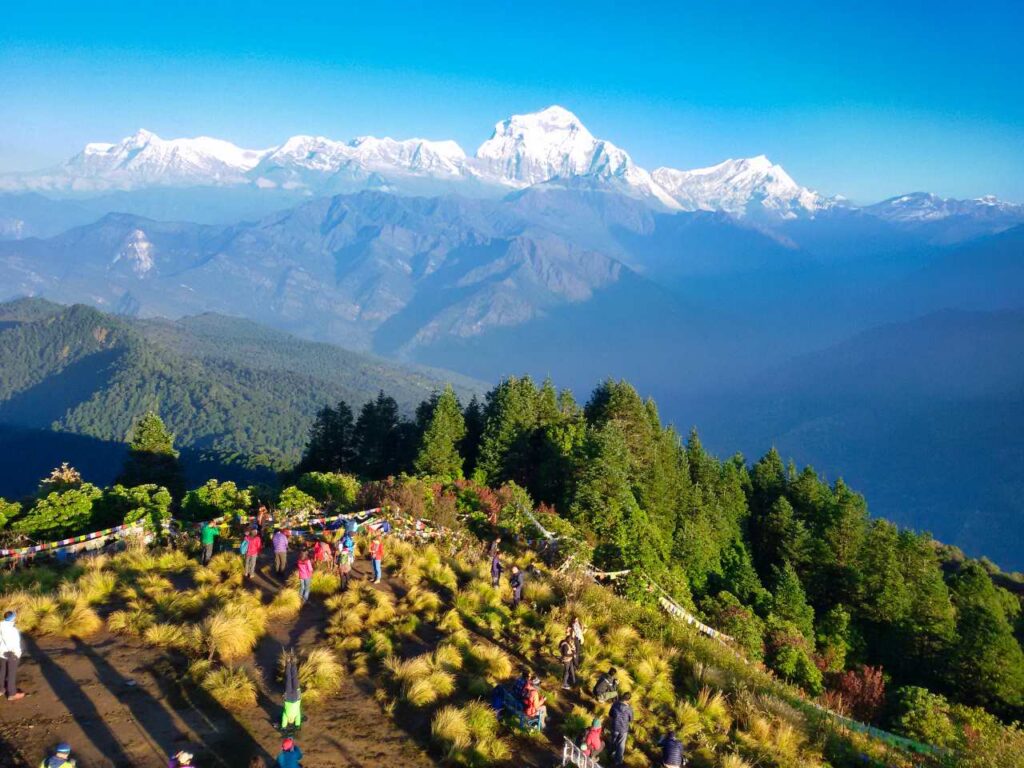
One of the first highlights is the legendary Poon Hill (3,210 m), renowned for its unforgettable sunrise. As the first golden light touches the snow-covered peaks, you’ll enjoy sweeping views of the Annapurna and Dhaulagiri mountain ranges, creating one of the most iconic Himalayan panoramas in Nepal.
Leaving the Poon Hill trail behind, the route continues into the tranquil Annapurna Sanctuary. The landscape gradually transforms from lush forests to alpine valleys, with crystal-clear rivers, cascading waterfalls, towering cliffs, and glacier-fed streams accompanying your journey. Traditional Gurung villages along the trail offer warm hospitality and provide a fascinating insight into the mountain lifestyle that has flourished for generations.
The adventure reaches its highest point at Annapurna Base Camp (4,130 m), surrounded by a magnificent natural amphitheater of towering Himalayan giants. Standing at the base of Annapurna I (8,091 m), the world’s tenth-highest mountain, is a truly inspiring experience. The panoramic views of Annapurna South, Hiunchuli, Machhapuchhre (Fishtail), Gangapurna, and other surrounding peaks create memories that will last a lifetime.
After witnessing the spectacular mountain sunrise from Annapurna Base Camp, the trail descends through pristine forests to Jhinu Danda, where natural hot springs provide a relaxing conclusion to the trekking experience. The journey finishes with a comfortable return to Pokhara and Kathmandu, completing an unforgettable exploration of one of Nepal’s most scenic mountain regions.
At Himalayan Sherpa Exodus Team Treks & Expeditions Pvt. Ltd., every itinerary is thoughtfully designed with gradual altitude gain, experienced local guides, responsible tourism practices, and personalized service. Whether you are an experienced hiker or embarking on your first Himalayan adventure, this trek offers the perfect combination of natural beauty, cultural discovery, and unforgettable mountain experiences.
Trip Highlights
Trip Highlights
- Experience two of Nepal's most iconic trekking destinations in one unforgettable journey.
- Witness a breathtaking Himalayan sunrise from Poon Hill (3,210 m), one of Nepal's most famous viewpoints.
- Trek to the spectacular Annapurna Base Camp (4,130 m), surrounded by the towering Annapurna Massif.
- Enjoy close-up views of Annapurna I (8,091 m), Machhapuchhre (Fishtail), Hiunchuli, Annapurna South, Gangapurna, Dhaulagiri, and numerous Himalayan peaks.
- Walk through beautiful rhododendron, bamboo, oak, and pine forests rich in Himalayan wildlife.
- Explore traditional Gurung villages and experience authentic mountain hospitality.
- Cross scenic suspension bridges above the crystal-clear Modi Khola River.
- Visit peaceful mountain settlements including Ghorepani, Chuile, Sinuwa, Deurali, and Jhinu Danda.
- Enter the breathtaking Annapurna Sanctuary, one of Nepal's most remarkable glacial valleys.
- Relax in the natural hot springs of Jhinu Danda after completing the trek.
- Discover diverse landscapes ranging from subtropical forests to alpine meadows and glacier valleys.
- Capture unforgettable photographs of snow-covered peaks, waterfalls, rivers, and colorful mountain villages.
- Stay in comfortable local teahouses while enjoying freshly prepared Himalayan meals.
- Trek with experienced, government-licensed local guides who prioritize safety, comfort, and personalized service.
- Experience a carefully paced itinerary suitable for both first-time trekkers and experienced mountain enthusiasts.
- Create lifelong memories while exploring one of the world's most beautiful trekking regions with Himalayan Sherpa Exodus Team Treks & Expeditions Pvt. Ltd.
Day 01 :
Arrival in Kathmandu, Nepal
Altitude: 1,365 m / 4,478 ft
Driving Distance: Approximately 6–8 km (Airport to Hotel)
Driving Time: 20–30 minutes
Welcome to Nepal, the gateway to the Himalayas! Upon your arrival at Tribhuvan International Airport, a representative from Himalayan Sherpa Exodus Team Treks & Expeditions Pvt. Ltd. will warmly welcome you and transfer you to your hotel in Kathmandu.
After checking in, enjoy some free time to recover from your journey or explore the vibrant streets of Thamel, where you can discover local cafés, souvenir shops, trekking equipment stores, and traditional Nepali handicrafts.
In the evening, meet your trekking guide for a comprehensive briefing about your upcoming Ghorepani Poon Hill and Annapurna Base Camp adventure. Your guide will review the itinerary, check your equipment, and provide important safety information before the trek begins.
Highlights
- Traditional Nepali welcome.
- Comfortable hotel transfer.
- Free time to explore Thamel.
- Pre-trek briefing and equipment check.
Accommodation: Hotel in Kathmandu
Day 02 :
Travel from Kathmandu to Pokhara
Starting Altitude: Kathmandu – 1,365 m / 4,478 ft
Ending Altitude: Pokhara – 828 m / 2,717 ft
Option 1: Domestic Flight
- Flight Duration: Approximately 25–30 minutes
Option 2: Tourist Bus
- Driving Distance: Approximately 200 km / 124 mi
- Driving Time: 6–7 hours
After breakfast, travel to the beautiful lakeside city of Pokhara, the gateway to the Annapurna region. If you choose the domestic flight, enjoy breathtaking aerial views of the Himalayas, including the Annapurna, Manaslu, and Dhaulagiri ranges.
Alternatively, the scenic drive follows the Prithvi Highway alongside the Trishuli and Marshyangdi Rivers, passing terraced farmland, traditional villages, and rolling hills before reaching Pokhara.
Upon arrival, check into your hotel and spend the afternoon relaxing beside Phewa Lake or exploring the lively Lakeside district.
Highlights
- Scenic drive or short mountain flight.
- Beautiful views of rivers and countryside.
- Relax at Phewa Lake.
- Overnight in Pokhara.
Meals: Breakfast
Accommodation: Hotel in Pokhara
Day 03 :
Drive from Pokhara to Banthanti and Trek to Ghorepani
Starting Altitude: Pokhara – 828 m / 2,717 ft
Drive Destination: Banthanti – 2,210 m / 7,251 ft
Ending Altitude: Ghorepani – 2,880 m / 9,449 ft
Driving Distance: Approximately 42 km / 26 mi
Driving Time: 2.5–3 hours
Trekking Distance: Approximately 11 km / 6.8 mi
Walking Duration: 6–7 hours
After breakfast, enjoy a scenic drive through picturesque villages and terraced hillsides to Banthanti, where your trek officially begins.
The trail gradually climbs through beautiful forests of rhododendron, oak, and pine while passing charming mountain settlements and peaceful woodland paths. During spring, the surrounding hills burst into vibrant colors as rhododendron flowers bloom across the landscape.
As you continue ascending, magnificent views of Annapurna South, Hiunchuli, and Machhapuchhre (Fishtail Mountain) begin to appear.
By late afternoon, arrive at the lively mountain village of Ghorepani, a popular overnight stop famous for its panoramic Himalayan scenery and warm hospitality.
Highlights
- Scenic mountain drive to Banthanti.
- Trek through rhododendron forests.
- Beautiful Himalayan mountain views.
- Traditional Magar villages.
- Overnight in Ghorepani.
Meals: Breakfast, Lunch & Dinner
Accommodation: Mountain Teahouse
Day 04 :
Sunrise at Poon Hill, then Trek to Chuile
Starting Altitude: Ghorepani – 2,880 m / 9,449 ft
Highest Altitude: Poon Hill – 3,210 m / 10,531 ft
Ending Altitude: Chuile – 2,245 m / 7,365 ft
Trekking Distance: Approximately 11.5 km / 7.1 mi
Walking Duration: 6–7 hours
Rise before dawn for one of Nepal's most famous sunrise experiences. A short uphill hike brings you to Poon Hill (3,210 m), where spectacular panoramic views unfold as the first rays of sunlight illuminate the snow-covered peaks.
Enjoy breathtaking views of Dhaulagiri, Annapurna I, Annapurna South, Machhapuchhre, Nilgiri, Hiunchuli, Tukuche Peak, and numerous surrounding Himalayan summits.
After returning to Ghorepani for breakfast, continue your trek through lush forests toward Chuile. The trail passes peaceful villages, streams, and dense woodlands filled with birds and wildlife, offering a quieter and more secluded trekking experience.
Chuile provides a peaceful overnight stop surrounded by forest and mountain scenery.
Highlights
- Spectacular sunrise from Poon Hill.
- One of Nepal's finest Himalayan viewpoints.
- Magnificent panorama of the Annapurna and Dhaulagiri ranges.
- Scenic forest trekking to Chuile.
Meals: Breakfast, Lunch & Dinner
Accommodation: Mountain Teahouse
Day 05 :
Trek from Chuile to Sinuwa
Starting Altitude: Chuile – 2,245 m / 7,365 ft
Ending Altitude: Sinuwa – 2,300 m / 7,546 ft
Trekking Distance: Approximately 10 km / 6.2 mi
Walking Duration: 5–6 hours
Today's journey follows beautiful forest trails toward the heart of the Annapurna Sanctuary. Descend through bamboo and rhododendron forests before crossing suspension bridges over the Modi Khola.
The trail gradually climbs through peaceful woodland and traditional Gurung settlements, offering occasional glimpses of Machhapuchhre, Hiunchuli, and Annapurna South between the trees.
As you reach Sinuwa, enjoy the tranquil mountain atmosphere and prepare for the higher sections of the Annapurna Base Camp trail in the coming days.
The combination of rich forests, flowing rivers, mountain wildlife, and welcoming local villages makes today's walk both relaxing and rewarding.
Highlights
- Trek through bamboo and rhododendron forests.
- Cross scenic suspension bridges.
- Beautiful views of Machhapuchhre and Annapurna South.
- Peaceful overnight stay in Sinuwa.
Meals: Breakfast, Lunch & Dinner
Accommodation: Mountain Teahouse
Day 06 :
Trek from Sinuwa to Deurali
Starting Altitude: Sinuwa – 2,300 m / 7,546 ft
Ending Altitude: Deurali – 3,200 m / 10,499 ft
Trekking Distance: Approximately 12 km / 7.5 mi
Walking Duration: 6–7 hours
After breakfast, continue deeper into the Annapurna Sanctuary. The trail climbs gradually through lush bamboo and rhododendron forests before reaching the peaceful settlement of Bamboo. As the forest becomes thinner, the scenery changes into alpine vegetation with dramatic mountain cliffs surrounding the valley.
Passing Dovan and the Himalayan Hotel, the route follows the Modi Khola through a spectacular glacial valley. Along the way, waterfalls tumble from towering cliffs while impressive views of Machhapuchhre (Fishtail Mountain) become increasingly prominent.
The final section ascends gently to Deurali, a small mountain settlement nestled beneath massive rock walls and surrounded by breathtaking Himalayan scenery.
Highlights
- Trek through dense bamboo and rhododendron forests.
- Follow the scenic Modi Khola Valley.
- Beautiful views of Machhapuchhre and surrounding peaks.
- Experience the changing alpine landscape.
Meals: Breakfast, Lunch & Dinner
Accommodation: Mountain Teahouse
Day 07 :
Trek from Deurali to Annapurna Base Camp
Starting Altitude: Deurali – 3,200 m / 10,499 ft
Via: Machhapuchhre Base Camp (3,700 m / 12,139 ft)
Ending Altitude: Annapurna Base Camp – 4,130 m / 13,550 ft
Trekking Distance: Approximately 10 km / 6.2 mi
Walking Duration: 5–6 hours
Today's journey leads into the spectacular heart of the Annapurna Sanctuary. Leaving Deurali behind, the trail gradually climbs through open alpine terrain toward Machhapuchhre Base Camp (MBC), where magnificent views of towering Himalayan peaks begin to unfold.
From MBC, continue through broad glacial meadows surrounded by snow-covered mountains on every side. The landscape becomes increasingly dramatic as you approach Annapurna Base Camp (ABC).
Standing at 4,130 meters, Annapurna Base Camp offers a breathtaking 360-degree panorama featuring Annapurna I (8,091 m), Annapurna South, Hiunchuli, Machhapuchhre, Tent Peak, Annapurna III, Gangapurna, and several other magnificent Himalayan peaks.
Watching the changing colors of the mountains during sunset creates one of the most memorable moments of the entire trek.
Highlights
- Enter the spectacular Annapurna Sanctuary.
- Visit Machhapuchhre Base Camp.
- Reach Annapurna Base Camp (4,130 m).
- Panoramic views of the Annapurna Massif.
- Unforgettable sunset over the Himalayas.
Meals: Breakfast, Lunch & Dinner
Accommodation: Mountain Teahouse
Day 08 :
Trek from Annapurna Base Camp to Sinuwa
Starting Altitude: Annapurna Base Camp – 4,130 m / 13,550 ft
Ending Altitude: Sinuwa – 2,300 m / 7,546 ft
Trekking Distance: Approximately 18 km / 11.2 mi
Walking Duration: 7–8 hours
Wake early to witness a spectacular sunrise over the Annapurna Sanctuary as golden light gradually illuminates the surrounding snow-covered peaks.
After breakfast, begin your descent through Machhapuchhre Base Camp, Deurali, Himalayan Hotel, Dovan, and Bamboo before reaching Sinuwa.
The return journey offers a different perspective of the dramatic valley, with opportunities to appreciate waterfalls, dense forests, and towering cliffs from above. Descending to a lower elevation also provides welcome relief after spending the night at high altitude.
Highlights
- Sunrise at Annapurna Base Camp.
- Scenic descent through the Annapurna Sanctuary.
- Magnificent glacier and mountain views.
- Overnight in peaceful Sinuwa.
Meals: Breakfast, Lunch & Dinner
Accommodation: Mountain Teahouse
Day 09 :
Trek from Sinuwa to Jhinu Danda and Drive to Pokhara
Starting Altitude: Sinuwa – 2,300 m / 7,546 ft
Ending Altitude: Pokhara – 822 m / 2,697 ft
Trekking Destination: Jhinu Danda – 1,780 m / 5,840 ft
Trekking Distance: Approximately 8.5 km / 5.3 mi
Walking Duration: 3–4 hours
Driving Distance: Approximately 65 km / 40 mi
Driving Duration: 3–4 hours
After breakfast, leave Sinuwa and descend through lush rhododendron and bamboo forests, crossing suspension bridges above the Modi Khola. The trail passes the charming villages of Chhomrong and New Bridge before reaching Jhinu Danda, a peaceful riverside settlement renowned for its natural hot springs.
If time allows, you may take a short walk down to the relaxing hot spring pools beside the Modi Khola River, where many trekkers enjoy soaking in the warm mineral water after several days of trekking.
Following lunch, continue by local jeep to the beautiful lakeside city of Pokhara. The scenic drive winds through picturesque hills, terraced farmland, traditional villages, and river valleys before arriving in Nepal's adventure capital.
The evening is free to explore the vibrant Lakeside area, enjoy a peaceful stroll along Phewa Lake, or relax at one of the many cafés overlooking the water.
Highlights
- Descend through beautiful rhododendron and bamboo forests.
- Visit the natural hot springs at Jhinu Danda.
- Scenic jeep drive to Pokhara.
- Relax beside the tranquil Phewa Lake.
Meals: Breakfast & Lunch
Accommodation: Hotel in Pokhara
Day 10 :
Return from Pokhara to Kathmandu
Starting Altitude: Pokhara – 822 m / 2,697 ft
Ending Altitude: Kathmandu – 1,365 m / 4,478 ft
Option 1: Domestic Flight
Flight Duration: Approximately 25–30 minutes
Option 2: Tourist Bus
Driving Distance: Approximately 200 km / 124 mi
Driving Duration: 7–8 hours
After breakfast, return to Kathmandu by either a scenic domestic flight or a comfortable tourist bus, depending on your travel preference.
The short mountain flight offers spectacular aerial views of the Annapurna, Manaslu, and Langtang Himalayan ranges. Alternatively, the overland journey follows the scenic Prithvi Highway alongside the Trishuli River, passing picturesque villages, green hills, and terraced fields.
Upon arrival in Kathmandu, transfer to your hotel and enjoy the remainder of the day at your leisure. You may explore Thamel, purchase souvenirs, visit nearby cultural landmarks, or simply relax after completing your Himalayan adventure.
Highlights
- Scenic flight or comfortable drive to Kathmandu.
- Magnificent Himalayan views (flight option).
- Free time for shopping or sightseeing.
- Celebrate the successful completion of your trek.
Meals: Breakfast
Accommodation: Hotel in Kathmandu
Day 11 :
Leisure in Kathmandu or Final Departure
Altitude: Kathmandu – 1,365 m / 4,478 ft
Today marks the conclusion of your unforgettable journey through the Annapurna region.
If your international flight departs later in the day, you may spend your free time exploring Kathmandu's historic landmarks, relaxing in a café, or shopping for traditional handicrafts and trekking souvenirs in Thamel.
According to your flight schedule, a representative from Himalayan Sherpa Exodus Team Treks & Expeditions Pvt. Ltd. will transfer you to Tribhuvan International Airport for your onward journey.
As you leave Nepal, take with you unforgettable memories of spectacular Himalayan landscapes, welcoming mountain communities, breathtaking sunrises from Poon Hill, and the remarkable experience of standing at Annapurna Base Camp (4,130 m).
We sincerely thank you for choosing Himalayan Sherpa Exodus Team Treks & Expeditions Pvt. Ltd. and look forward to welcoming you back for another adventure in the Himalayas.
Highlights
- Free leisure time in Kathmandu.
- Airport transfer service.
- End of your Ghorepani Poon Hill & Annapurna Base Camp adventure.
- Depart with lifelong memories of the Himalayas.
Meals: Breakfast
Ghorepani Poon Hill ABC Trek
The Trip Package Cost Includes
- Airport pick-up and drop-off by private tourist vehicle.
- Two nights' accommodation in a comfortable hotel in Kathmandu with breakfast.
- One night's hotel accommodation in Pokhara with breakfast.
- Tourist bus transportation between Kathmandu and Pokhara (or domestic flight according to the selected package).
- Private or shared local transportation from Pokhara to Banthanti, the trek starting point.
- Local jeep transportation from Jhinu Danda back to Pokhara.
- Annapurna Conservation Area Permit (ACAP).
- TIMS Card or any required trekking registration under current government regulations.
- Government-licensed, English-speaking professional trekking guide.
- Experienced porter (one porter shared between two trekkers).
- Guide and porter insurance, meals, accommodation, transportation, and wages.
- Comfortable teahouse accommodation throughout the trek.
- Three freshly prepared meals daily during the trekking period (breakfast, lunch, and dinner).
- Fresh seasonal fruit after dinner whenever available.
- Complimentary use of a sleeping bag, down jacket, duffel bag, and trekking poles (to be returned after the trek).
- Comprehensive first-aid kit carried by the trekking guide.
- Official trek completion certificate from Himalayan Sherpa Exodus Team Treks & Expeditions Pvt. Ltd.
- All applicable government taxes and company service charges.
The Trip Package Cost Excludes
- International airfare to and from Nepal.
- Nepal entry visa fee.
- Personal travel insurance, including emergency helicopter evacuation.
- Personal trekking gear and equipment.
- Lunch and dinner in Kathmandu and Pokhara.
- Soft drinks, bottled beverages, alcoholic drinks, snacks, desserts, and personal refreshments.
- Hot showers, Wi-Fi, battery charging, laundry, and telephone charges in mountain lodges.
- Personal medical expenses and medications.
- Tips for the guide, porter, and driver (tipping is customary and greatly appreciated).
- Additional accommodation or transportation caused by weather conditions, road closures, illness, or other unforeseen circumstances.
- Any services not specifically mentioned under "Cost Includes."
Best Time to Trek
The 11 Days Ghorepani Poon Hill & Annapurna Base Camp Trek can be enjoyed throughout much of the year, but spring and autumn provide the most favorable trekking conditions.
Spring (March to May) : Spring is one of the most colorful seasons in the Annapurna region. Rhododendron forests bloom with vibrant red, pink, and white flowers, while clear skies offer spectacular mountain views. Comfortable daytime temperatures make trekking enjoyable from the lower hills to Annapurna Base Camp.
Autumn (September to November) : Autumn is widely regarded as the best trekking season in Nepal. Following the monsoon rains, the air becomes exceptionally clear, revealing outstanding panoramic views of the Annapurna range. Stable weather, pleasant temperatures, and dry trails make this season ideal for trekking.
Winter (December to February) : Winter brings peaceful trails and beautiful snow-covered landscapes. Although mornings and evenings become much colder, the trek remains accessible for well-prepared trekkers. Occasional snowfall may occur near Annapurna Base Camp during mid-winter.
Summer / Monsoon (June to August) : Summer offers lush green forests and fewer visitors. Frequent afternoon rainfall, muddy trails, and occasional landslides are common in lower elevations, while higher mountain scenery remains equally impressive when weather conditions are favorable.
Trek Difficulty
The 11 Days Ghorepani Poon Hill & Annapurna Base Camp Trek is considered a moderate Himalayan trek suitable for trekkers with a reasonable level of physical fitness.
Daily walks generally range from 5 to 7 hours, with the longest trekking day lasting approximately 7 to 8 hours. The route includes numerous stone staircases, forest trails, river crossings, and gradual mountain ascents before reaching Annapurna Base Camp (4,130 meters).
No technical climbing or mountaineering experience is required. However, regular walking, hiking, or cardiovascular exercise before your trip will significantly enhance your comfort and enjoyment throughout the journey.
Acclimatization & Altitude Sickness
Although the maximum elevation on this trek is lower than many Himalayan expeditions, trekkers still ascend above 4,000 meters, where the thinner air may affect some individuals.
Our itinerary has been carefully designed with a gradual elevation gain, allowing your body sufficient time to adjust naturally as you progress toward Annapurna Base Camp.
To reduce the likelihood of altitude-related discomfort, we recommend:
- Walking at a comfortable and steady pace.
- Drinking at least 3 liters of water each day.
- Eating balanced and nutritious meals.
- Avoiding alcohol before reaching higher elevations.
- Informing your guide immediately if you experience headaches, dizziness, nausea, unusual fatigue, or shortness of breath.
Our experienced guides continuously monitor your health and are trained to respond appropriately should altitude-related symptoms occur.
Gurung Culture & Monasteries
The Ghorepani Poon Hill and Annapurna Base Camp Trek offers a wonderful opportunity to experience the rich cultural heritage of the Gurung people, one of Nepal’s most respected Himalayan communities. For generations, the Gurung people have lived among these mountains, preserving their traditions, language, architecture, and warm hospitality.
Along the trail, you’ll pass through traditional villages where beautifully constructed stone houses, terraced fields, colorful flower gardens, and welcoming tea houses reflect the simple yet vibrant mountain lifestyle. Visitors can observe local farming practices, seasonal festivals, and everyday village life while learning about the customs that have shaped the region for centuries.
The trekking route also features numerous symbols of Himalayan Buddhism, including prayer flags, mani walls, chortens, and small monasteries that provide peaceful places for reflection and spiritual practice. Gentle Buddhist traditions blend harmoniously with the local culture, creating an atmosphere of tranquility throughout the journey.
As you travel deeper into the Annapurna Sanctuary, the surrounding mountains become more than just spectacular scenery—they represent a spiritual landscape that has inspired local communities for generations. Combined with the genuine hospitality of the Gurung people, this cultural experience adds remarkable depth and meaning to the adventure, making the trek as enriching culturally as it is visually unforgettable.
Preparation Guide
A successful Himalayan trek begins with proper preparation. Although the 11 Days Ghorepani Poon Hill & Annapurna Base Camp Trek is suitable for most active travelers, a good level of physical fitness will make the journey more enjoyable.
We recommend starting light fitness training at least 4 to 6 weeks before your trip. Regular activities such as hiking, brisk walking, jogging, cycling, swimming, or climbing stairs help improve endurance for consecutive trekking days. Strengthening your legs and core muscles can also reduce fatigue on steep ascents and descents.
Before arriving in Nepal, make sure your trekking boots are comfortable and already broken in. Pack lightweight clothing that can be layered easily to adapt to changing mountain temperatures. Getting adequate rest, maintaining a balanced diet, and staying hydrated before and during the trek will help your body perform well at higher elevations.
Our experienced trekking guides will conduct a detailed pre-trek briefing, explaining the itinerary, safety guidelines, weather conditions, and altitude awareness to ensure you begin your adventure with confidence.
Weather & Climate
The Ghorepani Poon Hill & Annapurna Base Camp Trek passes through several climate zones, creating diverse weather conditions throughout the journey.
The lower elevations around Pokhara and Banthanti are generally warm and humid, with green forests and mild temperatures. As you climb higher through Ghorepani, Deurali, and Annapurna Base Camp, the air becomes cooler, drier, and noticeably thinner.
During spring and autumn, daytime temperatures are comfortable for walking, while mornings and evenings become cold, particularly above 3,000 meters. At Annapurna Base Camp, nighttime temperatures often fall below freezing, even during the main trekking seasons.
Mountain weather can change rapidly. Bright sunshine may be followed by clouds, rain, or snowfall within a few hours. For this reason, trekkers should always carry waterproof clothing and warm layers regardless of the season.
Accommodation
Accommodation during the trek is provided in locally operated mountain teahouses that offer a welcoming and authentic Himalayan experience.
Guest rooms are generally simple, clean, and comfortable, with twin beds, mattresses, pillows, blankets, and shared bathroom facilities. Larger villages such as Ghorepani and Chhomrong provide a wider range of lodge options, while higher settlements such as Deurali and Annapurna Base Camp offer more basic facilities due to their remote location.
Hotels in Kathmandu and Pokhara provide modern amenities, private rooms, and comfortable surroundings before and after your trekking adventure.
Although mountain accommodation is modest, the genuine hospitality of local hosts makes every overnight stay a memorable part of the journey.
Meals During the Trek
Nutritious meals play an important role in maintaining energy and supporting acclimatization during the trek.
Mountain teahouses prepare freshly cooked dishes using locally available ingredients. Menus include both traditional Nepali cuisine and a variety of international meals suitable for trekkers.
Popular meal options include:
- Dal Bhat (traditional Nepali meal)
- Fried rice
- Noodles
- Pasta
- Vegetable curry
- Soups
- Tibetan bread
- Pancakes
- Eggs
- Chapati
- Potatoes
- Porridge
- Seasonal vegetables
- Tea, coffee, hot lemon, and hot chocolate
Vegetarian meals are widely available and are often recommended at higher elevations because they are easier to digest.
Our trekking package includes breakfast, lunch, and dinner throughout the trekking period.
Drinking Water
Staying properly hydrated is essential while trekking in the Himalayas.
Clean drinking water is available throughout the Annapurna region. Most teahouses provide boiled drinking water for a small fee, while natural water sources can be safely treated using purification tablets, portable filters, or UV purification devices.
To reduce plastic waste, we encourage trekkers to carry reusable water bottles or hydration systems instead of purchasing single-use plastic bottles.
Drinking 3 to 4 liters of water each day helps improve acclimatization and reduces the risk of dehydration at higher elevations.
Internet & Charging
Internet access is available in many villages along the trekking route, although connection quality varies depending on altitude and weather conditions.
Wi-Fi services are commonly available in Ghorepani, Chhomrong, and several other larger settlements for an additional fee. Mobile network coverage is available in many lower sections of the trail but becomes less reliable as you approach Annapurna Base Camp.
Most mountain lodges offer battery charging facilities for cameras, mobile phones, and other electronic devices. Charging usually requires a small service fee, so carrying a power bank is highly recommended for added convenience.
Travel Insurance
Comprehensive travel insurance is strongly recommended for all trekkers joining this adventure.
Your insurance policy should include:
- High-altitude trekking coverage up to 4,500 meters or higher
- Emergency helicopter evacuation
- Medical treatment and hospitalization
- Accidental injury protection
- Trip cancellation or interruption
- Baggage loss or delay
Please provide your insurance details to our office before the trek begins and carry both printed and digital copies throughout your journey.
Proper travel insurance provides peace of mind and ensures rapid assistance should an unexpected situation arise in the mountains.
Packing List
Packing appropriate equipment will help ensure a safe and comfortable trekking experience.
Clothing
- Waterproof trekking boots
- Comfortable camp shoes or sandals
- Down jacket
- Waterproof jacket and trousers
- Thermal base layers
- Fleece jacket
- Trekking trousers
- Quick-dry T-shirts
- Warm hat
- Sun hat
- Neck gaiter or buff
- Warm gloves
- Wool trekking socks
Trekking Equipment
- Sleeping bag (recommended comfort rating: -10°C)
- Trekking poles
- Backpack (30–40 liters)
- Duffel bag (if using porter service)
- Headlamp with spare batteries
- Sunglasses with UV protection
- Water bottles or hydration bladder
- Power bank
- Universal travel adapter
Personal Essentials
- Sunscreen (SPF 50+)
- Lip balm
- Personal medications
- Toiletries
- Wet wipes
- Hand sanitizer
- Camera
- Passport
- Passport-sized photographs
- Travel insurance documents
- Cash for personal expenses
Safety Measures
Your safety remains our highest priority throughout every stage of the trek.
Our professional trekking guides are experienced in high-altitude environments and receive regular training in mountain safety, first aid, and emergency response.
To ensure a safe trekking experience, we follow several important safety practices:
- Well-planned itinerary with gradual altitude gain.
- Continuous monitoring of weather and trail conditions.
- Daily health assessments by your guide.
- Comprehensive first-aid kit carried throughout the trek.
- Flexible itinerary adjustments when necessary.
- Immediate coordination of emergency evacuation if required.
Trekkers are encouraged to communicate openly with their guide about any physical discomfort so that any concerns can be addressed promptly and appropriately.
Frequently Asked Questions (FAQ)
How difficult is the Ghorepani Poon Hill & Annapurna Base Camp Trek?
This trek is considered moderate, making it suitable for active beginners as well as experienced trekkers with a reasonable level of physical fitness.
What is the highest point of the trek?
The highest elevation reached is Annapurna Base Camp (4,130 meters / 13,550 feet).
How many hours do we walk each day?
Most trekking days involve 5 to 7 hours of walking, with the longest day lasting approximately 7 to 8 hours.
Do I need previous trekking experience?
Previous trekking experience is helpful but not required. Good physical preparation and a positive attitude are usually sufficient.
Is altitude sickness a concern?
The itinerary has been carefully designed with a gradual ascent to help your body adjust naturally. Staying hydrated and following your guide’s advice greatly reduces the risk of altitude-related illness.
Can I charge my phone and camera during the trek?
Yes. Most teahouses provide charging facilities for a small additional fee. Carrying a power bank is recommended for convenience.
Is Wi-Fi available along the route?
Wi-Fi is available in many villages, although internet speed and reliability decrease at higher elevations.
What type of accommodation is provided?
Accommodation consists of clean mountain teahouses during the trek and comfortable hotels in Kathmandu and Pokhara.
Are vegetarian meals available?
Yes. Vegetarian dishes are widely available throughout the Annapurna region and are commonly chosen by trekkers at higher elevations.
Why choose Himalayan Sherpa Exodus Team Treks & Expeditions Pvt. Ltd.?
We are committed to delivering safe, authentic, and personalized Himalayan adventures led by experienced local professionals. Our carefully planned itineraries, reliable support team, responsible tourism practices, and dedication to outstanding service ensure every guest enjoys an unforgettable journey through Nepal’s magnificent mountain landscapes.
Be Well Prepared for Your Trek in Nepal
Proper preparation is the key to a safe, comfortable, and enjoyable trekking experience in Nepal. Please use this equipment guide to prepare the essential clothing, footwear, personal items, health and safety gear, and other trekking necessities according to your chosen route and season.
Pack wisely, travel comfortably, and trek confidently with Himalayan Sherpa Exodus Team.
 4130M
 Moderate