Trip Overview
ACT + Tilicho Lake + ABC Classic Trek Overview
The 19 Days ACT + Tilicho Lake + Annapurna Base Camp Classic Trek is one of Nepal’s most rewarding and diverse Himalayan adventures, thoughtfully crafted for trekkers who want to experience the very best of the Annapurna region in a single journey. This extended classic route links the world-famous Annapurna Circuit, the breathtaking turquoise waters of Tilicho Lake, the dramatic crossing of Thorong La Pass (5,416m), and the unforgettable sanctuary of Annapurna Base Camp (4,130m).
The journey begins with a scenic drive from Kathmandu to Chame before gradually ascending through picturesque villages, pine forests, alpine meadows, and ancient Tibetan-influenced settlements. Along the way, trekkers enjoy spectacular mountain scenery while allowing proper acclimatization through carefully planned hiking days, including an excursion to the stunning Ice Lake above Manang.
A major highlight is the visit to Tilicho Lake (4,920m), one of the world’s highest alpine lakes, surrounded by towering snow-covered peaks and rugged Himalayan landscapes. Afterward, the adventure continues across the legendary Thorong La Pass, the highest point of the trek, offering breathtaking panoramic views before descending to the sacred pilgrimage town of Muktinath.
The experience doesn’t end there. From the Kali Gandaki Valley and the natural hot springs of Tatopani, the route continues through beautiful rhododendron forests to the famous Poon Hill viewpoint, where sunrise paints the Annapurna and Dhaulagiri ranges in brilliant golden light. The final section leads deep into the Annapurna Sanctuary, surrounded by towering Himalayan giants, culminating at Annapurna Base Camp—an unforgettable destination nestled beneath Annapurna I, Machhapuchhre, Hiunchuli, and several other magnificent peaks.
Designed with gradual altitude gain, proper acclimatization, comfortable tea house accommodation, and rich cultural encounters, this trek offers the perfect balance of adventure, scenery, local hospitality, and Himalayan achievement. Guided by the experienced team of Himalayan Sherpa Exodus Team Treks & Expeditions Pvt. Ltd., this expedition provides a safe, memorable, and authentic trekking experience for those seeking Nepal’s most iconic mountain landscapes.
ACT + Tilicho Lake + ABC Classic Trek Highlights
ACT + Tilicho Lake + ABC Classic Trek Highlights
- Experience Nepal's ultimate Himalayan adventure by combining the Annapurna Circuit, Tilicho Lake, Poon Hill, and Annapurna Base Camp in one spectacular journey.
- Trek through diverse landscapes ranging from lush forests and waterfalls to high alpine valleys, glacial terrain, and dramatic mountain passes.
- Visit the breathtaking Tilicho Lake (4,920m), one of the world's highest alpine lakes with extraordinary Himalayan scenery.
- Enjoy an acclimatization hike to the stunning Ice Lake, offering magnificent views of Annapurna, Gangapurna, Chulu, and surrounding peaks.
- Cross the legendary Thorong La Pass (5,416m), one of the highest and most famous trekking passes in the Himalayas.
- Explore the sacred pilgrimage site of Muktinath, revered by both Hindus and Buddhists.
- Travel through the spectacular Kali Gandaki Gorge, one of the deepest river gorges on Earth.
- Relax in the natural hot springs at Tatopani after days of high-altitude trekking.
- Witness the unforgettable sunrise from Poon Hill (3,210m) with panoramic views of Annapurna, Dhaulagiri, Nilgiri, Machhapuchhre, and Hiunchuli.
- Walk through colorful rhododendron forests, traditional Gurung villages, and peaceful Himalayan settlements.
- Reach the magnificent Annapurna Base Camp (4,130m), surrounded by towering snow-capped peaks within the Annapurna Sanctuary.
- Experience diverse ethnic cultures including Gurung, Manangi, Thakali, and Tibetan-influenced mountain communities.
- Stay in welcoming local tea houses while enjoying authentic Himalayan hospitality.
- Observe changing ecosystems, unique wildlife habitats, alpine vegetation, and glacier-fed rivers throughout the trek.
- Capture spectacular views of Annapurna I (8,091m), Dhaulagiri (8,167m), Machhapuchhre (6,993m), Gangapurna, Tilicho Peak, Chulu East & West, Nilgiri, Hiunchuli, Lamjung Himal, and many other Himalayan giants.
- Follow a carefully designed itinerary with sufficient acclimatization for a safer and more enjoyable high-altitude experience.
- Suitable for experienced trekkers seeking a challenging, rewarding, and comprehensive Himalayan trekking expedition.
- Professionally organized by Himalayan Sherpa Exodus Team Treks & Expeditions Pvt. Ltd., ensuring experienced guides, reliable logistics, personalized service, and an unforgettable journey through Nepal's Annapurna region.
Day 01 :
Arrival in Kathmandu (1,350m / 4,429ft)
Driving Distance: Airport to Hotel: 6–8 km (20–30 minutes)
Upon your arrival at Tribhuvan International Airport, a representative from Himalayan Sherpa Exodus Team Treks & Expeditions Pvt. Ltd. will warmly welcome you and transfer you to your hotel in Kathmandu. After check-in, enjoy some time to relax or explore the vibrant streets of Thamel, known for its trekking shops, restaurants, and cultural atmosphere. In the evening, you'll receive a detailed trek briefing and have an opportunity to meet your guide while making final preparations for the adventure ahead.
Accommodation: Hotel in Kathmandu
Day 02 :
Drive from Kathmandu (1,350m) to Chame (2,710m) via Besisahar
- Driving Distance: Approximately 240 km / 149 mi
- Driving Duration: 11–12 hours
After an early breakfast, begin a scenic drive from Kathmandu to Besisahar along the Prithvi Highway, passing picturesque villages, terraced farmland, and riverside landscapes. From Besisahar, continue by local jeep along the rugged mountain road following the Marsyangdi River to Chame, the administrative headquarters of the Manang District. Along the route, enjoy impressive waterfalls, dense pine forests, and the first magnificent views of Lamjung Himal and Annapurna II.
Accommodation: Tea House
Meals: Breakfast, Lunch & Dinner
Day 03 :
Trek from Chame (2,710m) to Upper Pisang (3,310m)
- Walking Distance: Approximately 14 km / 8.7 mi
- Walking Duration: 7–8 hours
Today's trek follows the beautiful Marsyangdi River through fragrant pine and fir forests before crossing several suspension bridges. As you gradually gain elevation, breathtaking views of Annapurna II, Pisang Peak, and surrounding Himalayan giants accompany your journey. Passing through Bhratang and apple orchards, the trail eventually climbs to the traditional village of Upper Pisang, where Tibetan-influenced culture and spectacular mountain scenery create a memorable overnight stop.
Accommodation: Tea House
Meals: Breakfast, Lunch & Dinner
Day 04 :
Trek from Upper Pisang (3,310m) to Ghyaru / Ngawal (3,670m)
- Walking Distance: Approximately 11 km / 6.8 mi
- Walking Duration: 6–7 hours
Leaving Upper Pisang, the trail climbs steadily to the beautiful villages of Ghyaru and Ngawal along the upper section of the Annapurna Circuit. Although more challenging, this higher route rewards trekkers with exceptional panoramic views of Annapurna II, Annapurna III, Gangapurna, Tilicho Peak, Chulu East, and Pisang Peak. Along the way, you'll pass ancient monasteries, traditional stone houses, colorful prayer flags, and scenic yak pastures while experiencing the rich Tibetan Buddhist culture of the Manang region.
Accommodation: Tea House
Meals: Breakfast, Lunch & Dinner
Day 05 :
Trek from Ghyaru / Ngawal (3,670m) to Bragha (3,470m)
- Walking Distance: Approximately 10 km / 6.2 mi
- Walking Duration: 5–6 hours
Today's relatively gentle trek traverses open alpine landscapes before descending gradually toward the historic village of Bragha (Braka). Surrounded by dramatic cliffs and snow-covered mountains, Bragha is famous for its centuries-old monastery, traditional stone architecture, and unique Himalayan culture. The peaceful surroundings and lower altitude make this an excellent day for gradual acclimatization while enjoying uninterrupted mountain views.
Accommodation: Tea House
Meals: Breakfast, Lunch & Dinner
Day 06 :
Hike to Ice Lake (4,620m) and Trek to Manang (3,540m)
- Maximum Elevation: Ice Lake – 4,620m / 15,157ft
- Walking Distance: Approximately 15–16 km / 9.3–10 mi
- Walking Duration: 8–9 hours
Today features one of the most rewarding acclimatization hikes in the Annapurna region. Begin with a steady climb to the spectacular Ice Lake, a crystal-clear alpine lake surrounded by towering Himalayan peaks. From the summit viewpoint, enjoy breathtaking panoramic views of Annapurna II, Annapurna III, Gangapurna, Tilicho Peak, Chulu East, Chulu West, Pisang Peak, and the expansive Manang Valley. After spending time at the lake and capturing unforgettable photographs, descend gradually to Manang, where you'll rest before continuing toward higher elevations.
Accommodation: Tea House
Meals: Breakfast, Lunch & Dinner
Day 07 :
Acclimatization Day in Manang (3,540m)
- Optional Hiking Distance: 4–8 km / 2.5–5 mi
- Optional Hiking Duration: 3–5 hours
A full acclimatization day is essential before heading toward Tilicho Lake and Thorong La Pass. Rather than remaining inactive, you may enjoy a short hike to nearby viewpoints, Gangapurna Lake, Gangapurna Glacier Viewpoint, or explore the traditional village of Manang and its ancient monasteries. This gradual activity helps your body adapt to the increasing altitude while offering incredible views of Annapurna III, Gangapurna, Tilicho Peak, and surrounding glaciers. Spend the remainder of the day relaxing, preparing your gear, and enjoying the warm hospitality of the local tea houses.
Accommodation: Tea House
Meals: Breakfast, Lunch & Dinner
Day 08 :
Trek from Manang (3,540m) to Tilicho Base Camp (4,140m)
- Starting Elevation: 3,540m / 11,614ft
- Ending Elevation: 4,140m / 13,583ft
- Walking Distance: Approximately 14 km / 8.7 mi
- Walking Duration: 6–7 hours
After breakfast, leave Manang and follow the trail westward toward Khangsar Village before ascending through rugged alpine terrain to Tilicho Base Camp. The route passes dramatic cliffs, glacial streams, and landslide-prone sections while offering magnificent views of Gangapurna, Tilicho Peak, and surrounding Himalayan landscapes. As vegetation gradually disappears, the scenery transforms into a spectacular high-altitude wilderness. Upon reaching Tilicho Base Camp, enjoy the peaceful mountain surroundings while preparing for the next day's excursion to the world-famous Tilicho Lake.
Accommodation: Tea House
Meals: Breakfast, Lunch & Dinner
Day 09 :
Trek from Tilicho Base Camp (4,140m) to Tilicho Lake (4,920m) and Continue to Shree Kharka (4,045m)
- Highest Elevation: Tilicho Lake – 4,920m / 16,142ft
- Ending Elevation: Shree Kharka – 4,045m / 13,271ft
- Walking Distance: Approximately 17 km / 10.6 mi
- Walking Duration: 7–8 hours
Start before sunrise for the rewarding hike to the breathtaking Tilicho Lake, one of the world's highest alpine lakes. The trail steadily climbs across rocky slopes before revealing the magnificent turquoise lake surrounded by towering snow-covered peaks and rugged cliffs. Spend time admiring the spectacular scenery and capturing unforgettable photographs before retracing your steps to Tilicho Base Camp. After a short break, continue descending to the peaceful settlement of Shree Kharka for an overnight stay, where beautiful mountain views accompany the evening.
Accommodation: Tea House
Meals: Breakfast, Lunch & Dinner
Day 10 :
Trek from Shree Kharka (4,045m) to Yak Kharka / Ledar (4,230m)
- Starting Elevation: 4,045m / 13,271ft
- Ending Elevation: 4,230m / 13,878ft
- Walking Distance: Approximately 10 km / 6.2 mi
- Walking Duration: 5–6 hours
Today's trail reconnects with the main Annapurna Circuit route as you trek through wide alpine valleys and yak grazing pastures. The landscape becomes increasingly rugged with impressive views of Annapurna III, Gangapurna, Chulu East, Chulu West, and surrounding glaciers. Passing seasonal herders' shelters and small mountain settlements, you gradually arrive at Yak Kharka or nearby Ledar, where the thinner mountain air reminds you that you are approaching the highest section of the journey.
Accommodation: Tea House
Meals: Breakfast, Lunch & Dinner
Day 11 :
Trek from Ledar (4,230m) to Thorong High Camp (4,850m)
- Starting Elevation: 4,230m / 13,878ft
- Ending Elevation: 4,850m / 15,912ft
- Walking Distance: Approximately 7 km / 4.3 mi
- Walking Duration: 4–5 hours
The trek today is relatively short but involves a steady climb toward Thorong High Camp. Crossing suspension bridges and ascending rocky switchbacks, you'll enjoy breathtaking views of towering Himalayan peaks, deep valleys, and glacial landscapes. Upon reaching High Camp, spend the afternoon resting, hydrating, and preparing for tomorrow's early morning crossing of the legendary Thorong La Pass. A good night's rest is essential before the most challenging day of the trek.
Accommodation: Tea House
Meals: Breakfast, Lunch & Dinner
Day 12 :
Cross Thorong La Pass (5,416m) and Trek to Muktinath (3,710m)
- Highest Elevation: Thorong La Pass – 5,416m / 17,769ft
- Ending Elevation: Muktinath – 3,710m / 12,172ft
- Walking Distance: Approximately 16 km / 10 mi
- Walking Duration: 8–9 hours
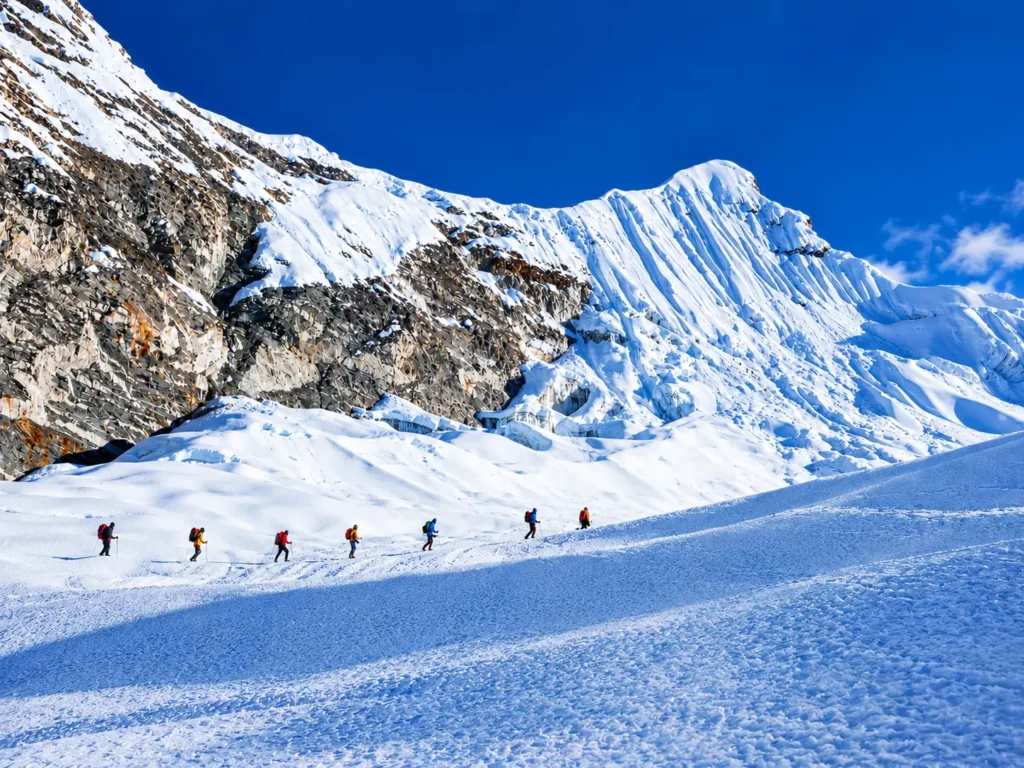
Today marks the highest and most rewarding point of the entire expedition. Depart before dawn and steadily ascend to the iconic Thorong La Pass (5,416m), one of the highest trekking passes in the world. From the summit, enjoy extraordinary panoramic views of the Annapurna and Dhaulagiri ranges before beginning a long descent into Mustang. The trail gradually leads to the sacred pilgrimage destination of Muktinath, revered by both Hindus and Buddhists for its eternal flame, ancient temples, and 108 holy water spouts. Celebrate your remarkable achievement after successfully crossing one of Nepal's most famous Himalayan passes.
Accommodation: Tea House
Meals: Breakfast, Lunch & Dinner
Day 13 :
Trek from Muktinath (3,710m) to Jomsom (2,760m)
- Starting Elevation: 3,710m / 12,172ft
- Ending Elevation: 2,760m / 9,055ft
- Walking Distance: Approximately 18 km / 11.2 mi
- Walking Duration: 5–6 hours
Leaving the sacred village of Muktinath, descend through the beautiful Mustang landscape toward the Kali Gandaki Valley. Pass traditional Thakali villages, colorful prayer flags, apple orchards, and windswept terrain while enjoying magnificent views of Nilgiri, Dhaulagiri, and Tukuche Peak. Following the ancient trade route alongside the Kali Gandaki River, arrive in the bustling town of Jomsom, the administrative center of Lower Mustang.
Accommodation: Tea House
Meals: Breakfast, Lunch & Dinner
Day 14 :
Drive from Jomsom (2,760m) to Tatopani (1,190m)
- Starting Elevation: 2,760m / 9,055ft
- Ending Elevation: 1,190m / 3,904ft
- Driving Distance: Approximately 70 km / 43.5 mi
- Driving Duration: 4–5 hours
After breakfast, enjoy a scenic jeep or local bus journey following the Kali Gandaki River through the charming villages of Marpha, Tukuche, Larjung, Ghasa, and Dana before arriving at Tatopani, meaning "hot water" in Nepali. The drive passes dramatic waterfalls, deep gorges, pine forests, and traditional Thakali settlements. Upon arrival, relax in the famous natural hot springs, where the warm mineral-rich water provides a refreshing and soothing experience after many days of trekking in the high Himalayas.
Accommodation: Tea House
Meals: Breakfast, Lunch & Dinner
Day 15 :
Trek or Drive from Tatopani (1,190m) to Ghorepani (2,860m)
Option A – Trek
- Walking Distance: Approximately 17 km / 10.6 mi
- Walking Duration: 7–8 hours
Option B – Jeep Drive
- Driving Distance: Approximately 32 km / 20 mi
- Driving Duration: 3 hours
After breakfast, begin your journey toward the beautiful mountain village of Ghorepani. Trekkers following the classic trail ascend through traditional Magar villages, terraced farmlands, cascading waterfalls, and dense rhododendron forests. During spring, the hillsides bloom with colorful rhododendron flowers, creating one of Nepal's most spectacular natural displays. Alternatively, those preferring a shorter day may travel by shared jeep to Ghorepani. Upon arrival, enjoy magnificent views of Annapurna South, Hiunchuli, Nilgiri, and Dhaulagiri while preparing for tomorrow's famous sunrise hike.
Accommodation: Tea House
Meals: Breakfast, Lunch & Dinner
Day 16 :
Early Morning Hike to Poon Hill (3,210m) and Trek to Chuile (2,245m)
- Highest Elevation: Poon Hill – 3,210m / 10,531ft
- Ending Elevation: Chuile – 2,245m / 7,365ft
- Walking Distance: Approximately 18 km / 11.2 mi
- Walking Duration: 7–8 hours
Wake before dawn for the unforgettable hike to Poon Hill, one of Nepal's most iconic sunrise viewpoints. Watch the first golden rays illuminate the magnificent peaks of Dhaulagiri, Annapurna I, Annapurna South, Machhapuchhre, Hiunchuli, Nilgiri, and dozens of surrounding Himalayan summits. After returning to Ghorepani for breakfast, continue trekking through lush rhododendron and oak forests, passing Deurali and Banthanti before descending to the peaceful Gurung village of Chuile, surrounded by tranquil forest and mountain scenery.
Accommodation: Tea House
Meals: Breakfast, Lunch & Dinner
Day 17 :
Trek from Chuile (2,245m) to Sinuwa (2,300m)
- Walking Distance: Approximately 11 km / 6.8 mi
- Walking Duration: 5–6 hours
Today's trail descends to Kimrong Khola before climbing through beautiful forests filled with bamboo, oak, and rhododendron trees. Passing traditional Gurung settlements and terraced farmland, you'll gradually join the famous Annapurna Base Camp trekking route. The peaceful village of Sinuwa, perched on a forested ridge, offers beautiful views of surrounding hills and provides an ideal overnight stop before entering the Annapurna Sanctuary.
Accommodation: Tea House
Meals: Breakfast, Lunch & Dinner
Day 18 :
Trek from Sinuwa (2,300m) to Deurali (3,200m)
- Walking Distance: Approximately 13 km / 8.1 mi
- Walking Duration: 7–8 hours
Leaving Sinuwa, follow the beautiful trail through dense bamboo forests, lush rhododendron woodlands, and scenic waterfalls. Pass the villages of Bamboo, Dovan, and Himalaya before gradually climbing into the alpine environment of Deurali. Along the route, enjoy dramatic views of steep cliffs, glacier-fed rivers, and the impressive entrance to the Annapurna Sanctuary. As the elevation increases, the surrounding Himalayan landscape becomes increasingly spectacular.
Accommodation: Tea House
Meals: Breakfast, Lunch & Dinner
Day 19 :
Trek from Deurali (3,200m) via Machhapuchhre Base Camp (3,700m) to Annapurna Base Camp (4,130m)
- Highest & Overnight Elevation: Annapurna Base Camp – 4,130m / 13,550ft
- Walking Distance: Approximately 10 km / 6.2 mi
- Walking Duration: 5–6 hours
Today's destination is the breathtaking Annapurna Base Camp, the grand finale of the Annapurna Sanctuary trek. Ascend gradually through alpine terrain to Machhapuchhre Base Camp (3,700m) before continuing into the spectacular glacial basin surrounded by towering Himalayan giants. Upon reaching Annapurna Base Camp, you'll be rewarded with extraordinary 360-degree panoramic views of Annapurna I (8,091m), Annapurna South, Hiunchuli, Machhapuchhre, Gangapurna, Tent Peak, and several other snow-covered peaks. Spend the evening immersed in one of Nepal's most magnificent mountain amphitheaters.
Accommodation: Tea House
Meals: Breakfast, Lunch & Dinner
Day 20 :
Trek from Annapurna Base Camp (4,130m) to Sinuwa (2,300m)
- Walking Distance: Approximately 19 km / 11.8 mi
- Walking Duration: 7–8 hours
Wake early to witness a magical Himalayan sunrise over the Annapurna Sanctuary before beginning the descent. Retrace your steps through Machhapuchhre Base Camp, Deurali, Himalaya, Dovan, and Bamboo, enjoying changing mountain perspectives along the way. The descent through lush forests and river valleys offers a pleasant contrast to the alpine landscapes experienced earlier. Arrive back at Sinuwa for a well-deserved overnight rest.
Accommodation: Tea House
Meals: Breakfast, Lunch & Dinner
Day 21 :
Trek from Sinuwa (2,300m) to Jhinu Danda (1,780m) and Drive to Pokhara (822m)
- Walking Distance: Approximately 9 km / 5.6 mi
- Walking Duration: 3–4 hours
- Driving Distance: Approximately 65 km / 40 mi
- Driving Duration: 3–4 hours
- Total Duration: 6–7 hours
After breakfast, descend through Chhomrong and continue to Jhinu Danda, famous for its relaxing natural hot springs located beside the Modi Khola River. If time permits, enjoy a refreshing soak before boarding a private jeep or local vehicle for the scenic drive to Pokhara. Upon arrival, check into your hotel and spend the evening exploring the beautiful lakeside area, enjoying restaurants, cafés, and the peaceful atmosphere after completing your remarkable Himalayan adventure.
Accommodation: Hotel in Pokhara
Meals: Breakfast & Lunch
Day 22 :
Travel from Pokhara (822m) to Kathmandu (1,350m)
Option A – Domestic Flight
- Flight Distance: Approximately 146 km / 91 mi
- Flight Duration: 25–30 minutes
Option B – Tourist Bus / Private Vehicle
- Driving Distance: Approximately 200 km / 124 mi
- Driving Duration: 7–8 hours
Following breakfast, either take a scenic domestic flight offering spectacular aerial views of the Himalayas or enjoy a comfortable drive back to Kathmandu along the Prithvi Highway. Upon arrival, transfer to your hotel and enjoy free time for shopping, exploring UNESCO World Heritage Sites, or celebrating the successful completion of your unforgettable trekking expedition.
Accommodation: Hotel in Kathmandu
Meals: Breakfast
- Driving Distance: Hotel to Tribhuvan International Airport: 6–8 km / 3.7–5 miles
- Driving Duration: 20–30 minutes
After breakfast and according to your international flight schedule, a representative from Himalayan Sherpa Exodus Team Treks & Expeditions Pvt. Ltd. will transfer you to Tribhuvan International Airport for your onward journey home. We sincerely thank you for trekking with us and hope the unforgettable memories of the Annapurna Circuit, Tilicho Lake, Thorong La Pass, Poon Hill, and Annapurna Base Camp inspire you to return for another Himalayan adventure in Nepal. We wish you a safe flight and look forward to welcoming you again in the future.
ACT + Tilicho Lake + ABC Classic Trek
The Trip Package Cost Includes
- Airport arrival and departure transfers by private vehicle.
- 2 nights hotel accommodation in Kathmandu with breakfast.
- 1 night hotel accommodation in Pokhara with breakfast.
- Ground transportation as per the itinerary (Kathmandu–Chame and Jomsom–Tatopani).
- Tourist bus or domestic flight from Pokhara to Kathmandu (as per package selection).
- Twin-sharing tea house accommodation throughout the trek.
- Three daily meals (Breakfast, Lunch, and Dinner) during the trekking period.
- Seasonal fresh fruits after dinner during the trek (when available).
- Government-licensed, experienced English-speaking trekking guide.
- Strong and reliable porter service (1 porter for every 2 trekkers; up to 20 kg total luggage).
- Guide and porter salaries, meals, accommodation, transportation, equipment, and insurance.
- Annapurna Conservation Area Permit (ACAP).
- TIMS (Trekkers' Information Management System) Card.
- Comprehensive first-aid kit carried by the guide.
- Pulse oximeter for daily altitude and health monitoring.
- Company duffel bag for use during the trek (return after completion).
- Trekking route briefing before departure.
- Official trekking completion certificate.
- All applicable government taxes and company service charges.
- 24/7 operational support from Himalayan Sherpa Exodus Team Treks & Expeditions Pvt. Ltd.
The Trip Package Cost Excludes
- International airfare to and from Nepal.
- Nepal entry visa fees.
- Travel insurance covering high-altitude trekking, medical treatment, and emergency helicopter evacuation.
- Lunch and dinner in Kathmandu and Pokhara.
- Personal trekking equipment (sleeping bag, down jacket, trekking poles, etc., unless rented).
- Personal expenses such as bottled water, soft drinks, alcoholic beverages, snacks, bakery items, chocolates, and energy drinks.
- Hot showers, Wi-Fi, battery charging, and laundry services during the trek.
- Personal clothing and equipment rental.
- Tips for the guide, porter, and driver (tipping is customary and greatly appreciated).
- Costs arising from itinerary changes due to weather, road conditions, flight delays, natural disasters, political unrest, illness, or any circumstances beyond our control.
- Additional hotel nights or transportation caused by early arrival, late departure, or unexpected delays.
- Any services not specifically mentioned under "Cost Includes."
Best Time to Trek
The 19 Days ACT + Tilicho Lake + Annapurna Base Camp Classic Trek can be enjoyed throughout much of the year, but the finest trekking conditions occur during spring (March to May) and autumn (September to November). These seasons provide stable weather, comfortable temperatures, crystal-clear mountain views, and excellent trail conditions.
Spring transforms the lower hills into vibrant landscapes filled with blooming rhododendron forests, while snow-covered peaks stand out beautifully against deep blue skies. Autumn offers dry weather, exceptional visibility, fresh mountain air, and spectacular sunrise and sunset views from Poon Hill, Tilicho Lake, Thorong La Pass, and Annapurna Base Camp.
Winter (December to February) remains suitable for experienced trekkers prepared for snow and freezing temperatures, while the summer monsoon season (June to August) brings lush greenery, fewer trekkers, and occasional rainfall, making trails more challenging but rewarding for adventurous hikers.
Trek Difficulty
The ACT + Tilicho Lake + Annapurna Base Camp Classic Trek is considered a challenging to strenuous trekking adventure. The route combines multiple iconic destinations into one expedition, requiring excellent physical fitness, endurance, and determination.
Trekkers typically walk between 5 to 9 hours daily across diverse terrain, including forest trails, rocky paths, glacial valleys, steep ascents, and high mountain passes. The highest elevation reached is Thorong La Pass (5,416m), while Tilicho Lake sits at 4,920m, making proper preparation and gradual acclimatization essential.
Although previous high-altitude trekking experience is beneficial, physically fit beginners with strong determination and adequate preparation can also successfully complete this remarkable Himalayan journey under the guidance of experienced trekking professionals.
Acclimatization & Altitude Sickness
Because this trek reaches elevations above 5,400 meters, proper acclimatization is one of the most important factors for a safe and enjoyable adventure. Our itinerary has been carefully designed with gradual altitude gain and dedicated acclimatization time in Manang, including the rewarding hike to Ice Lake, allowing your body to adjust naturally before continuing toward Tilicho Lake and Thorong La Pass.
Our experienced guides closely monitor each trekker’s health using a pulse oximeter and remain alert for early symptoms of Acute Mountain Sickness (AMS), including headache, fatigue, nausea, dizziness, loss of appetite, or difficulty sleeping. Trekkers are encouraged to walk at a comfortable pace, stay well hydrated, eat nutritious meals, avoid alcohol, and communicate any unusual symptoms immediately.
Your safety is always our highest priority, and our experienced mountain team is fully prepared to adjust the itinerary whenever necessary to ensure a safe Himalayan experience.
Himalayan Tribe Culture & Monasteries
This extraordinary journey is not only a mountain adventure but also a fascinating cultural exploration through the diverse ethnic communities of the Annapurna region. As the trail ascends from lush foothills into the high Himalayas, trekkers encounter the warm hospitality and unique traditions of Gurung, Magar, Thakali, and Manangi communities, each preserving their own customs, architecture, language, and mountain lifestyle.
The upper valleys reveal strong Tibetan Buddhist influences, where colorful prayer flags flutter across mountain passes, ancient mani walls line the trails, and centuries-old chortens welcome travelers into peaceful villages. Along the journey, you’ll visit historic monasteries such as the renowned Braga Monastery, one of the oldest Buddhist monasteries in the Manang region, along with several smaller gompas that continue to serve as important spiritual centers for local communities.
The sacred pilgrimage site of Muktinath offers a remarkable blend of both Hindu and Buddhist traditions, making it one of Nepal’s most spiritually significant destinations. Throughout the trek, cultural encounters, traditional stone villages, local festivals, and timeless Himalayan hospitality enrich the journey just as much as the magnificent mountain scenery, creating an unforgettable experience that combines nature, adventure, and living heritage.
Preparation Guide
- Begin regular walking, hiking, or cardio exercises at least 4–6 weeks before the trek.
- Build leg strength and endurance through stair climbing, cycling, or light jogging.
- Carry a small daypack during training to prepare for daily trekking.
- Pack layered clothing suitable for both warm valleys and freezing mountain conditions.
- Wear well-broken-in trekking boots to prevent blisters and improve comfort.
- Bring essential gear, including a down jacket, waterproof clothing, gloves, hat, sunglasses, sunscreen, trekking poles, headlamp, and personal medications.
- Obtain comprehensive travel insurance that covers high-altitude trekking and emergency helicopter evacuation.
- Stay hydrated, maintain a balanced diet, and get adequate rest before and during the trek.
- Follow your guide’s instructions, walk at a steady pace, and allow your body sufficient time to acclimatize.
- Keep important documents such as your passport, permits, insurance details, and emergency contacts easily accessible.
Weather & Climate
- Spring (March–May): Mild temperatures, blooming rhododendron forests, clear mountain views, and stable trekking conditions.
- Summer/Monsoon (June–August): Warm temperatures with frequent rainfall at lower elevations, lush green landscapes, slippery trails, and occasional clouds.
- Autumn (September–November): Dry weather, excellent visibility, comfortable temperatures, and some of the year’s best trekking conditions.
- Winter (December–February): Cold temperatures with snowfall at higher elevations, fewer trekkers, and breathtaking snow-covered Himalayan scenery.
- Temperatures vary significantly with altitude, ranging from 20–25°C in lower valleys to below -15°C around Thorong La Pass during winter nights.
- Mountain weather can change rapidly, so trekkers should always be prepared for sudden wind, snow, rain, or temperature changes.
Accommodation
- Comfortable twin-sharing tea house accommodation throughout the trekking route.
- Private hotel accommodation in Kathmandu and Pokhara as specified in the itinerary.
- Tea houses generally provide clean rooms with twin beds, mattresses, pillows, and blankets.
- Shared bathroom facilities are common at higher elevations, while attached bathrooms may be available in lower villages.
- Dining halls are warm and comfortable, usually heated by a central stove during cold evenings.
- Electricity for charging devices is available in most villages, though a small additional fee may apply.
- Wi-Fi is available in many tea houses but may be limited or unavailable at higher elevations.
- Accommodation standards become more basic as altitude increases, especially near Tilicho Base Camp, High Camp, and Annapurna Base Camp.
Meals During the Trek
- Three nutritious meals (Breakfast, Lunch, and Dinner) are provided daily during the trek.
- Breakfast options typically include eggs, Tibetan bread, chapati, porridge, pancakes, toast, muesli, tea, and coffee.
- Lunch and dinner menus commonly feature Dal Bhat, fried rice, noodles, pasta, soup, momos, potatoes, pizza, seasonal vegetables, and local specialties.
- Fresh seasonal fruits are served after dinner whenever available.
- Vegetarian meals are widely available throughout the trekking route.
- Vegan and special dietary requirements can usually be accommodated with advance notice.
- Guides often recommend eating freshly prepared local meals to maintain energy and support acclimatization.
- A healthy, balanced diet is encouraged throughout the trek to help maintain strength at higher elevations.
Drinking Water
- Safe drinking water is available throughout the trekking route.
- Trekkers may purchase boiled drinking water at tea houses for a small additional charge.
- Bottled mineral water is available in lower villages but becomes more expensive at higher elevations and is discouraged due to plastic waste.
- Natural tap or stream water should always be purified before drinking.
- Carry reusable water bottles or a hydration bladder with a total capacity of 2–3 liters.
- Water purification tablets, UV purifiers, or portable water filters are highly recommended.
- Drink 3–4 liters of water daily to reduce the risk of dehydration and altitude-related illness.
- Your trekking guide will regularly remind you to stay well hydrated throughout the journey.
Internet & Charging
- Wi-Fi is available in most tea houses along the trekking route, though connection speed and reliability vary by location.
- Internet access becomes slower and less stable at higher elevations, especially near Tilicho Base Camp, High Camp, and Annapurna Base Camp.
- Mobile network coverage is available in many villages, with Nepal Telecom (NTC) generally offering the best coverage in the Annapurna region.
- Charging facilities are available at most tea houses for cameras, phones, and power banks.
- A small charging fee may apply, particularly at higher altitudes.
- Bringing a high-capacity power bank (10,000–20,000mAh) is strongly recommended.
- Spare batteries and charging cables are useful, especially in cold weather where battery life decreases.
- Consider switching devices to airplane mode when not in use to conserve battery power.
Travel Insurance
- Comprehensive travel insurance is mandatory for this trek.
- Your insurance must cover trekking up to 5,500 meters or higher.
- Emergency helicopter rescue and medical evacuation coverage are highly recommended.
- Coverage should include medical treatment, hospitalization, accidents, trip interruption, and emergency transportation.
- Ensure your insurance policy specifically covers trekking in Nepal.
- Carry both digital and printed copies of your insurance policy during the trek.
- Provide your insurance details to your trekking agency before departure.
- Any rescue or medical expenses not covered by insurance will be the traveler’s responsibility.
Packing List
- Valid passport and passport-sized photos.
- Travel insurance documents.
- Trekking backpack (30–40L) and duffel bag.
- Waterproof trekking boots (well broken-in).
- Lightweight camp shoes or sandals.
- Moisture-wicking base layers.
- Warm fleece jacket.
- Down jacket suitable for sub-zero temperatures.
- Waterproof and windproof jacket and trousers.
- Trekking pants and quick-dry T-shirts.
- Thermal underwear for higher elevations.
- Warm hat, sun hat, neck gaiter, and gloves.
- Wool and trekking socks.
- Sunglasses with UV protection.
- Sunscreen (SPF 50+) and lip balm.
- Headlamp with spare batteries.
- Trekking poles.
- Water bottles or hydration bladder (2–3 liters).
- Water purification tablets or portable filter.
- Personal toiletries and quick-dry towel.
- Personal medications and basic first-aid supplies.
- Camera, mobile phone, chargers, and power bank.
- Energy bars, trail snacks, and electrolyte powder.
Safety Measures
- Trek with an experienced licensed guide for maximum safety and local knowledge.
- Follow the planned itinerary and maintain a gradual pace for proper acclimatization.
- Stay well hydrated by drinking 3–4 liters of water daily.
- Eat nutritious meals and avoid excessive alcohol consumption at high altitude.
- Immediately inform your guide if you experience symptoms of altitude sickness.
- Daily health monitoring with a pulse oximeter is recommended above 3,500 meters.
- Dress in layers to adapt to rapidly changing mountain weather.
- Use trekking poles for better balance on steep or uneven trails.
- Protect yourself from strong sunlight with sunglasses, sunscreen, and a hat.
- Keep emergency contact information and insurance details readily available.
- Follow your guide’s instructions during difficult trail sections and while crossing Thorong La Pass.
- Respect local customs, wildlife, and the fragile Himalayan environment by following Leave No Trace principles.
Frequently Asked Questions (FAQ)
1. How difficult is the 19 Days ACT + Tilicho Lake + ABC Classic Trek?
It is a challenging to strenuous trek suitable for trekkers with good physical fitness and a positive attitude.
2. What is the highest point of the trek?
The highest elevation is Thorong La Pass (5,416m / 17,769ft).
3. Do I need previous trekking experience?
Previous trekking experience is helpful but not essential. Fit beginners with proper preparation can successfully complete the trek.
4. What permits are required?
You will need the Annapurna Conservation Area Permit (ACAP) and TIMS Card, both of which are included in our trekking package.
5. Is altitude sickness a concern?
Yes. Since the trek reaches over 5,400 meters, proper acclimatization, hydration, and a gradual ascent are essential.
6. Is travel insurance required?
Yes. Travel insurance covering high-altitude trekking and emergency helicopter evacuation is mandatory.
7. What type of accommodation is available?
Accommodation is provided in local tea houses during the trek and comfortable hotels in Kathmandu and Pokhara.
8. Is drinking water easily available?
Yes. Boiled water, filtered water, and bottled water are available along the route, although reusable bottles and purification methods are strongly recommended.
9. Can I charge my phone and camera during the trek?
Yes. Most tea houses offer charging facilities for a small additional fee.
10. Is Wi-Fi available?
Wi-Fi is available in many villages, but connection quality decreases as altitude increases.
11. What is the best season for this trek?
Spring (March–May) and Autumn (September–November) offer the best weather, clear mountain views, and excellent trekking conditions.
12. Can vegetarians or vegans join this trek?
Absolutely. Vegetarian meals are widely available, and vegan or special dietary requirements can usually be arranged with advance notice.
13. How many hours do we walk each day?
Most trekking days involve 5–9 hours of walking, depending on the itinerary and trail conditions.
14. Will there be a guide and porter?
Yes. Our packages include experienced government-licensed trekking guides and reliable porters to ensure a safe and enjoyable trekking experience.
15. Why choose Himalayan Sherpa Exodus Team Treks & Expeditions Pvt. Ltd.?
We are committed to providing professional service, experienced mountain guides, personalized support, responsible tourism practices, and carefully designed itineraries that prioritize your safety, comfort, and unforgettable Himalayan experiences.
Be Well Prepared for Your Trek in Nepal
Proper preparation is the key to a safe, comfortable, and enjoyable trekking experience in Nepal. Please use this equipment guide to prepare the essential clothing, footwear, personal items, health and safety gear, and other trekking necessities according to your chosen route and season.
Pack wisely, travel comfortably, and trek confidently with Himalayan Sherpa Exodus Team.

 5416M
5416M Moderate