Island Peak Climbing
TRIP– OVERVIEW
Island Peak, locally known as Imja Tse, rises to an impressive altitude of 6,189 metres (20,305 ft) in Nepal’s spectacular Everest region. Surrounded by some of the most celebrated Himalayan peaks, this rewarding climbing adventure combines classic trekking through the Khumbu Valley with the excitement and challenge of reaching a genuine Himalayan summit.
The Island Peak Climbing 6,189m journey with Himalayan Sherpa Exodus Team Treks & Expeditions Pvt. Ltd. has been carefully designed to allow gradual acclimatization, practical climbing preparation, and sufficient time to experience the remarkable landscapes and Sherpa culture of the Everest region. It is particularly appealing to physically fit trekkers who wish to progress from high-altitude trekking into Himalayan mountaineering.
The adventure begins in Kathmandu with sightseeing, equipment checking, and final preparation before taking the scenic mountain flight to Lukla. From Lukla, the trail follows the beautiful Dudh Koshi Valley through Phakding and gradually climbs towards the lively mountain town of Namche Bazaar, the principal trading centre of the Khumbu region.
An acclimatization day in Namche provides valuable time for the body to adjust to the increasing altitude before the journey continues towards Tengboche and Dingboche. The route passes through traditional Sherpa settlements, forests, suspension bridges, monasteries, glacial valleys, and increasingly dramatic high-mountain scenery.
A second important acclimatization day is spent at Dingboche, with an excursion towards Nangkartshang Hill, reaching approximately 5,180 metres. This gradual approach helps prepare climbers for the higher elevations ahead while offering magnificent views across the surrounding Himalayan landscape.
From Dingboche, the route continues to Chhukung and onward to Island Peak Base Camp at approximately 5,200 metres. At base camp, our climbing team conducts essential pre-climb preparation and practical training. Climbers become familiar with the equipment and techniques required for the summit attempt, including the appropriate use of crampons, climbing ropes, harnesses, ascenders, and other mountaineering equipment.
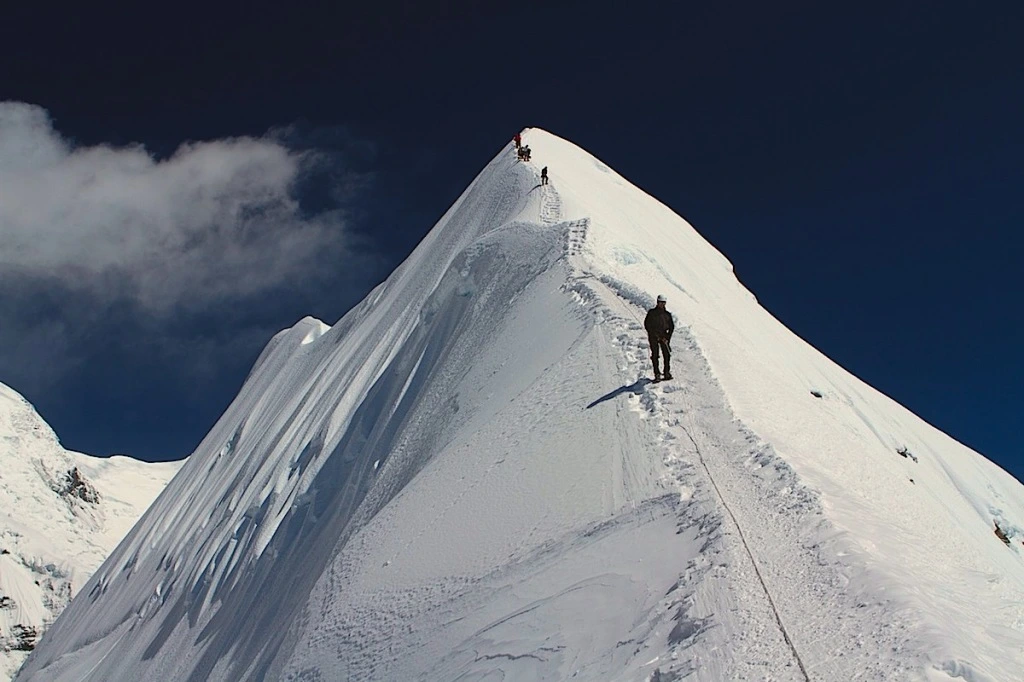
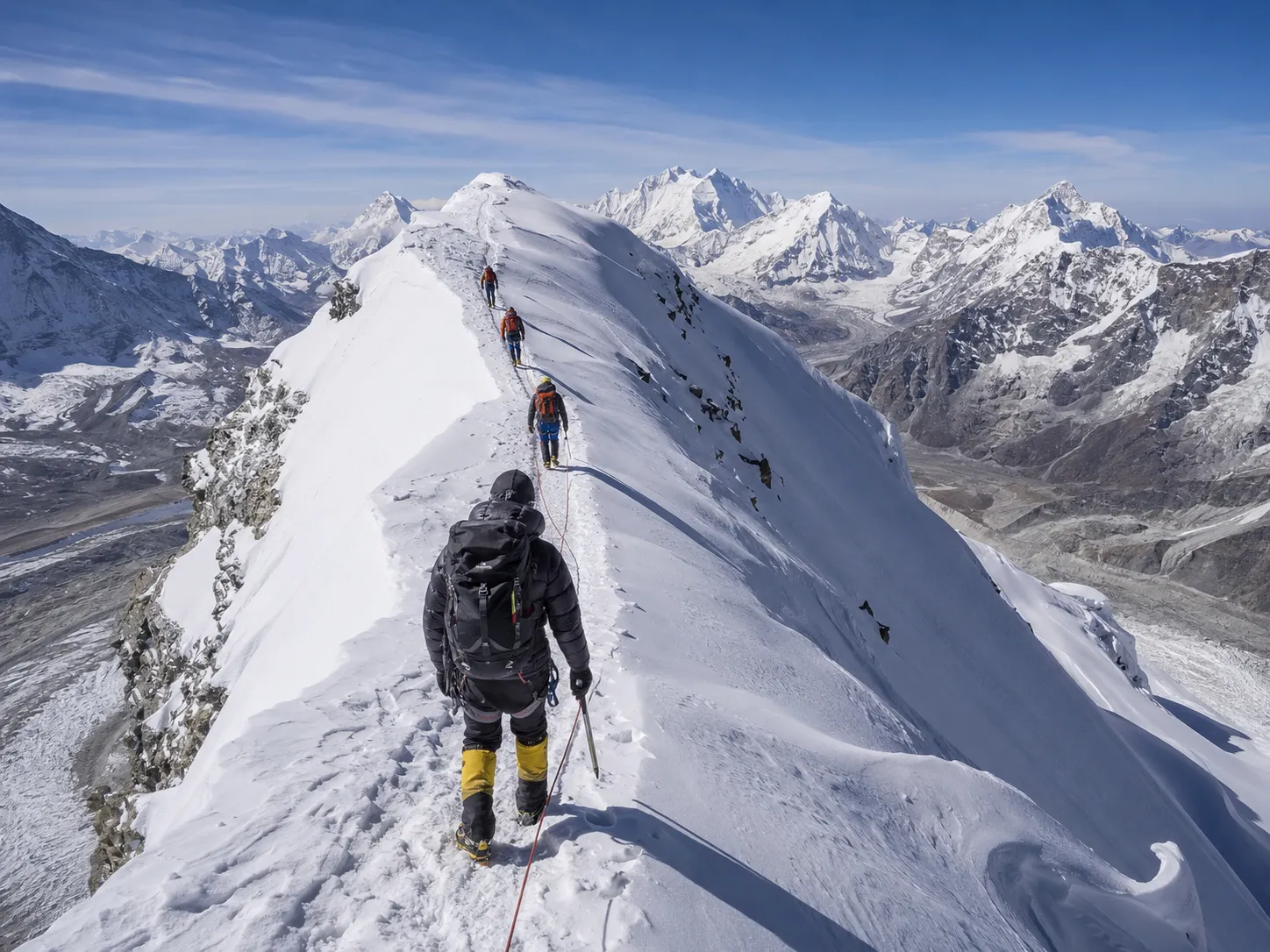
The summit climb normally begins during the early hours of the morning. From base camp, climbers gradually make their way over rugged mountain terrain before reaching the higher snow and glacial sections of the route. Depending on current mountain conditions, fixed ropes and technical climbing equipment may be required on steeper sections approaching the summit.
Standing on the 6,189-metre summit of Island Peak is an unforgettable Himalayan achievement. On a clear day, the summit rewards climbers with an extraordinary mountain panorama, including impressive views towards Lhotse, Lhotse Shar, Ama Dablam, Makalu, Baruntse, and numerous surrounding peaks and glaciers of the eastern Himalaya.
The itinerary also allows additional flexibility around the summit period because success in the mountains always depends on weather, snow conditions, individual acclimatization, and the professional assessment of the climbing team.
After completing the climb, the journey gradually descends through Pangboche and Namche Bazaar before returning to Lukla. A flight back to Kathmandu brings the mountain section of the expedition to a close.
More than simply reaching a summit, Island Peak Climbing 6,189m is an opportunity to experience the spirit of the Khumbu, develop practical high-altitude climbing skills, walk beneath some of the highest mountains on Earth, and accomplish a memorable Himalayan goal with an experienced local team.
With Himalayan Sherpa Exodus Team Treks & Expeditions Pvt. Ltd., the journey is approached with careful preparation, responsible acclimatization, professional climbing support, and respect for the mountains, local communities, and changing Himalayan conditions.
TRIP HIGHLIGHTS
TRIP HIGHLIGHTS
- Experience the rewarding challenge of reaching the 6,189m summit of Island Peak (Imja Tse) in Nepal’s legendary Everest region.
- Enjoy an exciting mountain flight between Kathmandu and Lukla, the traditional gateway to the Khumbu Himalaya.
- Trek through the beautiful Dudh Koshi Valley, crossing suspension bridges and passing traditional Sherpa villages surrounded by dramatic mountain scenery.
- Spend valuable acclimatization time in Namche Bazaar, one of the most vibrant and culturally significant mountain settlements in the Everest region.
- Visit the peaceful Tengboche area, renowned for its Himalayan atmosphere, Buddhist heritage, and spectacular mountain surroundings.
- Trek through Dingboche and Chhukung, where the landscape gradually changes from alpine settlements to a rugged high-altitude environment.
- Complete an important acclimatization excursion towards Nangkartshang Hill at approximately 5,180m, helping the body prepare for the higher elevations ahead.
- Stay at Island Peak Base Camp at approximately 5,200m, surrounded by glaciers, high ridges, and impressive Himalayan peaks.
- Receive practical pre-climb training and equipment orientation before attempting the summit.
- Gain hands-on experience using essential mountaineering equipment such as crampons, harnesses, climbing ropes, ascenders, and other technical climbing gear under the guidance of the climbing team.
- Experience the excitement of an early-morning Himalayan summit attempt, progressing from rocky mountain terrain towards snow, ice, and higher glacial sections.
- Stand at 6,189 metres above sea level and experience the remarkable sense of achievement that comes with completing a Himalayan climbing expedition.
- Enjoy outstanding summit views towards Lhotse, Lhotse Shar, Ama Dablam, Makalu, Baruntse, and the surrounding mountains and glaciers of the Khumbu region.
- Benefit from an itinerary designed with multiple acclimatization opportunities and flexibility around the summit period, helping climbers approach the mountain responsibly.
- Descend through Pangboche and Namche Bazaar, enjoying a different perspective of the landscapes experienced during the ascent.
- Discover the traditions, hospitality, monasteries, mountain lifestyle, and enduring Sherpa culture of the Khumbu region.
- Combine high-altitude trekking, cultural discovery, practical mountaineering experience, and a challenging Himalayan summit within one memorable 18-day adventure.
- Climb with the support of the experienced local team of Himalayan Sherpa Exodus Team Treks & Expeditions with emphasis on preparation, acclimatization, responsible climbing, and respect for mountain conditions.
Day 01 :
Arrival in Kathmandu (1,350m/4,428ft)
Upon your arrival at Tribhuvan International Airport in Kathmandu, you will be warmly welcomed by our representative from Himalayan Sherpa Exodus Team Treks & Expeditions Pvt. Ltd. and transferred to your hotel. After check-in, you will have time to rest and recover from your journey. In the evening, our team will provide a short briefing about the upcoming Island Peak climbing adventure and introduce you to the expedition preparation process.
Maximum Altitude: 1,350m/4,428ft
Accommodation: Hotel in Kathmandu
Meals: Welcome dinner included
Day 02 :
Kathmandu Sightseeing, Climbing Preparation and Gear Check
Today is dedicated to final preparation before heading into the Himalayas. After breakfast, you will explore some of Kathmandu’s famous cultural and historical landmarks, including ancient temples, monasteries, and UNESCO World Heritage sites. Later, our climbing team will conduct a detailed gear inspection to ensure all essential equipment is prepared properly for the Island Peak summit attempt.
Any missing personal climbing equipment can be arranged in Kathmandu before departure. Our climbing guide will also provide important information regarding altitude, safety, climbing techniques, and the overall journey ahead.
Maximum Altitude: 1,350m/4,428ft
Activities: Sightseeing, expedition briefing, equipment preparation
Accommodation: Hotel in Kathmandu
Meals: Breakfast included
Day 03 :
Flight to Lukla (2,840m/9,315ft) and Trek to Phakding (2,610m/8,560ft)
After an early morning breakfast, we take a scenic mountain flight from Kathmandu to Lukla, one of the world’s most famous mountain airstrips. The approximately 35–40 minute flight offers breathtaking views of the Himalayan range, green hills, valleys, and snow-covered peaks.
After meeting the supporting crew in Lukla, the trek begins through the beautiful Khumbu region. The trail gradually descends and follows the Dudh Koshi River through charming Sherpa villages, prayer wheels, and suspension bridges before reaching Phakding, a peaceful riverside settlement.
This short trekking day allows your body to slowly adjust to the mountain environment.
Flight Duration: Approximately 35–40 minutes
Walking Distance: Approximately 8 km
Trekking Duration: 3–4 hours
Maximum Altitude: Phakding 2,610m/8,560ft
Accommodation: Tea House
Meals: Breakfast, lunch, and dinner included
Day 04 :
Trek from Phakding to Namche Bazaar (3,440m/11,286ft)
Today is one of the most exciting sections of the Everest region trek. Leaving Phakding, the trail continues along the Dudh Koshi Valley, crossing several impressive suspension bridges decorated with colorful prayer flags.
The route passes through beautiful pine forests and traditional Sherpa villages including Monjo and Jorsale before entering Sagarmatha National Park. From here, the trail gradually climbs towards Namche Bazaar. The final uphill section provides the first spectacular views of Mount Everest and surrounding peaks (weather permitting).
Namche Bazaar is the largest Sherpa settlement in the Khumbu region and serves as the main trading and acclimatization centre for trekkers and climbers.
Walking Distance: Approximately 10–12 km
Trekking Duration: 5–6 hours
Maximum Altitude: Namche Bazaar 3,440m/11,286ft
Accommodation: Tea House
Meals: Breakfast, lunch, and dinner included
Day 05 :
Acclimatization Day at Namche Bazaar (3,440m/11,286ft)
A proper acclimatization day is essential before moving towards higher elevations. Today, we follow the principle of “climb high and sleep low” with a short exploration hike around Namche Bazaar.
A popular excursion includes a hike to Everest View Hotel (3,880m), offering magnificent views of Everest, Ama Dablam, Lhotse, Nuptse, and other Himalayan giants. The day also provides an opportunity to explore the local Sherpa culture, museums, monasteries, and the traditional lifestyle of the Khumbu people.
Hiking Distance: Approximately 5–6 km
Hiking Duration: 3–4 hours
Maximum Altitude: Around 3,880m during exploration
Accommodation: Tea House
Meals: Breakfast, lunch, and dinner included
Day 06 :
Trek from Namche Bazaar to Tengboche (3,860m/12,664ft)
After breakfast, the trail leaves Namche Bazaar and follows a beautiful mountain path with stunning panoramic views of the Everest range. The route offers spectacular scenery of Mount Everest, Lhotse, Nuptse, Thamserku, Kangtega, and Ama Dablam.
The trail initially follows a gradual uphill and downhill route before descending to the Dudh Koshi River at Phunki Tenga. From here, a steady uphill climb through rhododendron forests leads to Tengboche, home to the famous Tengboche Monastery, the largest Buddhist monastery in the Khumbu region.
The peaceful surroundings and breathtaking mountain backdrop make Tengboche one of the most memorable stops on the journey.
Walking Distance: Approximately 10 km
Trekking Duration: 5–6 hours
Maximum Altitude: Tengboche 3,860m/12,664ft
Accommodation: Tea House
Meals: Breakfast, lunch, and dinner included
Day 07 :
Trek from Tengboche to Dingboche (4,410m/14,468ft)
Today the trail continues deeper into the high Himalayas. After visiting Tengboche Monastery, we descend through beautiful forests towards Deboche and cross the suspension bridge over the Imja Khola River.
The route passes through traditional Sherpa villages including Pangboche, one of the oldest settlements in the Everest region. As we move higher, vegetation becomes thinner and the landscape changes into a rugged alpine environment.
Continuing through the Imja Valley, surrounded by magnificent peaks including Ama Dablam, Lhotse, and Island Peak, we reach Dingboche, known as the “summer valley” of the Khumbu region.
Walking Distance: Approximately 11–12 km
Trekking Duration: 6–7 hours
Maximum Altitude: Dingboche 4,410m/14,468ft
Accommodation: Tea House
Meals: Breakfast, lunch, and dinner included
Day 08 :
Acclimatization Day at Dingboche – Hike to Nangkartshang Hill (5,180m/16,994ft)
Another important acclimatization day is planned at Dingboche to prepare your body for the higher altitude of Island Peak Base Camp and the summit climb.
Today, we hike towards Nangkartshang Hill, reaching approximately 5,180 metres. This gradual climb provides excellent acclimatization while rewarding you with spectacular views of some of the highest Himalayan peaks, including Makalu, Lhotse, Island Peak, Ama Dablam, and surrounding glaciers.
After spending time enjoying the mountain scenery, we return to Dingboche for overnight rest.
Hiking Distance: Approximately 5–6 km
Hiking Duration: 4–5 hours
Maximum Altitude: Nangkartshang Hill 5,180m/16,994ft
Accommodation: Tea House
Meals: Breakfast, lunch, and dinner included
Day 09 :
Trek from Dingboche to Chhukung (4,730m/15,518ft)
Leaving Dingboche behind, we continue towards Chhukung, a beautiful high-altitude valley located close to Island Peak and the surrounding Himalayan giants.
The trail gradually climbs through the Imja Valley, passing alpine landscapes, rocky moraines, and spectacular views of Island Peak, Ama Dablam, Lhotse, and surrounding mountains. Chhukung is the final settlement before heading towards Island Peak Base Camp and provides an excellent location for final preparation before the climbing phase.
Walking Distance: Approximately 5–6 km
Trekking Duration: 3–4 hours
Maximum Altitude: Chhukung 4,730m/15,518ft
Accommodation: Tea House
Meals: Breakfast, lunch, and dinner included
Day 10 :
Trek from Chhukung to Island Peak Base Camp (5,200m/17,060ft) – Pre-Climb Training
Today marks the beginning of the climbing section of the expedition. After breakfast, we leave Chhukung and follow the trail towards Island Peak Base Camp, gradually moving into the remote and spectacular high Himalayan environment.
The trail passes through rocky terrain, glacial moraines, and alpine landscapes with outstanding views of Island Peak, Lhotse, Ama Dablam, and surrounding peaks. As we approach the base camp, the atmosphere becomes more adventurous, with towering mountains and glaciers surrounding the route.
Upon arrival at Island Peak Base Camp (5,200m), our climbing guides will conduct essential pre-climb training. The session includes learning and practicing the proper use of climbing equipment such as crampons, harnesses, ropes, ascenders, and safety techniques required for the summit attempt.
This preparation day plays an important role in building confidence and ensuring climbers are familiar with the technical aspects before heading towards the summit.
Walking Distance: Approximately 5–6 km
Trekking Duration: 3–4 hours
Maximum Altitude: Island Peak Base Camp 5,200m/17,060ft
Activities: Pre-climb training and equipment practice
Accommodation: Tent Camp
Meals: Breakfast, lunch, and dinner included
Day 11-12 :
Island Peak Base Camp to Summit (6,189m/20,305ft) and Return to Base Camp
The most challenging and rewarding part of the expedition begins with the Island Peak summit attempt. Depending on weather conditions, snow conditions, and the physical condition of the climbers, the summit push will be planned during this period.
The climb usually starts very early in the morning to take advantage of stable weather conditions. From Base Camp, the route gradually ascends through rocky sections before reaching the glacier area. Climbers will use technical equipment, including crampons, climbing ropes, and harnesses, while crossing snow and ice sections under the guidance of our experienced climbing team.
The final section involves a steeper ascent towards the summit ridge, requiring focus, teamwork, and careful movement. Upon reaching the top of Island Peak (6,189m), climbers are rewarded with unforgettable panoramic views of some of the world’s highest mountains, including Lhotse, Lhotse Shar, Makalu, Baruntse, Ama Dablam, and the magnificent Himalayan landscape of the Khumbu region.
After spending valuable time celebrating the summit achievement and capturing memorable photographs, we carefully descend back to Island Peak Base Camp for rest and recovery.
The summit day is physically demanding and normally requires approximately 10–12 hours depending on conditions and individual climbing pace. An additional day is reserved as flexibility because Himalayan weather can change rapidly and summit success depends greatly on safe mountain conditions.
Walking Duration: Approximately 10–12 hours on summit day
Maximum Altitude: Island Peak Summit 6,189m/20,305ft
Accommodation: Tent Camp
Meals: Breakfast, lunch, and dinner included
Day 13 :
Contingency / Weather Reserve Day
A reserve day is included to provide flexibility in case of unfavorable weather, snowfall, strong winds, or other unexpected mountain conditions affecting the summit plan.
This additional day allows the climbing team to select the safest possible opportunity for the summit attempt while maintaining responsible climbing practices.
Purpose: Weather and climbing contingency day
Accommodation: Tent Camp
Meals: Breakfast, lunch, and dinner included
Day 14 :
Island Peak Base Camp to Pangboche (3,985m/13,074ft)
After successfully completing the Island Peak climb, we begin our descent back through the beautiful landscapes of the Khumbu region.
The trail gradually leaves the high alpine environment and follows the route through Chhukung and Dingboche before continuing towards Pangboche. As we descend, the air becomes warmer and the vegetation slowly returns, offering a pleasant change after the challenging summit experience.
Pangboche is one of the oldest Sherpa villages in the Everest region and offers a wonderful opportunity to experience traditional Himalayan culture and mountain lifestyle.
Walking Distance: Approximately 12–14 km
Trekking Duration: 5–6 hours
Maximum Altitude: Pangboche 3,985m/13,074ft
Accommodation: Tea House
Meals: Breakfast, lunch, and dinner included
Day 15 :
Trek from Pangboche to Namche Bazaar (3,440m/11,286ft)
Today’s trek follows a scenic downhill route through forests, traditional Sherpa villages, and beautiful Himalayan landscapes.
The trail passes through Tengboche Monastery, allowing time to enjoy the peaceful surroundings and magnificent views of Ama Dablam and other Himalayan peaks. Continuing through the Dudh Koshi Valley, we gradually return to the lively mountain town of Namche Bazaar.
After the quiet and remote mountain environment, Namche provides a comfortable place to relax, enjoy local facilities, and celebrate the successful completion of the climbing adventure.
Walking Distance: Approximately 10–12 km
Trekking Duration: 4–5 hours
Maximum Altitude: Namche Bazaar 3,440m/11,286ft
Accommodation: Tea House
Meals: Breakfast, lunch, and dinner included
Day 16 :
Trek from Namche Bazaar to Lukla (2,840m/9,315ft)
The final trekking day follows the familiar trail back towards Lukla. We descend through forests, cross suspension bridges, and pass through beautiful Sherpa settlements along the Dudh Koshi River.
After reaching Lukla, you will have time to rest and reflect on the memorable Island Peak climbing experience with the Himalayan mountains behind you.
Walking Distance: Approximately 17–18 km
Trekking Duration: 6–7 hours
Maximum Altitude: Lukla 2,840m/9,315ft
Accommodation: Tea House
Meals: Breakfast, lunch, and dinner included
Day 17 :
Flight from Lukla to Kathmandu (1,350m/4,428ft)
After breakfast, we take a scenic morning flight from Lukla back to Kathmandu. The short mountain flight provides a final opportunity to enjoy aerial views of the Himalayan landscapes, valleys, and mountain villages.
Upon arrival in Kathmandu, you will be transferred to your hotel. The remaining time can be used for relaxation, shopping for souvenirs, or exploring the vibrant streets of Kathmandu.
Flight Duration: Approximately 35–40 minutes
Maximum Altitude: Kathmandu 1,350m/4,428ft
Accommodation: Hotel in Kathmandu
Meals: Breakfast included
Today marks the conclusion of your memorable Island Peak Climbing 6,189m expedition. According to your international flight schedule, our representative will transfer you to Tribhuvan International Airport for your onward journey.
We hope you return home with unforgettable memories of the Himalayas, the warmth of Sherpa hospitality, and the achievement of standing on one of Nepal’s most beautiful trekking peaks.
Meals: Breakfast included
Transportation: Airport transfer provided
Island Peak Climb
The Trip Package Cost Includes
- Airport transfers in Kathmandu according to the itinerary.
- Welcome and farewell arrangements as mentioned in the program.
- Accommodation in Kathmandu in a comfortable hotel on a twin-sharing basis.
- Domestic flight tickets between Kathmandu and Lukla (both ways), including necessary airport transportation.
- Experienced, government-licensed trekking guide and professional Island Peak climbing guide.
- Necessary climbing support staff, including experienced Sherpa climbing assistance.
- Trekking permits, Island Peak climbing permit, Sagarmatha National Park permit, and local area permits Pasang Lhamu Rural Municipality).
- TIMS (Trekkers’ Information Management System) card where applicable.
- Accommodation in quality tea houses during the trekking section.
- Tent accommodation at Island Peak Base Camp during the climbing period.
- Three meals daily (breakfast, lunch, and dinner) during the trek and climbing period.
- Base Camp kitchen support and necessary camping arrangements.
- High-altitude food and climbing-related arrangements during the expedition.
- Porter service for carrying shared trekking and climbing equipment.
- Porter insurance, guide insurance, and staff welfare expenses.
- Climbing equipment support such as ropes and necessary group climbing gear.
- Pre-climb training and practical guidance before the summit attempt.
- Government taxes and official service charges.
The Trip Package Cost Excludes
- International airfare and travel arrangements outside Nepal.
- Nepal entry visa fees.
- Travel insurance covering emergency evacuation, medical treatment, and high-altitude climbing activities.
- Personal climbing equipment such as climbing boots, down jacket, sleeping bag, crampons, harness, helmet, and other personal gear.
- Personal expenses including beverages, bottled drinks, snacks, hot showers, laundry, and internet charges during the trek.
- Extra accommodation and meals in Kathmandu due to early arrival, late departure, or unexpected itinerary changes.
- Helicopter rescue, emergency evacuation, or medical expenses if required.
- Tips for the guide, porter support staff (tipping is customary and greatly appreciated).
- Any additional expenses caused by weather conditions, flight delays, natural events, political situations, or circumstances beyond the company’s control.
Best Time for Island Peak Climbing 6,189m
Island Peak can be climbed during different seasons; however, the most favorable periods are spring (March to May) and autumn (September to November).
Spring Season (March–May)
Spring is one of the most popular climbing seasons in Nepal. The weather is generally stable, temperatures are comfortable, and the mountain environment becomes vibrant with blooming rhododendron forests and clear Himalayan views. The conditions are suitable for both trekking and climbing activities.
Autumn Season (September–November)
Autumn is considered the best overall season for Island Peak climbing. After the monsoon, the skies become clearer, mountain visibility is excellent, and the trails are dry and comfortable. Climbers can enjoy some of the finest views of Everest, Lhotse, Ama Dablam, and other Himalayan peaks.
Winter and Monsoon Season
Winter climbing is possible for experienced mountaineers but requires additional preparation due to colder temperatures and more challenging conditions. The monsoon season brings heavy rainfall in lower areas and cloudier mountain conditions, making climbing more difficult.
Lukla Flight Information
The Island Peak adventure begins with one of Nepal’s most exciting mountain flights from Kathmandu to Lukla.
The approximately 35–40 minute flight takes you from the busy Kathmandu Valley to the beautiful mountain airstrip of Lukla, located at around 2,840 metres. The flight offers spectacular views of green hills, deep valleys, rivers, and Himalayan peaks.
Lukla Airport is a small mountain runway surrounded by dramatic landscapes and is considered the main gateway to the Everest region. Due to its location and mountain weather conditions, flights may sometimes be delayed or postponed.
Our team carefully manages flight arrangements and provides necessary support in case of unexpected weather-related changes. During peak trekking seasons, flights may operate from Ramechhap/Manthali Airport instead of Kathmandu due to air traffic management.
Trek Difficulty – Island Peak Climbing 6,189m
Island Peak Climbing is considered a moderate to challenging Himalayan climbing adventure that combines high-altitude trekking with basic technical mountaineering.
The trekking section follows the classic Everest region trail and gradually gains altitude, allowing climbers to adapt properly. The climbing section requires additional physical effort, mental preparation, and basic knowledge of mountaineering techniques.
The summit day is the most demanding part of the expedition, involving long hours of climbing over rocky terrain, snow, and glacier sections. Climbers should be prepared for early morning starts, cold temperatures, and physically demanding conditions.
Although Island Peak is considered one of Nepal’s more accessible 6,000-metre peaks, successful completion requires:
- Good physical fitness and endurance.
- Proper acclimatization.
- Positive mental preparation.
- Basic climbing skills and willingness to learn.
- Respect for mountain conditions and safety instructions.
With proper preparation and guidance from an experienced climbing team, Island Peak provides an achievable and rewarding Himalayan climbing experience.
Acclimatization & Altitude Sickness
Proper acclimatization is one of the most important factors for a successful Island Peak climbing expedition. The itinerary has been carefully designed with gradual altitude gain and dedicated acclimatization days at important locations such as Namche Bazaar and Dingboche.
The acclimatization hikes, including the climb towards Nangkartshang Hill (5,180m), help the body adjust to reduced oxygen levels before reaching higher elevations.
Altitude sickness can affect anyone traveling above 2,500 metres, regardless of age, fitness level, or previous trekking experience. Common symptoms may include:
- Headache
- Loss of appetite
- Tiredness
- Difficulty sleeping
- Shortness of breath
- Nausea or dizziness
Our experienced guides closely monitor climbers throughout the journey and follow safe altitude practices. Maintaining a slow pace, staying hydrated, eating properly, and communicating any discomfort early are essential for safety.
The climbing team always prioritizes health and safety over reaching the summit, and decisions are made according to weather conditions and individual well-being.
Himalayan Culture & Ancient Monasteries
The Island Peak climbing journey is not only a mountain adventure but also an opportunity to experience the unique culture and traditions of the Himalayan Sherpa community.
The Khumbu region is home to the legendary Sherpa people, whose lifestyle, traditions, and spiritual connection with the mountains have been preserved for generations. Throughout the trek, you will encounter traditional villages, prayer walls, colorful prayer flags, chortens, and Buddhist monasteries.
Important cultural highlights include:
Tengboche Monastery
Located in a peaceful mountain setting, Tengboche Monastery is one of the most important Buddhist monasteries in the Everest region. Surrounded by panoramic Himalayan views, it represents the spiritual heart of the Khumbu Valley.
Pangboche Village and Monastery
Pangboche is one of the oldest Sherpa settlements in the region and provides insight into traditional Himalayan life, Buddhist practices, and mountain heritage.
Namche Bazaar
Beyond being a trading centre, Namche reflects the unique blend of Sherpa culture, mountain traditions, and modern Himalayan lifestyle.
During the expedition, climbers experience not only the beauty of the Himalayas but also the warmth, hospitality, and cultural richness of the communities that have lived among these mountains for centuries.
With Himalayan Sherpa Exodus Team, Island Peak Climbing 6,189m becomes a complete Himalayan experience combining adventure, culture, nature, and the unforgettable achievement of standing on a Himalayan summit.
Preparation Guide
A successful Island Peak climbing expedition requires proper preparation, physical fitness, and a positive mindset. Although Island Peak is considered one of Nepal’s more accessible 6,000-metre peaks, the journey involves long trekking days, high altitude, cold temperatures, and technical climbing sections.
Before arriving in Nepal, climbers are advised to prepare themselves through regular cardiovascular and strength training. Activities such as hiking, running, cycling, swimming, stair climbing, and endurance exercises help improve stamina for the demanding mountain environment.
Recommended preparation includes:
- Regular endurance training at least 2–3 months before the expedition.
- Strength exercises focusing on legs, core, and overall body stability.
- Practice walking with a backpack to become comfortable carrying trekking gear.
- Improve flexibility and balance through stretching or yoga.
- Develop mental preparation for long trekking days and changing mountain conditions.
Previous high-altitude trekking experience is beneficial but not compulsory. Basic mountaineering skills will be introduced and practiced at Island Peak Base Camp under the guidance of our experienced climbing team.
Weather & Climate
The weather in the Everest region changes rapidly due to altitude and mountain conditions. Temperatures become colder as the elevation increases, especially during the Island Peak summit attempt.
Spring (March–May)
Spring offers favorable climbing conditions with relatively stable weather, clear mountain views, and moderate temperatures. Daytime temperatures at lower elevations are comfortable, while higher elevations remain cold.
Autumn (September–November)
Autumn is considered the most suitable season for Island Peak climbing. The skies are generally clear after the monsoon, visibility is excellent, and the mountain environment is ideal for trekking and climbing.
Winter (December–February)
Winter climbing is possible but requires additional preparation due to extreme cold, stronger winds, and more challenging snow conditions at higher elevations.
Approximate Temperature Range
- Kathmandu: 10°C to 25°C
- Lukla/Namche: -5°C to 15°C
- Dingboche/Chhukung: -10°C to 10°C
- Island Peak Base Camp: -15°C to 5°C
- Island Peak Summit: Can drop below -20°C depending on wind and weather conditions
Proper clothing, quality equipment, and careful planning are essential for comfort and safety.
Accommodation
During the Island Peak climbing journey, accommodation is arranged according to the location and available facilities.
Kathmandu
In Kathmandu, accommodation is provided in a comfortable hotel with modern facilities, allowing climbers to rest before and after the expedition.
Trekking Route
During the trekking section, accommodation is provided in carefully selected local tea houses. Tea houses offer a warm and friendly atmosphere with basic but comfortable rooms, dining areas, and shared facilities.
Rooms usually include:
- Twin-sharing beds
- Mattress and blanket
- Common dining area
- Shared bathroom facilities (private bathrooms available in some locations)
Island Peak Base Camp
At Island Peak Base Camp, accommodation is arranged in expedition-style tents. Our team manages camping arrangements, kitchen support, and necessary facilities to provide a comfortable climbing environment.
Meals During the Trek
A balanced diet is important for maintaining energy during high-altitude trekking and climbing. Our team provides nutritious meals throughout the journey, including trekking days and the climbing period.
Typical meals include:
Breakfast
- Tea or coffee
- Eggs
- Bread, toast, pancakes
- Porridge
- Tibetan bread
- Cereals and seasonal items
Lunch and Dinner
- Dal Bhat (traditional Nepali meal)
- Rice and curry
- Noodles
- Pasta
- Soup
- Vegetables
- Potatoes
- Snacks and energy-rich foods
At higher elevations, meals are prepared with consideration for altitude conditions and climbers’ energy requirements.
Vegetarian and special dietary requirements can be arranged with prior notice.
Drinking Water
Staying properly hydrated is extremely important during high-altitude trekking and climbing. Drinking enough water helps maintain energy levels and reduces the risk of altitude-related problems.
Safe drinking water options include:
- Filtered or boiled water available at tea houses.
- Bottled water where available.
- Purification tablets or portable water filters.
- Personal hydration systems such as water bottles or hydration packs.
We recommend carrying a reusable water bottle and using purification methods to reduce plastic waste and protect the Himalayan environment.
Internet & Charging Facilities
Communication facilities are available in most villages along the Everest region trekking route, although service quality decreases at higher elevations.
Internet
- Wi-Fi facilities are available at many tea houses for an additional cost.
- Mobile network coverage is available in some areas.
- Internet speed and reliability may vary depending on location and weather conditions.
Charging
- Electricity is available in most tea houses.
- Charging electronic devices usually requires an additional payment at higher elevations.
- Power supply may be limited at remote locations and during bad weather.
We recommend carrying:
- Power bank
- Universal charging adapter
- Spare batteries
- Solar charger (optional)
Travel Insurance
Comprehensive travel insurance is compulsory for Island Peak Climbing.
Your insurance should cover:
- High-altitude trekking and climbing activities up to at least 6,500 metres.
- Emergency helicopter evacuation.
- Medical treatment.
- Hospital expenses.
- Trip cancellation or interruption.
- Loss or damage of personal belongings.
Normal travel insurance policies may not cover mountaineering activities, so climbers must confirm that their policy specifically includes high-altitude climbing.
Packing List
Proper equipment is essential for comfort, safety, and successful summit completion.
Clothing
- Waterproof trekking jacket
- Down jacket
- Thermal base layers
- Fleece jacket
- Trekking trousers
- Insulated climbing pants
- Warm hat and sun hat
- Gloves and inner gloves
- Hiking socks
- Neck warmer or buff
Footwear
- Trekking boots
- Mountaineering boots suitable for Island Peak
- Camp shoes/sandals
- Gaiters
Climbing Equipment
- Climbing helmet
- Harness
- Crampons
- Ice axe
- Ascender/Jumar
- Carabiners
- Climbing gloves
- Headlamp with extra batteries
(Some group climbing equipment may be provided by the company.)
Personal Items
- Sleeping bag suitable for -20°C or below
- Backpack and daypack
- Sunglasses with UV protection
- Sunscreen and lip balm
- Water bottle
- Personal medication
- First aid items
- Camera and accessories
Safety Measures
Safety is the highest priority throughout the Island Peak climbing expedition.
Our safety approach includes:
- Experienced climbing guides and local Sherpa support.
- Gradual acclimatization schedule.
- Regular health monitoring during the trek.
- Proper climbing equipment and training before summit attempt.
- Careful assessment of weather and mountain conditions.
- Flexible summit planning when necessary.
- Emergency communication and evacuation support arrangements.
Climbers are encouraged to communicate openly with guides about any discomfort or symptoms. The mountain always comes first, and all decisions are made with safety as the priority.
Frequently Asked Questions (FAQ)
1. Is previous climbing experience required for Island Peak?
Previous technical climbing experience is helpful but not mandatory. However, climbers should have good physical fitness, endurance, and willingness to learn basic mountaineering techniques.
2. How difficult is Island Peak Climbing?
Island Peak is considered a moderate to challenging 6,000m climbing adventure. The trekking section is achievable for fit trekkers, while the summit requires technical skills, physical strength, and mental preparation.
3. How long does the Island Peak Climbing trip take?
The complete itinerary is approximately 18 days, including Kathmandu preparation, trekking, acclimatization, summit attempt, and return journey.
4. What is the best season for Island Peak climbing?
The best seasons are spring (March–May) and autumn (September–November) due to stable weather, better visibility, and favorable climbing conditions.
5. What happens if the summit attempt is affected by bad weather?
A contingency day is included in the itinerary to allow flexibility. The climbing team will select the safest possible opportunity depending on weather and mountain conditions.
6. Do I need my own climbing equipment?
Personal climbing gear is recommended. However, some group climbing equipment and support gear can be arranged by Himalayan Sherpa Exodus Team Treks & Expeditions Pvt. Ltd.
7. Can beginners join Island Peak Climbing?
Physically fit beginners with strong determination can participate after proper preparation and training. Previous high-altitude trekking experience is an advantage.
8. How safe is Island Peak Climbing?
With proper acclimatization, experienced guides, suitable preparation, and responsible decision-making, Island Peak is considered a safe and rewarding Himalayan climbing experience.
9. Why choose Himalayan Sherpa Exodus Team Treks & Expeditions Pvt. Ltd.?
We provide professional local expertise, experienced Sherpa support, carefully designed itineraries, responsible climbing practices, and personalized service to help climbers achieve their Himalayan goals safely and successfully.
 6189M
6189M Moderate