Essential Trip Information
-
17 Days
-
Api Himal - Far - Western Nepal
-
2+
-
 4710M
-
 Moderate
-
Spring (Mar - May) Autumn (Sep- Nov)
-
Nepal
Overview
Saipal Base Camp Trek – Overview
| Duration | Highest Stated Point |
Trek Style |
| 17 Days | 4,709 m | Remote / Camping |
The Api Himal – Saipal Base Camp Trek is a demanding 17-day Himalayan journey for trekkers who appreciate remote landscapes, quiet trails and meaningful cultural encounters. Based on the supplied itinerary, the journey is centred on the Saipal region of Humla in far-western Nepal, moving through deep river valleys, pine forests, alpine pastures, traditional mountain settlements and high passes before finishing in Simikot.
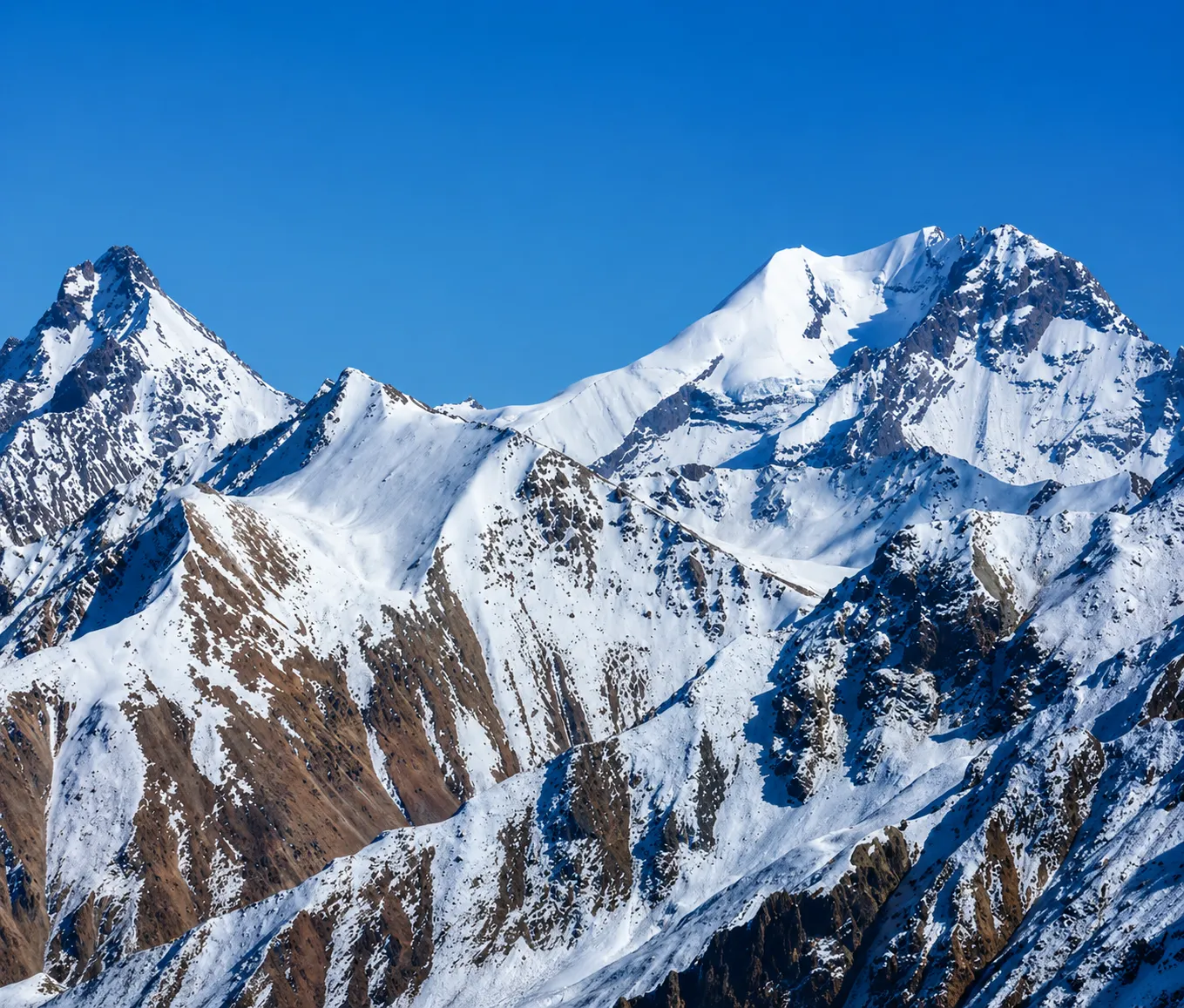
The route follows the Humla Karnali corridor before entering increasingly secluded valleys and rugged high-altitude terrain. One of the principal experiences is the excursion towards Saipal Base Camp and the snout of Nunekhara Glacier, with close views of the striking eastern face of Mount Saipal. The journey later crosses Sakya Lagna at approximately 4,709 metres and Syakup Pass at approximately 4,214 metres, combining physical challenge with wide Himalayan panoramas.
The trek is equally rewarding for its cultural and ecological variety. Tibetan-influenced villages, Yalwang’s Buddhist monastery, historical trade routes, Kermi’s natural hot springs and changing vegetation from forest to alpine country give the route a distinctive character. Long walking days, remote camping and limited infrastructure make this a genuine expedition-style trek for fit, well-prepared travellers who are comfortable in isolated mountain environments.
Best Time to Trek Saipal Base Camp
The most favorable seasons for the Saipal Base Camp Trek are generally spring (March to May) and autumn (September to November). These periods usually provide more stable weather, clearer mountain views, and better trail conditions for exploring the remote Himalayan landscape.
Spring – March to May
Spring brings warmer daytime conditions and gradually improving weather across the highlands. The lower and mid-elevation landscapes become greener, while rhododendrons and other Himalayan flowers add vibrant colors to the trail.
As the season progresses, the combination of clear mountain views, blooming vegetation, pleasant trekking temperatures, and dramatic snow-covered peaks creates excellent conditions for exploring the Saipal region.
Autumn – September to November
Autumn is one of the most rewarding periods for trekking in Nepal. After the summer monsoon, the atmosphere is generally clearer, often producing impressive visibility across the Himalayan ranges.
Daytime temperatures are usually comfortable for trekking, while temperatures become significantly colder at higher elevations. The relatively stable weather during this season makes it an excellent period for crossing rugged terrain and enjoying panoramic views of Saipal Himal and the surrounding mountains.
Why Choose Spring or Autumn?
- More favorable trekking conditions
- Better chances of clear Himalayan views
- Pleasant daytime temperatures at lower and middle elevations
- Beautiful vegetation and flowering landscapes in spring
- Crisp, clean mountain scenery in autumn
- Generally more stable conditions than the monsoon and winter seasons
Because Saipal is a remote and high-altitude trekking destination, weather conditions can change quickly even during the best seasons. Proper preparation, an experienced trekking team, and flexibility in the itinerary are therefore essential for a safe and enjoyable journey.
Saipal BC Trek Highlights
Trip High Light
- Saipal Base Camp and Mount Saipal : Explore the high-Himalayan surroundings beneath the impressive eastern face of Mount Saipal.
- Nunekhara Glacier : Approach the glacier snout, the furthest practical point described in the itinerary without specialised climbing equipment.
- High Mountain Passes : Cross Dhid Lagna (about 3,650 m), Sakya Lagna (about 4,709 m) and Syakup Pass (about 4,214 m).
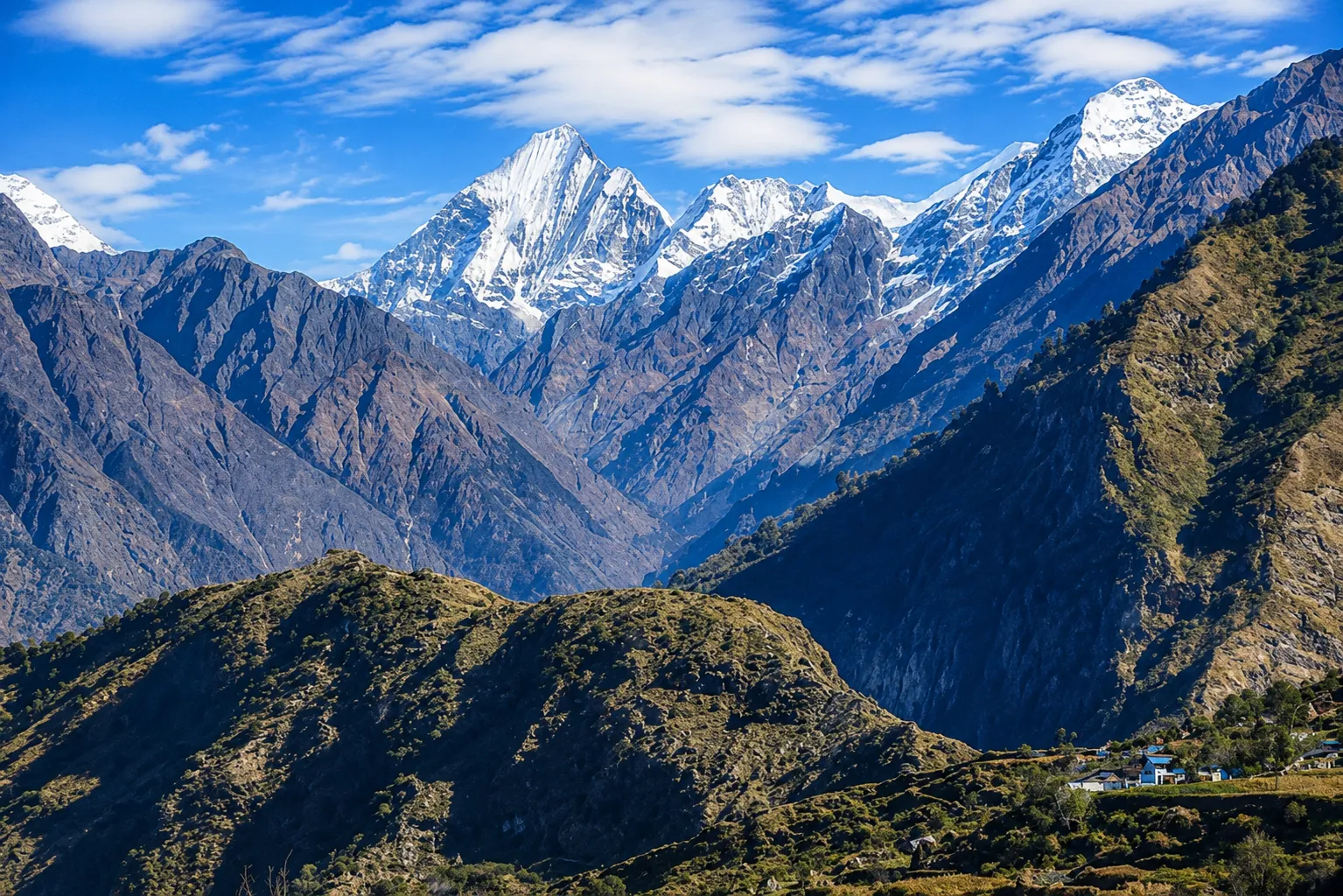
- Remote Humla Valleys : Follow the Humla Karnali and secluded side valleys where forests, rivers and mountain ridges dominate the landscape.
- Traditional Himalayan Communities : Travel through Tibetan-influenced settlements such as Chala and experience the distinctive culture of upper Humla.
- Yalwang Buddhist Monastery : Visit a local monastery and gain insight into the Buddhist traditions of the region.
- Diverse Himalayan Ecology : Walk through pine, juniper, oak, walnut and alder forests before reaching open alpine pastures and rocky high country.
- Mountain Birdlife : Look for Himalayan Monal, eagles, vultures and other birds in the varied ecological zones along the route.
- Kermi Natural Hot Springs : Enjoy the chance to relax in natural hot springs after several demanding trekking days.
- Remote Camping Experience : Spend nights in quiet riverside and mountain camps far from Nepal's busier trekking trails.
Day-by-day-Itinerary
Welcome to Nepal and the beginning of your Saipal Base Camp adventure.
Upon arrival at Tribhuvan International Airport in Kathmandu, a representative from Himalayan Sherpa Exodus Team Treks & Expeditions Pvt. Ltd. will welcome you and assist with your transfer to the hotel.
Once you have settled in, our team will provide a detailed pre-trek briefing covering the planned route, transportation, accommodation arrangements, required permits, trekking conditions, safety procedures, equipment, and other practical information for the journey ahead.
The remainder of the day can be spent relaxing and preparing for your Himalayan adventure.
Overnight in Kathmandu.
Today, we leave the Kathmandu Valley and travel towards Nepalgunj, the important gateway city for journeys into Nepal's remote western Himalayan districts.
The flight offers an interesting transition from the hills surrounding Kathmandu towards the extensive plains of western Nepal. Nepalgunj has long served as a transportation and commercial hub connecting the Terai with the isolated mountain regions of Karnali and Humla.
After arrival, we prepare for the onward journey towards Simikot and the remote trekking trails leading towards the Saipal region.
Overnight in Nepalgunj.
Beginning from Bargaun, we gradually descend towards the Karnali River and join an old trail traditionally used by sheep caravans travelling through this isolated Himalayan region.
The route leads towards the Karnali Valley and passes through landscapes that remain relatively untouched by modern development. Continuing towards Lali, the trail reveals the rugged character of the Humla Karnali region, where deep river valleys, forested slopes, traditional settlements, and distant mountain ridges define the scenery.
Much of today's walk passes through quiet terrain, offering an authentic sense of travelling through one of Nepal's less-frequented regions.
By evening, we reach the camping area around Yangchu Kuna. Surrounded by peaceful Himalayan landscapes, we settle into camp and enjoy a quiet evening beneath the open mountain sky.
Overnight camping at Yangchu Kuna.
After breakfast, we continue along the Humla Karnali River Valley, following a scenic trail through diverse Himalayan woodland.
The route passes through forests containing alder, oak, walnut, Himalayan bamboo, juniper, and pine. Moving southwards, we eventually reach Bokche Gauda, where a local teahouse provides an opportunity for a short break.
Continuing beside the river, we make our way towards the impressive bluff near Lali. The surrounding valley opens considerably in places, providing beautiful views across the river corridor and forested hillsides.
Beyond Lali Bluff, the trail undulates through Biubare, where tall pine forests and a broader valley landscape accompany our journey.
Eventually, we arrive at Ripghat and establish our campsite. The sound of the nearby river and the surrounding forests creates a peaceful setting in which to rest after the day's walk.
Overnight camping at Ripghat.
Leaving Ripghat behind, we gradually move away from the main Humla Karnali River as it turns towards the southeast.
Our route follows a smaller river into the beautiful Kheta Khola Valley. The landscape becomes increasingly secluded, with winding waterways, steep hillsides, forests, and remote mountain terrain surrounding the trail.
We continue through the valley towards Ogaliya, a rarely visited settlement that reflects the remarkable isolation of this part of western Nepal.
Crossing a series of natural spurs and changing terrain, we eventually reach Bhuagdiya, where a broad and comparatively level area beside the Kheta Khola provides a suitable campsite.
The quiet river valley and absence of large settlements make tonight's camp particularly atmospheric.
Overnight camping beside Kheta Khola.
Today's journey is physically demanding and takes us deeper into the mountainous interior of the region.
Initially, the trail climbs through dense pine forest, where thick vegetation may occasionally obscure the surrounding snow-covered mountains. As the ascent continues, we approach Dhid Lagna Pass at approximately 3,650 metres.
The climb to the pass requires steady pacing and good endurance. Reaching the top, however, brings a rewarding sense of achievement together with impressive views across the surrounding valleys and mountain landscapes.
From Dhid Lagna, the trail descends steeply towards Kawadi Khola before continuing in a north-westerly direction.
After negotiating the day's demanding terrain, we reach Lampate and establish camp for the evening.
Overnight camping at Lampate.
Leaving Lampate, the character of the landscape begins to change noticeably.
Dense pine woodland gradually gives way to more open alpine pastures, allowing increasingly expansive views across the surrounding Himalayan terrain.
The walk towards Rani Kharka involves several challenging sections, so maintaining a comfortable and consistent pace is particularly important.
One of the highlights comes around Dhaule Kharka, where the open landscape provides beautiful mountain panoramas.
Upon reaching Rani Kharka, we are rewarded with an exceptional view towards the eastern face of Mount Saipal. Our campsite is positioned amid impressive high-Himalayan scenery, providing an ideal base for the following day's exploration towards Saipal Base Camp.
Overnight camping at Rani Kharka.
Today is dedicated to exploring the dramatic mountain environment surrounding Saipal Base Camp.
Because we return along the same route, the day's walking distance may be adjusted according to weather conditions, trail conditions, and the physical condition of the trekking group.
Our objective is to approach as closely as safely possible towards the spectacular eastern face of Mount Saipal.
The trail leads towards the snout of Nunekhara Glacier, considered the furthest practical point accessible on this route without specialised climbing equipment.
The surrounding environment is characterised by striking Himalayan vegetation, including pine, juniper, rhododendron, alpine herbs, and other high-altitude plant species. The region also supports diverse birdlife, and trekkers may have opportunities to observe Himalayan Monal, eagles, vultures, and other mountain birds.
After spending time appreciating the glacier and the imposing Saipal massif, we retrace our route towards camp.
Overnight camping in the Saipal region.
After leaving Rani Kharka, we continue through increasingly rugged high-altitude terrain.
The trail passes through Tharang Kharka, where a basic shelter provides a convenient place for a short rest before we continue northwards towards the Lepcha Khola Valley.
As the trail climbs, the landscape becomes progressively more dramatic and remote. Alpine vegetation, open mountain slopes, rocky terrain, and distant peaks create a distinctly high-Himalayan atmosphere.
Our aim is to establish camp near Lepcha Kharka at approximately 4,450 metres.
Because of the considerable elevation, the afternoon is best spent resting, staying hydrated, and allowing the body time to adjust to the altitude.
Overnight camping at Lepcha Kharka.
Today is one of the most spectacular and demanding stages of the Saipal Base Camp Trek.
From Lepcha Kharka, we climb towards Sakya Lagna Pass at approximately 4,709 metres, one of the highest points reached during the journey.
The ascent can be strenuous, but the mountain scenery becomes increasingly impressive as we gain elevation. From the pass, magnificent views extend towards Mount Saipal in the southwest, while the vast landscapes of the Tibetan Plateau can be seen towards the north.
After enjoying the panorama, we begin a careful descent through steep terrain towards Khaniphuk Kharka.
Continuing lower, the route reaches the meeting point of the Karang Khola and Kalungba Khola. The varied ecological zones encountered during the day provide opportunities to observe different Himalayan plant communities and, with some fortune, local wildlife.
We eventually continue westwards towards Chala, a traditional settlement strongly influenced by Tibetan Himalayan culture.
Overnight camping at Chala.
Today's route takes us through another impressive section of the high Himalaya, with Sakya Lagna Pass at approximately 4,709 metres forming the major geographical landmark.
The strenuous climb is compensated by broad panoramic views across the Saipal Himal. Mount Saipal rises prominently towards the southwest, while the expansive Tibetan Plateau forms a contrasting landscape towards the north.
During the descent, we negotiate steep mountain terrain towards Khaniphuk Kharka before reaching the meeting point of the Kerang Khola and Kalungba Khola.
From here, the route continues westwards across the Khalungba River before climbing towards Chala.
Chala is a traditional Tibetan-influenced Himalayan village where distinctive cultural practices and a remote mountain lifestyle remain important aspects of everyday life.
After reaching camp, we can rest and absorb the peaceful atmosphere of this isolated settlement.
Overnight camping at Chala.
Our journey continues from Chala towards Yalwang, crossing another significant mountain pass along the way.
The trail climbs towards Syakup Pass at approximately 4,214 metres. After reaching the pass, we descend into the side valley of Puiya Khola and continue through forested terrain.
Eventually, the route reaches the bridge across the Humla Karnali near Muchu. From here, a gradual climb leads us towards Yalwang.
One of the day's important cultural experiences is a visit to the local Buddhist monastery. The monastery provides valuable insight into Buddhist religious traditions and the cultural life of communities inhabiting the upper Humla region.
This corridor also carries historical importance because routes through the region were traditionally associated with trade between Nepal and Tibet.
We establish camp around Yalwang and enjoy a quieter evening following the day's long journey.
Overnight camping at Yalwang.
After leaving Yalwang, we descend towards Yalwang Chaur before climbing again through rocky cliffs above the narrow Karnali canyon.
This section of trail provides dramatic views of the rugged river valley and illustrates the striking geological character of Humla.
We then continue into the beautiful Salli Khola Valley. A short climb brings us towards Salli Lagna before the trail begins descending gradually towards Kermi.
Along the way, we pass through attractive forests of blue pine, alder, willow, and other Himalayan vegetation. Birdlife is also diverse, and there may be opportunities to see the colourful Himalayan Monal.
Reaching Kermi, trekkers can enjoy one of the day's most welcome experiences: the area's natural hot springs. A relaxing soak provides an excellent way to ease tired muscles after several demanding days on the trail.
Overnight camping at Kermi.
Kermi is a picturesque Himalayan settlement where Tibetan Buddhist traditions and distinctive local cultural practices remain visible.
After leaving the village, we join the principal trail running through the Karnali River Valley, historically connecting communities around Simikot with settlements closer to the Tibetan border.
Compared with several previous stages, today's walking is relatively moderate, allowing more time to appreciate the river valley and surrounding landscape.
Our route leads towards Dharapori, where different cultural communities contribute to the social diversity of the region.
Vegetation along the journey includes blue pine, juniper, alder, apricot trees, and other Himalayan species, making this section particularly pleasant.
By evening, we establish camp and enjoy another peaceful night beside the mountains and forests of Humla.
Overnight camping at Dharapori.
Today marks the final major trekking stage of our Saipal journey.
Leaving Dharapori, we travel through Majgaun, a small village largely inhabited by the Thakuri community. The settlement provides another opportunity to observe the cultural diversity found throughout the Humla region.
As we approach Simikot Lagna, the trail becomes more demanding. After many days of trekking through remote valleys and high mountain passes, this final ascent provides a fitting conclusion to the walking portion of the expedition.
A short descent along a rugged trail eventually brings us towards Simikot.
Blue pine dominates much of the surrounding landscape, accompanied by juniper, pipal, and other vegetation.
From Simikot Lagna, a broad view of the settlement appears below, signalling the completion of an extraordinary circuit through the Saipal region.
After reaching Simikot, we check into a guesthouse and enjoy a well-earned rest.
Overnight in a guesthouse at Simikot.
After breakfast, we prepare to leave the remote mountain landscapes of Humla.
Simikot serves as the administrative centre of the district and brings together communities from different parts of Nepal, creating a distinctive mixture of Himalayan and hill cultures.
Subject to suitable flying conditions, we board the morning flight from Simikot to Nepalgunj.
From Nepalgunj, we continue by connecting flight to Kathmandu.
Arriving back in the capital after our extended journey through western Nepal, we transfer to the hotel and enjoy some much-needed comfort.
The remainder of the day can be spent resting, exploring Kathmandu, or simply reflecting on the mountain passes, remote villages, glaciers, rivers, forests, and cultural encounters that have shaped the Saipal Base Camp Trek.
Overnight in Kathmandu.
Your remarkable journey through the remote Saipal Himal comes to an end today.
At the appropriate time, a representative from Himalayan Sherpa Exodus Team Treks & Expeditions Pvt. Ltd. will arrange your transfer to Tribhuvan International Airport according to your international flight schedule.
As you leave Nepal, you take with you memories of Mount Saipal's dramatic mountain scenery, the isolated valleys of Humla, traditional Himalayan communities, high mountain passes, glacial landscapes, and the warm encounters experienced along the trail.
We sincerely hope your Saipal Base Camp Trek has been a memorable exploration of one of Nepal's most remote and fascinating Himalayan regions.We wish you a safe onward journey and hope to welcome you back to Nepal for another Himalayan adventure.
The Trip Package Cost Includes
- Airport arrival assistance and hotel transfer in Kathmandu on Day 1.
- Pre-trek briefing covering the route, transportation, accommodation arrangements, permits, trekking conditions, safety procedures and equipment guidance.
- Domestic flight from Kathmandu to Nepalgunj as stated in the itinerary.
- Overnight accommodation in Kathmandu and Nepalgunj where specifically mentioned in the itinerary.
- Camping accommodation during the remote trekking stages in the Humla-Saipal region.
- Guesthouse accommodation in Simikot at the end of the trekking section.
- Return domestic flights from Simikot to Nepalgunj and onward to Kathmandu, subject to suitable flying conditions.
- Final transfer to Tribhuvan International Airport in Kathmandu for departure.
The Trip Package Cost Excludes
- International airfare to and from Nepal.
- Nepal entry visa fees and passport-related expenses.
- Travel and medical insurance, including high-altitude trekking, emergency evacuation and rescue coverage.
- Personal trekking clothing, footwear, sleeping equipment and other personal gear unless specifically stated in the final package.
- Meals, drinks and bottled beverages unless specifically confirmed as included in the final quotation.
- Trekking permits, conservation fees or local entry charges unless specifically confirmed as included by the operator.
- Personal expenses such as laundry, telephone, internet, charging, snacks and souvenirs.
- Tips and gratuities for guides, porters, drivers and support staff.
- Extra costs arising from weather delays, flight cancellations, route changes, illness, early return or other circumstances outside the operator's control.
- Additional hotel nights, transport or any service not specifically listed under Cost Includes.