Manaslu Circuit Trek
Trip Overview
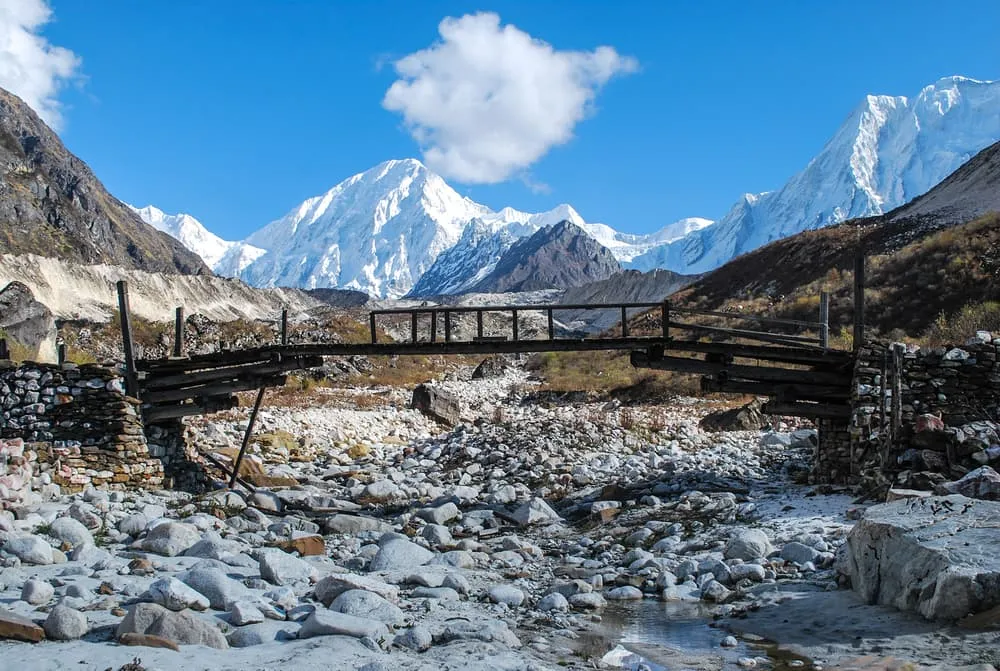
The Manaslu Circuit Trek is a remarkable Himalayan journey around Mount Manaslu, the eighth-highest mountain in the world. Designed for trekkers who wish to experience a quieter and more authentic side of Nepal, this route combines impressive mountain scenery, traditional villages, deep river valleys, changing landscapes, Tibetan-influenced culture, and the rewarding challenge of crossing the high Larke La Pass at 5,106 metres.
With Himalayan Sherpa Exodus Team Treks & Expeditions Pvt. Ltd., the journey begins in Kathmandu with time allocated for sightseeing and the preparation of the required special trekking permit. A scenic overland drive then takes you to Machchhakhola, where the walking adventure begins. From here, the trail gradually follows the Budhi Gandaki valley through villages such as Jagat, Deng, Namrung, Shyala, Samagaun, and Samdo, allowing the landscape and culture to change naturally with every stage of the trek.
As the trail climbs higher, dense forests and cultivated hillsides slowly give way to rugged alpine terrain and wide Himalayan views. The journey through Namrung and Shyala is especially rewarding, with increasingly impressive views of the surrounding mountains and a strong sense of entering Nepal’s high Himalayan region.
One of the most memorable parts of the trek is the stay at Samagaun, a beautiful mountain settlement located at approximately 3,520 metres. An exploration day towards Manaslu Base Camp at around 4,400 metres provides an opportunity to experience the dramatic environment below Mount Manaslu while also supporting gradual acclimatization.
The route then continues towards Samdo, a traditional settlement close to the Tibetan border region. A dedicated acclimatization day gives trekkers time to rest or explore towards Samdo Ri, helping the body prepare for the higher elevations ahead. From Samdo, the trail proceeds to Dharmashala at 4,460 metres, the final major stop before crossing the highest point of the journey.
Crossing Larke La Pass at 5,106 metres is the defining experience of the Manaslu Circuit Trek. It is a long and physically demanding day, but reaching the pass rewards trekkers with a spectacular high-mountain landscape surrounded by snow-covered peaks, glaciers, and vast alpine terrain. The descent towards Bimtang brings a dramatic change in scenery and a satisfying sense of achievement after completing the most challenging section of the route.
From Bimtang, the trek descends through beautiful mountain forests and lower settlements towards Gowa and Tilche. The walking journey concludes at Tilche, followed by an overland drive through Besisahar and onward to Kathmandu. A final leisure day in the capital provides time to relax, explore, or prepare for the international journey home.
The Manaslu Circuit is best suited to trekkers who appreciate both adventure and cultural discovery. Rather than following Nepal’s busiest trekking corridors, this journey offers a more peaceful experience where traditional mountain life, changing Himalayan landscapes, and challenging high-altitude trekking remain closely connected.
At Himalayan Sherpa Exodus Team Treks & Expeditions Pvt. Ltd., we approach this trek with careful planning, responsible acclimatization, experienced guidance, and respect for the communities and natural environments along the trail. Our aim is not simply to guide you around Manaslu, but to help you experience the region at a thoughtful pace and return with a genuine understanding of one of Nepal’s most distinctive Himalayan landscapes.
Trip Highlights
Himalayan Sherpa Exodus Team honestly requests for everyone!
Explore quietly. Travel respectfully. Experience the Himalaya beyond the ordinary.
Trip Highlights
- Journey Around Mount Manaslu : Trek through the magnificent Himalayan region surrounding Mount Manaslu, rising to 8,163 metres and standing as the world's eighth-highest mountain.
- Cross the Larke La Pass at 5,106 Metres : Complete the most challenging and rewarding section of the trek by crossing the high Larke La Pass, surrounded by dramatic alpine scenery, glaciers, and snow-covered mountains.
- Explore Manaslu Base Camp : Enjoy an adventurous side trip from Samagaun towards Manaslu Base Camp at approximately 4,400 metres and experience the impressive mountain environment beneath Manaslu.
- Experience the Beauty of Shyala and Samagaun : Walk through two of the most scenic settlements of the upper Manaslu region, where open valleys and high Himalayan peaks create some of the finest landscapes of the journey.
- Discover Traditional Himalayan Villages : Pass through Jagat, Deng, Namrung, Samagaun, Samdo, Bimtang, Tilche, and many smaller settlements where traditional lifestyles remain closely connected to farming, Buddhism, trade, and the surrounding mountains.
- Tibetan-Influenced Culture of the Upper Manaslu Region : Experience monasteries, mani walls, prayer flags, traditional stone houses, and Buddhist customs that reflect the strong cultural relationship between the upper Manaslu valleys and the Tibetan Himalayan world.
- Acclimatization and Exploration at Samdo : Spend an additional day at Samdo with the possibility of exploring towards Samdo Ri, providing both valuable acclimatization and beautiful views of the surrounding highlands.
- Remarkable Change in Landscape : Begin among river valleys, forests, farmland, and subtropical scenery before gradually entering pine and rhododendron forests, alpine meadows, glacial valleys, and high mountain terrain.
- Walk Along the Budhi Gandaki Valley : Follow sections of the powerful Budhi Gandaki River through narrow gorges, suspension bridges, waterfalls, rocky trails, and traditional riverside settlements.
- A Peaceful Alternative to Nepal's Busier Trekking Routes : The Manaslu region offers a more remote and less crowded trekking experience, making it particularly rewarding for travellers seeking solitude, natural beauty, and meaningful cultural encounters.
- Beautiful Descent Through Bimtang : After crossing Larke La, descend into the striking Bimtang valley, where mountain views, forests, rivers, and open pastures create a completely different character from the northern side of the circuit.
- Carefully Planned High-Altitude Progression : The itinerary includes gradual elevation gain, exploration days, and acclimatization time at Samagaun and Samdo to support a more comfortable and responsible journey into the high Himalaya.
- Adventure Combined with Cultural Discovery : The trek is more than a high-pass challenge. It brings together mountain scenery, village life, Buddhist traditions, remote landscapes, and the personal satisfaction of completing one of Nepal's finest Himalayan circuits.
- Complete Himalayan Journey from Kathmandu and Back : From arrival and cultural exploration in Kathmandu to the remote Manaslu valleys, Larke La crossing, Bimtang descent, and return through Besisahar, the itinerary offers a complete and well-balanced Nepal trekking experience.
Day 01 :
Arrival in Kathmandu, Nepal
Altitude: Approximately 1,350 m / 4,429 ft
Activity: Arrival and hotel transfer
Overnight: Kathmandu
Welcome to Nepal. Upon your arrival at Tribhuvan International Airport in Kathmandu, our representative from Himalayan Sherpa Exodus Team Treks & Expeditions Pvt. Ltd. will warmly receive you and assist with your transfer to the hotel.
After checking in, you can take time to rest and recover from your journey. Depending on your arrival time, you may also enjoy a short walk around the nearby streets of Kathmandu. Later, we will provide a brief introduction to your upcoming Manaslu Circuit Trek, including important information about the route, equipment, weather, accommodation, and high-altitude trekking conditions.
Day 02 :
Half-Day Kathmandu Sightseeing and Special Permit Preparation
Altitude: Approximately 1,350 m / 4,429 ft
Activity: Cultural sightseeing and trekking permit preparation
Duration: Half-day sightseeing
Overnight: Kathmandu
Today is reserved for a relaxed half-day exploration of Kathmandu while the necessary special trekking permits for the Manaslu region are being processed.
You will have an opportunity to visit some of Kathmandu's significant cultural and historical sites and gain an introduction to Nepal's rich religious traditions, architecture, and everyday life.
The remaining part of the day can be used for final trekking preparation, checking personal equipment, purchasing any missing essentials, and discussing the journey ahead with your trekking guide. This is also a useful day to rest before travelling towards the mountains.
Day 03 :
Drive from Kathmandu to Machchhakhola
Altitude: 869 m / 2,851 ft
Driving Distance: Approximately 160 km
Driving Duration: 8–9 hours
Overnight: Machchhakhola
After breakfast, we leave Kathmandu and begin our scenic overland journey towards Machchhakhola, the starting area of our trekking adventure.
The drive gradually takes us away from the busy capital and into Nepal's beautiful countryside. Along the way, we pass terraced farmland, traditional settlements, rivers, forested hills, and changing rural landscapes.
As the journey progresses deeper into the Gorkha region, sections of the road become more rugged and adventurous. Eventually, we reach Machchhakhola, a peaceful riverside settlement situated along the Budhi Gandaki valley.
After the long drive, we settle into our lodge and prepare for the first full day of trekking.
Day 04 :
Trek from Machchhakhola to Jagat
Starting Altitude: 869 m / 2,851 ft
Destination Altitude: 1,340 m / 4,396 ft
Walking Distance: Approximately 22 km
Walking Duration: 8–9 hours
Overnight: Jagat
Today marks the beginning of our journey on foot. After breakfast, we follow the trail northward through the impressive Budhi Gandaki valley.
The route passes through small settlements, cultivated terraces, forested sections, rocky paths, and several suspension bridges. Throughout the day, the Budhi Gandaki River remains an important feature of the landscape.
The trail includes a mixture of gradual climbs, descents, and narrow valley sections, making this a rewarding but relatively long first trekking day.
Eventually, we arrive at Jagat, an attractive stone-built village and an important entry point into the protected Manaslu region. We spend the evening resting and enjoying the quieter atmosphere of the mountain valley.
Day 05 :
Trek from Jagat to Deng
Starting Altitude: 1,340 m / 4,396 ft
Destination Altitude: 1,860 m / 6,102 ft
Walking Distance: Approximately 20 km
Walking Duration: 7–8 hours
Overnight: Deng
After breakfast in Jagat, we continue deeper into the Manaslu region.
Today's trail follows a varied route through traditional villages, forests, river valleys, agricultural terraces, and several suspension bridges. As we gradually gain elevation, the surrounding landscape begins to feel more remote and distinctly Himalayan.
The route provides an interesting transition from the lower subtropical environment towards the cooler mountain valleys of the upper region.
After approximately seven to eight hours of trekking, we reach Deng, a peaceful settlement surrounded by forested hills and dramatic valley scenery. From this stage onward, Tibetan Buddhist cultural influences become increasingly noticeable along the trail.
Day 06 :
Trek from Deng to Namrung
Starting Altitude: 1,860 m / 6,102 ft
Destination Altitude: 2,630 m / 8,629 ft
Walking Distance: Approximately 19.5 km
Walking Duration: 7–8 hours
Overnight: Namrung
Leaving Deng, we continue steadily into the upper Manaslu valley.
The trail passes through beautiful forested terrain, traditional mountain settlements, river crossings, stone paths, and sections decorated with Buddhist prayer flags and mani walls. With increasing altitude, the scenery gradually changes and the air becomes noticeably cooler.
Today's route also offers a stronger sense of the Tibetan-influenced culture that characterizes the upper Manaslu region.
After a rewarding day of walking, we arrive at Namrung, a charming Himalayan settlement surrounded by forests and impressive mountain landscapes. Namrung also marks the beginning of increasingly dramatic views toward the high peaks of the Manaslu massif.
Day 07 :
Trek from Namrung to Shyala
Starting Altitude: 2,630 m / 8,629 ft
Destination Altitude: 3,500 m / 11,483 ft
Walking Distance: Approximately 16 km
Walking Duration: 5–6 hours
Overnight: Shyala
Today's trek brings one of the most noticeable changes in landscape during the journey.
Leaving Namrung, we gradually ascend through beautiful forests and traditional villages where stone houses, Buddhist monuments, prayer flags, and cultivated fields reflect the distinctive character of the upper Manaslu valley.
As we climb higher, the forests begin to open and the surrounding Himalayan peaks become increasingly prominent.
Our destination is Shyala, a wonderfully positioned mountain settlement at approximately 3,500 metres. Surrounded by impressive Himalayan scenery, Shyala offers an inspiring introduction to the high-altitude landscapes that will dominate the coming days.
The relatively moderate walking duration also allows valuable time for the body to adjust naturally to the higher elevation.
Day 08 :
Trek from Shyala to Samagaun
Starting Altitude: 3,500 m / 11,483 ft
Destination Altitude: 3,520 m / 11,549 ft
Walking Distance: Approximately 15.6 km
Walking Duration: 5–6 hours
Overnight: Samagaun
After breakfast, we leave beautiful Shyala and continue towards Samagaun, one of the most important and memorable settlements of the Manaslu Circuit.
Today's route offers exceptional high-mountain surroundings, with broad valleys, traditional settlements, alpine landscapes, Buddhist monuments, and magnificent views of the Manaslu region accompanying us along the trail.
Although the overall elevation gain is relatively small, the day's journey is intentionally comfortable and well suited to the increasing altitude.
We eventually reach Samagaun at 3,520 metres, a traditional Himalayan village situated beneath the towering mountains of the Manaslu massif. The village provides a fascinating combination of natural beauty, Buddhist culture, traditional architecture, and everyday mountain life.
Samagaun will also serve as an important base for our upcoming exploration and acclimatization before continuing towards the higher sections of the Manaslu Circuit.
Day 09 :
Explore Manaslu Base Camp
Starting Altitude: 3,520 m / 11,549 ft
Highest Altitude: Approximately 4,400 m / 14,436 ft
Walking Duration: Approximately 8–9 hours
Activity: Manaslu Base Camp exploration
Overnight: Samagaun
Today is dedicated to exploring the remarkable surroundings of Samagaun, with a rewarding hike towards Manaslu Base Camp.
The trail gradually climbs through open alpine terrain, glacial landscapes, and increasingly dramatic mountain scenery. As we gain elevation, the impressive presence of Mount Manaslu becomes more dominant, creating one of the most memorable mountain experiences of the entire journey.
Reaching the base camp area at approximately 4,400 metres offers a close perspective of the Manaslu massif and its surrounding glaciers. After spending time enjoying the high-altitude environment and mountain views, we carefully descend back to Samagaun.
This excursion also provides valuable acclimatization before we continue towards the higher sections of the trek.
Day 10 :
Trek from Samagaun to Samdo
Starting Altitude: 3,520 m / 11,549 ft
Destination Altitude: 3,875 m / 12,713 ft
Walking Distance: Approximately 13 km
Walking Duration: 4–5 hours
Overnight: Samdo
After breakfast, we leave Samagaun and continue gradually north towards Samdo, one of the highest permanent settlements along the Manaslu Circuit.
The trail follows an increasingly open valley, with fewer trees and broader views of the surrounding mountains. The walking pace remains comfortable, allowing time to enjoy the changing landscape and adjust naturally to the higher elevation.
Along the way, we pass through areas influenced by traditional Tibetan culture, where prayer flags, stone structures, and remote grazing lands reflect the character of life in this high Himalayan region.
We reach Samdo after approximately four to five hours of walking and spend the remainder of the day resting in preparation for further acclimatization.
Day 11 :
Acclimatization Day in Samdo and Exploration towards Samdo Ri
Altitude: 3,875 m / 12,713 ft
Activity: Rest, acclimatization, and optional exploration
Overnight: Samdo
Today is an important acclimatization day before moving into the highest section of the trek.
Rather than remaining completely inactive, trekkers may take a gradual exploratory hike towards Samdo Ri, depending on weather conditions, individual fitness, and the advice of the trekking guide.
The surrounding highlands offer excellent views across the remote Himalayan valleys and provide an opportunity to experience the peaceful atmosphere of the upper Manaslu region.
The main purpose of the day is to allow the body additional time to adapt to the elevation before continuing towards Dharmashala and the crossing of Larke La Pass.
Day 12 :
Trek from Samdo to Dharmashala
Starting Altitude: 3,875 m / 12,713 ft
Destination Altitude: 4,460 m / 14,633 ft
Walking Distance: Approximately 11.5 km
Walking Duration: Around 3 hours
Overnight: Dharmashala
After breakfast, we leave Samdo and continue towards Dharmashala, the final major overnight stop before crossing Larke La Pass.
The trail gradually climbs through a remote and increasingly rugged alpine environment. Vegetation becomes sparse as we move higher, while the surrounding landscape opens into broad mountain valleys, glacial terrain, and high ridges.
Although today's walking distance is relatively moderate, the significant increase in altitude makes a slow and steady pace essential.
Upon reaching Dharmashala at approximately 4,460 metres, we take the remainder of the day to rest, hydrate, and prepare physically and mentally for the demanding pass crossing ahead.
Day 13 :
Cross Larke La Pass and Trek to Bhimtang
Starting Altitude: 4,460 m / 14,633 ft
Highest Altitude: Larke La Pass – 5,106 m / 16,752 ft
Destination Altitude: Bimtang – 3,590 m / 11,778 ft
Walking Distance: Approximately 24 km
Walking Duration: 9–10 hours
Overnight: Bimtang
Today is the most demanding and rewarding day of the Manaslu Circuit Trek.
We begin early in the morning and gradually ascend through high-altitude terrain towards Larke La Pass, the highest point of the entire journey at 5,106 metres.
The route passes through an impressive landscape of rocky moraines, snow-covered slopes, glacial features, and vast Himalayan surroundings. Weather and trail conditions can make this section challenging, so a steady pace and careful guidance are especially important.
Reaching the top of Larke La is a significant achievement. From the pass, trekkers can enjoy a magnificent high-mountain panorama before beginning the long descent towards Bimtang.
The descent reveals a striking change in landscape, gradually leading us into a broad alpine valley surrounded by dramatic mountain scenery.
After approximately nine to ten hours of trekking, we arrive at Bhimtang, where we can finally rest after completing the highest and most challenging section of the trek.
Day 14 :
Trek from Bhimtang to Gowa or Tilche
Starting Altitude: 3,590 m / 11,778 ft
Destination Altitude: Gowa – approximately 2,470 m / 8,104 ft
Walking Duration: Approximately 6–7 hours
Overnight: Gowa or Tilche
After the demanding Larke La crossing, today's journey offers a beautiful and refreshing descent into lower elevations.
Leaving Bimtang, the trail passes through alpine meadows, forested valleys, rivers, and gradually changing vegetation. As we descend, the landscape becomes greener and warmer, creating a pleasant contrast to the high-altitude terrain of the previous days.
The route continues through attractive Himalayan countryside towards Gowa and Tilche, with mountain views occasionally appearing through the forests behind us.
After approximately six to seven hours of walking, we reach our overnight destination and enjoy a well-earned rest following the completion of the major trekking section.
Day 15 :
Drive from Tilche to Besisahar and Continue to Kathmandu
Starting Point: Tilche
Besisahar Altitude: Approximately 760 m / 2,493 ft
Driving Distance to Besisahar: Approximately 43 km
Besisahar to Kathmandu Distance: Approximately 175.5 km
Total Driving Duration: Approximately 7–8 hours
Overnight: Kathmandu
Today we leave the mountain region and begin our overland journey back to Kathmandu.
From Tilche, we first drive approximately 43 kilometres towards Besisahar, passing through rural settlements, river valleys, terraced farmland, and gradually busier roads.
After reaching Besisahar, we continue towards Kathmandu, covering approximately 175.5 kilometres.
The drive provides a final opportunity to observe Nepal's changing countryside as we travel from the Himalayan foothills back towards the capital.
Upon arrival in Kathmandu, we transfer to the hotel, where you can relax and enjoy a comfortable evening after completing the Manaslu Circuit Trek.
Day 16 :
Leisure Day in Kathmandu or International Departure
Altitude: Approximately 1,350 m / 4,429 ft
Activity: Leisure, personal exploration, or international departure
Today is kept flexible according to your international flight schedule.
If your departure is later in the day, you may enjoy some free time in Kathmandu for personal exploration, shopping, visiting local cafés, or simply relaxing after the trek.
For guests with an international departure, our team will assist with the appropriate airport transfer according to the scheduled flight time.
With the completion of your Manaslu Circuit journey, we sincerely hope you leave Nepal with meaningful memories of its mountains, people, culture, and landscapes.
Himalayan Sherpa Exodus Team Treks & Expeditions Pvt. Ltd. is honoured to have been part of your Himalayan journey and wishes you a safe and pleasant onward journey.
The Trip Package Cost Includes
- Airport arrival and departure transfer in Kathmandu.
- Hotel accommodation in Kathmandu as mentioned in the confirmed itinerary.
- Required ground transportation during the trek, including Kathmandu to Machchhakhola and Tilche/Besisahar to Kathmandu.
- All necessary trekking permits required for the Manaslu Circuit Trek.
- Accommodation in local teahouses or mountain lodges during the trekking period.
- Meals during the trek as specified in the confirmed package.
- Experienced and professional trekking guide for the entire trekking journey.
- Porter service as mentioned in the confirmed trekking package.
- Guide and porter wages, meals, accommodation, transportation, and insurance.
- Trekking route planning and necessary administrative arrangements.
- Basic first-aid and group safety support during the trek.
- Government taxes and official service charges applicable to the confirmed package.
- Assistance from Himalayan Sherpa Exodus Team Treks & Expeditions Pvt. Ltd. throughout the trekking arrangement.
The Trip Package Cost Excludes
- International airfare to and from Nepal.
- Nepal entry visa fee.
- Personal travel, medical, and emergency evacuation insurance.
- Helicopter rescue or emergency evacuation expenses.
- Personal trekking clothing, equipment, and accessories.
- Meals in Kathmandu unless specifically mentioned in the package.
- Extra accommodation caused by early arrival, late departure, illness, weather, road conditions, or changes to the planned itinerary.
- Bottled water, boiled water, hot drinks, soft drinks, alcoholic beverages, and personal snacks.
- Hot shower charges during the trek.
- Battery charging, Wi-Fi, internet, and telephone expenses.
- Laundry and other personal expenses.
- Medical treatment and personal medication.
- Expenses arising from natural disasters, road disruption, weather conditions, political situations, or other circumstances beyond the company's reasonable control.
- Tips for guides, porters, drivers, and support staff.
- Any service or expense not specifically mentioned under Cost Includes.
Best Time to Trek
The Manaslu Circuit is most rewarding during Nepal’s two principal trekking seasons: spring, generally from March to May, and autumn, generally from September to November.
Spring gradually brings warmer conditions to the lower valleys, while forests and mountain slopes begin to show seasonal colour. Higher sections can still hold snow, giving the landscape around Samagaun, Samdo, Dharmashala, and Larke La a distinctly Himalayan character. As the season progresses, conditions generally become more comfortable for longer trekking days.
Autumn is particularly valued for its stable trekking conditions, clearer mountain views, comfortable daytime temperatures, and excellent visibility across the Manaslu massif. Following the summer monsoon, the valleys are often fresh and green, while the higher mountains usually become more consistently visible.
Winter trekking is possible for experienced and properly prepared trekkers, but heavy snowfall and severe cold can affect the upper route, particularly around Dharmashala and Larke La Pass. Trail accessibility may also change with weather conditions.
The summer monsoon brings rain to the lower and middle elevations, with slippery trails, cloud cover, landslides, and road disruption possible in some areas. For most travellers seeking the best balance of scenery, accessibility, and trekking conditions, spring and autumn remain the preferred periods.
Trek Difficulty
The Manaslu Circuit Trek is considered a challenging high-altitude trek and is most suitable for travellers with good physical fitness, determination, and preparation for several consecutive days of mountain walking.
The difficulty comes from a combination of long trekking days, significant changes in elevation, remote terrain, basic mountain accommodation, changing weather, and the gradual ascent into elevations above 4,000 metres.
Most trekking days involve approximately four to eight hours of walking, while the crossing of Larke La Pass at 5,106 metres can require around nine to ten hours depending on trail, snow, weather, and individual conditions.
The route does not require technical mountaineering skills under normal trekking conditions. However, trekkers should be comfortable walking on uneven mountain trails, steep ascents and descents, rocky sections, suspension bridges, and potentially snowy or icy terrain at higher elevations.
Regular cardiovascular exercise, hill walking, stair climbing, strength training, and longer practice hikes before travelling to Nepal can make the experience considerably more comfortable.
The Manaslu Circuit should not be approached as a race. A steady walking rhythm, sensible rest, adequate hydration, and respect for altitude are far more important than speed.
Acclimatization & Altitude Sickness
Proper acclimatization is one of the most important aspects of completing the Manaslu Circuit safely and comfortably.
The itinerary is designed to gain altitude gradually and includes important acclimatization opportunities around Samagaun and Samdo before proceeding towards Dharmashala and Larke La Pass.
An exploration towards Manaslu Base Camp, reaching approximately 4,400 metres, allows trekkers to spend time at a higher elevation before returning to sleep at Samagaun. Similarly, the acclimatization day in Samdo provides an opportunity for a controlled hike towards higher ground such as Samdo Ri while returning to the village for rest.
Even physically fit trekkers can experience altitude-related symptoms because altitude response is not determined by fitness alone. Mild headache, tiredness, reduced appetite, disturbed sleep, or shortness of breath during exertion may occur as the body adjusts.
Any symptoms should be communicated honestly to the trekking guide. Continuing higher despite worsening symptoms can be dangerous. Our trekking team monitors individual wellbeing and may recommend additional rest, a change in pace, stopping further ascent, or descending when necessary.
Trekkers are encouraged to walk slowly, drink adequate fluids, eat properly, avoid excessive alcohol, obtain sufficient rest, and allow the body time to adjust naturally.
At Himalayan Sherpa Exodus Team Treks & Expeditions Pvt. Ltd., reaching the destination is important, but safe acclimatization and responsible decision-making always take priority over maintaining a fixed schedule.
Himalayan Culture & Ancient Monasteries
The Manaslu Circuit is not only a journey through dramatic mountain landscapes. It is also an opportunity to enter communities where Himalayan traditions, Tibetan Buddhist influences, agriculture, trade, spirituality, and everyday village life remain closely connected.
As the trail moves from the lower Budhi Gandaki valley towards Namrung, Shyala, Samagaun, and Samdo, the cultural character of the region gradually changes. Stone-built settlements, traditional houses, prayer flags, mani walls, chortens, monasteries, and carved Buddhist inscriptions become increasingly visible.
In the upper Manaslu region, Tibetan Buddhist traditions have played an important role in community life for generations. Monasteries and religious structures are not simply attractions for visitors; they remain meaningful places of worship, gathering, reflection, and cultural continuity for local people.
Samagaun and the surrounding villages provide particularly valuable opportunities to observe the relationship between mountain life and Buddhist tradition. The rhythm of daily life here is shaped by the landscape, livestock, seasonal agriculture, family traditions, religious practices, and the realities of living in a remote high-altitude environment.
Travellers are encouraged to approach monasteries, sacred structures, local homes, and religious ceremonies respectfully. Walking around mani walls and chortens in the customary direction, asking permission before photographing people, dressing appropriately around religious sites, and listening to guidance from the local trekking team are simple but meaningful expressions of respect.
For us, the cultural experience of the Manaslu Circuit is not an additional attraction placed beside the trek. It is an essential part of the journey itself.
Travelling with Himalayan Sherpa Exodus Team Treks & Expeditions Pvt. Ltd. means experiencing the Manaslu region not only through its mountains and trails, but also through the communities, traditions, and stories that give this Himalayan landscape its distinctive identity.
Preparation Guide
The Manaslu Circuit Trek is a demanding Himalayan journey, so thoughtful preparation can make a considerable difference to both comfort and enjoyment.
We recommend beginning regular physical preparation several weeks before departure. Walking, hiking, stair climbing, cycling, swimming, and other cardiovascular activities can help improve endurance. Strengthening the legs, core, and back is also useful for long days on uneven mountain trails.
Whenever possible, practice walking for several hours while carrying a light daypack. This helps the body become familiar with the type of sustained activity required during the trek.
Good preparation is not only physical. Trekkers should also arrive with realistic expectations about simple mountain accommodation, changing weather, basic facilities, long walking days, and the effects of increasing altitude.
Well-broken-in trekking boots, suitable layered clothing, reliable rain protection, and appropriate personal equipment should be prepared before beginning the journey.
At Himalayan Sherpa Exodus Team Treks & Expeditions Pvt. Ltd., we encourage every traveller to prepare carefully while keeping the spirit of the journey flexible. In the Himalaya, patience is often just as useful as physical strength.
Weather & Climate
Weather on the Manaslu Circuit varies considerably because the trek travels from lower river valleys to elevations above 5,000 metres.
At lower elevations, daytime conditions can be relatively warm, particularly during spring and autumn. As the trail climbs through Namrung, Shyala, Samagaun, Samdo, and Dharmashala, temperatures gradually become colder, especially during the early morning, evening, and night.
Around the higher sections of the trek, including Larke La Pass at 5,106 metres, conditions can change quickly. Wind, snowfall, cloud, and freezing temperatures are possible even during the main trekking seasons.
Spring generally offers gradually warming conditions, while autumn is often appreciated for clearer mountain visibility and comfortable trekking temperatures. Winter can bring severe cold and considerable snow at higher elevations, while the summer monsoon can bring rainfall, cloud, slippery trails, and occasional transport disruption in the lower region.
Mountain weather is never completely predictable, so trekkers should be prepared for both warm and cold conditions within the same journey.
Accommodation
Accommodation during the Manaslu Circuit Trek is primarily provided in locally operated teahouses and mountain lodges.
Rooms are generally simple, clean, and practical, usually with twin beds, mattresses, blankets, and basic furnishings. Facilities become more limited as the route reaches higher and more remote settlements.
In lower villages, some lodges may offer attached bathrooms, hot showers, Wi-Fi, and charging facilities. At higher elevations such as Samdo and Dharmashala, accommodation is considerably more basic and shared facilities are common.
A warm sleeping bag is strongly recommended, particularly for the higher sections of the trek where nighttime temperatures may fall well below freezing.
Staying in locally operated lodges is also an important part of the Manaslu experience, giving travellers an opportunity to observe everyday mountain life and contribute directly to local communities.
Meals During the Trek
Meals are served at local teahouses along the trekking route. Although menus vary between villages, most lodges provide a practical selection of Nepali, Tibetan-influenced, and familiar international-style dishes.
A typical breakfast may include porridge, eggs, bread, pancakes, potatoes, or hot drinks. Lunch and dinner commonly include dal bhat, noodles, soups, fried rice, pasta, potatoes, momos, and seasonal vegetables.
Dal bhat, consisting mainly of rice, lentil soup, vegetables, and accompanying side dishes, remains one of the most reliable choices for sustained energy during long trekking days.
At higher elevations, fresh ingredients become more difficult and expensive to transport, so menus naturally become simpler.
We encourage trekkers to eat sufficient carbohydrates and nutritious meals, even when appetite decreases at altitude. Maintaining energy and hydration is particularly important during the approach to Larke La Pass.
Drinking Water
Safe hydration is essential throughout the Manaslu Circuit Trek.
Drinking water is available at villages and teahouses along the route, although the method of supply varies according to location. Boiled water can commonly be purchased from lodges, while natural or tap water should be properly treated before drinking.
Trekkers are encouraged to carry reusable water bottles and an appropriate purification method such as purification tablets, drops, or a reliable filtration system.
Using reusable bottles also helps reduce unnecessary single-use plastic waste in the mountain environment.
At higher altitude, regular hydration becomes especially important. Rather than waiting until you feel thirsty, it is generally better to drink moderate amounts consistently throughout the day.
Internet & Charging
Mobile communication and internet access have gradually improved in parts of the Manaslu region, but coverage should not be expected to remain reliable throughout the entire trek.
Some teahouses offer Wi-Fi or mobile network access for an additional charge. Connections can be slow or unavailable because of weather, electricity supply, technical conditions, or the remoteness of the region.
Electricity for charging phones, cameras, watches, and other devices is available at many lodges, although additional charging fees may apply, particularly at higher elevations.
We recommend carrying a fully charged power bank and keeping unnecessary electronic use to a minimum during remote sections.
The limited connectivity is also part of the character of the journey. A few days with less screen time has, against all odds, proven survivable.
Travel Insurance
Comprehensive travel insurance is strongly recommended for the Manaslu Circuit Trek.
Your insurance policy should be suitable for high-altitude trekking up to at least 5,106 metres, the elevation of Larke La Pass.
Coverage should ideally include emergency medical treatment, evacuation and helicopter rescue where applicable, trip interruption, cancellation, personal accident, and other circumstances relevant to adventure travel in remote mountain areas.
Travellers should carefully read the policy conditions rather than assuming that ordinary travel insurance automatically covers high-altitude trekking.
A copy of the insurance policy, emergency contact information, and relevant policy details should be kept accessible during the trek.
Emergency rescue arrangements can be extremely expensive in remote Himalayan regions, making appropriate insurance an important part of responsible preparation.
Packing List
Essential Clothing
- Moisture-wicking base layers
- Trekking shirts and T-shirts
- Comfortable trekking trousers
- Warm thermal layers
- Fleece or insulated mid-layer
- Warm down jacket
- Waterproof and windproof outer jacket
- Waterproof trekking trousers
- Warm hat or beanie
- Sun hat or cap
- Lightweight gloves
- Warm insulated gloves
- Trekking socks
- Comfortable clothes for evenings
Footwear
- Well-broken-in waterproof trekking boots
- Lightweight shoes or sandals for lodge use
- Spare trekking socks
- Gaiters where appropriate for snow or wet trail conditions
Trekking Equipment
- Comfortable trekking backpack or daypack
- Duffel bag where porter service is provided
- Trekking poles
- Sleeping bag suitable for cold Himalayan conditions
- Headlamp with spare batteries
- Reusable water bottles
- Water purification tablets, drops, or filter
- Sunglasses with reliable UV protection
- Rain cover for backpack
- Dry bags or waterproof packing pouches
Personal & Health Items
- Personal medication
- Basic personal first-aid items
- Sunscreen with high SPF
- Lip balm with sun protection
- Hand sanitizer
- Personal toiletries
- Quick-drying towel
- Toilet paper and tissues
- Blister treatment
- Personal hygiene products
Electronics & Documents
- Mobile phone
- Camera if required
- Power bank
- Charging cables
- Universal travel adapter
- Passport
- Travel insurance details
- Required photographs or documents requested for trekking permits
- Emergency contact information
- Copies of important travel documents
Packing should remain practical. Carrying equipment for every hypothetical disaster usually results in one very real problem: a painfully heavy bag.
Safety Measures
Safety remains one of the central priorities throughout the Manaslu Circuit Trek.
Trekkers should always follow the advice of their guide, particularly regarding altitude, weather, trail conditions, daily departure times, and the crossing of Larke La Pass.
Our approach to safety includes:
- Gradual altitude progression wherever possible.
- Dedicated acclimatization periods in the upper region.
- Regular observation of trekkers’ general wellbeing.
- Appropriate response to symptoms associated with altitude.
- Early departure on demanding high-altitude trekking days.
- Adjustment of walking pace according to individual and group conditions.
- Monitoring of local weather and trail information.
- Careful decision-making before crossing Larke La Pass.
- Basic first-aid support within the trekking team.
- Coordination of emergency assistance when required.
- Encouragement of proper hydration, nutrition, rest, and personal communication.
- Respect for local guidance and changing mountain conditions.
No itinerary should be treated as more important than personal safety. Weather, health, trail conditions, or altitude may occasionally require an adjustment to the planned journey.
At Himalayan Sherpa Exodus Team Treks & Expeditions Pvt. Ltd., responsible decisions take priority over reaching a destination according to a fixed timetable.
Frequently Asked Questions (FAQ)
1. How difficult is the Manaslu Circuit Trek?
The Manaslu Circuit is a challenging high-altitude trek. It involves several consecutive walking days, significant elevation gain, remote terrain, and the crossing of Larke La Pass at 5,106 metres. Good physical preparation and a steady trekking pace are recommended.
2. Do I need previous trekking experience?
Previous high-altitude trekking experience is helpful but not always essential. Travellers with good fitness, appropriate preparation, a realistic attitude, and the ability to walk for several hours over consecutive days can undertake the trek with experienced guidance.
3. What is the highest point of the trek?
The highest point is Larke La Pass at approximately 5,106 metres / 16,752 feet.
4. Do I need a special permit for the Manaslu Circuit?
The Manaslu region includes areas where special trekking permissions are required. The necessary permits are arranged according to the route and applicable regulations before entering the restricted trekking area.
5. Can I trek Manaslu alone?
The Manaslu Circuit passes through a restricted trekking region where specific trekking and permit requirements apply. Travellers should undertake the journey according to the current official regulations and through appropriate authorized arrangements.
6. What are the best months for the Manaslu Circuit Trek?
Spring, generally from March to May, and autumn, generally from September to November, are the most popular trekking periods because they usually provide the most favourable combination of trail conditions, mountain visibility, and temperatures.
7. What type of accommodation is available?
Accommodation is mainly in local teahouses and mountain lodges. Facilities are relatively comfortable in lower settlements and become increasingly simple as the trek reaches higher and more remote locations.
8. Are meals available throughout the trek?
Yes. Teahouses along the route serve breakfast, lunch, and dinner. Choices generally include Nepali meals such as dal bhat as well as soups, noodles, rice, potatoes, pasta, momos, eggs, and other simple dishes.
9. Is drinking water available?
Yes. Water is available along the route, but untreated natural or tap water should not be consumed without suitable purification. Boiled water and other treated-water options are commonly used by trekkers.
10. Is there internet on the Manaslu Circuit?
Internet or mobile connectivity is available in some settlements, but service becomes less reliable in remote and high-altitude areas. Travellers should be prepared for periods without a connection.
11. Can I charge my phone and camera?
Charging is available at many teahouses, usually for an additional fee in remote areas. A good-quality power bank is highly recommended.
12. Is altitude sickness a concern?
Yes. The trek reaches elevations above 5,000 metres, so altitude must be taken seriously. Gradual ascent, acclimatization, hydration, sufficient rest, and immediate communication of symptoms are essential.
13. Do I need travel insurance?
Comprehensive travel insurance suitable for high-altitude trekking is strongly recommended. The policy should provide appropriate emergency medical and evacuation coverage for the maximum elevation reached during the trek.
14. Do I need a sleeping bag?
Yes. A warm sleeping bag is recommended because temperatures at higher elevations can become very cold and lodge blankets alone may not always provide sufficient warmth.
15. How long is the Larke La Pass day?
According to our itinerary, the journey from Dharmashala across Larke La Pass to Bimtang covers approximately 24 km and usually requires around 9–10 hours, depending on weather, snow, trail conditions, altitude response, and individual walking pace.
16. Are porters available?
Yes. Porter services can be arranged as part of the trekking package. Baggage allowances and porter arrangements should be confirmed before departure.
17. What happens if the weather becomes unsuitable for crossing Larke La?
The final decision is made according to actual weather, trail, snow, and group conditions. Safety takes priority, and the itinerary may be adjusted when crossing the pass would involve unreasonable risk.
18. Is the Manaslu Circuit crowded?
Compared with some of Nepal’s better-known trekking regions, the Manaslu Circuit generally offers a quieter and more remote atmosphere. This is one of its strongest attractions for travellers looking for a genuine Himalayan trekking experience.
19. What makes the Manaslu Circuit special?
The trek combines high Himalayan scenery, the Budhi Gandaki valley, remote mountain communities, Tibetan Buddhist cultural influence, monasteries, changing ecosystems, Manaslu Base Camp exploration, and the challenging crossing of Larke La Pass within one remarkably varied journey.
20. Why trek with Himalayan Sherpa Exodus Team Treks & Expeditions Pvt. Ltd.?
We believe a successful Himalayan journey depends on more than reaching the final destination. Our approach emphasizes careful preparation, experienced local guidance, responsible acclimatization, respectful interaction with mountain communities, flexible decision-making, and genuine attention to each traveller’s experience.
Our purpose is to help you experience the Manaslu region safely, respectfully, and meaningfully while allowing the mountains and communities themselves to remain the most memorable part of the journey.
Be Well Prepared for Your Trek in Nepal
Proper preparation is the key to a safe, comfortable, and enjoyable trekking experience in Nepal. Please use this equipment guide to prepare the essential clothing, footwear, personal items, health and safety gear, and other trekking necessities according to your chosen route and season.
Pack wisely, travel comfortably, and trek confidently with Himalayan Sherpa Exodus Team.
 5106M
 Moderate