Trip Overview
Trip Overview
Lobuche Peak Climbing 6119m is an extraordinary Himalayan adventure that combines the legendary Everest region trekking experience with the thrill of high-altitude mountaineering. Designed by Himalayan Sherpa Exodus Team Treks & Expeditions Pvt. Ltd., this journey takes you through the heart of the Khumbu Valley, where ancient Sherpa culture, breathtaking mountain landscapes, and world-famous trails come together.
The expedition begins with a scenic mountain flight to Lukla and follows the classic Everest Base Camp trail through beautiful Sherpa villages, vibrant Namche Bazaar, sacred monasteries, and spectacular Himalayan viewpoints. Gradual acclimatization days at Namche and Dingboche help prepare your body for the challenges of high altitude while allowing you to explore the natural and cultural wonders of the region.
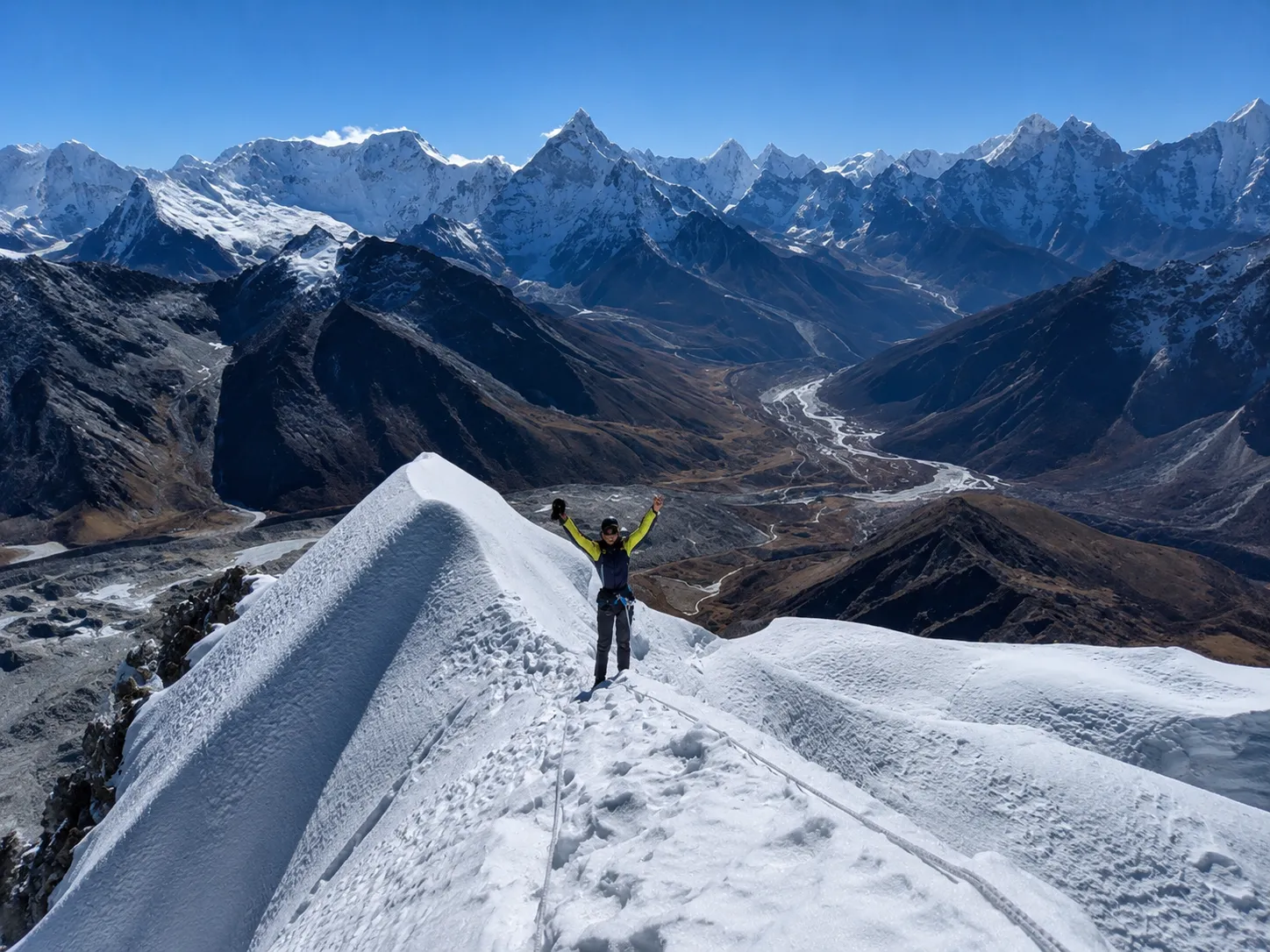
The highlight of this expedition is the climb of Lobuche East Peak (6119m), a technically rewarding Himalayan summit offering magnificent views of some of the world’s highest mountains, including Everest, Lhotse, Nuptse, Ama Dablam, Pumori, and many other Himalayan giants. With professional Sherpa guides, proper acclimatization, safety-focused planning, and experienced expedition support, this climb provides an ideal opportunity for adventure seekers aiming to experience Himalayan mountaineering beyond trekking.
This journey is not only about reaching the summit but also about discovering the spirit of the Himalayas — the warmth of Sherpa hospitality, the beauty of remote mountain landscapes, and the unforgettable feeling of standing above the clouds.
Trip- Highlights
Lobuche Peak Climb 6119m with Himalayan Sherpa Exodus Team Treks & Expeditions Pvt. Ltd. is a journey of courage, discovery, and unforgettable Himalayan memories — from the peaceful Sherpa valleys to the exhilarating summit above 6000 meters.
Trip- Highlights
- Summit Adventure of Lobuche East Peak (6119m), one of Nepal’s most popular trekking peaks, offering a rewarding Himalayan climbing experience.
- Experience the legendary Everest region, following the iconic trail through the Khumbu Valley toward Everest Base Camp.
- Scenic mountain flight between Kathmandu and Lukla, offering breathtaking aerial views of Himalayan landscapes.
- Explore traditional Sherpa villages including Phakding, Namche Bazaar, Dingboche, Lobuche, and Pheriche while experiencing authentic mountain culture.
- Visit the historic Tengboche Monastery, a spiritual center surrounded by spectacular Himalayan scenery.
- Proper acclimatization strategy with rest days and altitude hikes at Namche Bazaar and Dingboche to improve summit preparation.
- Hike to Everest Base Camp (5364m) and experience the legendary destination of mountaineers from around the world.
- Sunrise view from Kala Patthar (5545m) with unforgettable panoramic views of Everest, Nuptse, Lhotse, Pumori, and the surrounding peaks.
- Professional Sherpa climbing support, experienced mountain guides, and carefully planned logistics throughout the expedition.
- Witness the unique combination of adventure, culture, and nature in the magnificent Everest Himalayan region.
- Enjoy breathtaking Himalayan scenery featuring glaciers, icefalls, high mountain passes, and dramatic landscapes throughout the journey.
- A perfect introduction to Himalayan peak climbing, combining trekking experience with an achievable technical summit challenge.
Day 01 :
Arrival in Kathmandu (1,400m) and Transfer to Hotel
Upon your arrival at Tribhuvan International Airport, our representative from Himalayan Sherpa Exodus Team Treks & Expeditions Pvt. Ltd. will warmly welcome you and assist with your transfer to the hotel. You will have time to rest, recover from your journey, and prepare for the exciting Himalayan adventure ahead. A short briefing about the expedition schedule, safety guidelines, and necessary preparations will be provided.
Accommodation: Hotel in Kathmandu || Meals: Welcome dinner included
Day 02 :
Expedition Preparation, Gear Check & Official Formalities in Kathmandu (1,400m)
Walking Duration: Approximately 2–3 hours (optional city walk)
Distance: Approximately 2–4 km (optional)
Today is dedicated to final preparation for the Lobuche Peak expedition. Our experienced climbing team will conduct a detailed gear inspection to ensure all essential equipment is ready for high-altitude climbing. We will also complete necessary permits, documentation, and official formalities required for the journey.
You may also explore nearby areas of Kathmandu, purchase or rent any missing climbing equipment, and experience the vibrant atmosphere of Nepal’s capital city.
Accommodation: Hotel in Kathmandu || Meals: Breakfast included
Day 03 :
Flight from Kathmandu to Lukla (2,840m) and Trek to Phakding (2,610m)
Flight Duration: 35 minutes
Walking Duration: 3–4 hours
Walking Distance: Approximately 8 km
After an early morning scenic flight from Kathmandu to Lukla, the gateway to the Everest region, we begin our first trekking day. The trail gradually descends through beautiful Sherpa settlements, green forests, and along the Dudh Koshi River.
The walk introduces you to the natural beauty and cultural charm of the Khumbu region as we reach Phakding, a peaceful mountain village surrounded by Himalayan landscapes.
Accommodation: Teahouse/Lodge || Meals: Breakfast, Lunch & Dinner
Day 04 :
Trek from Phakding (2,610m) to Namche Bazaar (3,440m)
Walking Duration: 5–6 hours
Walking Distance: Approximately 10–12 km
Today we enter the Sagarmatha National Park and continue our journey toward the famous Sherpa trading town of Namche Bazaar. The trail follows the Dudh Koshi River, crossing several suspension bridges decorated with colorful prayer flags.
After passing through beautiful villages such as Monjo and Jorsale, we begin a challenging uphill climb through pine forests before reaching Namche Bazaar. On the way, weather permitting, we get our first glimpse of Mount Everest and surrounding Himalayan peaks.
Namche Bazaar is the cultural and commercial heart of the Khumbu region, offering spectacular mountain views and a unique Sherpa lifestyle experience.
Accommodation: Teahouse/Lodge || Meals: Breakfast, Lunch & Dinner
Day 05 :
Acclimatization Day in Namche Bazaar (3,440m) – Everest View Hotel (3,880m) & National Park Museum Visit
Walking Duration: 3–4 hours
Walking Distance: Approximately 5–6 km
A proper acclimatization day is essential before gaining more altitude. Today we take a gradual hike to the famous Everest View Hotel, one of the best viewpoints in the Everest region. From here, you can enjoy magnificent views of Mount Everest, Lhotse, Ama Dablam, Thamserku, and other Himalayan peaks.
We also visit the Sagarmatha National Park Museum, where you can learn about Sherpa culture, Himalayan biodiversity, mountaineering history, and the natural heritage of the Everest region.
The afternoon is reserved for relaxation and exploring Namche Bazaar.
Accommodation: Teahouse/Lodge || Meals: Breakfast, Lunch & Dinner
Day 06 :
Trek from Namche Bazaar (3,440m) to Debuche (3,820m) via Tengboche Monastery (3,867m)
Walking Duration: 5–6 hours
Walking Distance: Approximately 11–12 km
Leaving Namche Bazaar, we follow a scenic trail overlooking some of the most spectacular Himalayan landscapes. The trail passes through beautiful forests, hillside paths, and traditional Sherpa villages.
We reach Tengboche, home to the famous Tengboche Monastery, the largest and most important Buddhist monastery in the Khumbu region. Surrounded by towering peaks, this spiritual site provides a peaceful and unforgettable Himalayan experience.
After visiting the monastery and enjoying the mountain views, we continue descending through rhododendron forests to Debuche, a quiet settlement near Tengboche.
Accommodation: Teahouse/Lodge || Meals: Breakfast, Lunch & Dinner
Day 07 :
Trek from Debuche (3,820m) to Dingboche (4,410m)
Walking Duration: 5–6 hours
Walking Distance: Approximately 11–12 km
Today the trail gradually climbs higher into the alpine landscape. We cross the Imja River and pass through traditional Sherpa villages including Pangboche, one of the oldest settlements in the Everest region.
As we move further into the high Himalayas, the landscape becomes more open, with incredible views of Ama Dablam, Island Peak, Lhotse, and surrounding mountains. The final section takes us toward Dingboche, a beautiful mountain village known as the “summer valley” of the Khumbu region.
Dingboche is an important acclimatization stop before heading toward Lobuche Base Camp and the summit adventure.
Accommodation: Teahouse/Lodge || Meals: Breakfast, Lunch & Dinner
Day 08 :
Acclimatization Day in Dingboche (4,410m) – Hike to Nagarjun Hill (5,000m)
Walking Duration: 4–5 hours
Walking Distance: Approximately 5–6 km
Today is an important acclimatization day before moving toward higher elevations. We take a challenging but rewarding hike to Nagarjun Hill, which rises to around 5,000 meters above sea level.
The climb provides excellent panoramic views of some of the world’s most spectacular Himalayan peaks, including Makalu, Lhotse, Lhotse Shar, Ama Dablam, Island Peak, and the surrounding Khumbu mountains. This hike helps improve altitude adaptation while preparing your body for the upcoming Lobuche Peak climbing section.
After enjoying the magnificent mountain scenery, we return to Dingboche for rest and further preparation.
Accommodation: Teahouse/Lodge || Meals: Breakfast, Lunch & Dinner
Day 09 :
Trek from Dingboche (4,410m) to Lobuche (4,940m)
Walking Duration: 5–6 hours
Walking Distance: Approximately 11–12 km
Leaving Dingboche behind, we continue deeper into the high Himalayan region. The trail gradually climbs through the dry alpine landscape, passing memorial sites dedicated to climbers who lost their lives on Himalayan expeditions.
We follow the beautiful Imja Valley and cross high mountain terrain with breathtaking views of Pumori, Nuptse, Lobuche Peak, and other surrounding Himalayan giants. After a gradual ascent, we reach Lobuche, a small settlement located near the Khumbu Glacier.
This is the final major overnight stop before heading toward Everest Base Camp and the Lobuche climbing section.
Accommodation: Teahouse/Lodge || Meals: Breakfast, Lunch & Dinner
Day 10 :
Trek from Lobuche (4,940m) to Gorakshep (5,164m) and Hike to Everest Base Camp (5,364m)
Walking Duration: 7–8 hours
Walking Distance: Approximately 15–17 km
Today is one of the most memorable days of the expedition as we reach the legendary Everest Base Camp. The trail follows the rocky moraine of the Khumbu Glacier, offering incredible views of the surrounding Himalayan peaks.
After reaching Gorakshep, we take a short rest before continuing toward Everest Base Camp. Standing at the foot of the world’s highest mountain, you will experience the unique atmosphere of this iconic mountaineering destination.
After exploring Everest Base Camp and enjoying the spectacular glacier surroundings, we return to Gorakshep for an overnight stay.
Accommodation: Teahouse/Lodge || Meals: Breakfast, Lunch & Dinner
Day 11 :
Early Morning Hike to Kala Patthar (5,545m) and Trek Back to Lobuche (4,940m)
Walking Duration: 7–8 hours
Walking Distance: Approximately 13–15 km
We begin early morning with a hike to Kala Patthar, one of the best viewpoints in the Everest region. From the summit, you can witness a breathtaking sunrise over Mount Everest, Nuptse, Lhotse, Pumori, Changtse, and the surrounding Himalayan range.
After capturing unforgettable mountain views, we descend back to Gorakshep, enjoy breakfast, and continue our trek back to Lobuche.
This day provides both a remarkable sightseeing experience and valuable preparation before entering the climbing phase.
Accommodation: Teahouse/Lodge || Meals: Breakfast, Lunch & Dinner
Day 12 :
Trek from Lobuche (4,940m) to Lobuche Base Camp (5,400m)
Walking Duration: 3–4 hours
Walking Distance: Approximately 4–5 km
Today we officially enter the Lobuche Peak climbing section. The trail gradually ascends toward Lobuche Base Camp, passing through rugged Himalayan terrain and glacial landscapes.
Upon reaching Base Camp, our climbing team will organize the campsite, review climbing plans, and prepare all necessary equipment for the summit attempt.
The evening is spent resting and mentally preparing for the exciting days ahead.
Accommodation: Tented Camp || Meals: Breakfast, Lunch & Dinner
Day 13 :
Pre-Climb Training and Summit Preparation at Lobuche Base Camp (5,400m)
Walking Duration: Short practice session (2–3 hours)
Distance: Approximately 1–2 km (depending on training area)
Today is dedicated to technical climbing preparation and rest before the summit push. Our experienced climbing guides will provide practical training on essential mountaineering techniques, including:
- Using climbing equipment such as harness, ropes, crampons, and ice axe
- Glacier walking techniques
- Safety procedures and rope management
- Summit day strategy and communication
This preparation ensures climbers feel confident and ready for the Lobuche Peak ascent.
Accommodation: Tented Camp || Meals: Breakfast, Lunch & Dinner
Day 14 :
Summit Lobuche East Peak (6,119m) and Trek to Pheriche (4,240m)
Walking Duration: 10–12 hours
Walking Distance: Approximately 12–15 km
The most exciting day of the expedition begins early before sunrise. We make our summit attempt with the support of our experienced Sherpa climbing team.
The climb involves steep sections requiring the use of technical climbing equipment. Upon reaching the summit of Lobuche East Peak (6,119m), you will be rewarded with magnificent views of Everest, Lhotse, Makalu, Cho Oyu, Ama Dablam, Pumori, and countless Himalayan peaks.
After celebrating this incredible achievement, we descend carefully back toward the lower valley and continue trekking to Pheriche for a well-deserved rest.
Accommodation: Teahouse/Lodge || Meals: Breakfast, Lunch & Dinner
Walking Duration: Flexible
Distance: Flexible
A reserve day is included in the itinerary to manage unexpected circumstances such as unfavorable weather, altitude conditions, or technical delays during the summit attempt.
If the summit is successfully completed on schedule, this day can also be used for additional rest or enjoying the Himalayan surroundings.
Accommodation: Teahouse/Lodge or Tented Camp (depending on situation) || Meals: Breakfast, Lunch & Dinner
Day 16 :
Trek from Pheriche (4,240m) to Namche Bazaar (3,440m)
Walking Duration: 6–7 hours
Walking Distance: Approximately 14–15 km
Leaving the high mountains behind, we gradually descend through beautiful Sherpa villages and alpine forests. The trail passes through Pangboche, Tengboche, and scenic landscapes with magnificent views of Ama Dablam and surrounding peaks.
We continue toward Namche Bazaar, where you can enjoy the comfort of the vibrant Sherpa town after completing the climbing adventure.
Accommodation: Teahouse/Lodge || Meals: Breakfast, Lunch & Dinner
Day 17 :
Trek from Namche Bazaar (3,440m) to Lukla (2,840m)
Walking Duration: 6–7 hours
Walking Distance: Approximately 18–20 km
Our final trekking day follows the familiar trail along the Dudh Koshi River. We cross suspension bridges, pass through charming Sherpa villages, and enjoy the final views of the Everest region.
Upon reaching Lukla, we celebrate the successful completion of the Lobuche Peak adventure with the team.
Accommodation: Teahouse/Lodge || Meals: Breakfast, Lunch & Dinner
Day 18 :
Flight from Lukla (2,840m) to Kathmandu (1,400m) and Hotel Transfer
Flight Duration: Approximately 35 minutes
Walking Duration: No trekking
After breakfast, we take a scenic mountain flight from Lukla back to Kathmandu. Upon arrival, our representative will transfer you to your hotel.
The rest of the day is free for relaxation, shopping, or celebrating the successful completion of your Himalayan expedition.
Accommodation: Hotel in Kathmandu || Meals: Breakfast included
Day 19 :
Leisure Day or Kathmandu Valley Sightseeing (1,400m)
Walking Duration: 3–5 hours (during sightseeing)
Walking Distance: Approximately 5–8 km
Today is reserved for relaxation or exploring the cultural treasures of Kathmandu Valley. Optional sightseeing may include UNESCO World Heritage Sites such as ancient temples, monasteries, and historical monuments.
It is a perfect opportunity to experience Nepal’s rich culture before departure.
Accommodation: Hotel in Kathmandu || Meals: Breakfast included
Day 20 :
Final Departure from Kathmandu (1,400m)
Walking Duration: No trekking
Distance: No trekking
Your unforgettable Lobuche Peak Climbing adventure comes to an end today. Depending on your flight schedule, our team will assist you with transportation to Tribhuvan International Airport for your onward journey.
We sincerely hope that your Himalayan experience with Himalayan Sherpa Exodus Team Treks & Expeditions Pvt. Ltd. remains a lifetime memory filled with adventure, achievement, and unforgettable moments.
Meals: Breakfast included
Trip Cost Includes and Excludes
Cost Includes
- Airport transfers in Kathmandu as per the itinerary.
- Accommodation in Kathmandu with breakfast before and after the expedition.
- Domestic flights between Kathmandu and Lukla (including airport transfers).
- All necessary trekking permits, climbing permits, and official documentation required for Lobuche Peak climbing.
- Experienced, government-licensed English-speaking trekking guide and professional Sherpa climbing guide.
- Required number of supporting staff, porters, and their wages, meals, insurance, and equipment.
- Accommodation in comfortable teahouses during the trekking period.
- Tented camp accommodation at Lobuche Base Camp during the climbing period.
- Three meals daily (breakfast, lunch, and dinner) during the trek and climbing section.
- Basic climbing equipment support, including rope, ice axe, and other group climbing equipment.
- Pre-climbing training at Lobuche Base Camp conducted by experienced climbing guides.
- First aid medical kit and basic safety equipment carried by the expedition team.
- Government taxes, service charges, and company management expenses.
- Farewell dinner in Kathmandu after the successful completion of the expedition.
Cost Excludes
- International airfare and travel expenses to and from Nepal.
- Nepal entry visa fees.
- Personal travel insurance covering high-altitude trekking, climbing, helicopter evacuation, and medical emergencies.
- Personal climbing equipment such as climbing boots, down jacket, sleeping bag, crampons, harness, helmet, and personal gear.
- Extra expenses caused by flight delays, weather conditions, natural disasters, political situations, or unexpected circumstances.
- Additional accommodation and meals in Kathmandu due to early arrival or delayed departure.
- Personal expenses such as beverages, hot showers, internet, charging fees, laundry, and phone calls.
- Tips and gratitude for trekking staff, climbing guides, and support crew.
- Any services not mentioned under the “Cost Includes” section.
Best Time to Trek and Climb Lobuche Peak
The most favorable seasons for Lobuche Peak Climbing 6119m are spring (March to May) and autumn (September to November).
Spring Season (March–May)
Spring offers stable weather, clear mountain views, and excellent climbing conditions. The temperatures become more comfortable, and the trails are decorated with blooming rhododendron flowers, making the journey through the Khumbu region especially beautiful.
Autumn Season (September–November)
Autumn is considered the best trekking and climbing season in Nepal. After the monsoon, the skies are generally clear, offering outstanding visibility of Everest, Lhotse, Ama Dablam, and other Himalayan peaks.
Winter climbing is possible for experienced mountaineers but requires additional preparation due to extreme cold and challenging weather conditions.
Lukla Flight Information
The adventure begins with a scenic flight between Kathmandu and Lukla, one of the world’s most spectacular mountain flights. The short flight takes approximately 35 minutes and offers breathtaking aerial views of hills, valleys, and Himalayan peaks.
Lukla Airport, located at an altitude of 2,840m, serves as the main gateway to the Everest region.
Due to the mountainous terrain and changing weather conditions, flights to and from Lukla are highly dependent on visibility and weather. During peak trekking seasons, flight schedules can become busy, and occasional delays may occur.
Our team carefully manages flight arrangements and provides necessary support to ensure a smooth beginning and ending of your Himalayan journey.
Trek Difficulty
Lobuche Peak Climbing 6119m is considered a challenging Himalayan adventure that combines high-altitude trekking with technical climbing.
The journey requires good physical fitness, mental determination, and preparation for long walking days at high elevations. The trekking route includes steep ascents, rocky trails, glacier sections, and changing mountain conditions.
The summit day involves technical climbing sections where climbers use equipment such as ropes, crampons, harnesses, and ice axes under the guidance of experienced Sherpa climbing professionals.
Previous trekking experience is highly recommended, while basic mountaineering training before the expedition is beneficial. With proper preparation, gradual acclimatization, and professional support, Lobuche Peak is an achievable and rewarding climb for adventure-minded travelers.
Acclimatization & Altitude Sickness
Acclimatization is one of the most important aspects of a successful Lobuche Peak expedition. The itinerary is carefully designed with gradual altitude gain and dedicated acclimatization days in Namche Bazaar and Dingboche.
During the journey, climbers are encouraged to:
- Walk slowly and maintain a comfortable pace.
- Drink sufficient water and stay properly hydrated.
- Allow the body enough time to adapt to increasing altitude.
- Avoid excessive physical stress during acclimatization periods.
- Inform guides immediately about any symptoms of altitude-related problems.
Altitude sickness can affect anyone regardless of age, fitness level, or previous experience. Common symptoms may include headache, tiredness, dizziness, loss of appetite, and difficulty sleeping.
Our experienced Sherpa guides closely monitor each climber’s condition and follow safety-first practices throughout the expedition. In case of serious altitude-related concerns, appropriate decisions will be taken according to mountain safety protocols.
Himalayan Culture & Ancient Monasteries
The Lobuche Peak expedition is not only a climbing adventure but also a journey into the heart of Sherpa culture and Himalayan traditions.
The Khumbu region is home to the legendary Sherpa community, known worldwide for their mountaineering skills, warm hospitality, and deep connection with the mountains. Throughout the trek, you will experience traditional villages, prayer flags, mani walls, Buddhist customs, and the peaceful lifestyle of Himalayan communities.
One of the cultural highlights of the journey is a visit to Tengboche Monastery (3,867m), one of the most important Buddhist monasteries in the Everest region. Surrounded by magnificent Himalayan peaks, this spiritual center reflects the deep religious heritage of the Sherpa people.
The expedition also passes through historic villages such as Namche Bazaar, Pangboche, Dingboche, and Lobuche, where ancient traditions continue alongside modern Himalayan adventure.
With Himalayan Sherpa Exodus Team Treks & Expeditions Pvt. Ltd., Lobuche Peak Climbing 6119m becomes more than a summit journey — it becomes an unforgettable experience of Himalayan nature, culture, spirituality, and adventure.
Preparation Guide
Lobuche Peak Climbing 6119m is a demanding Himalayan adventure that requires proper physical preparation, mental readiness, and suitable equipment. A good level of fitness will help you enjoy the journey and handle long trekking days at high altitude.
Before joining the expedition, we recommend:
- Regular cardiovascular training such as hiking, running, cycling, or swimming.
- Strength exercises focusing on legs, core, and overall endurance.
- Practice walking with a backpack to prepare for mountain conditions.
- Previous high-altitude trekking experience is beneficial but not mandatory.
- Learn basic mountaineering skills, including the use of crampons, ice axe, harness, and climbing ropes.
- Prepare mentally for changing weather, basic mountain facilities, and long trekking days.
Our experienced Sherpa climbing team will provide necessary guidance and practical training before the summit attempt to ensure you are properly prepared.
Weather & Climate
The weather conditions in the Everest region vary greatly depending on altitude and season. Temperatures become colder as you gain elevation, especially during the Lobuche Peak climbing period.
Spring (March–May)
- Generally stable weather with clear mountain views.
- Moderate temperatures during trekking days.
- Excellent conditions for climbing and photography.
- Rhododendron forests bloom in the lower regions.
Autumn (September–November)
- Considered the best season for trekking and climbing.
- Clear skies and excellent visibility of Himalayan peaks.
- Stable weather conditions with comfortable trekking temperatures.
Winter (December–February)
- Extremely cold conditions at higher elevations.
- Heavy snowfall and strong winds may create challenging climbing conditions.
- Suitable mainly for experienced climbers with proper preparation.
At Lobuche Base Camp and higher elevations, temperatures can drop significantly below freezing, especially during nights and summit attempts. Proper cold-weather clothing and equipment are essential.
Accommodation
During the Lobuche Peak expedition, accommodation is arranged according to the environment and altitude.
Kathmandu
You will stay in a comfortable hotel with modern facilities, including private rooms, attached bathrooms, electricity, and internet access.
Trekking Section
Accommodation will be provided in traditional Himalayan teahouses/lodges. These offer basic but comfortable facilities, including:
- Twin-sharing rooms
- Warm dining areas
- Local hospitality
- Basic toilet facilities
Lobuche Base Camp
During the climbing period, accommodation will be arranged in a tented camp. The expedition team will provide camping arrangements, meals, and necessary support for the summit preparation.
Meals During the Trek
Nutritious food is essential for maintaining energy at high altitude. Our team ensures hygienic and balanced meals throughout the journey.
During the trek, meals generally include:
Breakfast
- Tea, coffee, hot drinks
- Eggs
- Bread, pancakes, porridge
- Tibetan bread
- Local breakfast options
Lunch & Dinner
- Dal Bhat (rice, lentils, and vegetables)
- Noodles and pasta
- Soups
- Potatoes
- Vegetables
- Rice dishes
- Traditional Himalayan meals
At higher elevations, food choices become simpler due to limited transportation facilities. Our team focuses on providing sufficient calories and warm meals required for trekking and climbing.
Drinking Water
Staying hydrated is extremely important during high-altitude trekking and climbing.
Drinking water options include:
- Bottled mineral water available in many villages (where available).
- Filtered or boiled water provided by lodges.
- We recommend carrying a reusable water bottle or hydration system.
- Water purification tablets or personal filtration systems are recommended.
Avoid dehydration as it can increase the risk of altitude-related problems.
Internet & Charging Facilities
Communication facilities are available in most villages along the Everest region trekking route, although services become limited at higher elevations.
Internet
- Wi-Fi is available in many teahouses for an additional charge.
- Mobile network coverage is available in some areas.
- Internet speed and reliability decrease at higher altitudes.
Charging
- Electricity is available in most lodges.
- Charging electronic devices usually requires an additional payment.
- At higher elevations, charging facilities may be limited.
We recommend carrying:
- Power bank
- Universal travel adapter
- Spare batteries for important devices
Travel Insurance
Comprehensive travel insurance is mandatory for Lobuche Peak Climbing 6119m.
Your insurance should include coverage for:
- High-altitude trekking and mountaineering activities.
- Emergency medical treatment.
- Helicopter evacuation up to the required altitude.
- Trip cancellation or interruption.
- Lost baggage and personal belongings.
Due to the remote Himalayan environment, rescue services can be expensive. Proper insurance provides essential protection and peace of mind throughout the expedition.
Packing List
Climbing & Technical Equipment
- Mountaineering boots suitable for crampons
- Crampons
- Ice axe
- Climbing harness
- Helmet
- Ascender/Jumar
- Carabiners
- Climbing gloves
- Headlamp with extra batteries
Clothing
- Down jacket
- Thermal base layers
- Fleece jacket
- Waterproof jacket and trousers
- Trekking pants
- Warm hat and neck warmer
- Inner gloves and outer gloves
- Hiking socks
Personal Trekking Gear
- Comfortable trekking shoes
- Sleeping bag suitable for cold temperatures
- Backpack and daypack
- Sunglasses with UV protection
- Water bottle/hydration system
- Trekking poles
- Personal first aid items
- Sunscreen and lip balm
Personal Items
- Passport and documents
- Camera/mobile phone
- Power bank
- Personal toiletries
- Small medical supplies
A detailed equipment checklist will be provided before departure.
Safety Measures
Safety is the highest priority during the Lobuche Peak expedition. Our experienced guides and climbing Sherpas follow careful planning and responsible mountain practices.
Safety arrangements include:
- Experienced and licensed climbing guides.
- Proper acclimatization schedule.
- Daily health monitoring during high-altitude sections.
- Professional support during technical climbing.
- Emergency communication arrangements.
- First aid and basic medical support.
- Flexible decision-making according to weather and mountain conditions.
Our team always follows a safety-first approach, understanding that successful climbing means returning safely after achieving the summit.
Frequently Asked Questions (FAQ)
1. How difficult is Lobuche Peak Climbing 6119m?
Lobuche Peak is considered a challenging trekking peak requiring good physical fitness and basic mountaineering skills. The climb involves glacier travel and technical sections.
2. Do I need previous climbing experience?
Previous trekking experience is recommended. Basic climbing training will be provided before the summit attempt, but participants should be comfortable with high-altitude environments.
3. What is the best season for Lobuche Peak climbing?
Spring (March–May) and autumn (September–November) are the most suitable seasons due to stable weather and better visibility.
4. How long does the Lobuche Peak expedition take?
The complete itinerary is approximately 20 days, including Kathmandu preparation, trekking, acclimatization, summit attempt, and return.
5. What happens if the summit attempt is delayed due to bad weather?
A contingency day is included in the itinerary to manage possible weather delays or unexpected mountain conditions.
6. Is altitude sickness a serious concern?
Altitude sickness can affect anyone. The itinerary includes gradual altitude gain and acclimatization days to reduce risks. Our guides monitor climbers carefully throughout the journey.
7. Can I charge my phone and use the internet during the trek?
Yes, charging and internet facilities are available in many lodges, but services become limited at higher elevations.
8. Why choose Himalayan Sherpa Exodus Team Treks & Expeditions Pvt. Ltd.?
Our experienced Sherpa team combines professional climbing expertise, local Himalayan knowledge, safety-focused planning, and personalized service to create a memorable and responsible mountain experience.
Lobuche East Peak Climbing 6119m is more than a summit expedition — it is a journey through legendary Sherpa valleys, ancient Himalayan traditions, and the breathtaking wilderness of the Everest region. With Himalayan Sherpa Exodus Team Treks & Expeditions Pvt. Ltd., every step is guided by experience, safety, and a deep respect for the mountains.
 6119M
6119M Challenging