Dhaulagiri Base Camp Trek
DBC Trek Overview
The 15 Days Dhaulagiri Base Camp Trek is one of Nepal’s most adventurous and rewarding Himalayan journeys, designed for trekkers seeking a true wilderness experience beyond the crowded trekking routes. This spectacular expedition leads you deep into the remote valleys of the Dhaulagiri region, passing through traditional villages, dense forests, alpine meadows, glacial moraines, and high mountain landscapes before reaching the magnificent Dhaulagiri Base Camp (4,748m).
The adventure continues across the breathtaking French Pass (5,360m), one of Nepal’s most impressive high mountain passes, offering unforgettable panoramic views of Dhaulagiri I (8,167m), Tukuche Peak, Dhampus Peak, Mukut Himal, and numerous snow-covered Himalayan giants. After crossing into the dramatic Hidden Valley, the trail descends through Yak Kharka and the beautiful Mustang region to the charming village of Marpha.
Unlike many popular trekking destinations, the Dhaulagiri Base Camp Trek provides a peaceful and authentic Himalayan experience with fewer trekkers on the trail. Along the journey, you’ll discover the rich cultures of the Magar and Gurung communities, enjoy warm local hospitality, and witness untouched natural beauty in one of Nepal’s most remote mountain regions.
Carefully designed by Himalayan Sherpa Exodus Team Treks & Expeditions Pvt. Ltd., this itinerary balances adventure, safety, and proper acclimatization, making it an excellent choice for experienced trekkers looking to explore the hidden treasures of the Nepal Himalayas.
DBC Trek Highlights
Trip Highlights
- 15-day adventurous trekking journey through the remote Dhaulagiri region.
- Explore one of Nepal's least-crowded and most pristine Himalayan trekking routes.
- Reach the spectacular Dhaulagiri Base Camp (4,748m) beneath the world's seventh-highest mountain.
- Cross the famous French Pass (5,360m) with breathtaking 360-degree Himalayan panoramas.
- Trek through the beautiful and isolated Hidden Valley, surrounded by towering snow peaks.
- Witness magnificent views of Dhaulagiri I (8,167m), Tukuche Peak, Dhampus Peak, Mukut Himal, Nilgiri, and surrounding Himalayan ranges.
- Walk across glaciers, moraines, alpine meadows, rocky landscapes, and high mountain passes.
- Experience dramatic changes in scenery from lush forests and waterfalls to rugged alpine wilderness.
- Pass through traditional Magar and Gurung villages while experiencing authentic local culture and hospitality.
- Visit the famous Italian Base Camp and Japanese Base Camp, both offering incredible mountain scenery.
- Trek through peaceful rhododendron, pine, oak, and bamboo forests rich in Himalayan flora and fauna.
- Spot Himalayan wildlife such as Himalayan thar, blue sheep, musk deer, and colorful Himalayan birds when conditions allow.
- Enjoy incredible sunrise and sunset views over the snow-covered Himalayan giants.
- Explore the picturesque apple village of Marpha, renowned for its traditional stone houses and local apple products.
- Experience one of Nepal's finest wilderness trekking adventures away from commercial trekking routes.
- Professional trekking organization, experienced guides, proper acclimatization planning, and reliable support from Himalayan Sherpa Exodus Team Treks & Expeditions Pvt. Ltd. throughout the journey.
Day 01 :
Arrive at Tribhuvan International Airport (TIA), Kathmandu (1,400m) – Transfer to Hotel
- Starting Altitude: Tribhuvan International Airport (1,400m / 4,593ft)
- Ending Altitude: Kathmandu Hotel (1,400m / 4,593ft)
- Driving Distance: 6–8 km
- Driving Duration: 20–30 minutes (depending on traffic)
- Walking Distance: Optional short walk around Thamel
Welcome to Nepal! Upon your arrival at Tribhuvan International Airport, a representative from Himalayan Sherpa Exodus Team Treks & Expeditions Pvt. Ltd. will warmly greet you and transfer you to your hotel in Kathmandu. After check-in, you can relax or explore the vibrant streets of Thamel. In the evening, you'll attend a trekking briefing where your guide will review the itinerary, permits, equipment, and safety information before your Dhaulagiri adventure begins.
Day 02 :
Drive from Kathmandu to Pokhara – Darbang (1,100m)
- Starting Altitude: Kathmandu (1,400m / 4,593ft)
- Ending Altitude: Darbang (1,100m / 3,609ft)
- Driving Distance: Approximately 290–300 km
- Driving Duration: 10–12 hours
- Walking Distance: Minimal
After an early breakfast, begin a scenic drive along the Prithvi Highway, following rivers, terraced hillsides, and charming villages to Pokhara. Continuing west through Beni, the road gradually reaches the peaceful village of Darbang, the gateway to the Dhaulagiri region. Enjoy beautiful countryside scenery, waterfalls, cultivated farmland, and glimpses of the Annapurna and Dhaulagiri ranges before settling into your lodge for the night.
Day 03 :
Trek from Darbang to Dharapani (1,400m)
- Starting Altitude: Darbang (1,100m / 3,609ft)
- Ending Altitude: Dharapani (1,400m / 4,593ft)
- Walking Distance: Approximately 15 km
- Trekking Duration: 5–6 hours
The trek officially begins by following the Myagdi Khola through traditional Magar villages and terraced farmland. The trail passes suspension bridges, forests, and riverside paths before gradually climbing toward Dharapani. Along the way, enjoy warm local hospitality and peaceful rural landscapes that introduce you to the remote beauty of western Nepal.
Day 04 :
Trek from Dharapani to Jugepani (1,300m)
- Starting Altitude: Dharapani (1,400m / 4,593ft)
- Ending Altitude: Jugepani (1,300m / 4,265ft)
- Walking Distance: Approximately 14 km
- Trekking Duration: 5–6 hours
Today's trail follows the Myagdi River through lush forests of bamboo, oak, and rhododendron. Crossing several suspension bridges and passing small settlements, you'll experience the peaceful atmosphere of the lower Dhaulagiri region. The trail gently descends and ascends before arriving at Jugepani, a quiet riverside campsite surrounded by beautiful natural scenery.
Day 05 :
Trek from Jugepani to Boghara (2,414m)
- Starting Altitude: Jugepani (1,300m / 4,265ft)
- Ending Altitude: Boghara (2,414m / 7,920ft)
- Walking Distance: Approximately 12 km
- Trekking Duration: 5–6 hours
Leaving Jugepani, the trail climbs steadily through dense forests and steep hillsides. As you gain elevation, magnificent mountain views begin to appear while crossing suspension bridges and narrow forest trails. After several challenging ascents, you reach the beautiful settlement of Boghara, offering stunning views of surrounding hills and distant Himalayan peaks.
Day 06 :
Trek from Boghara to Dobang (2,520m)
- Starting Altitude: Boghara (2,414m / 7,920ft)
- Ending Altitude: Dobang (2,520m / 8,268ft)
- Walking Distance: Approximately 13 km
- Trekking Duration: 6–7 hours
Today's journey enters a more remote wilderness as the trail winds through dense bamboo, pine, and rhododendron forests. Following the Myagdi Khola upstream, you'll cross wooden bridges and narrow mountain paths while enjoying spectacular waterfalls and untouched natural beauty. Dobang is a peaceful resting point surrounded by towering cliffs and thick forests, making it an excellent place to prepare for higher elevations.
Day 07 :
Trek from Dobang to Sallaghari (2,500m)
- Starting Altitude: Dobang (2,520m / 8,268ft)
- Ending Altitude: Sallaghari (2,500m / 8,202ft)
- Walking Distance: Approximately 11 km
- Trekking Duration: 5–6 hours
After breakfast, continue trekking through enchanting pine, fir, and rhododendron forests while following the upper Myagdi Valley. The trail remains relatively gradual with occasional short climbs and descents, offering beautiful views of waterfalls, rocky cliffs, and snow-fed rivers. Arriving at Sallaghari, you'll enjoy a peaceful overnight stay surrounded by alpine forests, with the dramatic peaks of the Dhaulagiri massif gradually coming into closer view.
Day 08 :
Trek from Sallaghari to Italian Base Camp (3,660m)
- Starting Altitude: Sallaghari (2,500m / 8,202ft)
- Ending Altitude: Italian Base Camp (3,660m / 12,008ft)
- Walking Distance: Approximately 10 km
- Trekking Duration: 4–5 hours
After breakfast, leave the forest behind and gradually climb into the alpine zone. The trail passes open meadows, glacial streams, and rocky slopes with increasingly spectacular views of the Dhaulagiri massif. As you gain altitude, the scenery becomes more dramatic, surrounded by towering cliffs and hanging glaciers. Arrive at Italian Base Camp, a stunning natural viewpoint that offers breathtaking panoramas of Dhaulagiri I (8,167m), Eiger Peak, and surrounding snow-capped mountains. Spend the evening enjoying one of the finest mountain camps in the Himalayas.
Day 09 :
Trek from Italian Base Camp to Japanese Base Camp (4,300m)
- Starting Altitude: Italian Base Camp (3,660m / 12,008ft)
- Ending Altitude: Japanese Base Camp (4,300m / 14,108ft)
- Walking Distance: Approximately 8 km
- Trekking Duration: 4–5 hours
Today's trail follows glacial terrain and rugged alpine landscapes as you move higher toward the heart of the Dhaulagiri Sanctuary. The route crosses rocky moraines, icy streams, and wide glacial valleys with magnificent views in every direction. The surrounding peaks appear much closer as you reach Japanese Base Camp, a peaceful campsite situated below the massive Dhaulagiri Glacier. This is an excellent location to appreciate the raw beauty of the high Himalayas while preparing for the journey to Dhaulagiri Base Camp.
Day 10 :
Trek from Japanese Base Camp to Dhaulagiri Base Camp (4,748m)
- Starting Altitude: Japanese Base Camp (4,300m / 14,108ft)
- Ending Altitude: Dhaulagiri Base Camp (4,748m / 15,577ft)
- Walking Distance: Approximately 11 km
- Trekking Duration: 7–8 hours
Today is one of the most rewarding trekking days of the expedition. The trail traverses rocky moraines, glacier crossings, and rugged alpine terrain while steadily gaining elevation. Surrounded by towering Himalayan giants, you'll eventually reach Dhaulagiri Base Camp, nestled beneath the world's seventh-highest mountain. The panoramic views of Dhaulagiri I, Tukuche Peak, Dhampus Peak, and the surrounding glaciers create an unforgettable Himalayan experience. Overnight at the base camp surrounded by magnificent snow-covered peaks.
Day 11 :
Trek from Dhaulagiri Base Camp to Hidden Valley (5,120m) via French Pass (5,360m)
- Starting Altitude: Dhaulagiri Base Camp (4,748m / 15,577ft)
- Highest Point: French Pass (5,360m / 17,585ft)
- Ending Altitude: Hidden Valley (5,120m / 16,798ft)
- Walking Distance: Approximately 13 km
- Trekking Duration: 6–7 hours
An early morning start leads across glacier terrain toward the spectacular French Pass (5,360m), the highest point of the trek. From the summit of the pass, enjoy breathtaking 360-degree views of Dhaulagiri I, Mukut Himal, Tashi Kang, Sita Chuchura, Nilgiri, and countless surrounding Himalayan peaks. After celebrating this remarkable achievement, descend gradually into the remote Hidden Valley, a beautiful alpine basin surrounded by snow-covered mountains. Overnight in this peaceful high-altitude wilderness.
Day 12 :
Trek from Hidden Valley to Yak Kharka (3,837m)
- Starting Altitude: Hidden Valley (5,120m / 16,798ft)
- Ending Altitude: Yak Kharka (3,837m / 12,589ft)
- Walking Distance: Approximately 15 km
- Trekking Duration: 6–7 hours
Leaving Hidden Valley, the trail descends steadily through wide alpine landscapes and rugged mountain ridges. Enjoy incredible views of the Dhaulagiri and Nilgiri ranges before entering grassy yak grazing pastures. As the altitude decreases, the terrain becomes greener and more comfortable for trekking. Arrive at Yak Kharka, a peaceful pastureland frequently used by local herders during the summer months.
Day 13 :
Trek to Marpha (2,670m) and Drive to Pokhara (850m)
- Starting Altitude: Yak Kharka (3,837m / 12,589ft)
- Trekking Destination: Marpha (2,670m / 8,760ft)
- Final Altitude: Pokhara (850m / 2,789ft)
- Walking Distance: Approximately 14 km
- Trekking Duration: 4–5 hours
- Driving Distance: Approximately 165 km
- Driving Duration: 3–4 hours
Descend through beautiful mountain trails toward the famous village of Marpha, well known for its traditional whitewashed houses, apple orchards, and rich Thakali culture. After exploring this charming Himalayan settlement, continue by private vehicle through Jomsom, Tatopani, Beni, and scenic river valleys before arriving in Pokhara. Relax at your hotel and celebrate the successful completion of your Himalayan adventure.
Day 14 :
Drive from Pokhara to Kathmandu (1,400m)
- Starting Altitude: Pokhara (850m / 2,789ft)
- Ending Altitude: Kathmandu (1,400m / 4,593ft)
- Driving Distance: Approximately 200 km
- Driving Duration: 6–7 hours
Following breakfast, enjoy a scenic drive back to Kathmandu along the Prithvi Highway. The route follows the Trishuli and Marsyangdi Rivers, passing picturesque villages, green hills, terraced farmland, and bustling roadside towns. Upon arrival in Kathmandu, transfer to your hotel. The remainder of the day is free for souvenir shopping, sightseeing, or relaxing before your departure.
Day 15 :
Transfer to Tribhuvan International Airport – Departure
- Starting Altitude: Kathmandu (1,400m / 4,593ft)
- Ending Altitude: Tribhuvan International Airport (1,400m / 4,593ft)
- Driving Distance: 6–8 km
- Driving Duration: 20–30 minutes
After breakfast, a representative from Himalayan Sherpa Exodus Team Treks & Expeditions Pvt. Ltd. will transfer you to Tribhuvan International Airport according to your international flight schedule. As your unforgettable Dhaulagiri Base Camp Trek comes to an end, depart Nepal with lifelong memories of dramatic Himalayan landscapes, remote wilderness, and the warm hospitality of the Nepalese people. We look forward to welcoming you again for your next Himalayan adventure.
Dhaulagiri Base Camp Trek
The Trip Package Cost Includes
- Airport arrival and departure transfers by private tourist vehicle.
- Two nights' hotel accommodation in Kathmandu with breakfast.
- One night's hotel accommodation in Pokhara.
- Private or shared ground transportation between Kathmandu, Pokhara, Darbang, Marpha, and Pokhara as per the itinerary.
- All required trekking permits and conservation area entry fees.
- Government-licensed, experienced English-speaking trekking guide.
- Necessary number of strong porters (1 porter shared between two trekkers, carrying up to 20 kg).
- Guide and porter salaries, meals, accommodation, insurance, transportation, and equipment.
- Full-board meals (Breakfast, Lunch, and Dinner) during the trekking period.
- Tea house/lodge accommodation and tented camping where permanent lodges are unavailable.
- Trekking equipment (two men tent, dining tent, kitchen tent, table with chairs, kitchen utensils, and other necessary equipment during the trek)
- Sleeping mattress during camping nights.
- Freshly prepared meals by the trekking kitchen crew during the camping section.
- Seasonal fresh fruits after dinner whenever available.
- Safe drinking water treatment tablets.
- Comprehensive first aid kit carried by the guide.
- Emergency satellite communication or backup communication (where available).
- Official trek completion certificate from Himalayan Sherpa Exodus Team Treks & Expeditions Pvt. Ltd.
- All applicable government taxes and company service charges.
The Trip Package Cost Excludes
- International airfare to and from Nepal.
- Nepal entry visa fees.
- Travel insurance covering high-altitude trekking, helicopter rescue, medical treatment, and trip cancellation.
- Personal trekking equipment and clothing.
- Lunch and dinner in Kathmandu and Pokhara.
- Personal snacks, bakery items, chocolates, and energy drinks.
- Alcoholic beverages, bottled drinks, soft drinks, and extra hot beverages.
- Hot shower, Wi-Fi, device charging, and laundry services where available.
- Tips for guides, porters, drivers, and support staff.
- Personal expenses such as shopping, souvenirs, and additional accommodation.
- Costs arising from flight delays, road closures, weather conditions, natural disasters, illness, political situations, or itinerary changes beyond the company's control.
- Any services not specifically mentioned under Cost Includes.
Best Time to Trek
The Dhaulagiri Base Camp Trek is best enjoyed during Nepal’s two main trekking seasons when weather conditions are generally stable and mountain views are at their finest.
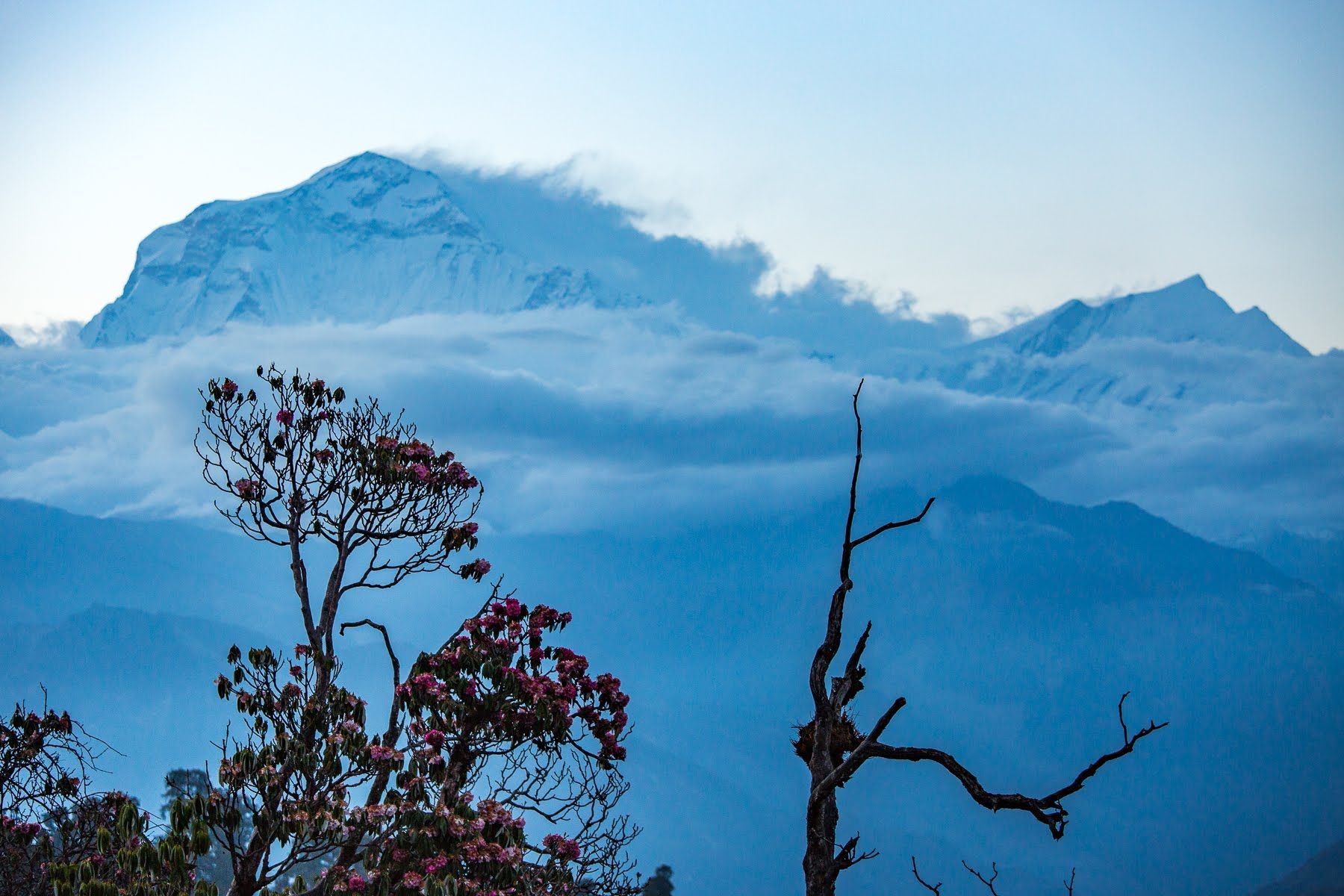
Spring (March to May) : Spring is one of the most popular seasons for the Dhaulagiri region. Forests bloom with colorful rhododendrons, temperatures are moderate, and the skies are often clear. Snow remains on the higher mountains, creating spectacular scenery while maintaining comfortable trekking conditions.
Autumn (September to November) : Autumn offers crisp mountain air, excellent visibility, and stable weather after the monsoon season. Dry trails, comfortable daytime temperatures, and crystal-clear Himalayan panoramas make this the ideal season for crossing French Pass and reaching Dhaulagiri Base Camp.
Winter (December to February) : Winter trekking is possible for experienced adventurers but brings heavy snowfall, freezing temperatures, and challenging conditions around French Pass. Proper winter equipment and flexible planning are essential.
Monsoon (June to August) : The summer monsoon brings frequent rain, muddy trails, leeches in lower forests, and limited mountain visibility. Landslides may affect road access, making this the least recommended season.
Trek Difficulty
The Dhaulagiri Base Camp Trek is considered a challenging to strenuous Himalayan adventure. It is best suited for trekkers with previous high-altitude trekking experience, good physical fitness, and strong determination.
The trail includes steep ascents and descents, glacier crossings, rocky moraines, narrow mountain paths, and the demanding crossing of French Pass (5,360m). Daily trekking typically ranges from 5 to 8 hours, with several days spent above 4,000 meters where thinner air can make hiking more demanding.
Regular cardiovascular exercise, strength training, and endurance preparation before the trek will greatly improve comfort and enjoyment. With professional guides, a carefully planned itinerary, and proper acclimatization, well-prepared trekkers can safely complete this remarkable Himalayan expedition.
Acclimatization & Altitude Sickness
As the trek reaches elevations above 5,000 meters, proper acclimatization is essential for a safe and enjoyable journey.
Our itinerary is designed with a gradual altitude gain, allowing your body time to adjust naturally before crossing French Pass. Staying well hydrated, maintaining a steady walking pace, eating nutritious meals, and getting sufficient rest all help reduce the risk of altitude-related illness.
Common early symptoms of Acute Mountain Sickness (AMS) may include:
- Mild headache
- Fatigue
- Loss of appetite
- Difficulty sleeping
- Dizziness
- Nausea
Our experienced guides monitor every trekker throughout the expedition. If symptoms become more serious, the safest response is immediate descent to a lower altitude, along with appropriate medical assistance if necessary. Your safety always remains the highest priority throughout the trek.
Himalaya Tribe Culture & Monasteries
The Dhaulagiri region offers more than spectacular mountains—it also provides a meaningful introduction to the traditional lifestyles of Nepal’s diverse Himalayan communities.
During the lower sections of the trek, you’ll pass through welcoming Magar and Gurung villages, where agriculture, livestock farming, and mountain traditions remain an important part of daily life. As the trail approaches the Kali Gandaki Valley, you’ll also experience the rich heritage of the Thakali people, renowned for their hospitality, distinctive cuisine, and beautifully preserved stone villages such as Marpha.
Along the route, you’ll encounter colorful prayer flags, Buddhist chortens, mani walls, and small monasteries that reflect the spiritual traditions of the Himalayas. These sacred landmarks, together with the warm hospitality of local communities, add a rich cultural dimension to the adventure, making the Dhaulagiri Base Camp Trek not only a journey through magnificent mountain landscapes but also an opportunity to experience Nepal’s unique Himalayan heritage.
Preparation Guide
Proper preparation is essential for a safe and enjoyable Dhaulagiri Base Camp Trek. As this is a remote, high-altitude adventure, trekkers should begin physical training at least 6–8 weeks before departure. Regular hiking, jogging, cycling, stair climbing, and strength exercises help build endurance for long trekking days.
Before arriving in Nepal, ensure you have valid travel insurance, appropriate trekking gear, and all necessary travel documents. Packing warm layered clothing, waterproof equipment, quality trekking boots, and personal medications will greatly improve your comfort throughout the journey. Maintaining good hydration, eating nutritious meals, and following your guide’s advice are key to a successful trek.
Weather & Climate
The Dhaulagiri region experiences significant weather variations depending on the season and altitude.
Spring (March–May)
- Mild temperatures with blooming rhododendron forests.
- Clear mornings and excellent mountain visibility.
- Daytime: 10°C to 18°C (lower elevations).
- High camps: -8°C to 5°C.
Autumn (September–November)
- Stable weather with crystal-clear Himalayan views.
- Dry trails and comfortable trekking conditions.
- Daytime: 8°C to 16°C.
- High elevations: -10°C to 3°C.
Winter (December–February)
- Very cold temperatures and frequent snowfall above 4,000m.
- French Pass may become challenging due to heavy snow.
- Temperatures may fall below -20°C during the night.
Monsoon (June–August)
- Heavy rainfall at lower elevations.
- Slippery trails, leeches, and possible landslides.
- Mountain views are often limited by clouds.
Accommodation : Accommodation varies throughout the trek depending on the location.
Lower sections of the trail offer comfortable local tea houses and mountain lodges with twin-sharing rooms and basic bedding facilities. As the trek reaches more remote areas beyond Italian Base Camp, permanent lodges become limited, and well-equipped camping arrangements are used when necessary.
Himalayan Sherpa Exodus Team Treks & Expeditions Pvt. Ltd. provides quality camping equipment, including comfortable tents, dining tents, kitchen tents, sleeping mattresses, and experienced camping staff to ensure a safe and enjoyable wilderness experience.
Meals During the Trek
Nutritious meals play an important role in maintaining energy during high-altitude trekking.
Breakfast, lunch, and dinner are freshly prepared each day using locally available ingredients. Typical meals include:
- Tibetan bread, pancakes, porridge, eggs, and tea for breakfast.
- Dal Bhat (rice, lentil soup, vegetables), noodles, fried rice, pasta, soups, potatoes, momos, and seasonal vegetables.
- Hot tea, coffee, ginger tea, lemon tea, and garlic soup.
- Fresh fruits are served whenever available.
Our experienced kitchen crew prepares hygienic meals throughout the camping section of the trek.
Drinking Water
Safe drinking water is essential throughout the expedition.
Boiled drinking water is available at most tea houses for a small additional charge. During the camping section, water is collected from clean mountain sources and purified using filtration systems or water purification tablets before drinking.
Trekkers are encouraged to carry a reusable water bottle or hydration bladder with a capacity of 2–3 liters to reduce plastic waste and stay well hydrated.
Internet & Charging
Mobile network coverage is available in some lower villages but becomes very limited or unavailable at higher elevations.
Wi-Fi services may be available at selected tea houses for an additional fee before reaching the remote camping section. Once deeper into the Dhaulagiri region, internet access is generally unavailable.
Charging electronic devices is possible in some villages for an extra charge. During camping nights, charging opportunities are limited, so carrying a high-capacity power bank and spare camera batteries is highly recommended.
Travel Insurance
Comprehensive travel insurance is mandatory for the Dhaulagiri Base Camp Trek.
Your insurance policy should include:
- High-altitude trekking coverage up to 5,500 meters or above.
- Emergency helicopter rescue and evacuation.
- Medical treatment and hospitalization.
- Trip cancellation and interruption.
- Personal accident coverage.
- Loss or delay of baggage and trekking equipment.
Please carry both printed and digital copies of your insurance documents throughout the trek.
Packing List
Clothing
- Moisture-wicking base layers
- Insulating fleece jacket
- Down jacket
- Waterproof jacket and trousers
- Trekking pants
- Thermal underwear
- Warm hat and sun hat
- Waterproof gloves
- Warm trekking socks
- Gaiters (recommended)
Footwear
- Waterproof trekking boots
- Camp shoes or sandals
Equipment
- Sleeping bag (-15°C to -20°C recommended)
- Trekking poles
- Headlamp with spare batteries
- Sunglasses with UV protection
- Water bottles or hydration bladder (2–3L)
- Power bank
- Camera and spare batteries
- Personal toiletries
- Quick-dry towel
- Sunscreen (SPF 50+)
- Lip balm
- Personal first aid kit and medications
Safety Measures
Your safety is the highest priority throughout the expedition.
- Trek with licensed and experienced mountain guides.
- Follow a gradual ascent schedule for proper acclimatization.
- Drink plenty of water and maintain regular meals.
- Inform your guide immediately if you experience any symptoms of altitude sickness.
- Follow your guide’s instructions during glacier crossings and French Pass.
- Check weather conditions before high-pass crossings.
- Carry essential emergency medications and personal identification.
- Avoid alcohol and smoking at high elevations.
- Wear layered clothing to adapt to changing mountain weather.
- Always remain with the group during remote trekking sections.
Frequently Asked Questions (FAQ) – Dhaulagiri Base Camp Trek
- What is the Dhaulagiri Base Camp Trek?
The Dhaulagiri Base Camp Trek is one of Nepal’s most remote and adventurous trekking routes. It takes you through traditional mountain villages, dense forests, alpine meadows, glaciers, and rugged high-altitude landscapes before reaching Dhaulagiri Base Camp (4,748m). The trek also crosses the spectacular French Pass (5,360m) and explores the breathtaking Hidden Valley, offering unforgettable views of the Dhaulagiri Himalayan range.
- How long does the Dhaulagiri Base Camp Trek take?
The standard itinerary usually takes 15 days, including arrival and departure in Kathmandu. However, depending on your travel plans, acclimatization schedule, and weather conditions, the trek can also be completed in 16–18 days.
- Is the Dhaulagiri Base Camp Trek difficult?
Yes. The Dhaulagiri Base Camp Trek is considered a challenging to strenuous Himalayan adventure. It involves long trekking days, glacier crossings, steep ascents and descents, and high-altitude trekking above 5,000 meters. Good physical fitness and previous trekking experience are highly recommended.
- What is the best time to do the Dhaulagiri Base Camp Trek?
The best seasons are:
- Spring (March to May): Pleasant temperatures, blooming rhododendrons, and excellent mountain views.
- Autumn (September to November): Stable weather, dry trails, and crystal-clear Himalayan panoramas.
These seasons provide the safest and most enjoyable trekking conditions.
- Do I need a permit for the Dhaulagiri Base Camp Trek?
Yes. Trekkers are required to obtain the necessary government permits before entering the region. These generally include:
- Dhaulagiri Conservation Area Permit (DCAP)
- Any additional local or government permits required at the time of travel.
Your trekking agency usually arranges all permits before the trek begins.
- Is it necessary to hire a guide or porter for the Dhaulagiri Base Camp Trek?
Hiring a licensed guide is strongly recommended due to the trek’s remote location, glacier crossings, and high mountain passes. A porter can also make the journey more comfortable by carrying your main luggage, allowing you to trek with only a light daypack.
- Are there teahouses or lodges along the Dhaulagiri Base Camp Trek?
Basic tea houses and mountain lodges are available in the lower sections of the route. Beyond the higher alpine areas, particularly around the base camp and French Pass, accommodation is mainly provided through organized camping expeditions with full camping support.
- What equipment do I need for the Dhaulagiri Base Camp Trek?
Essential trekking equipment includes:
- Waterproof trekking boots
- Warm down jacket
- Waterproof jacket and trousers
- Thermal clothing
- Sleeping bag (-15°C to -20°C recommended)
- Trekking poles
- Headlamp
- Sunglasses
- Gloves and warm hat
- Water bottles or hydration bladder
- Personal first aid kit
- Sunscreen and lip balm
- Power bank and spare batteries
A detailed packing list should be prepared before departure.
- Is altitude sickness a concern on the Dhaulagiri Base Camp Trek?
Yes. Since the trek reaches 5,360 meters at French Pass, altitude sickness is a potential concern. A gradual ascent, proper acclimatization, staying hydrated, eating well, and following your guide’s instructions significantly reduce the risk. If symptoms worsen, descending to a lower altitude is the safest course of action.
- Can I do the Dhaulagiri Base Camp Trek solo?
While experienced trekkers may consider independent travel where regulations permit, the Dhaulagiri Base Camp Trek is generally not recommended as a solo trek. The route passes through isolated wilderness, glacier terrain, and remote high-altitude areas where navigation, weather changes, and emergency situations can be challenging. Trekking with an experienced guide through Himalayan Sherpa Exodus Team Treks & Expeditions Pvt. Ltd. provides greater safety, local expertise, logistical support, and a more enjoyable overall experience.
Be Well Prepared for Your Trek in Nepal
Proper preparation is the key to a safe, comfortable, and enjoyable trekking experience in Nepal. Please use this equipment guide to prepare the essential clothing, footwear, personal items, health and safety gear, and other trekking necessities according to your chosen route and season.
Pack wisely, travel comfortably, and trek confidently with Himalayan Sherpa Exodus Team.
 4740M
4740M Moderate