Essential Trip Information
-
17 Days
-
Dolpo
-
2+
-
 5190M
5190M -
 Moderate
 -
Spring (Mar - May) Autumn (Sep- Nov)
-
Nepal
Extend Your Trip
Best Time to Trek Lower Dolpo
The most favourable periods for the Lower Dolpo Trek are generally spring and autumn, when the combination of temperature, trail conditions and mountain visibility is better suited to a long high-altitude journey.
Spring: April to June : Spring is an excellent period for travelling through Lower Dolpo. Lower sections of the route become more colourful as seasonal vegetation returns, while higher valleys retain the striking dry character for which Dolpo is known.
Days are generally more comfortable for walking than during winter, although temperatures remain cold at higher camps and around the major passes. As the route crosses both Numa La and Baga La above 5,000 metres, trekkers should still be prepared for snow, strong winds and sudden changes in mountain weather.
Late spring can be particularly rewarding for travellers who enjoy a combination of active mountain landscapes, longer daylight hours and relatively moderate trekking temperatures.
Autumn: September to November : Autumn is another highly recommended period for the Lower Dolpo Trek. After the main summer rains, the atmosphere often becomes clearer and the surrounding ridges, valleys and distant Himalayan ranges can appear particularly sharp.
September and October usually offer a good balance of trekking conditions and visibility. By November, the weather becomes noticeably colder, particularly during mornings, evenings and at camps above 4,000 metres.
For travellers primarily interested in clear mountain scenery and stable trekking conditions, autumn remains one of the strongest choices.
Winter and Mid-Monsoon Considerations : Winter travel can become extremely cold, especially around Dho Tarap, Numa La Base Camp and the high passes. Snow may make crossings difficult or temporarily impractical.
Although parts of Dolpo lie within the rain-shadow influence of the Himalaya, the Lower Dolpo route also passes through southern valleys that receive considerably more summer rainfall. July and August can therefore bring wetter trails, cloud, flight disruption and more demanding conditions.
For most guests, April to June and September to October or early November provide the most practical seasonal windows for this particular itinerary.
Kathmandu – Nepalgunj – Juphal – Nepalgunj – Kathmandu Flight Information
Domestic flights form an important part of the Lower Dolpo journey because road access to the trekking region remains limited and travelling by air considerably reduces the approach time.
Kathmandu to Nepalgunj
The journey begins with a scheduled domestic flight from Kathmandu to Nepalgunj in western Nepal.
The flight normally takes approximately 45–60 minutes, depending on the aircraft, operating conditions and routing. Nepalgunj lies in Nepal’s southern lowlands and serves as an important aviation gateway to remote mountain districts in the west.
After arrival, guests stay overnight in Nepalgunj before continuing towards Dolpo.
Nepalgunj to Juphal
The following morning, the journey continues by mountain flight from Nepalgunj to Juphal Airport, also known as Dolpa Airport, which provides air access to the Lower Dolpo region.
The flight generally takes around 35–45 minutes and offers an impressive transition from the lowland plains towards increasingly rugged hills, river valleys and isolated Himalayan terrain.
Juphal is the starting and finishing point of the trekking section of this itinerary.
Juphal to Nepalgunj
After completing the trek at Juphal, guests take a return mountain flight to Nepalgunj. The flight is normally scheduled during the morning, when mountain flying conditions are often more suitable.
Nepalgunj to Kathmandu
After reaching Nepalgunj, guests continue by domestic flight to Kathmandu, where they are transferred to their hotel.
Important Flight Information
Flights serving remote Himalayan airports operate according to weather, visibility and aviation conditions. Delays, rescheduling or cancellations can occasionally occur, particularly on the Nepalgunj–Juphal sector.
For this reason, guests are encouraged to maintain reasonable flexibility in their travel plans and avoid arranging a tightly timed international departure immediately after returning from a remote mountain region.
Flight schedules, operating airlines, baggage allowances and aircraft types may change according to season and operational requirements. Himalayan Sherpa Exodus Team Treks and Expedition (P) Ltd. will provide the latest available flight information before the trek begins and assist with necessary arrangements if schedules change.
Lower Dolpo Trek Difficulty
The Lower Dolpo Trek is considered a challenging high-altitude Himalayan trek and is most suitable for travellers who are physically prepared for consecutive days of walking in remote mountain terrain.
The difficulty comes not from a single factor but from the combination of altitude, long trekking days, isolated terrain, limited infrastructure and two demanding passes above 5,000 metres.
According to this itinerary, trekkers gradually travel from the lower valleys of Dolpo towards Dho Tarap before reaching Numa La Base Camp. The most demanding portion begins with the crossing of Numa La Pass, followed by another major crossing over Baga La Pass the next day.
Walking days are generally around five to seven hours, although actual duration depends on trail conditions, weather, individual pace and group movement.
Some sections include steep ascents, long descents, rocky trails, narrow valleys and exposed high-altitude terrain. Accommodation and services in remote areas are naturally more basic than those available on Nepal’s more developed trekking routes.
Previous technical climbing experience is not normally required for the standard trekking route under suitable conditions. However, good cardiovascular fitness, leg strength, stamina, mental preparation and the ability to remain comfortable in remote environments are important.
Regular preparation involving hiking, stair climbing, cycling, running or other endurance exercise before travelling can make the experience considerably more comfortable.
Lower Dolpo should therefore be approached as a genuine Himalayan adventure rather than an ordinary walking holiday.
Acclimatization & Altitude Sickness
Altitude management is an important part of the Lower Dolpo Trek because the itinerary reaches elevations above 5,000 metres at Numa La and Baga La.
As trekkers ascend, atmospheric pressure decreases and less oxygen is available to the body. Everyone responds differently to altitude, and even physically fit travellers can experience symptoms if they ascend faster than their body can comfortably adjust.
Acclimatization during the Trek
The itinerary gains altitude progressively as it travels through Dunai, Tarakot, Laini Odar and Nawarpani before reaching Dho Tarap.
A dedicated acclimatization day at Dho Tarap, approximately 3,950 metres, is included before continuing towards Numa La Base Camp. This provides valuable time for the body to adapt before entering the highest and most demanding section of the trek.
Trekkers are encouraged to maintain a comfortable walking pace, drink adequate fluids, eat properly, rest well and communicate openly with the guide about any unusual symptoms.
Walking slowly at altitude is not a weakness. In the Himalaya, patience is often the more intelligent form of strength.
Acute Mountain Sickness
Acute Mountain Sickness, commonly known as AMS, can occur when the body has not adequately adjusted to increased altitude.
Early symptoms may include:
- Headache
- Unusual tiredness or weakness
- Dizziness
- Reduced appetite
- Nausea
- Difficulty sleeping
Symptoms should never be hidden from the guide or ignored simply to continue with the planned itinerary.
A person experiencing altitude illness should not continue ascending to a higher sleeping altitude while symptoms persist. If symptoms become more severe, descending to a lower elevation may become necessary.
More serious altitude illnesses, including High-Altitude Cerebral Edema (HACE) and High-Altitude Pulmonary Edema (HAPE), require urgent attention and descent.
The trekking guide will assess the situation according to the guest’s condition, weather, location and available options. In matters involving altitude and personal safety, continuing the itinerary is always secondary to the wellbeing of the traveller.
Guests with existing heart, lung or other significant medical conditions should discuss high-altitude travel with an appropriately qualified medical professional before undertaking the trek.
Himalayan Sherpa Exodus Team Treks and Expedition (P) Ltd. believes that successful high-altitude trekking is not about reaching the next destination as quickly as possible. It is about travelling at a sensible pace, respecting the mountains and allowing sufficient time for the body to adapt naturally.
Himalayan Culture & Ancient Monasteries
The Lower Dolpo Trek is not only a journey through remote Himalayan landscapes; it is also an opportunity to experience one of Nepal’s most distinctive mountain cultures. The geographical isolation of Dolpo has allowed many traditional customs, religious practices and forms of village life to remain closely connected with the region’s Tibetan cultural heritage.
As the trek enters the Tarap Valley and reaches Dho Tarap, travellers begin to notice a significant cultural change. Stone-built houses, mani walls, chortens, prayer flags, traditional farmlands and small religious sites become natural features of the landscape. Dho is recognised as one of the important traditional settlements of Dolpo and represents the strong Buddhist and Bon heritage found throughout the region. Nepal Tourism Board also identifies Dho village, monasteries and the wider Bonpo cultural landscape among the important attractions of Shey Phoksundo National Park.
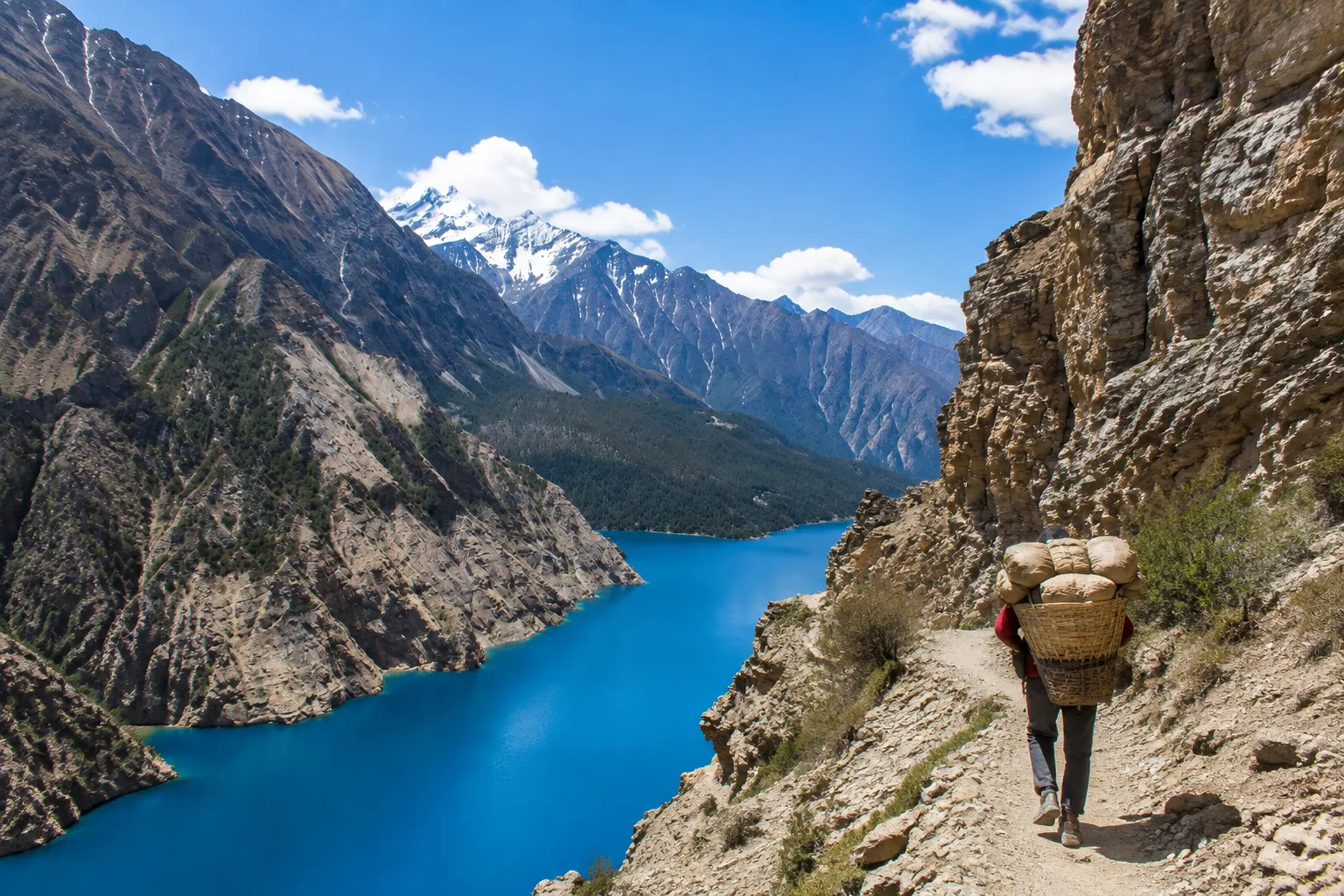
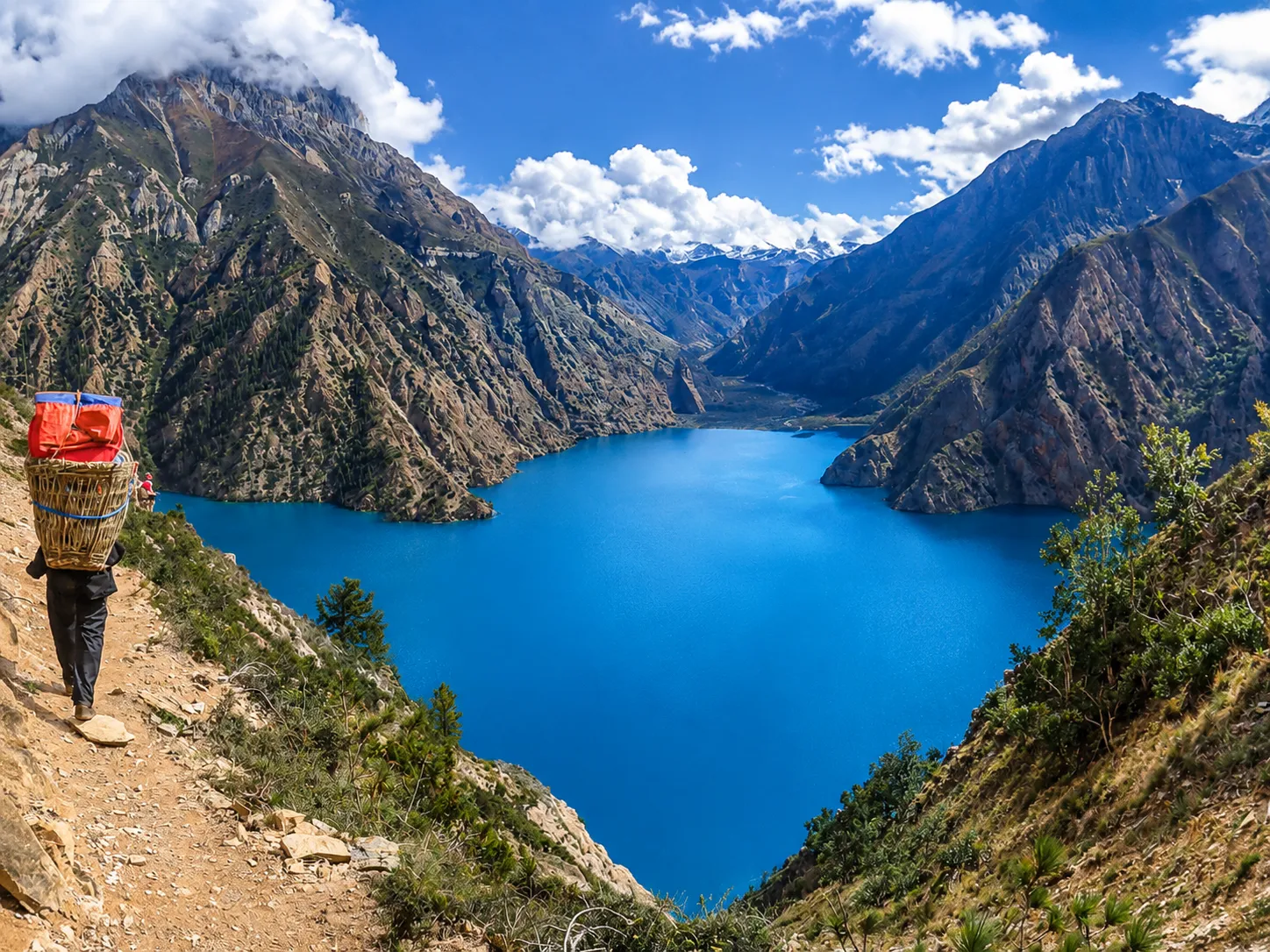
Later in the journey, the trail reaches the Phoksundo Lake and Ringmo area, where local communities continue to maintain traditions shaped by the harsh environment and centuries of cultural exchange across the Himalaya. Religious monuments and monasteries around the settlements provide quiet reminders that spirituality remains closely woven into everyday life here.
Guests are encouraged to approach monasteries, sacred objects, ceremonies and local homes respectfully. Photography should be taken only where appropriate, and permission should always be requested before photographing people or religious activities.
For Himalayan Sherpa Exodus Team Treks and Expedition (P) Ltd., cultural travel in Dolpo is about observation rather than intrusion: walking through these communities with patience, humility and respect for the people who call this extraordinary landscape home.
Preparation Guide
The Lower Dolpo Trek requires thoughtful preparation because it combines remote terrain, consecutive trekking days, two passes above 5,000 metres and limited access to modern facilities.
Physical Preparation
Guests should begin preparing several weeks before departure. Regular hiking, brisk walking, stair climbing, cycling, swimming or other cardiovascular activities can help improve endurance.
Training should ideally include:
- Long walks carrying a light daypack.
- Uphill and downhill hiking.
- Cardiovascular endurance exercises.
- Leg and core-strengthening exercises.
- Consecutive active days to become comfortable with repeated physical effort.
Technical climbing experience is normally not required for the standard Lower Dolpo trekking route under suitable conditions, but good general fitness and mental resilience are important.
Personal Preparation
Before leaving Kathmandu, trekkers should ensure that trekking equipment has been checked and walking boots have already been worn sufficiently. A remote Himalayan trek is a remarkably inefficient place to discover that new boots dislike your feet.
Guests should also bring sufficient personal medication, prescription details where applicable, copies of important travel documents and adequate personal spending money in Nepalese rupees.
Allow Flexibility
Flights between Nepalgunj and Juphal depend heavily on suitable weather and aviation conditions. Travellers should therefore keep some flexibility around international flight arrangements and avoid planning important onward connections immediately after the scheduled return from Dolpo.
Weather & Climate
The weather in Lower Dolpo varies considerably because the itinerary travels from the lower valleys of Dolpa into high Trans-Himalayan terrain above 5,000 metres.
Lower sections can experience relatively mild daytime temperatures during the main trekking seasons, while Dho Tarap, Numa La Base Camp and the high passes can remain cold even when conditions are pleasant lower down.
Dolpo is partly influenced by the Himalayan rain-shadow effect. However, rainfall is not uniform throughout the region. Official park information shows that the southern Suligad area receives considerably more precipitation than the dry northern Trans-Himalayan valleys, while July and August are among the wettest months. Winter conditions can be severe, particularly at higher elevations.
Spring
From approximately April to June, conditions generally become warmer and daylight hours longer. Lower valleys may show fresh seasonal vegetation, while nights remain cold at higher elevations.
Autumn
September through October, extending into early November in suitable conditions, is another favourable period. Autumn frequently offers clearer mountain visibility and comfortable daytime trekking temperatures, although nights become progressively colder later in the season.
Nepal Tourism Board identifies spring and autumn as the principal visiting periods for Shey Phoksundo National Park.
High-Altitude Conditions
Weather around Numa La and Baga La can change rapidly. Strong wind, snowfall, freezing temperatures or poor visibility may occasionally affect the planned crossing.
For this reason, daily movement in the high mountains must remain flexible and guided by actual trail, weather and safety conditions rather than by the printed itinerary alone.
Accommodation
Accommodation on the Lower Dolpo Trek is considerably more basic than on heavily developed routes such as Everest Base Camp or the Annapurna region.
Kathmandu and Nepalgunj stays are arranged in comfortable hotels according to the confirmed package category.
Once the trek enters Dolpo, facilities become progressively simpler. Depending on the season, route conditions and final operating arrangement, accommodation may involve simple local lodges or homestay-style facilities where suitable services exist, combined with organised camping in the more remote sections.
Camping is an established form of accommodation within Shey Phoksundo National Park, particularly on remote routes where permanent tourist lodges are limited.
At high camps such as Numa La Base Camp and around the remote pass sections, guests should expect practical mountain accommodation rather than hotel-style comfort.
The simplicity is part of travelling responsibly through a region where tourism infrastructure remains limited. Cleanliness, warmth, safety and proper logistical support are given greater importance than unnecessary luxury.
Meals During the Trek
During the trekking section, guests are provided with regular meals according to the confirmed package and the facilities available along the route.
Where local lodges are used, meals are selected from available menus. In camping sections, food is prepared by the trekking support team using supplies carried or obtained along the route.
Typical meals may include rice, lentils, vegetables, potatoes, noodles, pasta, soups, eggs, bread, porridge and other practical trekking foods. Availability becomes more limited as the route enters remote high-altitude areas, so guests should not expect the extensive menus found on Nepal’s more commercial trekking routes.
At altitude, appetite can decrease even though the body requires considerable energy. Trekkers are therefore encouraged to eat regularly and maintain adequate carbohydrate and fluid intake.
Guests with vegetarian diets, food allergies or significant dietary restrictions should inform Himalayan Sherpa Exodus Team Treks and Expedition (P) Ltd. before departure so that reasonable arrangements can be planned in advance.
Drinking Water
Safe hydration is especially important during the Lower Dolpo Trek.
Depending on the location, drinking water may be provided through boiled water, properly treated local water or another safe method arranged by the trekking team.
Trekkers should carry reusable water bottles or a hydration system together with a reliable personal purification method, such as purification tablets or an appropriate trekking water filter, as additional protection.
Water taken directly from rivers, streams or village taps should not automatically be assumed safe to drink without treatment.
Carrying reusable bottles also helps reduce unnecessary plastic waste in a region where proper waste collection and recycling facilities are extremely limited.
Internet & Charging
Lower Dolpo should be approached as a remote expedition-style trekking destination rather than a continuously connected holiday.
Mobile phone coverage may be available around some larger settlements, but signals can become weak, intermittent or completely unavailable as the route enters isolated valleys and high-pass areas.
Internet access, where available, may be slow and unreliable. Guests should therefore inform family, friends and work contacts in advance that they may be offline for several days.
Electricity is also limited in remote settlements. Some lodges may provide solar or locally generated power, and charging may involve an additional fee, but availability cannot be guaranteed. We recommend bringing:
- A high-capacity power bank.
- Spare camera batteries.
- Charging cables and adapters.
- Battery-saving settings for phones and cameras.
- A small solar charger if appropriate for personal use.
Important documents, maps and emergency information should be stored offline rather than depending entirely on internet access.
Travel Insurance
Comprehensive travel insurance is strongly recommended for every participant undertaking the Lower Dolpo Trek.
This is a remote high-altitude journey that crosses passes above 5,000 metres and travels through areas where immediate road access and advanced medical facilities are unavailable.
Your insurance policy should specifically cover:
- Trekking to the maximum altitude reached by the itinerary.
- Emergency medical treatment.
- Helicopter search and evacuation where medically necessary.
- Hospitalisation and repatriation.
- Trip cancellation or interruption.
- Flight delays and cancellations where applicable.
- Lost, stolen or delayed baggage.
- Personal accidents and other appropriate adventure-travel risks.
Travellers must carefully read their insurance policy rather than assuming that ordinary travel insurance automatically covers high-altitude trekking. Nepal Tourism Board advises trekkers to obtain comprehensive insurance because helicopter rescue and emergency medical treatment can be expensive.
Guests should carry both digital and printed copies of their policy number, insurer contact details and emergency assistance procedure.
Lower Dolpo Trek Packing List
Packing properly can make a significant difference to comfort and safety on a remote Himalayan journey.
Clothing
- Moisture-wicking base layers
- Lightweight trekking shirts
- Warm thermal layers
- Fleece or insulated mid-layer
- Down jacket suitable for high altitude
- Waterproof and windproof outer jacket
- Waterproof trekking trousers
- Comfortable trekking trousers
- Thermal leggings
- Warm hat or beanie
- Sun hat or cap
- Lightweight gloves
- Warm insulated gloves
- Several pairs of trekking socks
- Comfortable clothing for evenings
Footwear
- Well-broken-in waterproof trekking boots
- Lightweight camp shoes or sandals
- Spare shoelaces
- Gaiters, particularly when snow or wet conditions are possible
Trekking Equipment
- Comfortable backpack or daypack
- Duffel bag according to porter arrangements
- Trekking poles
- Sleeping bag suitable for sub-zero mountain temperatures
- Reusable water bottles or hydration system
- Headlamp with spare batteries
- Sunglasses with strong UV protection
- Personal water purification system
- Power bank
Personal Health & Hygiene
- Personal prescription medicines
- Personal first-aid items
- Sunscreen with high SPF
- Lip balm with sun protection
- Hand sanitiser
- Toothbrush and toothpaste
- Quick-drying towel
- Personal toiletries
- Wet wipes or biodegradable alternatives where appropriate
- Toilet paper
- Blister treatment
- Personal menstrual products where required
Any medication intended for altitude illness should be discussed with a qualified medical professional before travelling rather than self-prescribed from something an enthusiastic stranger once wrote on the internet.
Documents & Essentials
- Passport
- Nepal visa documentation
- Travel insurance details
- Emergency contact information
- Copies of important documents
- Passport-size photographs if requested for permit processing
- Appropriate cash in Nepalese rupees
- Waterproof document pouch
Useful Extras
- Camera and spare batteries
- Small notebook
- Earplugs
- Lightweight book or e-reader
- Small repair kit
- Dry bags or waterproof packing bags
- High-energy snacks
- Personal favourite electrolyte mix
Safety Measures
Safety is treated as an essential part of the Lower Dolpo journey rather than an optional addition to the itinerary.
Experienced Trekking Leadership
The trek should be operated with an experienced and properly licensed trekking guide who understands remote Himalayan travel, altitude management and local trail conditions.
Gradual Acclimatization
The itinerary gains elevation progressively and includes an acclimatization day at Dho Tarap before approaching Numa La Base Camp and the two major passes.
Nepal Tourism Board recommends gradual ascent, adequate hydration and avoiding further ascent when symptoms of Acute Mountain Sickness are present.
Weather Assessment
The guide will assess weather, snow, trail and pass conditions before major crossings. Departure times or overnight locations may occasionally need to change when safety requires it.
Hydration and Nutrition
Guests are encouraged to drink regularly, eat adequately and inform the guide immediately if they feel unusually weak, dizzy, nauseous or unwell.
First-Aid Support
The trekking team carries a general first-aid kit for basic emergency support. Guests should also carry personal medications required for known medical conditions.
Staying with the Group
Participants should follow the designated route and avoid walking far ahead of or behind the trekking team without informing the guide. Nepal Tourism Board similarly advises trekkers to remain on established routes and trek with proper support rather than alone.
Emergency Response
In the event of serious illness, injury or altitude-related problems, the guide and company will assess the safest available response. Depending on location and circumstances, this may involve descent, local assistance or emergency evacuation.
The scheduled itinerary will never take priority over the health and safety of a guest.
Lower Dolpo Trek – Frequently Asked Questions
1. Where is the Lower Dolpo Trek located?
Lower Dolpo lies in the remote western Himalayan region of Nepal, primarily within Dolpa District. This itinerary travels through places including Dunai, Tarakot, Dho Tarap, Numa La, Baga La and Phoksundo Lake within and around Shey Phoksundo National Park.
2. How difficult is the Lower Dolpo Trek?
It is a challenging high-altitude trek. Participants should be comfortable walking approximately five to seven hours on many days and be physically prepared for steep ascents, long descents and remote mountain terrain.
3. What is the highest point of this itinerary?
The highest sections are the crossings of Numa La and Baga La, both above 5,000 metres according to the planned route. Exact pass elevations should follow the final route data used by the company.
4. Do I need previous trekking experience?
Previous high-altitude trekking experience is helpful but not necessarily essential for a physically fit and well-prepared traveller. Technical climbing experience is normally not required for the standard trekking route in suitable conditions.
5. Is an acclimatization day included?
Yes. The itinerary includes an acclimatization and exploration day at Dho Tarap before continuing towards Numa La Base Camp.
6. What are the best months for the Lower Dolpo Trek?
Spring and autumn are generally the preferred trekking periods. April to June and September to October are particularly suitable, while conditions in early November may also be possible depending on weather and snow.
7. What type of accommodation is available?
Hotels are used in Kathmandu and Nepalgunj. During the trek, arrangements may include simple local accommodation where available and organised camping in remote sections. Luxury lodge facilities should not be expected.
8. Is Wi-Fi available during the trek?
Internet access is limited and unreliable. Some settlements may occasionally have mobile or internet connectivity, while several remote sections may have no usable signal at all.
9. Can I charge my phone and camera?
Charging may be available at selected settlements through solar or local electricity systems, sometimes for an additional fee. Guests should carry power banks and spare batteries because charging cannot be guaranteed every day.
10. Is drinking water available?
Water is available along the route, but it must be properly boiled, filtered or treated before drinking. Guests should carry reusable bottles and a personal purification method.
11. Do I need travel insurance?
Comprehensive insurance is strongly recommended. The policy should specifically include high-altitude trekking, emergency medical treatment and helicopter evacuation appropriate to the maximum altitude of this itinerary.
12. Can altitude sickness occur on this trek?
Yes. The trek spends several days above 3,000 metres and crosses passes above 5,000 metres. Anyone can develop altitude illness regardless of fitness, so gradual ascent and immediate reporting of symptoms are important.
13. Is the Lower Dolpo Trek suitable for beginners?
A determined and physically fit first-time Himalayan trekker may be able to undertake the journey with proper preparation, but Lower Dolpo is not generally considered an easy introductory trek. Its altitude, isolation and limited infrastructure make it better suited to travellers comfortable with genuine mountain adventure.
14. What happens if a mountain flight is cancelled?
Flights to and from Juphal are weather-dependent. In the event of delays or cancellations, Himalayan Sherpa Exodus Team Treks and Expedition (P) Ltd. will assist with the most practical available arrangements. Additional costs caused by circumstances outside the confirmed package are handled according to the booking terms and the traveller’s insurance coverage.
15. Are there ATMs during the trek?
Reliable ATM facilities should not be expected once the journey enters Dolpo. Guests should arrange sufficient Nepalese currency before travelling beyond the main urban centres.
16. Can dietary requirements be accommodated?
Vegetarian meals can normally be arranged. Guests with allergies, medical diets or significant food restrictions should provide details before the trek so appropriate planning can be made within the limitations of remote-area supplies.
17. Why choose the Lower Dolpo Trek?
Lower Dolpo offers something increasingly difficult to find: a genuinely remote Himalayan journey where landscape, culture and physical adventure remain closely connected. The route combines the traditional Tarap Valley, Buddhist and Bon cultural heritage, two major high passes, isolated mountain settlements and the extraordinary surroundings of Phoksundo Lake.
For travellers who value quiet trails, cultural depth and a demanding journey rather than commercial trekking comforts, Lower Dolpo can be one of Nepal’s most meaningful mountain experiences.
Be Well Prepared for Your Trek in Nepal
Proper preparation is the key to a safe, comfortable, and enjoyable trekking experience in Nepal. Please use this equipment guide to prepare the essential clothing, footwear, personal items, health and safety gear, and other trekking necessities according to your chosen route and season.
Pack wisely, travel comfortably, and trek confidently with Himalayan Sherpa Exodus Team.