Lo Manthang Trek
Trip Overview
The Lo Manthang Trek is an extraordinary journey into the remote and culturally rich landscape of Nepal’s Upper Mustang region, often regarded as the “Last Forbidden Kingdom.” This remarkable trek combines breathtaking Himalayan scenery, ancient Tibetan Buddhist heritage, dramatic desert-like landscapes, and authentic mountain lifestyles that have remained preserved for centuries.
Organized by Himalayan Sherpa Exodus Team Treks & Expeditions Pvt. Ltd., this carefully designed 16-day adventure takes trekkers beyond the usual trails, leading through traditional villages, ancient monasteries, high mountain passes, and the historic walled city of Lo Manthang. The route offers a unique opportunity to experience the deep-rooted culture of the Mustang people while exploring one of Nepal’s most fascinating and isolated regions.
Beginning with a scenic journey to Pokhara and a mountain flight to Jomsom, the trek gradually ascends through the Kali Gandaki Valley, passing through Kagbeni, Chele, Ghiling, Tsarang, and finally reaching Lo Manthang at an altitude of approximately 3,810 meters. The days spent exploring Lo Manthang allow travelers to discover ancient monasteries, royal traditions, caves, and the unique architectural beauty of this historic Himalayan settlement.
The return journey follows a different trail through beautiful villages and landscapes, providing a deeper connection with the region’s natural beauty and local communities. With experienced guides, careful planning, and warm hospitality, Himalayan Sherpa Exodus Team Treks & Expeditions Pvt. Ltd. ensures a safe, meaningful, and memorable Himalayan experience.
Trip Highlights
Himalayan Sherpa Exodus Team honestly requests for everyone!
Explore quietly. Travel respectfully. Experience the Himalaya beyond the ordinary.
Trip Highlights
- Explore the ancient kingdom of Lo Manthang, a culturally preserved Himalayan settlement with centuries-old traditions.
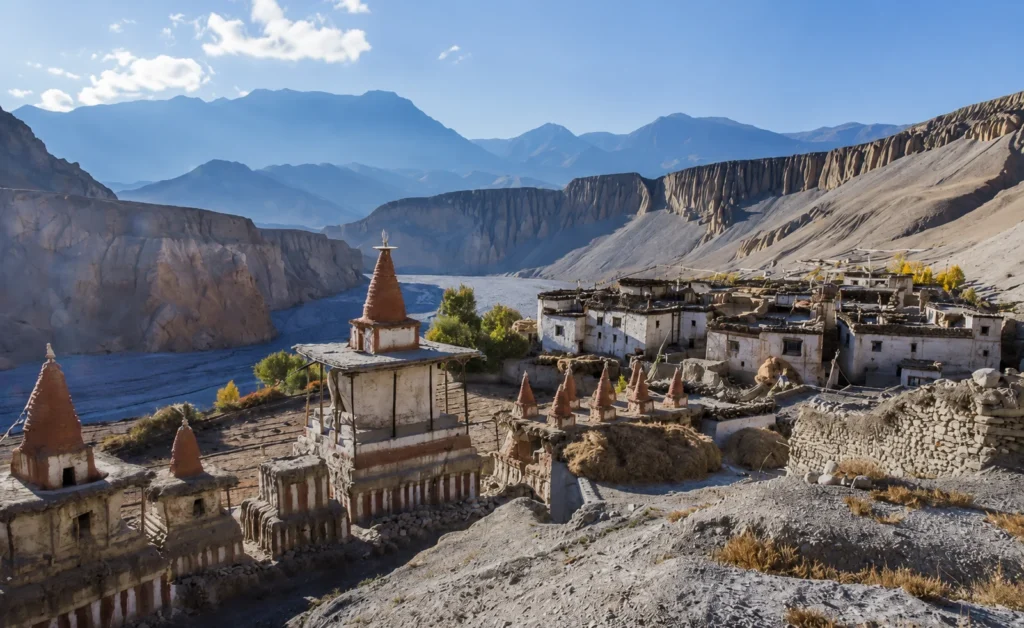
- Experience the unique landscapes of Upper Mustang, featuring dramatic cliffs, deep valleys, colorful rock formations, and high desert scenery.
- Enjoy breathtaking views of the Annapurna, Dhaulagiri, Nilgiri, and other Himalayan peaks.
- Visit traditional Mustang villages such as Kagbeni, Chele, Ghiling, and Tsarang, where ancient lifestyles continue alongside modern changes.
- Discover historic Buddhist monasteries, prayer walls, chortens, and sacred cultural sites reflecting Tibetan Buddhist heritage.
- Walk through the legendary Kali Gandaki Valley, one of the world’s deepest river valleys.
- Experience authentic local hospitality and learn about the unique customs, traditions, and daily life of the Mustang community.
- Spend valuable time exploring Lo Manthang, including its royal palace, ancient monasteries, surrounding villages, and hidden cultural treasures.
- Enjoy scenic mountain flights between Pokhara and Jomsom, offering spectacular Himalayan views.
- Trek through a less crowded and remote Himalayan region, ideal for travelers seeking nature, culture, and adventure.
- Travel with the professional support of Himalayan Sherpa Exodus Team ensuring responsible trekking services and a comfortable journey throughout the adventure.
Day 01 :
Arrival in Kathmandu (1,400m/4,593ft)
Welcome to Nepal – Preparation and Trek Briefing
Upon your arrival at Tribhuvan International Airport, Kathmandu, our representative from Himalayan Sherpa Exodus Team Treks & Expeditions Pvt. Ltd. will warmly welcome you and assist with your transfer to the hotel. Kathmandu, the cultural capital of Nepal, is a historic valley surrounded by hills and home to centuries-old temples, monasteries, and traditional settlements.
After check-in and refreshments, our trekking team will conduct a detailed briefing about the Lo Manthang Trek, including the route, altitude considerations, walking conditions, safety guidelines, and necessary preparations. This day allows you to settle comfortably and prepare for the Himalayan adventure ahead.
Overnight: Hotel in Kathmandu
Maximum Elevation: 1,400m/4,593ft
Day 02 :
Drive from Kathmandu to Pokhara (822m/2,697ft)
Distance: Approximately 200 km | Driving Duration: 6–7 hours
After breakfast, we begin our scenic drive toward Pokhara, one of Nepal’s most beautiful lakeside cities. The journey follows the Prithvi Highway, passing through green hills, terraced farmland, rivers, and traditional villages along the Trishuli and Marsyangdi river valleys.
Pokhara offers a peaceful atmosphere with spectacular views of the Annapurna and Machhapuchhre (Fishtail) mountain ranges. Before heading toward the remote Mustang region, you will have time to relax and enjoy the lakeside surroundings.
Driving Distance: Approx. 200 km
Driving Duration: 6–7 hours
Overnight: Hotel in Pokhara
Elevation: 822m/2,697ft
Day 03 :
Scenic Flight from Pokhara to Jomsom and Trek to Kagbeni (2,810m/9,219ft)
Flight Duration: 20–25 minutes | Walking Duration: 3 hours
The adventure begins with an early morning mountain flight from Pokhara to Jomsom. This spectacular flight passes between the giant peaks of Annapurna and Dhaulagiri, offering breathtaking views of the Himalayan landscape.
Jomsom is the administrative center of Mustang District and lies within the Kali Gandaki Valley. After meeting the trekking crew and completing preparations, we begin walking toward Kagbeni, an ancient village located at the gateway of Upper Mustang.
The trail follows the Kali Gandaki River, passing through dry landscapes, stone-built houses, and traditional settlements influenced by Tibetan culture. Kagbeni is known for its historic monastery, narrow alleys, and unique architecture.
Flight: Pokhara to Jomsom
Walking Distance: Approximately 10–12 km
Walking Duration: 3 hours
Elevation Gain: 2,720m to 2,810m
Overnight: Kagbeni
Day 04 :
Trek from Kagbeni to Chele (3,050m/10,007ft)
Walking Duration: 6 hours
Today we officially enter the restricted Upper Mustang region. After completing necessary permit checks at Kagbeni, the trail follows the Kali Gandaki River before gradually climbing through the dry Himalayan terrain.
The route passes through Tangbe and Chhusang villages, where traditional Mustang lifestyles can still be observed. The landscape changes dramatically with red cliffs, eroded rock formations, ancient caves, and barren mountains shaped by centuries of wind and weather.
The final section involves a gradual ascent to Chele, a small settlement surrounded by impressive Himalayan scenery.
Walking Duration: Approximately 6 hours
Approximate Walking Distance: 14–16 km
Destination Elevation: 3,050m/10,007ft
Overnight: Chele Village
Day 05 :
Trek from Chele to Ghiling (3,570m/11,713ft)
Walking Duration: 7 hours
This is one of the more challenging yet rewarding trekking days as the trail crosses high mountain passes and remote landscapes. The route climbs through dry valleys and rocky terrain while providing magnificent views of Nilgiri, Annapurna, and Dhaulagiri ranges.
Passing through Samar village and crossing scenic viewpoints, the trail continues toward Ghiling, a traditional Mustang settlement surrounded by agricultural fields and ancient Buddhist monuments.
Ghiling reflects the authentic lifestyle of the local people, where farming, animal husbandry, and Buddhist traditions remain an important part of daily life.
Walking Duration: Approximately 7 hours
Approximate Walking Distance: 17–18 km
Destination Elevation: 3,570m/11,713ft
Overnight: Ghiling
Day 06 :
Trek from Ghiling to Tsarang (3,560m/11,680ft)
Walking Duration: 6 hours
Leaving Ghiling behind, the trail continues through the remote and beautiful landscapes of Upper Mustang. The route crosses open valleys, ancient villages, and high desert terrain before reaching Tsarang.
Tsarang, also known as Charang, is one of the historically significant villages of Mustang. The village is famous for its impressive whitewashed houses, ancient monastery, traditional chortens, and the remains of the old royal palace.
The peaceful surroundings provide a deeper understanding of Mustang’s unique culture and Tibetan Buddhist heritage.
Walking Duration: Approximately 6 hours
Approximate Walking Distance: 15 km
Destination Elevation: 3,560m/11,680ft
Overnight: Tsarang
Day 07 :
Trek from Tsarang to Lo Manthang (3,810m/12,500ft)
Walking Duration: 5 hours
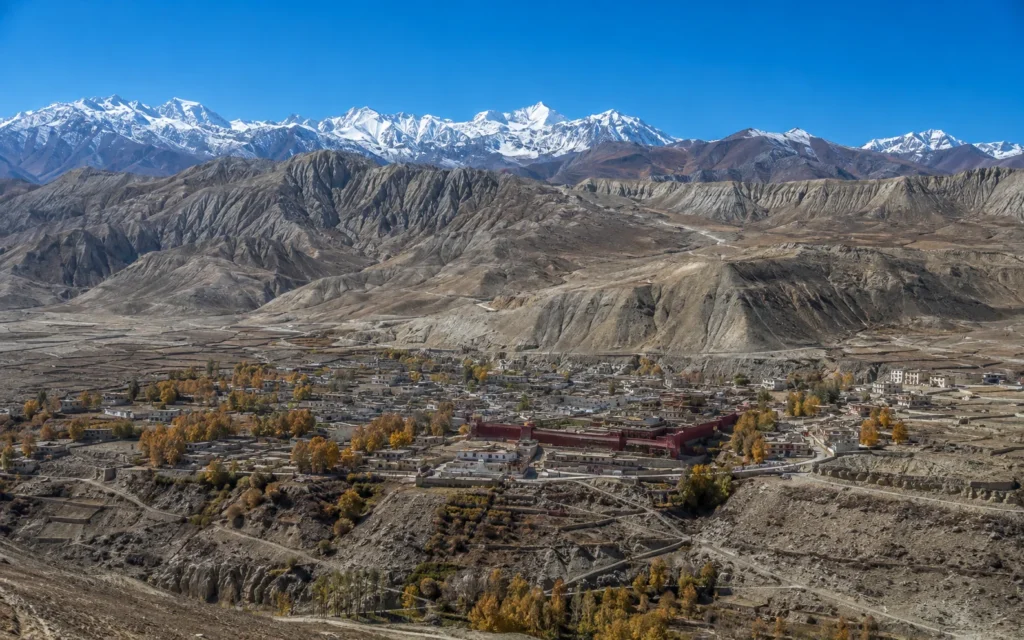
Today is a memorable highlight of the journey as we approach the legendary walled city of Lo Manthang, the former capital of the Kingdom of Mustang.
The trail gradually climbs through high desert landscapes, offering magnificent views of snow-covered Himalayan peaks and colorful cliffs. As you enter Lo Manthang, the traditional stone walls, narrow lanes, monasteries, and ancient buildings reveal the unique character of this historic settlement.
Lo Manthang remains a living cultural heritage site where traditional Tibetan Buddhist customs and local lifestyles continue to flourish.
Walking Duration: Approximately 5 hours
Approximate Walking Distance: 13 km
Destination Elevation: 3,810m/12,500ft
Overnight: Lo Manthang
Day 08 :
Exploration Day in Lo Manthang (3,810m/12,500ft)
Cultural Discovery and Local Experience
A full day is dedicated to exploring the remarkable heritage of Lo Manthang. You will visit ancient monasteries, including important Buddhist spiritual centers, and explore the traditional architecture of the walled city.
The day also provides opportunities to interact with local residents and understand their unique way of life, traditional practices, farming methods, and connection with the harsh yet beautiful Mustang environment.
Activities Include:
- Exploration of ancient monasteries
- Visit to historic settlements
- Cultural interaction with local communities
- Photography and landscape exploration
Overnight: Lo Manthang
Day 09 :
Excursion Around Lo Manthang (3,810m/12,500ft)
Exploring Hidden Valleys and Cultural Landscapes
Today we continue exploring the surrounding areas of Lo Manthang. Depending on local conditions, the excursion may include nearby villages, viewpoints, caves, and culturally significant locations.
The surrounding region reveals the deeper beauty of Upper Mustang, including ancient meditation caves, unique geological formations, and remote settlements where traditional lifestyles have continued for generations.
Overnight: Lo Manthang
Day 10 :
Trek from Lo Manthang to Drakmar (3,820m/12,533ft)
Walking Duration: 6 hours
Leaving the historic kingdom behind, we begin our return journey through another scenic route. The trail crosses high landscapes with dramatic cliffs, colorful rock formations, and panoramic Himalayan views.
Drakmar is known for its striking red cliffs and unique natural surroundings. The peaceful environment makes it a memorable overnight stop.
Walking Duration: Approximately 6 hours
Approximate Walking Distance: 15 km
Destination Elevation: 3,820m/12,533ft
Overnight: Drakmar
Day 11 :
Trek from Drakmar to Shyangmochen (3,800m/12,467ft)
Walking Duration: 5 hours
Today’s trail continues through the quiet landscapes of Upper Mustang. The route passes through traditional settlements and open valleys, offering a final opportunity to enjoy the region’s distinctive scenery and cultural atmosphere.
The changing landscapes provide excellent views of mountain ranges, cliffs, and remote Himalayan villages.
Walking Duration: Approximately 5 hours
Approximate Walking Distance: 13–14 km
Destination Elevation: 3,800m/12,467ft
Overnight: Shyangmochen
Day 12 :
Trek from Shyangmochen to Chhuksang (2,980m/9,777ft)
Walking Duration: 6 hours
The trail gradually descends toward lower Mustang landscapes. As altitude decreases, vegetation becomes more visible, and the environment changes from dry high desert to greener river valleys.
Chhuksang is a beautiful settlement located near the Kali Gandaki River, surrounded by impressive cliffs and ancient caves.
Walking Duration: Approximately 6 hours
Approximate Walking Distance: 16 km
Destination Elevation: 2,980m/9,777ft
Overnight: Chhuksang
Day 13 :
Trek from Chhuksang to Jomsom (2,720m/8,924ft)
Walking Duration: 7 hours
Our final trekking day follows the Kali Gandaki Valley back toward Jomsom. The trail passes through familiar landscapes while offering beautiful views of Mustang’s mountains, villages, and river valleys.
Upon reaching Jomsom, you can celebrate the successful completion of the Lo Manthang Trek with the trekking team.
Walking Duration: Approximately 7 hours
Approximate Walking Distance: 18 km
Destination Elevation: 2,720m/8,924ft
Overnight: Jomsom
Day 14 :
Flight from Jomsom to Pokhara (822m/2,697ft)
Scenic Mountain Flight
After breakfast, we take a scenic flight from Jomsom back to Pokhara. The flight provides another opportunity to appreciate the magnificent Himalayan landscapes from above.
The afternoon is free for relaxation, sightseeing, or enjoying the peaceful lakeside environment.
Flight Duration: 20–25 minutes
Overnight: Pokhara
Day 15 :
Drive from Pokhara to Kathmandu and Farewell Dinner
Distance: Approximately 200 km | Driving Duration: 6–7 hours
We return to Kathmandu by scenic highway. Upon arrival, you will have time to rest and prepare for your departure.
In the evening, Himalayan Sherpa Exodus Team Treks & Expeditions Pvt. Ltd. will organize a farewell dinner with a traditional Nepali cultural program, offering a memorable celebration of your Himalayan journey.
Overnight: Kathmandu
Day 16 :
Final Departure from Nepal
After breakfast, our representative will transfer you to Tribhuvan International Airport according to your flight schedule.
With unforgettable memories of the ancient kingdom of Mustang, Himalayan landscapes, and warm local hospitality, we hope your journey with Himalayan Sherpa Exodus Team Treks & Expeditions Pvt. Ltd. becomes a lifelong Himalayan experience.
Lo Manthang Trek
The Trip Package Cost Includes
- Airport arrival and departure assistance in Kathmandu.
- All necessary ground transportation as mentioned in the itinerary.
- Kathmandu and Pokhara hotel accommodation as per the package plan.
- Scenic domestic flights between Pokhara and Jomsom (both directions).
- Experienced, government-licensed trekking guide familiar with the Upper Mustang region.
- Required number of porters to support luggage transportation.
- Porter wages, meals, accommodation, and insurance.
- Trekking permits, including the Restricted Area Permit and Annapurna Conservation Area Permit (ACAP).
- Accommodation during the trek in selected local lodges and teahouses.
- Meals during the trekking period (breakfast, lunch, and dinner).
- Basic first-aid support and essential trekking assistance.
- Necessary office service charges and government taxes.
The Trip Package Cost Excludes
- International airfare and Nepal entry visa fees.
- Personal expenses such as beverages, snacks, laundry, and souvenirs.
- Travel insurance covering emergency evacuation and medical expenses.
- Personal trekking equipment and clothing.
- Additional accommodation or meals outside the planned itinerary.
- Helicopter rescue or emergency evacuation costs.
- Tips for guides, porters, and supporting staff.
- Any additional expenses caused by unexpected circumstances such as weather delays, natural events, or itinerary changes.
Best Time to Trek Lo Manthang
The Upper Mustang region has a unique trans-Himalayan climate, making it suitable for trekking during a longer season compared to many other Himalayan destinations.
The most favorable trekking periods are:
Spring Season (March to May) : Spring offers pleasant temperatures, clear mountain views, and comfortable walking conditions. The landscape begins to show signs of new growth, creating a beautiful contrast against Mustang’s dry cliffs and desert-like terrain.
Autumn Season (September to November) : Autumn is considered one of the best seasons for Lo Manthang Trek. The skies are generally clear, visibility is excellent, and the Himalayan panorama is at its finest.
Summer/Monsoon Season (June to August) : Unlike many trekking areas of Nepal, Upper Mustang lies in the rain-shadow area of the Himalayas. Therefore, it receives very little rainfall and remains accessible during the monsoon period.
Pokhara – Jomsom – Pokhara Flight Information
The mountain flight between Pokhara and Jomsom is one of the highlights of the Lo Manthang Trek. The flight passes through the dramatic Kali Gandaki Valley, surrounded by the Annapurna and Dhaulagiri mountain ranges.
- Flight Route: Pokhara – Jomsom – Pokhara
- Flight Duration: Approximately 20–25 minutes each way
- Altitude of Jomsom: 2,720m/8,924ft
- Aircraft Type: Small mountain aircraft (subject to airline operation)
Flights usually operate in the morning when weather conditions are more stable. However, mountain weather can change quickly, and flight schedules may be affected by visibility, wind, or other natural conditions.
Trek Difficulty
The Lo Manthang Trek is considered a moderate to challenging Himalayan trek due to its remote location, high altitude, and long walking days.
Although the route does not involve technical climbing, trekkers should be prepared for:
- Walking 5–7 hours on most trekking days.
- High-altitude trails reaching above 3,800m.
- Dry and windy landscapes.
- Uneven mountain paths and gradual ascents.
- Limited facilities compared to popular trekking routes.
A reasonable level of physical fitness, regular walking practice, and a positive mindset are recommended for completing this adventure comfortably.
Acclimatization & Altitude Sickness
Altitude adaptation is an important part of the Lo Manthang Trek. The itinerary is carefully designed with gradual elevation gain and sufficient time to explore Lo Manthang before descending. Common symptoms of altitude-related discomfort may include:
- Headache
- Shortness of breath
- Reduced appetite
- Fatigue
- Difficulty sleeping
Our trekking guides monitor your health throughout the journey and provide guidance on proper pacing, hydration, and rest. Maintaining a slow walking rhythm and allowing your body to adjust naturally are essential for a safe trekking experience.
Himalayan Culture & Ancient Monasteries
Upper Mustang is one of Nepal’s most culturally preserved regions, where Tibetan Buddhist traditions continue to shape everyday life. During the trek, travelers can experience:
- Traditional Mustang villages built with stone and mud architecture.
- Ancient monasteries with centuries-old religious significance.
- Prayer walls, chortens, and sacred Buddhist monuments.
- Local festivals, customs, and spiritual practices.
- The unique lifestyle of mountain communities adapted to the high-altitude desert environment.
Lo Manthang, the historic capital of Mustang, remains a remarkable cultural center where ancient traditions are preserved through generations.
Preparation Guide
Proper preparation helps ensure a comfortable and enjoyable trekking experience. Before starting the trek, we recommend:
- Improving physical fitness through regular walking, hiking, or cardiovascular exercise.
- Preparing suitable trekking clothing for changing mountain conditions.
- Carrying essential personal medication and first-aid supplies.
- Training with a backpack before the trek.
- Learning basic altitude awareness and safety practices.
- Preparing mentally for remote mountain environments and simple living conditions.
A well-prepared trekker can fully appreciate the natural and cultural richness of Upper Mustang.
Weather & Climate
Upper Mustang has a dry Himalayan climate influenced by the Tibetan Plateau. Weather conditions can vary significantly between day and night.
Typical conditions include:
- Warm and sunny days during trekking hours.
- Cool mornings and evenings.
- Strong winds, especially in open valleys.
- Cold temperatures at higher elevations.
Even during warmer seasons, carrying proper layers is important because mountain temperatures can change rapidly.
Accommodation
During the trek, accommodation is provided in locally operated mountain lodges and teahouses. These establishments offer simple yet comfortable facilities that allow travelers to experience authentic Himalayan hospitality.
Facilities generally include:
- Twin-sharing rooms.
- Basic bedding.
- Shared bathroom facilities in most locations.
- Dining areas with warm meals and social interaction.
Accommodation becomes more basic in remote villages, reflecting the natural limitations of the high mountain environment.
Meals During the Trek
Nutritious meals are essential for maintaining energy throughout the journey. Local lodges provide freshly prepared meals based on available ingredients.
Typical meals include:
Breakfast
- Tibetan bread
- Eggs
- Porridge
- Pancakes
- Tea or coffee
Lunch and Dinner
- Dal Bhat (traditional Nepali meal)
- Noodles and pasta
- Rice and vegetable dishes
- Soups
- Local Tibetan-style food
Special dietary requirements can usually be managed with prior notice.
Drinking Water
Safe drinking water is important during high-altitude trekking. Trekkers can obtain water from:
- Local lodges and teahouses.
- Bottled water where available.
- Filtered or treated water recommended for environmental responsibility.
We encourage the use of reusable bottles and purification methods to reduce plastic waste in the Himalayan region.
Internet & Charging Facilities
Internet and electricity facilities are available in many villages along the trekking route, although services may be limited compared to cities.
- Wi-Fi may be available at some lodges with additional charges.
- Mobile network coverage varies depending on location.
- Charging facilities are available in most accommodation areas.
- Carrying a power bank is highly recommended.
Travel Insurance
Comprehensive travel insurance is strongly recommended for the Lo Manthang Trek. Your insurance should cover:
- High-altitude trekking.
- Emergency medical treatment.
- Helicopter evacuation.
- Trip cancellation or interruption.
- Lost baggage and personal belongings.
Due to the remote nature of Upper Mustang, proper insurance provides essential protection during unexpected situations.
Packing List
Essential trekking equipment includes:
Clothing
- Waterproof trekking jacket
- Warm fleece or down jacket
- Thermal inner layers
- Trekking pants
- Comfortable hiking boots
- Warm hat and gloves
- Sun protection clothing
Personal Items
- Sunglasses
- Sunscreen
- Water bottle
- Headlamp
- Personal medicine
- Toiletries
Trekking Equipment
- Backpack
- Sleeping bag (recommended)
- Trekking poles
- Dry bags for protection from dust and moisture
Safety Measures
Your safety and comfort remain our highest priority throughout the journey. Our safety approach includes:
- Experienced local trekking guides.
- Careful monitoring of altitude-related symptoms.
- Proper acclimatization planning.
- Regular communication with the trekking team.
- Emergency response preparation.
- Responsible trekking practices respecting local communities and the environment.
With professional support from Himalayan Sherpa Exodus Team Treks & Expeditions Pvt. Ltd., you can enjoy the beauty of Upper Mustang with confidence and peace of mind.
Frequently Asked Questions (FAQ)
1. Is Lo Manthang Trek suitable for beginners?
Yes, the trek can be completed by beginners with good physical preparation. Previous trekking experience is helpful but not mandatory.
2. What is the highest point of the trek?
The highest overnight elevation is approximately 3,810m/12,500ft at Lo Manthang.
3. Do I need a special permit for Upper Mustang?
Yes. Upper Mustang is a restricted trekking area, and a special permit along with the Annapurna Conservation Area Permit is required.
4. How many hours do we walk each day?
Walking duration generally ranges from 5 to 7 hours per day, depending on the route and terrain.
5. Can I trek Lo Manthang during the monsoon season?
Yes. Upper Mustang lies in Nepal’s rain-shadow region, making it suitable for trekking even during the monsoon months.
6. What type of accommodation is available during the trek?
Accommodation is provided in local teahouses and lodges offering basic but comfortable facilities.
7. Is there a risk of altitude sickness?
Altitude sickness is possible above 3,000m. Proper acclimatization, gradual walking, hydration, and professional guidance help reduce the risk.
8. Why choose Himalayan Sherpa Exodus Team Treks & Expeditions Pvt. Ltd.?
We combine local Himalayan knowledge, professional trekking management, and genuine hospitality to create safe, culturally meaningful, and unforgettable journeys in Nepal’s mountain regions.
Be Well Prepared for Your Trek in Nepal
Proper preparation is the key to a safe, comfortable, and enjoyable trekking experience in Nepal. Please use this equipment guide to prepare the essential clothing, footwear, personal items, health and safety gear, and other trekking necessities according to your chosen route and season.
Pack wisely, travel comfortably, and trek confidently with Himalayan Sherpa Exodus Team.
 3840M
3840M Moderate