Damodar Kunda Trek
Trip Overview
The 21-day Damodar Kunda Trek is a remarkable journey into the remote and spiritually significant landscapes of Upper Mustang. Situated at an elevation of approximately 4,890 metres, Damodar Kunda is a sacred pilgrimage destination surrounded by the dry valleys, high ridges and dramatic mountain scenery of the Mustang region. The trek combines natural beauty, ancient settlements, Tibetan-influenced culture and important Hindu and Buddhist pilgrimage sites.
The journey begins in Kathmandu, where a preparation day allows time for permit arrangements, equipment checks and a detailed trek briefing. Travellers then drive to Pokhara and take a scenic mountain flight to Jomsom. From Jomsom, the walking journey starts towards Kagbeni, a historic village located at the entrance to Upper Mustang. The trail gradually continues through Chele, Syanbochen, Ghami and Charang, passing traditional settlements, eroded cliffs, deep river valleys, ancient chortens and landscapes shaped by centuries of wind and isolation.
One of the cultural highlights of the trek is Lo Manthang, the historic walled settlement of the former Kingdom of Mustang. Its narrow lanes, traditional mud-brick houses, monasteries, prayer walls and Tibetan Buddhist heritage provide valuable insight into the history and daily life of the region. An exploration day in Lo Manthang offers time to visit important cultural sites, observe the local way of life and take an optional short hike around the surrounding valley.
Beyond Lo Manthang, the route moves deeper into a quieter and more isolated part of Upper Mustang. The trail continues through Yara and climbs towards Bas Khola via Kyumupani Danda, reaching some of the highest and most demanding sections of the journey. From Bas Khola, trekkers cross the rugged terrain of Damodar Kunda Danda before arriving at the sacred lakes of Damodar Kunda. The high altitude, strong winds, cold temperatures and limited facilities make this section physically demanding, but the peaceful surroundings and spiritual importance of the area create a deeply rewarding experience.
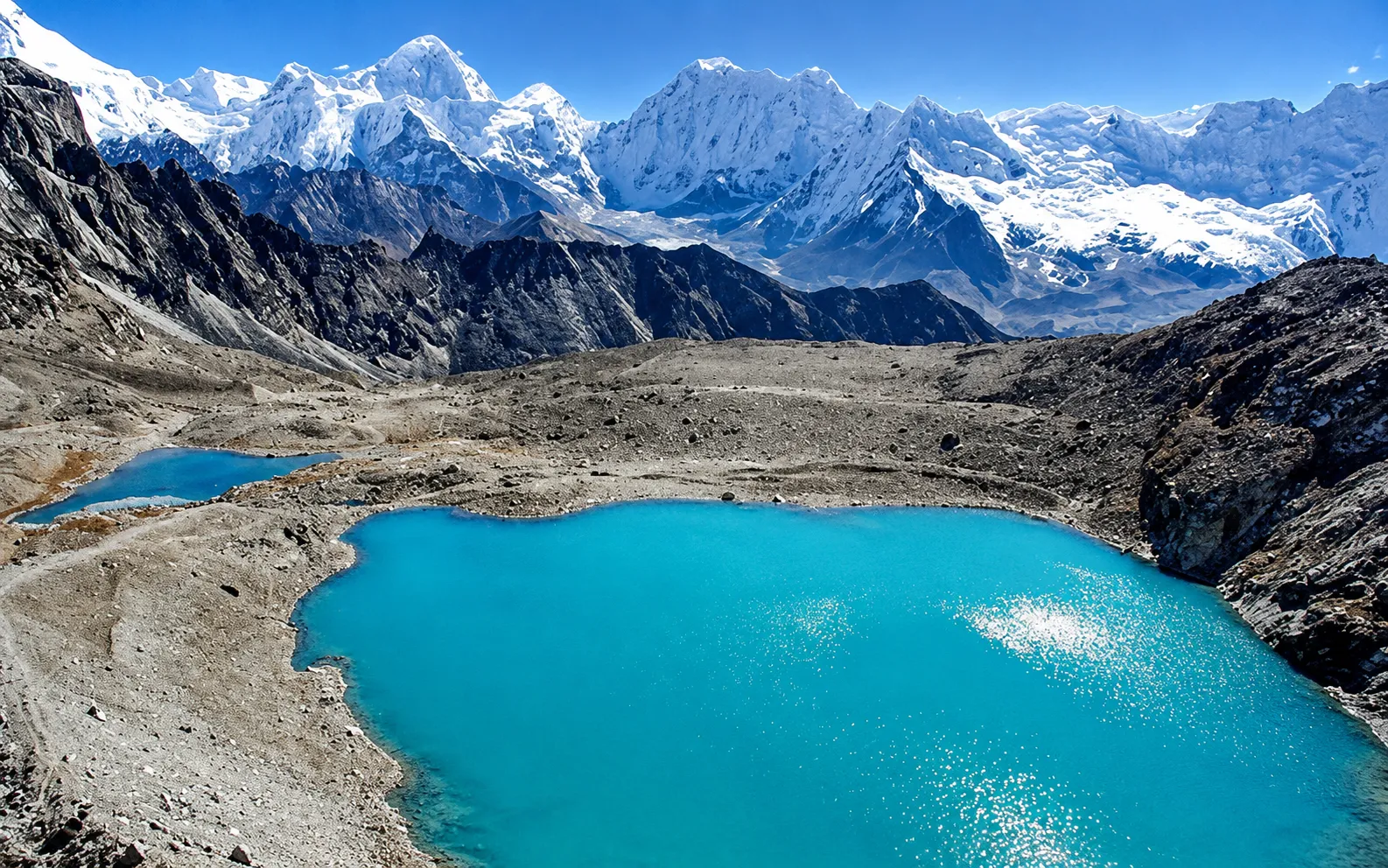
Damodar Kunda is traditionally understood as a group of three sacred lakes: Chakra Kunda, Dudh Kunda and Tama Kunda. Among them, Chakra Kunda is regarded as especially significant. Hindu traditions associate Damodar with Lord Krishna, while local religious beliefs connect the lakes with purification, forgiveness and spiritual liberation. Buddhist pilgrims also respect the area as part of Mustang’s sacred Himalayan landscape. The region is further associated with Shaligram stones, which are naturally occurring fossils found within the Kali Gandaki river system and are considered sacred in Hindu worship.
After visiting Damodar Kunda, the trek descends through Ghechung Khola and continues to the traditional villages of Tangye and Tetang. The route then crosses Gyu La Pass at approximately 4,077 metres before reaching Muktinath, one of Nepal’s most important pilgrimage destinations for both Hindus and Buddhists. Visiting Muktinath provides a meaningful spiritual conclusion to the trekking section. From Muktinath, the trail descends to Jomsom, followed by a flight to Pokhara and a return drive to Kathmandu.
The Damodar Kunda Trek is suitable for experienced trekkers who are comfortable with long walking days, high altitude, remote terrain and changing Himalayan weather. Some sections may require camping or basic accommodation due to the limited facilities available beyond the main Upper Mustang route. Proper acclimatisation, physical preparation, suitable equipment and the assistance of an experienced licensed guide are essential for completing the journey safely.
As the trek enters the restricted region of Upper Mustang, travellers are required to obtain the necessary restricted-area and Annapurna-region permits in accordance with the regulations applicable at the time of travel. Himalayan Sherpa Exodus Team Treks and Expedition (P) Ltd. carefully manages the required arrangements and provides professional guidance throughout the journey. Our team is committed to offering a safe, respectful and well-organised trekking experience while supporting local communities, protecting the environment and honouring the religious and cultural values of Mustang.
Major Highlights of the Damodar Kunda Trek
Trip Highlights
- Reach the sacred Damodar Kunda lakes at approximately 4,890 metres in one of the most remote areas of Upper Mustang.
- Visit Chakra Kunda, Dudh Kunda and Tama Kunda, three sacred lakes connected with Hindu and Buddhist traditions.
- Explore Lo Manthang, the historic walled settlement of the former Kingdom of Mustang.
- Discover ancient monasteries, prayer walls, chortens, traditional houses and Tibetan-influenced cultural heritage.
- Walk through the distinctive rain-shadow landscape of Upper Mustang, characterised by dry valleys, colourful cliffs and wind-shaped rock formations.
- Follow a culturally rich route through Kagbeni, Chele, Syanbochen, Ghami, Charang, Yara, Tangye and Tetang.
- Cross the challenging high-altitude terrain of Kyumupani Danda and Damodar Kunda Danda.
- Experience magnificent views of the Damodar Himal, Annapurna region and the vast landscapes extending towards the Tibetan Plateau.
- Learn about the religious traditions associated with Lord Krishna, spiritual purification and the sacred Shaligram stones of the Kali Gandaki region.
- Spend an additional day exploring the monasteries, settlements and surrounding landscape of Lo Manthang.
- Trek through isolated areas beyond the regular Upper Mustang route, where settlements and visitor facilities remain limited.
- Cross Gyu La Pass at approximately 4,077 metres while travelling from Tetang towards Muktinath.
- Visit Muktinath Temple, a highly respected pilgrimage site shared by Hindu and Buddhist devotees.
- Experience a balanced journey combining cultural exploration, spiritual significance, physical challenge and Himalayan scenery.
- Enjoy scenic flights between Pokhara and Jomsom, offering impressive aerial views of the Annapurna and Dhaulagiri regions.
- Complete a carefully planned 21-day itinerary with gradual altitude gain, cultural visits and professionally organised trekking support.
Day 01 :
Arrival in Kathmandu
Elevation: Approximately 1,350 metres
Destination: Kathmandu
Activity: Airport arrival and hotel transfer
Upon your arrival at Tribhuvan International Airport in Kathmandu, a representative from Himalayan Sherpa Exodus Team Treks and Expedition (P) Ltd. will welcome you and assist with your transfer to the hotel. After completing the hotel check-in formalities, you may rest and recover from your international journey.
Kathmandu is Nepal’s historic and cultural capital, surrounded by green hills and home to numerous temples, monasteries, traditional neighbourhoods and UNESCO-listed heritage sites. Depending on your arrival time, you may take a gentle walk around the nearby streets or simply relax at the hotel.
This first day is intentionally kept comfortable so that you can settle into the local environment before beginning the journey towards the remote landscapes of Upper Mustang.
Overnight: Hotel in Kathmandu
Day 02 :
Trek Preparation Day in Kathmandu
Elevation: Approximately 1,350 metres
Destination: Kathmandu
Activity: Trek briefing, equipment review and final preparation
Today is reserved for the final preparation of the Damodar Kunda Trek. Our trekking team will provide a detailed briefing regarding the route, walking conditions, altitude, accommodation, safety procedures, local customs and environmental responsibilities.
Your trekking equipment will be reviewed to ensure that you are properly prepared for the cold temperatures, strong winds and high-altitude conditions expected in the remote sections beyond Lo Manthang. Any necessary equipment can be purchased or rented in Kathmandu before departure.
Our office will also complete the required administrative arrangements and check the necessary trekking documents and permits. As Upper Mustang is a restricted region, travellers must follow the applicable entry regulations and travel with an authorised trekking agency and licensed guide.
The remaining time may be used for personal preparation, currency exchange, purchasing essential items or exploring part of Kathmandu at a relaxed pace.
Overnight: Hotel in Kathmandu
Day 03 :
Drive from Kathmandu to Pokhara
Elevation: Pokhara at approximately 820 metres
Driving Distance: Approximately 210 kilometres
Driving Duration: 7–8 hours
After breakfast, we begin the overland journey from Kathmandu to Pokhara. The drive follows the winding highway through Nepal’s middle hills, passing rivers, terraced farmland, roadside settlements and traditional villages.
Much of the journey follows the Trishuli and Marshyangdi river corridors. Along the way, you can observe the changing scenery of rural Nepal, including cultivated hillsides, suspension bridges, forested slopes and small market towns. Short stops will be made for meals, refreshments and rest.
Upon reaching Pokhara, you will be transferred to the hotel. Pokhara is a peaceful lakeside city located beneath the Annapurna and Machhapuchhre mountain ranges. It serves as an important gateway to the Annapurna region and the trans-Himalayan districts of Manang and Mustang.
The evening is free for rest or a gentle walk around the Lakeside area.
Overnight: Hotel in Pokhara
Day 04 :
Flight from Pokhara to Jomsom and Trek to Kagbeni
Elevation: Kagbeni at approximately 2,310 metres, according to the trip outline
Flight Duration: Approximately 20–25 minutes
Walking Distance: Approximately 10 kilometres
Walking Duration: 4–5 hours
Early in the morning, we transfer to Pokhara Airport for the scenic flight to Jomsom. Subject to suitable weather and operational conditions, the flight offers impressive aerial views of the Annapurna and Dhaulagiri mountain ranges.
Jomsom is the administrative and commercial centre of Mustang District. It lies within the broad Kali Gandaki Valley, an ancient trade corridor that historically connected the Himalayan region with the Tibetan Plateau.
After meeting the trekking support team and making final preparations, we begin walking towards Kagbeni. The trail follows the open and windswept Kali Gandaki Valley, where the landscape gradually becomes drier and more dramatic. The route passes through riverbeds, small settlements and areas surrounded by eroded cliffs and barren hills.
Kagbeni is a historic fortified village located near the meeting point of the Kali Gandaki and Jhong rivers. Its narrow lanes, traditional mud houses, monastery and Tibetan-influenced architecture provide an early introduction to the distinctive culture of Mustang.
Overnight: Trekking lodge in Kagbeni
Day 05 :
Trek from Kagbeni to Chele
Starting Point: Kagbeni
Destination Elevation: Approximately 3,060 metres
Walking Distance: Approximately 11 kilometres
Walking Duration: 6–7 hours
After completing the necessary restricted-area entry formalities, we leave Kagbeni and officially enter Upper Mustang. The trail follows the eastern side of the Kali Gandaki River through a dry landscape of colourful cliffs, wind-carved formations and scattered farming settlements.
The route generally passes through villages such as Tangbe and Chhusang. Tangbe is known for its narrow alleys, whitewashed houses, traditional chortens and cultivated fields protected by stone walls. Continuing northward, we reach Chhusang, a settlement surrounded by dramatic red and orange cliffs.
Beyond Chhusang, the trail crosses the river area and climbs steadily towards Chele. As elevation increases, the greener fields around Kagbeni gradually give way to the open, desert-like terrain characteristic of Upper Mustang.
Chele is a small settlement positioned above the Kali Gandaki Valley. From the village, there are wide views of the surrounding cliffs, deep valleys and rugged mountain ridges. The day introduces the group to the dry air, strong afternoon winds and gradual altitude gain of the restricted region.
Overnight: Trekking lodge in Chele
Day 06 :
Trek from Chele to Syanbochen
Starting Point: Chele
Destination Elevation: Approximately 3,475 metres
Walking Distance: Approximately 12 kilometres
Walking Duration: 6–7 hours
Today’s trek involves a series of gradual climbs and descents through the high, arid landscape of Upper Mustang. Leaving Chele, the route ascends above deep river gorges and passes through exposed ridges shaped by centuries of wind erosion.
The trail offers extensive views across barren hills, distant snow-covered mountains and unusual rock formations. Along the way, we may pass small seasonal settlements and traditional resting places once used by traders travelling between the Kali Gandaki Valley and the Tibetan Plateau.
The route continues through the wider surroundings of Samar, a traditional village with cultivated fields and clusters of poplar trees that contrast beautifully with the dry landscape. From this area, the trail crosses additional ridges and valleys before reaching Syanbochen.
Syanbochen is a quiet settlement situated among rolling hills and open grazing areas. Due to the increased elevation, the evening may feel noticeably colder. Trekkers are encouraged to stay hydrated, walk steadily and allow the body sufficient time to adjust to the altitude.
Overnight: Trekking lodge in Syanbochen
Day 07 :
Trek from Syanbochen to Ghami
Starting Point: Syanbochen
Destination Elevation: Approximately 3,520 metres
Walking Distance: Approximately 10.2 kilometres
Walking Duration: 5–6 hours
After breakfast, we continue through the remote interior of Upper Mustang. The trail crosses open plateaus, dry valleys and several gradual high points, providing broad views of the region’s distinctive mountain-desert environment.
The route passes through or near traditional settlements such as Ghiling, where stone and mud-built houses stand beside fields of barley, buckwheat and other high-altitude crops. Prayer flags, mani walls, chortens and small monasteries along the trail reflect the strong Tibetan Buddhist influence of the area.
We gradually ascend towards the higher ridges before descending into the valley of Ghami. The village is one of the larger traditional settlements along the route and is surrounded by cultivated land bordered by dry cliffs.
Near Ghami, trekkers may observe long mani walls, religious structures and red-coloured cliffs that are closely connected with local legends and Buddhist traditions. The village provides a peaceful place to rest after a day of walking through exposed and windswept terrain.
Overnight: Trekking lodge in Ghami
Day 08 :
Trek from Ghami to Charang
Starting Point: Ghami
Destination Elevation: Approximately 3,560 metres
Walking Distance: Approximately 10.4 kilometres
Walking Duration: 5–6 hours
Leaving Ghami, we cross the local stream and begin ascending through an open valley surrounded by colourful cliffs and barren hills. The route passes one of the region’s impressive mani walls, where stones carved with Buddhist prayers reflect the deep religious heritage of Upper Mustang.
The trail continues over gradual ridges and through a broad landscape marked by ancient chortens, eroded rock formations and distant mountain views. Although the terrain is dry, small areas of cultivation appear around villages where local communities have carefully managed limited water resources for generations.
As we approach Charang, also commonly written as Tsarang, the valley becomes wider and the settlement can be seen beneath the surrounding hills. Charang was historically an important administrative, religious and agricultural centre of the former Kingdom of Mustang.
The village contains traditional houses, cultivated fields, an old palace complex and a prominent monastery. Its location and historic structures provide a valuable introduction to the political and religious history of the region before entering Lo Manthang.
Overnight: Trekking lodge in Charang
Day 09 :
Trek from Charang to Lo Manthang
Starting Point: Charang
Destination Elevation: Approximately 3,850 metres
Walking Distance: Approximately 11 kilometres
Walking Duration: Around 6 hours
Today we continue towards Lo Manthang, the historic walled capital of the former Kingdom of Mustang. After leaving Charang, the trail passes through a wide and sparsely populated landscape of dry hills, high plateaus and ancient religious monuments.
The route gradually climbs towards the Lo La area, from where the walled settlement of Lo Manthang may first become visible in the distance. The view of the compact town, surrounded by fields and barren mountains, is one of the memorable moments of the journey.
We then descend towards the settlement and enter through its traditional gateway. Lo Manthang is known for its defensive walls, narrow lanes, whitewashed mud-brick houses, Buddhist monasteries and centuries-old cultural traditions.
For generations, the town served as the political and religious centre of the Kingdom of Lo. Although modern facilities have gradually reached the area, the settlement continues to preserve much of its traditional architecture and Tibetan-influenced identity.
After checking into the lodge, the remainder of the day is available for rest and initial exploration around the town.
Overnight: Trekking lodge in Lo Manthang
Day 10 :
Exploration and Acclimatisation Day in Lo Manthang
Elevation: Approximately 3,850 metres
Optional Walking Duration: Around 2 hours
Activity: Cultural exploration, rest and acclimatisation
Today is dedicated to exploring Lo Manthang and allowing the body additional time to adjust before continuing towards the more remote and demanding route to Damodar Kunda.
The old town contains a remarkable collection of Tibetan Buddhist monasteries, prayer walls, chortens and traditional residential buildings. Depending on local access conditions and opening arrangements, the exploration may include visits to important monasteries and culturally significant areas within the walled settlement.
A walk through the narrow lanes provides opportunities to observe local architecture, traditional courtyards, religious artwork and the daily activities of the people of Mustang. The surrounding agricultural fields demonstrate how local communities have adapted to the region’s limited rainfall, cold climate and high-altitude environment.
An optional short hike may be arranged around the nearby hills or viewpoints. The walk offers a broader perspective of Lo Manthang, its surrounding villages and the vast plateau extending towards the Nepal–Tibet border region.
The remainder of the day is reserved for rest, hydration and preparation for the next stage of the trek towards Yara and the isolated valleys leading to Damodar Kunda.
Overnight: Trekking lodge in Lo Manthang
Day 11 :
Trek from Lo Manthang to Yara
Starting Point: Lo Manthang
Destination Elevation: Approximately 3,660 metres
Walking Distance: Approximately 14 kilometres
Walking Duration: 5–6 hours
After breakfast, we leave the historic walls of Lo Manthang and begin trekking towards the remote settlement of Yara. The route gradually moves away from the main Upper Mustang trail and enters a quieter landscape of open plateaus, dry river valleys and wind-eroded cliffs.
The trail crosses the high and barren terrain east of Lo Manthang, offering wide views of Mustang’s desert-like hills and distant Himalayan ranges. Along the way, we pass traditional chortens, prayer walls and isolated grazing areas that reflect the strong Tibetan Buddhist character of the region.
The journey includes several gradual ascents and descents before entering the valley leading towards Yara. Depending on the selected route and local trail conditions, we may pass near small settlements and cultivated areas sustained by limited mountain water sources.
Yara is a traditional village surrounded by dramatic cliffs, caves and dry agricultural terraces. Its remote location and distinctive natural setting make it one of the most memorable settlements beyond Lo Manthang. Upon arrival, we settle into our accommodation and prepare for the increasingly isolated stages ahead.
Overnight: Basic lodge, local homestay or tented accommodation in Yara
Day 12 :
Trek from Yara to Bas Khola via Kyumupani Danda
Starting Point: Yara
Highest Point: Kyumupani Danda at approximately 5,565 metres
Destination Elevation: Bas Khola at approximately 4,800 metres
Walking Distance: Approximately 9.5 kilometres
Walking Duration: 4–5 hours
Today marks the beginning of the most remote and physically demanding section of the Damodar Kunda journey. Leaving Yara, we gradually ascend through an exposed high-altitude landscape with very limited settlements and facilities.
The route heads towards Kyumupani Danda, crossing steep slopes, dry valleys and rugged mountain terrain. Despite the relatively moderate walking distance, the significant elevation gain makes this a challenging day. The pace will remain slow and controlled to support safe acclimatisation.
From the higher sections of the route, trekkers may enjoy broad views across the isolated ridges of Upper Mustang, the Damodar Himal area and the vast plateau extending towards the Tibetan borderlands. Strong winds, cold temperatures and rapidly changing weather are possible in this exposed environment.
After crossing the high point, we descend carefully towards Bas Khola. The area is remote and offers few permanent facilities, so accommodation is generally arranged through a supported camping setup. Our trekking team will establish the campsite and prepare meals while participants rest and monitor their response to the altitude.
Overnight: Tented camp at Bas Khola
Day 13 :
Trek from Bas Khola to Damodar Kunda via Damodar Kunda Danda
Starting Point: Bas Khola
Destination Elevation: Damodar Kunda at approximately 4,890 metres
Walking Distance: Approximately 10 kilometres
Walking Duration: 5–6 hours
After an early breakfast, we continue towards the spiritual heart of the journey. The trail climbs through the remote terrain of Damodar Kunda Danda, where the landscape becomes increasingly open, windswept and isolated.
The route involves steady walking across high ridges, rocky ground and broad alpine valleys. There are no major settlements along this section, and the surroundings are characterised by silence, open skies and expansive views of the Damodar Himal region.
As we approach Damodar Kunda, the sacred lake area gradually comes into view. Damodar Kunda is traditionally associated with a group of holy lakes known as Chakra Kunda, Dudh Kunda and Tama Kunda. The site holds deep religious significance for Hindu devotees and is also respected within the Buddhist cultural landscape of Mustang.
Upon arrival, there will be time to rest, explore the lake surroundings respectfully and observe any pilgrimage or religious activities taking place. The high altitude, low temperatures and strong winds require careful movement and suitable cold-weather clothing.
The evening is spent at a supported campsite near the sacred lake area. Due to the fragile environment and religious importance of the site, all visitors are expected to avoid littering, disturbing the water or behaving in a manner that may disrespect local beliefs.
Overnight: Tented camp near Damodar Kunda
Day 14 :
Trek from Damodar Kunda to Ghechung Khola
Starting Point: Damodar Kunda
Destination Elevation: Approximately 3,350 metres
Walking Distance: Approximately 15 kilometres
Walking Duration: 5–6 hours
After experiencing the peaceful surroundings of Damodar Kunda, we begin descending towards Ghechung Khola. The trail leaves the sacred lake area and follows remote valleys, dry ridgelines and seasonal water channels.
Much of today’s route involves a significant loss of elevation. Although descending may feel easier on the lungs, the long distance and uneven terrain can place additional pressure on the knees and legs. Trekking poles are particularly helpful during this stage.
As we move lower, the landscape gradually changes from high alpine terrain to broader valleys with more visible vegetation and grazing areas. The route remains isolated, and there are few permanent settlements or visitor facilities.
Ghechung Khola is located near a remote stream valley that serves as a practical stopping point between Damodar Kunda and Tangye. Upon arrival, our team will select a safe campsite, arrange the tents and prepare the evening meal.
The lower sleeping elevation may provide welcome relief after the high-altitude nights near Bas Khola and Damodar Kunda.
Overnight: Tented camp near Ghechung Khola
Day 15 :
Trek from Ghechung Khola to Tangye
Starting Point: Ghechung Khola
Destination Elevation: Approximately 3,240 metres
Walking Distance: Approximately 10.3 kilometres
Walking Duration: 5–6 hours
Today we continue through the remote valleys of eastern Mustang towards Tangye. The trail follows a combination of river corridors, barren hills and open grazing land, with occasional crossings of small streams or dry channels.
The route may include gradual ascents and descents depending on seasonal trail conditions. After several days in completely isolated terrain, the sight of cultivated land and village structures near Tangye provides a welcome return to an inhabited settlement.
Tangye is a traditional Mustang village surrounded by dry hills and carefully maintained agricultural fields. It is known for its clusters of chortens, mani walls and mud-built houses that reflect the region’s Tibetan-influenced architecture and Buddhist traditions.
The village has historically depended on farming, livestock and local trade. Limited water resources are carefully managed through traditional irrigation systems, allowing residents to cultivate crops within an otherwise arid environment.
After reaching Tangye, we rest and explore the immediate village surroundings without disturbing local households or religious structures.
Overnight: Basic lodge, homestay or tented accommodation in Tangye
Day 16 :
Trek from Tangye to Tetang
Starting Point: Tangye
Destination Elevation: Approximately 3,040 metres
Walking Distance: Approximately 15 kilometres
Walking Duration: 6–7 hours
Leaving Tangye, we begin a long and rewarding trekking day towards Tetang. The trail crosses broad valleys, dry riverbeds and open ridges, with few settlements between the two villages.
The route passes through a striking landscape of sculpted cliffs, layered rock formations and distant snow-covered peaks. Depending on seasonal conditions, some sections may involve loose gravel, river crossings or exposed trails where steady footing is required.
As the day progresses, we gradually descend towards the lower Mustang region. Views of the Nilgiri and surrounding Himalayan peaks may become more prominent as the trail approaches the Kali Gandaki corridor.
Tetang is a traditional village located above the valley near Chhusang. Its closely built mud houses, narrow paths, cultivated fields and surrounding cliffs provide an authentic picture of life in southern Mustang.
After the long walk, we check into our available accommodation and take time to recover before the following day’s crossing of Gyu La Pass.
Overnight: Basic trekking lodge or local accommodation in Tetang
Day 17 :
Trek from Tetang to Muktinath via Gyu La Pass
Starting Point: Tetang
Highest Point: Gyu La Pass at approximately 4,077 metres
Destination Elevation: Muktinath at approximately 3,760 metres
Walking Distance: Approximately 12 kilometres
Walking Duration: 6–7 hours
Today’s route connects the remote Mustang villages with the sacred pilgrimage area of Muktinath. After leaving Tetang, we begin a steady ascent through dry hills and open mountain slopes towards Gyu La Pass.
The climb is gradual but demanding, particularly after the previous long trekking stages. From the higher sections, there are impressive views across the Kali Gandaki Valley and towards the Annapurna, Dhaulagiri and Nilgiri mountain ranges.
Upon reaching Gyu La Pass, approximately 4,077 metres, we pause briefly to enjoy the surrounding Himalayan panorama. Prayer flags may be found near the pass, reflecting the spiritual importance of high crossings within Himalayan Buddhist culture.
The trail then descends towards the Muktinath Valley, where the landscape becomes more populated and developed. Muktinath is one of Nepal’s most respected pilgrimage destinations and holds great significance for both Hindus and Buddhists.
Hindu devotees worship the site as a sacred place associated with Lord Vishnu, while Buddhists honour it as Chumig Gyatsa, commonly understood as the place of many sacred water sources. Depending on arrival time and temple access, we may make an initial visit to the religious complex or reserve the visit for the following morning.
Overnight: Trekking lodge in Muktinath
Day 18 :
Trek from Muktinath to Jomsom
Starting Point: Muktinath
Destination Elevation: Jomsom at approximately 2,720 metres
Walking Distance: Approximately 10 kilometres
Walking Duration: 3–4 hours
Early in the morning, there may be an opportunity to visit the Muktinath Temple complex. Visitors can observe the sacred water spouts, religious shrines, prayer wheels and places of worship shared by Hindu and Buddhist devotees.
After the visit, we begin descending towards the Kali Gandaki Valley. The trail may pass through or near Ranipauwa and Jharkot, traditional settlements known for their monasteries, old houses and views of the surrounding mountains.
Continuing downhill, we enter the drier lower Mustang landscape and gradually approach the wider river valley. Depending on local conditions and the selected route, the trek may connect with sections around Kagbeni, Ekle Bhatti or nearby settlements before reaching Jomsom.
Jomsom is the main administrative and transport centre of Mustang District. After checking into the hotel or lodge, the remainder of the day is available for rest, packing and celebrating the completion of the walking section of the Damodar Kunda Trek.
Overnight: Hotel or trekking lodge in Jomsom
Day 19 :
Flight from Jomsom to Pokhara
Starting Point: Jomsom
Destination: Pokhara
Flight Duration: Approximately 20–40 minutes, subject to flight routing and operating conditions
Activity: Scenic flight and leisure time in Pokhara
After breakfast, we transfer to Jomsom Airport for the morning flight to Pokhara. Flights on this route are generally operated early because wind conditions in the Kali Gandaki Valley often become stronger later in the day.
Subject to clear weather, the flight provides excellent aerial views of the deep Kali Gandaki Valley and the Annapurna, Dhaulagiri and Nilgiri mountain ranges.
Upon arrival at Pokhara Airport, a representative will transfer you to the hotel. After several days in the remote Mustang region, Pokhara offers a welcome return to comfortable accommodation, restaurants and lakeside surroundings.
The remainder of the day is free for rest, personal activities or a relaxed walk around Phewa Lake. Travellers may also enjoy the cafés, shops and peaceful atmosphere of the Lakeside area.
In case the flight is delayed or cancelled due to weather or operational circumstances, alternative travel arrangements will be considered according to road conditions and available services.
Overnight: Hotel in Pokhara
Day 20 :
Drive from Pokhara to Kathmandu
Starting Point: Pokhara
Destination: Kathmandu
Driving Duration: Approximately 7–8 hours
After breakfast, we begin the return drive from Pokhara to Kathmandu. The journey follows the highway through river valleys, agricultural communities, forested hills and busy roadside towns.
Several stops will be made for refreshments, meals and rest. Travel time may vary depending on traffic, road maintenance, weather and local highway conditions.
Upon reaching Kathmandu, you will be transferred to the hotel. The evening is free for relaxation, souvenir shopping or personal exploration. Subject to the trip arrangement, a farewell dinner may be organised to celebrate the successful completion of the Damodar Kunda Trek.
This final evening provides an opportunity to reflect on the journey through Upper Mustang, the sacred landscapes of Damodar Kunda and the remote communities encountered along the route.
Overnight: Hotel in Kathmandu
Day 21 :
Final Departure from Kathmandu
Activity: Airport transfer and international departure
Your memorable journey in Nepal comes to an end today. At the appropriate time, a representative from Himalayan Sherpa Exodus Team Treks and Expedition (P) Ltd. will meet you at the hotel and provide a private transfer to Tribhuvan International Airport.
We recommend arriving at the airport at least three hours before the scheduled international departure time to allow sufficient time for check-in, immigration and security procedures.
Our team sincerely appreciates the opportunity to accompany you through the remote landscapes, ancient villages and sacred pilgrimage sites of the Damodar Kunda region. We hope that the journey leaves you with meaningful memories of Mustang’s culture, spirituality and extraordinary Himalayan environment.
Service: Hotel-to-airport departure transfer
Important Trekking and Operational Note
The stated elevations, distances, walking times, road durations and flight times are approximate. Actual conditions may vary according to weather, trail changes, river levels, group pace, altitude response, road conditions and flight operations.
The section between Yara, Bas Khola, Damodar Kunda and Ghechung Khola passes through isolated high-altitude terrain with limited accommodation and communication facilities. Tented camping, qualified support staff, sufficient food supplies, suitable cold-weather equipment and careful altitude management are therefore essential.
Himalayan Sherpa Exodus Team Treks and Expedition (P) Ltd. reserves the right to make reasonable itinerary adjustments when required for the safety, comfort and overall wellbeing of guests. Any changes will be made responsibly and in consultation with the trekking leader.
The exact inclusions may vary depending on the selected package category, group size, accommodation standard and any private services requested by the traveller. A final list of confirmed services will be provided before the booking is completed.
Damodar Kunda Trek
The Trip Package Cost Includes
- Airport arrival and final departure transfers by private vehicle in Kathmandu.
- Hotel accommodation in Kathmandu and Pokhara on a twin-sharing basis, according to the selected service category.
- Necessary accommodation in trekking lodges, local guesthouses or basic homestays along the available sections of the route.
- Fully supported tented camping arrangements in remote areas where permanent accommodation is limited or unavailable, particularly around Bas Khola, Damodar Kunda and Ghechung Khola.
- Daily meals during the trekking and camping period, generally including breakfast, lunch and dinner.
- Breakfast during hotel stays in Kathmandu and Pokhara, unless a different meal plan is confirmed at the time of booking.
- Private or tourist-standard ground transportation between Kathmandu and Pokhara, according to the agreed programme.
- Domestic flights from Pokhara to Jomsom and from Jomsom to Pokhara, subject to weather conditions, airline operations and seat availability.
- All required trekking permits, restricted-area permissions and conservation-area entry documents applicable to the confirmed itinerary at the time of travel.
- An experienced, government-licensed and English-speaking trekking guide familiar with the Upper Mustang and Damodar Kunda region.
- Professional trekking support staff, including porters, assistant guides, cooks and camping crew, according to the final group size and operational requirements.
- Staff wages, meals, accommodation, transportation, equipment and insurance during the trek.
- Standard camping equipment, including sleeping tents, dining tents, kitchen tents, toilet tents, tables and seating arrangements where required.
- Trekking duffel bag for carrying personal equipment during the journey, subject to package arrangements.
- Basic first-aid supplies carried by the trekking team for common trekking-related conditions.
- Safe drinking-water arrangements during the supported camping section, using available filtration, boiling or treatment methods.
- Trekking route planning, trip briefing, equipment review and pre-departure preparation in Kathmandu.
- Government taxes, company service charges and official administrative expenses associated with the confirmed package.
- A certificate of trek completion from Himalayan Sherpa Exodus Team Treks and Expedition (P) Ltd., upon request.
The Trip Package Cost Excludes
- International airfare to and from Nepal.
- Nepal entry visa fees and any additional immigration-related charges.
- Travel, medical, emergency evacuation and trip-cancellation insurance.
- Meals in Kathmandu and Pokhara that are not specifically mentioned in the confirmed package.
- Additional accommodation, meals or transportation required due to early arrival, late departure, flight cancellation, road disruption, illness, personal choice or circumstances beyond the company’s control.
- Personal trekking clothing, footwear, sleeping bag, down jacket and other personal equipment unless specifically included in the booking.
- Excess baggage charges on domestic flights.
- Personal expenses such as laundry, telephone calls, internet use, battery charging, hot showers, bottled drinks, snacks and alcoholic beverages.
- Costs related to passport renewal, vaccination, medical examinations or personal medication.
- Rescue, helicopter evacuation, hospital treatment and other emergency medical expenses.
- Optional sightseeing tours, monument entrance fees and personal activities in Kathmandu, Pokhara or other locations unless mentioned in the confirmed programme.
- Special dietary products, imported food items or personal nutritional supplements.
- Expenses caused by changes to the itinerary requested by the traveller.
- Additional porter services beyond the baggage allowance stated in the booking agreement.
- Tips for trekking guides, porters, cooks, drivers and supporting staff. Gratuities are not compulsory, but they are customary when travellers are satisfied with the service.
- Any service, activity or expense not clearly mentioned under the “Cost Includes” section.
Best Time to Trek
The most favourable periods for the Damodar Kunda Trek are generally during the spring and autumn trekking seasons. However, the best time may also depend on the purpose of the journey, the traveller’s experience, local religious events and prevailing weather conditions.
Spring Season: April to May
Spring is one of the most suitable periods for completing the Damodar Kunda Trek. The days are generally clearer, temperatures gradually become more comfortable and the high trails are more accessible after the winter season.
The landscapes of Lower Mustang and the valleys around Jomsom may appear relatively dry, while the higher sections remain cold, particularly during the early morning and evening. Snow may still be present around high ridges, passes and the Damodar Kunda area.
Spring usually provides good opportunities for mountain views, cultural exploration and high-altitude trekking. Nevertheless, trekkers should remain prepared for cold winds, sudden snowfall and rapidly changing weather in the remote sections.
Monsoon and Pilgrimage Period: June to August
Upper Mustang lies within the rain-shadow area of the Annapurna and Dhaulagiri ranges. As a result, the region generally receives less rainfall than many other trekking areas of Nepal. This makes parts of Upper Mustang accessible during Nepal’s summer monsoon.
However, the journey begins and ends through Kathmandu, Pokhara and Jomsom, where rain, cloud, road conditions and domestic flight disruptions may affect the programme. Trails near rivers and seasonal streams may also become more difficult.
Damodar Kunda receives particular religious importance during the summer pilgrimage period, especially around the full-moon festival observed by Hindu devotees. Travellers visiting during this period may experience a more active pilgrimage environment, but they should also expect basic facilities, unpredictable weather and a greater need for flexible travel arrangements.
Autumn Season: September to October
Autumn is another highly recommended period for the Damodar Kunda Trek. After the summer monsoon, the atmosphere is often clearer, mountain visibility improves and daytime walking conditions are generally stable.
The villages, monasteries and dry landscapes of Upper Mustang are particularly impressive under clear autumn skies. Temperatures remain manageable during the day, although nights at Bas Khola, Damodar Kunda and other high-altitude camps can be extremely cold.
As the season progresses towards late October, temperatures fall rapidly and the risk of snowfall increases in the higher sections.
Late Autumn and Winter: November to March
The trek is generally more difficult during late autumn and winter. Heavy snowfall, freezing temperatures, strong winds and the closure of seasonal lodges may affect access to Damodar Kunda and the high passes.
Many local residents from the upper settlements temporarily move to lower areas during the coldest months. Domestic flights may also be disrupted by poor visibility, snow or strong winds.
Winter departures should only be considered by highly experienced trekkers with appropriate expedition equipment, strong logistical support and a flexible schedule.
For most travellers, April to May and September to October provide the best balance of trail accessibility, mountain visibility, temperature and operational reliability.
Pokhara–Jomsom–Pokhara Flight Information
The domestic flights between Pokhara and Jomsom form an important part of the 21 Days Damodar Kunda Trek. These short mountain flights reduce several days of road travel and provide convenient access to the Kali Gandaki Valley.
Flights are normally scheduled during the morning because wind conditions in the Jomsom area often become stronger as the day progresses. The route passes through a dramatic Himalayan corridor between the Annapurna and Dhaulagiri ranges, offering impressive aerial views when the weather is clear.
However, flights to and from Jomsom are highly dependent on visibility, wind speed, cloud conditions and airline operational decisions. Delays, rescheduling and cancellations can occur even during the recognised trekking seasons.
Travellers should understand the following points before booking the trek:
- Flight schedules may change without significant advance notice.
- Early morning departures are common, and passengers may need to arrive at the airport well before the scheduled flight time.
- Check-in baggage and hand-carry allowances are limited and are determined by the operating airline.
- Excess baggage is subject to availability and additional charges.
- Tickets are issued using the traveller’s passport details, and the name on the ticket must match the travel document.
- Weather-related delays are beyond the control of the trekking company, airline and local staff.
- When flights are cancelled, the next available flight will depend on weather, passenger priority and seat availability.
- Road transportation may be arranged as an alternative when conditions, time and vehicle availability permit. However, road travel between Pokhara and Jomsom is considerably longer and may be affected by rough surfaces, landslides, construction and seasonal conditions.
Travellers are advised to keep at least one flexible or contingency day before their international departure. Booking an international flight immediately after the expected return from Jomsom creates an unnecessary risk if the domestic flight is delayed.
Himalayan Sherpa Exodus Team will provide reasonable assistance with flight changes and alternative arrangements. Any additional expenses caused by weather delays, cancellations or unplanned transportation are normally the traveller’s responsibility unless specifically covered by the confirmed package or travel insurance.
Trek Difficulty
The 21 Days Damodar Kunda Trek is considered a strenuous and high-altitude trekking journey. It is more demanding than a standard lodge-based trek because it enters remote areas beyond the main Upper Mustang route, where accommodation, communication, medical assistance and transportation facilities are extremely limited.
The trek involves daily walking of approximately four to seven hours, although the actual duration may vary according to trail conditions, weather, group pace and individual fitness. Some days include long descents, exposed ridges, loose ground, river valleys and significant altitude gain.
The section from Yara to Bas Khola, Damodar Kunda and Ghechung Khola is particularly challenging. This area requires tented camping, organised food supplies and a fully supported trekking crew. Trekkers must be comfortable staying in isolated locations without the facilities normally available in developed trekking villages.
The main factors contributing to the difficulty include:
- Trekking at elevations approaching or exceeding 5,000 metres.
- High and exposed crossings, including the Kyumupani Danda and Damodar Kunda Danda sections shown in the planned route.
- Cold nighttime temperatures and strong winds.
- Limited permanent settlements and basic accommodation.
- Long periods without immediate road or medical access.
- Dry, dusty and uneven terrain typical of Upper Mustang.
- Possible snow, ice or rapidly changing weather at higher elevations.
- Consecutive trekking days with limited recovery time.
- Camping in remote high-altitude areas.
- The need to carry personal belongings within the agreed porter baggage allowance.
Previous high-altitude trekking experience is strongly recommended. Travellers should have good cardiovascular fitness, leg strength, physical endurance and the ability to walk steadily for several consecutive days.
The trek is not technically a mountaineering expedition, and specialised climbing skills are not normally required. Nevertheless, its remoteness and altitude make it unsuitable for travellers who are poorly prepared or who have serious unmanaged medical conditions.
A regular training programme should begin several weeks before departure. Suitable preparation may include hiking, stair climbing, cycling, swimming, jogging and strength exercises. Training with a daypack and walking on uneven terrain can also improve practical readiness.
Mental preparation is equally important. Weather delays, basic accommodation, cold camps and changes to the planned route are possible. A patient and flexible attitude contributes greatly to a safe and enjoyable journey.
Acclimatization and Altitude Sickness
Proper acclimatization is one of the most important safety considerations on the Damodar Kunda Trek. The itinerary gradually moves from the lower valleys of Jomsom and Kagbeni to Lo Manthang, Yara, Bas Khola and the sacred lakes of Damodar Kunda.
The exploration day in Lo Manthang provides valuable time for rest and adjustment before entering the higher and more isolated section of the route. However, an acclimatization day does not guarantee complete protection from altitude sickness. Every traveller responds differently to reduced oxygen levels.
Understanding Altitude Sickness
Altitude sickness can occur when the body ascends faster than it can adjust to the lower oxygen level at higher elevations. It may affect physically fit and experienced travellers as well as first-time trekkers.
Common early symptoms may include:
- Headache
- Unusual tiredness
- Loss of appetite
- Nausea
- Dizziness
- Disturbed sleep
- Shortness of breath during light activity
- Reduced coordination or general weakness
These symptoms should never be hidden from the guide. Continuing to ascend while symptoms are becoming worse can lead to serious and potentially life-threatening conditions.
Severe altitude-related illness may involve breathing difficulty while resting, confusion, inability to walk properly, persistent coughing, extreme weakness or unusual behaviour. In such cases, immediate descent and medical assistance may be necessary.
Our Acclimatization Approach
Himalayan Sherpa Exodus Team Treks and Expedition (P) Ltd. follows a careful and responsible approach to altitude management. The trekking pace is kept steady, and the guide regularly observes the wellbeing of group members.
Our approach includes:
- Gradual elevation gain whenever the route allows.
- A dedicated exploration and acclimatization day in Lo Manthang.
- Regular rest stops during long ascents.
- Encouragement to walk slowly and avoid unnecessary physical competition.
- Daily communication between trekkers and the guide regarding sleep, appetite, headache and general condition.
- Close observation during the higher stages towards Bas Khola and Damodar Kunda.
- Flexibility to modify the itinerary when a traveller’s health or safety requires additional rest or descent.
Reducing the Risk
Trekkers can support acclimatization by following a few practical guidelines:
- Walk at a comfortable and consistent pace.
- Drink sufficient safe water throughout the day.
- Eat regular meals even when appetite is reduced.
- Avoid alcohol, smoking and sedative medication at altitude.
- Keep warm, particularly during the evening and at night.
- Inform the guide immediately when symptoms appear.
- Do not ascend further when symptoms are moderate, persistent or worsening.
- Never separate from the group or continue alone when feeling unwell.
Medication for altitude sickness should only be used after receiving appropriate medical advice. It should not be treated as a substitute for gradual ascent, proper monitoring or descent when necessary.
Before travelling, participants should consult a qualified medical professional, particularly if they have heart, lung, blood-pressure or other health concerns. Comprehensive travel insurance must cover high-altitude trekking, medical treatment and emergency helicopter evacuation at the maximum elevation reached by the itinerary.
The final decision regarding continued ascent, additional rest, route adjustment or emergency descent will be made with safety as the highest priority. Reaching Damodar Kunda is meaningful, but no destination is more important than the health and wellbeing of the traveller.
Himalayan Culture & Ancient Monasteries
The 21 Days Damodar Kunda Trek with Himalayan Sherpa Exodus Team is a remarkable journey into the remote and culturally rich landscapes of the Upper Mustang region. This extraordinary adventure offers an opportunity to explore ancient Himalayan traditions, sacred pilgrimage sites, traditional villages, and centuries-old monasteries preserved by generations of mountain communities.
Throughout the trek, you will experience the unique Tibetan-influenced culture of Mustang, visit historic monasteries, witness traditional Buddhist practices, and discover the spiritual importance of the sacred Damodar Kunda lakes. Surrounded by breathtaking Himalayan scenery, this trek beautifully combines natural wonders, cultural exploration, and spiritual experiences in one of Nepal’s most remote destinations.
Preparation Guide
Proper preparation is essential for a successful and enjoyable Damodar Kunda Trek. As a high-altitude and remote Himalayan adventure, this trek requires good physical fitness, positive determination, and proper planning.
Trekkers are advised to prepare through regular walking, cardiovascular exercises, and strength training before the journey. Previous trekking experience is beneficial, although well-prepared adventurers with good fitness levels can also complete this journey successfully.
Our experienced trekking team provides complete guidance regarding permits, transportation, accommodation, meals, equipment preparation, and safety arrangements, ensuring a well-organized and comfortable Himalayan experience.
Weather & Climate
The weather conditions in the Damodar Kunda region can vary significantly due to changing altitude and remote Himalayan geography. The most favorable seasons for this trek are generally spring (March to May) and autumn (September to November), when the weather remains stable with clear mountain views.
During the daytime, trekking conditions are usually pleasant, while mornings and nights at higher elevations can be extremely cold. Weather changes in the Himalayas can happen quickly, so carrying proper warm clothing and suitable trekking equipment is highly recommended.
Our trekking specialists carefully plan the itinerary according to seasonal conditions to provide a safer and more enjoyable trekking experience.
Accommodation
During the Damodar Kunda Trek, accommodation is arranged according to the availability of facilities along the remote trail. Trekkers will stay in comfortable local teahouses, guesthouses, and camping setups where necessary.
The remote nature of this region means facilities are simpler compared to popular trekking routes. However, every effort is made by Himalayan Sherpa Exodus Team to provide clean accommodation, comfortable sleeping arrangements, and a warm Himalayan hospitality experience throughout the journey.
Meals During the Trek
A balanced and nutritious diet plays an important role during high-altitude trekking. Our trekking package includes carefully arranged meals that provide sufficient energy for long walking days.
Trekkers can enjoy a variety of hygienic meals including traditional Nepali dishes, Tibetan-inspired food, soups, noodles, rice, vegetables, pasta, bread, and other available local specialties.
Our team focuses on maintaining food quality, hygiene, and proper nutrition to support your health and energy throughout the adventure.
Drinking Water
Proper hydration is extremely important during the Damodar Kunda Trek. Safe drinking water arrangements are provided throughout the journey through boiled water, filtered water, or purification methods depending on location.
Trekkers are encouraged to carry reusable water bottles and personal purification tablets or filters as additional safety support. Drinking sufficient water helps maintain energy levels and reduces the risk of altitude-related discomfort.
Internet & Charging Facilities
Due to the remote location of the Damodar Kunda region, internet and communication facilities are limited. Mobile network coverage and Wi-Fi services may be available in some villages, but connectivity cannot be guaranteed throughout the entire route.
Electricity facilities are available in selected settlements with limited charging options. Trekkers are advised to bring power banks or portable chargers to keep essential electronic devices available during the trek.
Sometimes the mountains provide excellent views and terrible Wi-Fi. The Himalayas have clearly not yet accepted humanity’s obsession with constant notifications.
Travel Insurance
Travel insurance is compulsory for the Damodar Kunda Trek. Due to the high altitude, remote terrain, and challenging Himalayan environment, your insurance policy should include coverage for emergency evacuation, medical treatment, and trekking activities at high elevations.
Having comprehensive travel insurance ensures peace of mind and provides necessary support in case of unexpected situations such as altitude sickness, injuries, weather difficulties, or emergency evacuation.
Packing List
For a comfortable and safe trekking experience, we recommend carrying the following essential items:
Clothing & Personal Gear
- Quality trekking boots
- Warm thermal layers
- Down jacket
- Waterproof jacket and trousers
- Trekking pants and comfortable shirts
- Warm gloves, hat, and socks
- Sunglasses and sunscreen
Trekking Equipment
- Sleeping bag suitable for cold temperatures
- Trekking poles
- Headlamp with extra batteries
- Water bottle
- Backpack and rain cover
Personal Essentials
- Personal toiletries
- Basic medicines
- First aid supplies
- Power bank
- Camera and extra batteries
- Passport, permits, and important documents
Packing smartly ensures comfort without unnecessary burden during the long Himalayan journey.
Safety Measures
At Himalayan Sherpa Exodus Team Treks & Expedition (P) Ltd., client safety remains our highest priority. The Damodar Kunda Trek requires careful planning because of high altitude, remote trails, and changing Himalayan conditions.
Our experienced guides continuously monitor altitude adjustment, weather conditions, walking pace, and overall health throughout the trek.
Trekkers are encouraged to:
- Walk slowly and maintain a comfortable pace
- Stay properly hydrated
- Follow guide instructions
- Inform the team about any health concerns
- Respect local culture and environmental practices
With proper preparation and professional guidance, Damodar Kunda becomes a safe, rewarding, and unforgettable Himalayan adventure.
Frequently Asked Questions (FAQ)
- How difficult is the Damodar Kunda Trek?
The Damodar Kunda Trek is considered a challenging high-altitude trek due to remote trails, long walking days, and elevation gain. Good physical fitness and proper preparation are recommended.
- What is the best season for Damodar Kunda Trek?
Spring and autumn are the most suitable seasons because of favorable weather, clear mountain views, and better trekking conditions.
- Do I need special permits for this trek?
Yes, Damodar Kunda lies in a restricted area, and trekkers require special permits and necessary permissions arranged through an authorized trekking company.
- Is previous trekking experience required?
Previous trekking experience is helpful but not compulsory. Trekkers with good fitness, preparation, and determination can successfully complete the journey.
- Can I trek Damodar Kunda independently?
Due to restricted area regulations and remote conditions, this trek must be organized through an authorized trekking agency with a licensed guide.
- What type of accommodation is available?
Accommodation includes local teahouses, guesthouses, and camping arrangements depending on the location and availability.
- How do you manage altitude problems?
Our guides follow proper acclimatization practices, maintain a suitable walking pace, monitor symptoms, and provide necessary guidance throughout the trek.
- Why choose Damodar Kunda Trek?
Damodar Kunda Trek offers a rare combination of sacred Himalayan lakes, untouched landscapes, ancient culture, monasteries, and authentic mountain experiences, making it one of Nepal’s most unique trekking adventures.
Be Well Prepared for Your Trek in Nepal
Proper preparation is the key to a safe, comfortable, and enjoyable trekking experience in Nepal. Please use this equipment guide to prepare the essential clothing, footwear, personal items, health and safety gear, and other trekking necessities according to your chosen route and season.
Pack wisely, travel comfortably, and trek confidently with Himalayan Sherpa Exodus Team.


 4890M
 Moderate