North ABC Trek
North Annapurna BC Trek Overview
The North Annapurna Base Camp Trek offers a remarkable journey into one of the quieter and more historically significant corners of Nepal’s Annapurna region. Unlike the frequently travelled southern approach to Annapurna Base Camp, this route leads trekkers towards the remote northern side of Annapurna I (8,091 m), following a landscape associated with the pioneering French expedition of 1950.
Annapurna I holds a special place in Himalayan mountaineering history. In 1950, a French expedition led by Maurice Herzog reached its summit, making Annapurna I the first mountain above 8,000 metres ever successfully climbed. The expedition approached the mountain from the northern side, and the route later became associated with the historic French exploration of the Annapurna massif. Today, travelling towards Annapurna North Base Camp offers trekkers an opportunity to experience this legendary mountain from a perspective that remains comparatively secluded and little explored.
At Himalayan Sherpa Exodus Team Treks & Expeditions Pvt. Ltd., we have designed this journey for trekkers who value wilderness, mountain history, changing landscapes, and trails beyond Nepal’s more established trekking corridors. Rather than following busy trekking highways, the route gradually enters a quieter world of traditional settlements, deep valleys, forests, alpine pastures, glacial terrain, waterfalls, mountain streams and imposing Himalayan walls.
The adventure begins in Kathmandu before travelling west to the beautiful lakeside city of Pokhara. From Pokhara, the journey continues by road towards Tatopani, an area well known for its natural hot springs, before the trek begins towards Upper Narchyang. The trail then progresses through Chhotepa and Sandhi Kharka, steadily gaining altitude as cultivated valleys and forests give way to increasingly rugged alpine scenery.
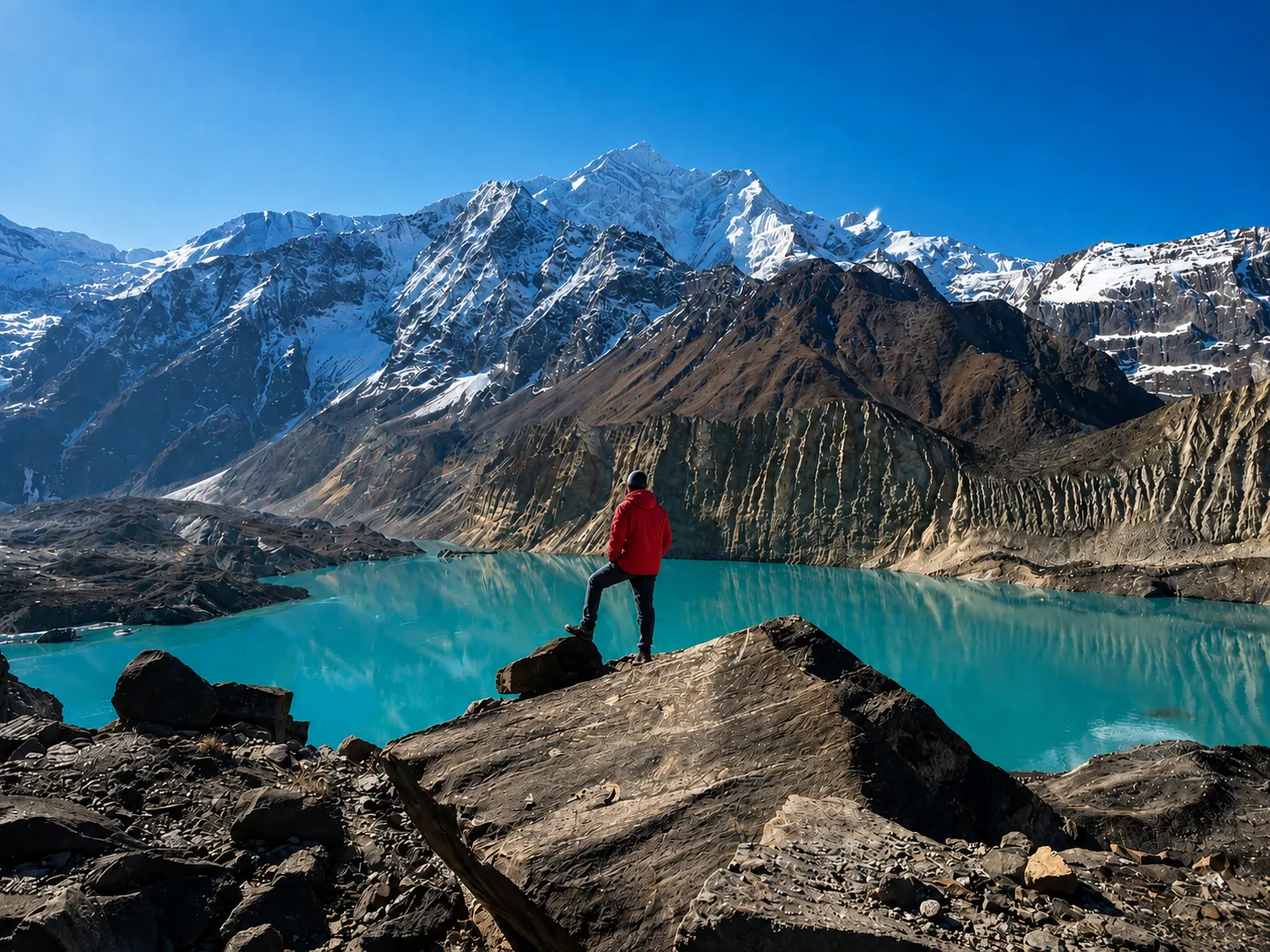
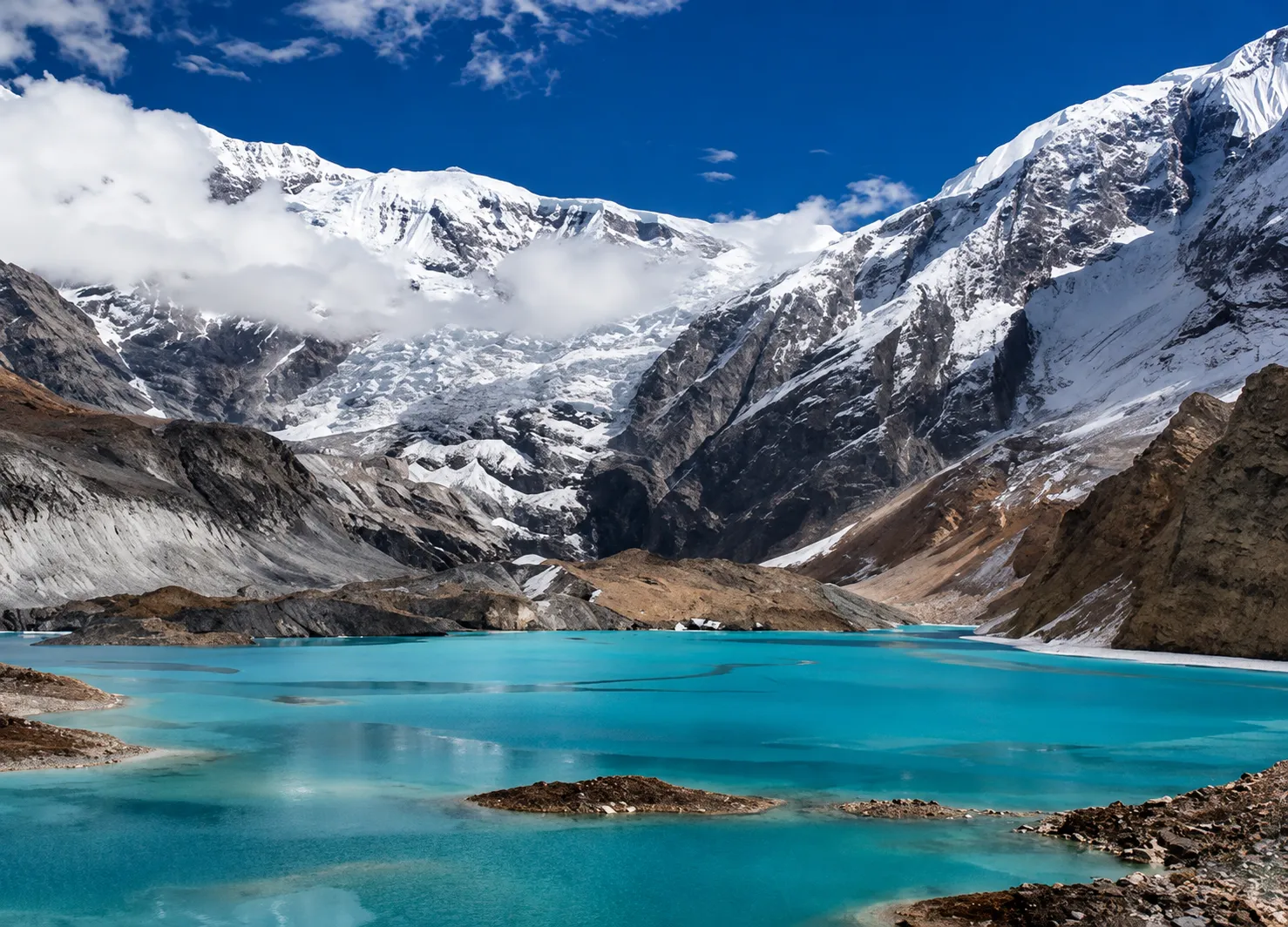
Reaching Annapurna North Base Camp at approximately 4,190 metres is the defining moment of the trek. Here, trekkers stand beneath the immense northern face of Annapurna I in an environment shaped by rock, ice and centuries of Himalayan geological activity. The isolation of the location, combined with the scale of the surrounding mountains, creates an atmosphere very different from that experienced on Nepal’s busier base camp routes.
The return journey provides another dimension to the adventure rather than simply retracing the entire approach. From the base camp, the trail returns through Sandhi Kharka and continues towards Thulo Bugin, an elevated landscape offering broad perspectives across the surrounding Himalayan terrain. The trek then descends towards Lete, where the route meets the dramatic landscape of the Kali Gandaki region before continuing by road to Pokhara and eventually Kathmandu.
Throughout the journey, the scenery changes considerably with altitude. Lower sections may reveal subtropical vegetation, terraced settlements, waterfalls and dense forest, while higher elevations introduce open grazing lands, rocky valleys, glaciers and panoramic Himalayan scenery. Depending on weather and visibility, trekkers may enjoy striking perspectives of peaks and ranges associated with Annapurna I, Annapurna South, Nilgiri, Dhaulagiri, Hiunchuli and Machhapuchhre.
The trek also provides meaningful encounters with the cultural landscape of the region. Villages along and around the route reflect generations of mountain life, where local traditions, agriculture, seasonal movement and hospitality remain closely connected with the Himalayan environment.
Because sections of the Annapurna North Base Camp trail remain remote and tourism infrastructure is more limited than on established routes, the journey requires thoughtful preparation and well-managed logistics. This relative isolation, however, is also what gives the trek much of its character. For travellers looking beyond crowded trails, the North Annapurna route offers space, silence and a genuine sense of Himalayan exploration.
With experienced local leadership and carefully organised trekking support, Himalayan Sherpa Exodus Team Treks & Expeditions Pvt. Ltd. invites adventurous travellers to discover this extraordinary side of Annapurna, where mountaineering history, wilderness and Himalayan grandeur come together in one memorable journey.
Highlights of the North Annapurna BC Trek
Highlights of the North Annapurna BC Trek
- Reach the remote northern base of Annapurna I (8,091 m) and experience one of the Annapurna region's less-frequented Himalayan destinations.
- Walk through a landscape connected with the historic 1950 French Annapurna expedition, adding a fascinating mountaineering dimension to the journey.
- Experience constantly changing scenery, from traditional settlements and cultivated valleys to dense forests, waterfalls, alpine meadows, rocky terrain and glacial landscapes.
- Enjoy an impressive close-up perspective of Annapurna I from Annapurna North Base Camp at approximately 4,190 metres.
- Admire panoramic Himalayan scenery that may include Annapurna I, Annapurna South, Nilgiri, Dhaulagiri, Hiunchuli and Machhapuchhre.
- Follow a quieter trekking route through Upper Narchyang, Chhotepa and Sandhi Kharka, far removed from the atmosphere of Nepal's busiest trekking trails.
- Cross the beautiful highland landscape of Thulo Bugin during the return journey towards Lete, adding variety to the trekking experience.
- Discover the natural diversity of the Annapurna region, where forests and river valleys gradually transition into exposed high-altitude wilderness.
- Experience local mountain communities and traditional hospitality while travelling through settlements shaped by generations of Himalayan culture and livelihood.
- Enjoy the natural hot-spring surroundings of Tatopani, providing a distinctive beginning to the trekking section of the journey.
- Experience a genuine combination of trekking and expedition-style adventure, particularly in the more remote sections where tourism facilities remain limited.
- Travel through contrasting regions of Nepal, beginning with Kathmandu and Pokhara before entering the isolated northern Annapurna landscape and eventually descending towards Lete and the Kali Gandaki region.
- Ideal for experienced and adventurous trekkers seeking something different, especially those who prefer solitude, wilderness and historical significance over heavily commercialised trekking routes.
- Journey with Himalayan Sherpa Exodus Team supported by experienced local professionals familiar with Nepal's mountain environment, trekking logistics and high-altitude travel.
Day 01 :
Arrival in Kathmandu
Altitude: 1,400 m / 4,593 ft
Airport Transfer: Approximately 6 km
Driving Duration: Approximately 20–40 minutes, depending on traffic
Overnight: Kathmandu
Welcome to Nepal and the beginning of your North Annapurna Base Camp adventure. Upon arrival at Tribhuvan International Airport in Kathmandu, you will be warmly received by a representative of Himalayan Sherpa Exodus Team Treks & Expeditions Pvt. Ltd. and transferred to your hotel.
After checking in, the remainder of the day is available to rest and recover from your journey. Depending on your arrival time, you may also enjoy a relaxed walk around the surrounding neighbourhood or make any final preparations for the trek.
Later, our team will provide a pre-trek briefing covering the journey ahead, trail conditions, essential equipment, safety considerations and general trekking arrangements. This is also an opportunity to meet your trekking team and clarify any questions before travelling towards the Annapurna region.
Day 02 :
Drive from Kathmandu to Pokhara
Kathmandu: 1,400 m / 4,593 ft
Pokhara: 822 m / 2,696 ft
Driving Distance: Approximately 200–205 km
Driving Duration: Approximately 7–9 hours
Overnight: Pokhara
After breakfast, we leave Kathmandu and travel west towards Pokhara, Nepal's celebrated lakeside city and one of the principal gateways to the Annapurna Himalaya.
The overland journey follows the Prithvi Highway through a constantly changing landscape of river valleys, terraced hillsides, roadside settlements and cultivated farmland. Much of the route accompanies the Trishuli and Marsyangdi river systems, offering an interesting introduction to Nepal's middle hills and rural countryside.
Although the geographical distance is approximately 200 km, driving time in Nepal can vary considerably because of traffic, road improvement works and local conditions.
Upon reaching Pokhara, you will check into your hotel and have time to relax. On a clear evening, the Annapurna and Machhapuchhre ranges may provide an impressive first glimpse of the mountains awaiting us.
Day 03 :
Drive from Pokhara to Tatopani and Trek to Upper Narchyang
Pokhara: 822 m / 2,696 ft
Tatopani: 1,243 m / 4,078 ft
Upper Narchyang: 2,140 m / 7,020 ft
Driving Distance: Approximately 95–105 km
Driving Duration: Approximately 5–6 hours
Walking Distance: Approximately 6–8 km
Walking Duration: Approximately 2–3 hours
Overnight: Upper Narchyang
Today we leave Pokhara and travel towards Tatopani in Myagdi District, gradually entering the deeper valleys west of the Annapurna massif. The journey passes through Beni and follows mountain roads towards the Kali Gandaki corridor before reaching Tatopani, a settlement particularly known for its natural hot springs.
From Tatopani, our trekking journey properly begins.
We set out on foot towards Upper Narchyang, gradually leaving the main road corridor behind and ascending into the hills. The walk introduces the agricultural and forested landscape characteristic of the lower North Annapurna region, with scattered settlements, terraced fields and views into the surrounding valleys.
Upper Narchyang is an important gateway to the remote northern approach to Annapurna. After arriving at the village, we settle in for the night and prepare for the more secluded stages of the trek beginning the following morning.
Day 04 :
Trek from Upper Narchyang to Chhotepa
Upper Narchyang: 2,140 m / 7,020 ft
Chhotepa: 2,369 m / 7,772 ft
Walking Distance: Approximately 12–14 km
Walking Duration: Approximately 6–7 hours
Overnight: Chhotepa
Leaving Upper Narchyang after breakfast, we begin entering the quieter wilderness of the North Annapurna trail. Today's route gradually takes us away from permanent settlements and deeper into an environment defined by forest, streams and steep Himalayan valleys.
The trail passes through sections associated with Lekhgaun, Ghalemdi and the Mristi Khola valley, with a combination of ascents, descents and stream crossings. Dense vegetation accompanies much of the journey, while breaks in the forest occasionally reveal glimpses of the surrounding mountains.
As we progress towards Chhotepa, the atmosphere becomes noticeably more isolated. Tourist infrastructure beyond this point is limited compared with Nepal's mainstream trekking routes, and the journey begins to acquire the character of a genuine wilderness trek.
We reach Chhotepa at approximately 2,369 metres, where we settle into our overnight accommodation or camp according to prevailing local arrangements and seasonal conditions.
Day 05 :
Trek from Chhotepa to Sandhi Kharka
Chhotepa: 2,369 m / 7,772 ft
Sandhi Kharka: 3,165 m / 10,383 ft
Walking Distance: Approximately 9–10 km
Walking Duration: Approximately 6–7 hours
Altitude Gain: Approximately 796 m
Overnight: Sandhi Kharka
Today's trek involves a substantial gain in elevation as we continue from Chhotepa towards Sandhi Kharka.
The route leads through forested terrain before gradually opening into a more alpine landscape. Along the way, mountain streams, waterfalls and increasingly rugged surroundings reveal the changing ecological character of the region. The trail also passes through the broader Hum Khola area, where the sense of Himalayan isolation becomes increasingly apparent.
As altitude is gained, dense forest gradually gives way to more open vegetation and highland terrain. On a clear day, portions of the Annapurna and Nilgiri massifs may begin to dominate the skyline.
After approximately six to seven hours of trekking, we reach Sandhi Kharka at 3,165 metres. Surrounded by high ridges and alpine scenery, this tranquil location provides an excellent staging point for the following day's ascent to North Annapurna Base Camp.
Day 06 :
Trek from Sandhi Kharka to Annapurna North Base Camp
Sandhi Kharka: 3,165 m / 10,383 ft
Annapurna North Base Camp: 4,190 m / 13,746 ft
Walking Distance: Approximately 10 km
Walking Duration: Approximately 7–8 hours
Altitude Gain: Approximately 1,025 m
Overnight: Annapurna North Base Camp
This is one of the most demanding and rewarding days of the entire journey as we trek from Sandhi Kharka to the magnificent Annapurna North Base Camp.
Leaving the alpine meadows behind, the trail moves steadily into a harsher high-altitude environment. Vegetation becomes increasingly sparse and the landscape is gradually dominated by rock, glacial streams, moraine and the enormous mountain walls rising above the valley.
The route passes through the Bhusket Mela area before continuing across rugged terrain towards the base camp. Because more than 1,000 metres of elevation is gained today, a controlled and steady walking pace is particularly important.
Eventually, the imposing northern face of Annapurna I (8,091 m) comes dramatically into view. Reaching North Annapurna Base Camp at approximately 4,190 metres is the principal achievement of the trek.
Here, surrounded by glaciers, mountain walls and the immense scale of the Annapurna massif, there is time to appreciate one of the quieter and historically significant mountain environments in Nepal. Weather and conditions permitting, the surrounding landscape may also provide striking views towards Nilgiri and neighbouring Himalayan peaks.
Tonight is spent in the remarkable setting of Annapurna North Base Camp.
Day 07 :
Explore Annapurna North Base Camp and Trek Back to Sandhi Kharka
Annapurna North Base Camp: 4,190 m / 13,746 ft
Sandhi Kharka: 3,165 m / 10,383 ft
Walking Distance: Approximately 10 km, excluding optional exploration
Walking Duration: Approximately 6–7 hours
Altitude Loss: Approximately 1,025 m
Overnight: Sandhi Kharka
Morning at North Annapurna Base Camp offers another opportunity to experience the extraordinary high-Himalayan environment before beginning our descent.
Depending on weather, trail conditions and the guidance of our trekking leader, there may be time for a short exploration around the base camp area. The glacial landscape, rocky moraine and tremendous northern wall of Annapurna I create particularly memorable photographic opportunities in the early morning.
After breakfast and exploration, we retrace the high-altitude trail towards Sandhi Kharka.
Although much of today's journey is downhill, care is necessary while crossing rocky moraine, uneven surfaces and potentially slippery sections. Gradually, the stark glacial landscape gives way once again to alpine vegetation.
By afternoon, we return to Sandhi Kharka, where we spend the night after completing one of the most memorable sections of the expedition.
Day 08 :
Trek from Sandhi Kharka to Thulo Bugin
Sandhi Kharka: 3,165 m / 10,383 ft
Thulo Bugin: 3,500 m / 11,482 ft
Walking Distance: Approximately 8 km
Walking Duration: Approximately 5–6 hours
Altitude Gain: Approximately 335 m
Overnight: Thulo Bugin
Rather than returning entirely along our original approach, today's journey leads towards Thulo Bugin, adding another distinctive landscape to the trek.
The trail moves through remote highland terrain characterised by forest, alpine vegetation, open grazing areas and small mountain streams. Depending on the season, rhododendrons and other Himalayan vegetation can add considerable colour to parts of the route.
Gradual ascents eventually bring us towards Thulo Bugin at approximately 3,500 metres. The area has the character of a high-altitude pastureland and offers a strong sense of solitude, with broad views across the surrounding ridges and valleys.
Compared with the previous two demanding trekking days, today's stage is somewhat shorter, providing useful time for rest and recovery while still remaining within the remote high-country environment.
We spend the night at Thulo Bugin, traditionally using camping or locally available trekking facilities according to conditions.
Day 09 :
Trek from Thulo Bugin to Lete
Thulo Bugin: 3,500 m / 11,482 ft
Lete: 2,010 m / 6,594 ft
Walking Distance: Approximately 12 km
Walking Duration: Approximately 6–7 hours
Altitude Loss: Approximately 1,490 m
Overnight: Lete
Today marks the final full day of walking on our North Annapurna journey.
From Thulo Bugin, the trail begins a substantial descent towards Lete, dropping nearly 1,500 metres through a striking transition of landscapes. High alpine terrain gradually gives way to greener slopes, forest and the deeper valley environment of the Kali Gandaki region.
The descent provides an interesting contrast with the glacial scenery experienced around North Annapurna Base Camp. As we lose elevation, vegetation becomes progressively richer, and the surrounding mountain perspectives continually change.
Eventually, we reach Lete at approximately 2,010 metres, a peaceful mountain settlement situated within the wider Kali Gandaki corridor. Here, after several days in remote terrain, we return to a more established village environment.
The evening offers a welcome opportunity to rest, enjoy a comfortable meal and reflect on the trekking portion of this remarkable Himalayan journey.
Day 10 :
Drive from Lete to Pokhara
Lete: 2,010 m / 6,594 ft
Pokhara: 822 m / 2,696 ft
Driving Distance: Approximately 120–125 km
Driving Duration: Approximately 5–7 hours, subject to road conditions
Overnight: Pokhara
After breakfast, we say goodbye to the mountain trail and begin our overland journey back towards Pokhara.
The drive follows the dramatic Kali Gandaki corridor, passing through mountain settlements and descending progressively towards the greener landscapes of Myagdi and the Pokhara Valley. Although the road distance is approximately 120 kilometres, sections of the mountain road can be rough, and travel time varies according to weather, traffic and surface conditions.
The journey itself remains scenic, with river valleys, waterfalls, cliffs, villages and changing mountain scenery accompanying us along the way.
Upon reaching Pokhara, you will check into the hotel and have the rest of the day to relax. A hot shower, comfortable surroundings and an evening beside Phewa Lake provide a pleasant conclusion to the wilderness portion of the trek.
Day 11 :
Drive from Pokhara to Kathmandu
Pokhara: 822 m / 2,696 ft
Kathmandu: 1,400 m / 4,593 ft
Driving Distance: Approximately 200–205 km
Driving Duration: Approximately 7–9 hours
Overnight: Kathmandu
After breakfast, we leave Pokhara and begin the return drive to Kathmandu.
The route follows the familiar Prithvi Highway, travelling through the middle hills alongside sections of the Marsyangdi and Trishuli rivers. Rural villages, farmland, forested slopes and lively roadside towns accompany the journey eastwards.
Driving time depends considerably on traffic and road conditions, so sufficient flexibility is maintained in today's programme.
After arriving in Kathmandu, you will be transferred to your hotel. The remainder of the day is free for rest, souvenir shopping, exploring Thamel or simply enjoying your final evening in Nepal's capital.
This evening also provides an opportunity to look back on a journey that has taken us from Nepal's urban heart into one of the quieter wilderness landscapes beneath Annapurna I.
Day 12 :
Final Departure or Onward Journey
Kathmandu: 1,400 m / 4,593 ft
Airport Transfer: Approximately 6 km from central Kathmandu
Driving Duration: Approximately 20–40 minutes, depending on traffic
Your North Annapurna Base Camp Trek comes to an end today.
At the appropriate time, a representative of Himalayan Sherpa Exodus Team Treks & Expeditions Pvt. Ltd. will assist with your transfer to Tribhuvan International Airport for your international departure.
We recommend leaving sufficient time for airport check-in and Kathmandu traffic conditions.
For travellers continuing their holiday in Nepal, the journey does not necessarily have to end here. Additional trekking, cultural tours, wildlife experiences, mountaineering programmes or other Himalayan destinations can be arranged according to your interests and available time.
Himalayan Sherpa Exodus Team sincerely thanks you for sharing this Himalayan journey with us and wishes you a safe onward journey, carrying lasting memories of the mountains, landscapes and communities encountered along the North Annapurna trail.
North ABC Trek
The Trip Package Cost Includes
- Airport arrival and departure transfers by private vehicle according to the itinerary.
- All necessary ground transportation mentioned in the trekking programme, including Kathmandu–Pokhara–Kathmandu and other required road transfers.
- Accommodation in Kathmandu and Pokhara in a comfortable hotel on a twin-sharing basis.
- Local transportation between Pokhara, Tatopani, Lete and other trail access points.
- Experienced, government-licensed trekking guide with extensive knowledge of the Annapurna region.
- Required number of supporting staff, including porters and their food, accommodation, insurance and equipment.
- Trekking permits and official conservation area permits required for the Annapurna region.
- National park/conservation entry fees and local government charges.
- Accommodation during the trekking period in available teahouses, lodges or camping arrangements according to the route condition.
- Meals during the trek, including breakfast, lunch and dinner.
- Necessary camping equipment in remote sections where lodge facilities are unavailable.
- Basic first-aid support and essential trekking safety equipment carried by the trekking team.
- Guide and staff expenses, including salary, meals, accommodation and insurance.
- Government taxes and official service charges.
The Trip Package Cost Excludes
- International airfare and Nepal entry visa fees.
- Travel insurance covering trekking, medical emergencies, helicopter rescue and high-altitude activities.
- Personal expenses such as alcoholic beverages, bottled drinks, snacks and additional food items.
- Personal trekking equipment and clothing.
- Hot showers, battery charging fees and internet charges during the trek.
- Additional accommodation or meals caused by early arrival, late departure or itinerary changes.
- Emergency evacuation costs in case of illness, injury or unexpected situations.
- Tips for trekking guides, porters and supporting staff.
- Any services not specifically mentioned under the “Cost Includes” section.
Best Time to Trek
The North Annapurna Base Camp Trek can be undertaken during different seasons; however, spring (March to May) and autumn (September to November) are considered the most favourable periods.
During spring, the lower trekking areas become vibrant with blooming rhododendron forests, fresh vegetation and pleasant temperatures. The skies are generally clear, providing excellent mountain views.
Autumn is widely regarded as the best season for Himalayan trekking because of stable weather conditions, excellent visibility and comfortable walking temperatures. The crisp atmosphere allows spectacular views of Annapurna I, Dhaulagiri, Nilgiri and surrounding peaks.
Winter trekking is possible for experienced adventurers, but higher sections near Annapurna North Base Camp may become challenging due to snowfall, freezing temperatures and difficult trail conditions. The monsoon season is generally less recommended because rainfall can affect road access and trail conditions.
Trek Difficulty
The North Annapurna Base Camp Trek is considered a moderate to challenging Himalayan trek due to its remote nature, altitude gain and limited infrastructure.
Although the maximum elevation reaches approximately 4,190 metres at Annapurna North Base Camp, the challenge comes from several factors including long walking days, steep ascents, changing weather conditions and less-developed trails.
Compared with popular Annapurna routes, this trek requires stronger physical preparation because sections of the trail are more isolated and involve wilderness-style trekking. Previous trekking experience is beneficial but not mandatory for physically prepared travellers.
A positive mindset, regular walking practice before the journey and proper acclimatisation greatly improve the overall trekking experience.
Acclimatization & Altitude Sickness
Altitude awareness is an important part of every Himalayan journey. During the North Annapurna Base Camp Trek, the body gradually adjusts as the trail rises from the lower valleys towards high mountain terrain.
Our itinerary has been carefully designed with gradual elevation gain, allowing trekkers sufficient time to adapt naturally. Maintaining a comfortable walking pace, drinking enough water, eating properly and getting adequate rest are essential for reducing altitude-related problems.
Symptoms such as headache, tiredness, dizziness, loss of appetite or difficulty sleeping should never be ignored. Our experienced trekking guides monitor guests throughout the journey and provide guidance whenever necessary.
In rare situations requiring medical attention, appropriate safety procedures and emergency support arrangements are followed.
Himalayan Culture & Ancient Monasteries
The North Annapurna region is not only a destination of mountains and landscapes but also a place where Himalayan traditions continue through generations.
The trekking route passes through communities where local lifestyles remain closely connected with agriculture, mountain ecology and ancestral customs. Travellers have opportunities to observe traditional houses, local festivals, village practices and the warm hospitality of Himalayan communities.
The wider Annapurna region is influenced by diverse ethnic groups, including Gurung, Magar and Thakali communities, each with unique languages, traditions and cultural identities.
Although this route is more focused on wilderness and mountain exploration, the cultural experiences along the way provide a deeper understanding of life in Nepal’s Himalayan valleys.
Preparation Guide
Proper preparation is essential for enjoying the North Annapurna Base Camp Trek safely and comfortably.
Before departure, trekkers should focus on improving cardiovascular fitness through activities such as hiking, walking, running or cycling. Strength training for legs and endurance exercises can also be helpful.
Recommended preparation includes:
- Regular walking or hiking practice before the trek.
- Carrying comfortable trekking shoes and testing equipment before departure.
- Preparing suitable clothing layers for changing mountain temperatures.
- Understanding basic altitude awareness.
- Maintaining good hydration and nutrition habits.
- Consulting a medical professional if there are existing health concerns.
A well-prepared trekker is more likely to enjoy the journey and adapt comfortably to Himalayan conditions.
Weather & Climate
Weather in the Annapurna region changes significantly with altitude and season.
Lower sections of the trek experience moderate mountain temperatures, while higher areas near Annapurna North Base Camp can be cold, windy and unpredictable.
During spring and autumn, daytime trekking conditions are generally comfortable, with clear mornings and excellent mountain visibility. Nights at higher elevations can still be very cold.
Winter brings colder temperatures and possible snowfall, particularly around the base camp area. Summer monsoon months bring increased rainfall in lower regions, which may influence road and trail conditions.
Because Himalayan weather can change quickly, flexible planning and proper equipment are essential.
Accommodation
Accommodation during the North Annapurna Base Camp Trek varies according to location and available facilities along the route.
In Kathmandu and Pokhara, guests stay in comfortable hotels selected for convenience and quality. During trekking sections, accommodation is arranged through local teahouses, mountain lodges or camping facilities depending on the availability of services.
Remote sections of this route have limited accommodation infrastructure, which is part of what makes this trek a unique wilderness experience. Camping arrangements may be necessary in certain areas, supported by our experienced trekking crew. Cleanliness, safety and comfort remain important priorities throughout the journey.
Meals During the Trek
Nutritious meals play an important role in maintaining energy during a high-altitude trek.
During the trekking period, meals generally include a variety of local and international options prepared by mountain lodges or trekking crews depending on the location.
Typical meals may include:
- Traditional Nepali dal bhat (rice, lentils and vegetables)
- Noodles and pasta dishes
- Soup and hot beverages
- Bread, eggs and breakfast items
- Seasonal vegetables and simple mountain meals
Our team encourages balanced eating habits to support endurance, recovery and acclimatisation throughout the trek.
Drinking Water
Staying properly hydrated is essential during Himalayan trekking.
Safe drinking water arrangements are available throughout the journey. Trekkers can refill water bottles from local sources after proper treatment using purification methods recommended by the trekking team.
We encourage travellers to carry reusable water bottles rather than relying on unnecessary plastic waste. Supporting environmentally responsible trekking practices helps protect the fragile Himalayan ecosystem.
Internet & Charging
Communication facilities become more limited as the trek enters remote mountain areas.
In Kathmandu and Pokhara, reliable internet and charging facilities are widely available. During trekking days, some teahouses may provide Wi-Fi and charging services, usually available at an additional cost.
Because electricity supply can be limited in higher regions, trekkers are advised to carry:
- Power banks
- Spare batteries
- Universal charging adapters
Enjoying periods of limited connectivity is also an opportunity to experience the peaceful and natural environment of the Himalayas.
Travel Insurance
Comprehensive travel insurance is strongly recommended for the North Annapurna Base Camp Trek.
Your insurance should include:
- High-altitude trekking coverage
- Emergency medical treatment
- Helicopter evacuation coverage if required
- Trip cancellation or interruption protection
- Lost baggage and personal belongings coverage
Although our team takes extensive safety measures, Himalayan environments can involve unpredictable conditions. Proper insurance provides valuable protection and peace of mind throughout the journey.
Packing List
A carefully prepared packing list helps ensure comfort and safety throughout the trek.
Recommended Trekking Equipment:
- Comfortable trekking boots
- Warm trekking socks
- Thermal base layers
- Fleece jacket and warm outer jacket
- Waterproof jacket and trousers
- Trekking pants
- Gloves, hat and sun protection
- Sleeping bag suitable for cold temperatures
- Backpack and rain cover
- Trekking poles
- Sunglasses and sunscreen
Personal Items:
- Water bottle
- Personal medicine
- First-aid supplies
- Headlamp
- Camera and accessories
- Personal hygiene items
- Power bank
Packing should be practical and lightweight while ensuring protection against changing Himalayan weather conditions.
Safety Measures
Safety is the highest priority throughout the North Annapurna Base Camp Trek.
Our experienced guides carefully monitor trail conditions, weather changes and the wellbeing of every trekker. The itinerary is designed with appropriate walking pace and altitude awareness to minimise unnecessary risks.
Important safety practices include:
- Professional and experienced trekking leadership.
- Proper acclimatisation planning.
- Regular health monitoring during the trek.
- Awareness of weather and trail conditions.
- Emergency communication and support arrangements.
- Responsible trekking practices respecting local communities and the environment.
With professional guidance, careful preparation and a responsible approach, the North Annapurna Base Camp Trek becomes not only a challenging adventure but also a safe and deeply rewarding Himalayan experience.
Why Choose Himalayan Sherpa Exodus Team for the North Annapurna Base Camp Trek?
At Himalayan Sherpa Exodus Team we understand that a remote Himalayan journey requires more than just a trekking route. It requires careful planning, professional support, local knowledge and personalised service. Our North Annapurna Base Camp Trek programme is designed to provide travellers with a safe, comfortable and memorable experience while exploring one of Nepal’s most extraordinary hidden mountain destinations.
When you choose us, you receive:
- Professional pre-trek assistance and airport support to ensure a smooth beginning and ending of your Himalayan journey.
- Private transportation arrangements between Kathmandu, Pokhara, trekking starting points and ending points according to the planned itinerary.
- Experienced local trekking guides with strong knowledge of Himalayan terrain, culture, weather conditions and safety procedures.
- Dedicated trekking crew support, including trained porters and necessary field staff for remote sections of the journey.
- Annapurna region trekking permits and required documentation assistance arranged by our team.
- A complimentary Himalayan Sherpa Exodus trekking map to help you understand the route and surrounding mountain landscape.
- A company trekking duffle bag for convenient packing and transportation during the trek.
- A Himalayan Sherpa Exodus trekking T-shirt as a memorable travel gift.
- Basic medical support and first-aid arrangements carried throughout the trekking journey.
- Oxygen saturation monitoring equipment (pulse oximeter) to help assess altitude adaptation during higher sections.
- Careful itinerary management with safety as a priority, especially in remote and high-altitude environments.
Our goal is to combine authentic Himalayan exploration with reliable service, allowing you to enjoy the adventure with confidence and peace of mind.
What Can You Experience During the North Annapurna Base Camp Trek?
The North Annapurna Base Camp Trek is a journey beyond ordinary trekking. It combines dramatic Himalayan landscapes, historical significance, remote wilderness and authentic mountain culture.
During this adventure, you can expect:
Magnificent Views of the Annapurna Himalaya
One of the greatest highlights of this trek is reaching the northern side of Annapurna I (8,091 m). Standing beneath this legendary mountain provides a rare perspective of its massive northern face, surrounded by a breathtaking amphitheatre of Himalayan peaks including Annapurna South, Nilgiri, Dhaulagiri, Hiunchuli and Machhapuchhre.
A Remote Wilderness Experience
Unlike many popular trekking routes in Nepal, the North Annapurna trail offers a quieter and more secluded Himalayan atmosphere. The route passes through peaceful valleys, alpine landscapes, forests, rivers and rugged mountain terrain where nature remains largely untouched.
Exploration of Annapurna Conservation Area
The trek takes place within the Annapurna Conservation Area, one of Nepal’s most diverse protected regions. The area supports rich biodiversity, and lucky travellers may have opportunities to observe Himalayan wildlife such as musk deer, blue sheep, Himalayan tahr, mountain birds and other native species.
Authentic Himalayan Culture and Hospitality
The lower sections of the journey provide opportunities to experience the traditional lifestyles of communities including Magar, Gurung and Thakali people. Their unique architecture, local food, customs and warm hospitality add an important cultural dimension to the trekking experience.
Relaxation at Natural Himalayan Hot Springs
Before or after the challenging trekking sections, the natural hot springs of Tatopani provide a refreshing experience where travellers can relax and enjoy the therapeutic warmth of Himalayan mineral water.
Diverse Landscapes Throughout the Journey
The trail continuously changes as you gain altitude. You will experience:
- Green forests and rhododendron landscapes
- Traditional mountain villages
- Terraced farmland
- River valleys and waterfalls
- Alpine grazing areas
- Rocky mountain terrain
- Glacial surroundings near the base camp
Adventure Through Remote Mountain Terrain
The journey includes sections through challenging Himalayan landscapes, including the highland area around Thulo Bugin and the remote Mristi Khola valley, creating an authentic adventure for those seeking a deeper connection with the mountains.
Unique Photography Opportunities
For photographers and nature lovers, this trek offers exceptional opportunities to capture:
- Dramatic Himalayan peaks
- Traditional villages
- Rare mountain landscapes
- Wildlife habitats
- Changing colours of sunrise and sunset over Annapurna
Is the North Annapurna Base Camp Trek Suitable for You?
The North Annapurna Base Camp Trek is ideal for travellers who are searching for a less-commercialised Himalayan adventure combined with natural beauty, cultural discovery and a sense of exploration.
This trek may be the perfect choice for you if:
You Prefer Quiet and Less Crowded Trails
If you enjoy peaceful environments away from busy trekking routes, this journey offers an opportunity to experience the Annapurna region in a more remote and authentic way.
You Enjoy Wilderness and Adventure Travel
The route passes through areas with limited infrastructure, making it suitable for travellers who appreciate nature, simplicity and expedition-style trekking experiences.
You Want to Experience Camping and Remote Mountain Life
Some sections require camping arrangements due to limited lodge facilities. This creates a closer connection with the Himalayan environment, where evenings are spent surrounded by mountains, forests and natural sounds.
You Have an Interest in Himalayan Culture
Travellers interested in local traditions, mountain communities and indigenous lifestyles will appreciate the cultural experiences found along the route.
You Love Nature, Photography and Wildlife
The combination of dramatic mountain scenery, diverse landscapes and possible wildlife encounters makes this trek especially attractive for photographers and nature enthusiasts.
You Are Looking for a Unique Annapurna Experience
For those who have already explored popular trekking routes or want something beyond the ordinary, North Annapurna Base Camp provides a rare opportunity to discover a hidden side of the Annapurna region.
Physical Requirement
Although previous trekking experience is helpful, the journey is achievable for physically prepared travellers. Good stamina, regular walking practice and a positive attitude are important because some days involve 6–8 hours of trekking at higher elevations.
Preparation for the North Annapurna Base Camp Trek
Proper preparation is one of the most important factors for enjoying a successful Himalayan adventure. The North Annapurna Base Camp Trek involves remote trails, changing weather conditions, long walking days and high-altitude environments, so both physical and mental readiness are essential.
Physical Preparation
Travellers should begin preparing several weeks before the trek. Recommended activities include:
- Regular walking and hiking practice
- Cardiovascular exercises such as running, cycling or swimming
- Strength training focused on legs and core muscles
- Practising walking with a backpack
- Increasing endurance for longer trekking days
Although the trek does not require technical climbing skills, being comfortable with walking 6–8 hours per day at mountain altitude will significantly improve your experience.
Mental Preparation
The North Annapurna Base Camp Trek is not only a physical journey but also an opportunity to experience remote Himalayan life. Some sections have limited facilities, and travellers should be prepared for:
- Simple mountain accommodation
- Basic food options
- Changing weather conditions
- Limited communication facilities
- Remote wilderness surroundings
A flexible mindset and willingness to adapt are essential qualities for enjoying this type of adventure.
Trekking Permits and Documentation
All required trekking permits and official documents should be arranged before entering the Annapurna region. Himalayan Sherpa Exodus Team assists guests with necessary permits and trekking procedures to ensure a smooth travel experience.
Essential Equipment Preparation
A suitable packing list should include:
- Quality trekking boots
- Warm layered clothing
- Waterproof outerwear
- Sleeping bag suitable for cold conditions
- Trekking poles
- Sun protection
- Personal medicines
- Reusable water bottle
- Headlamp and backup batteries
Because the North Annapurna route enters remote areas, carrying appropriate equipment is especially important.
Responsible Trekking Mindset
Travellers should also prepare themselves to respect the fragile Himalayan environment by reducing waste, protecting nature and respecting local traditions and communities.
With thoughtful preparation, the North Annapurna Base Camp Trek becomes more than a challenging walk. It becomes a meaningful Himalayan experience filled with adventure, discovery and unforgettable memories.
Be Well Prepared for Your Trek in Nepal
Proper preparation is the key to a safe, comfortable, and enjoyable trekking experience in Nepal. Please use this equipment guide to prepare the essential clothing, footwear, personal items, health and safety gear, and other trekking necessities according to your chosen route and season.
Pack wisely, travel comfortably, and trek confidently with Himalayan Sherpa Exodus Team.


 4,190M
 Moderate Climb